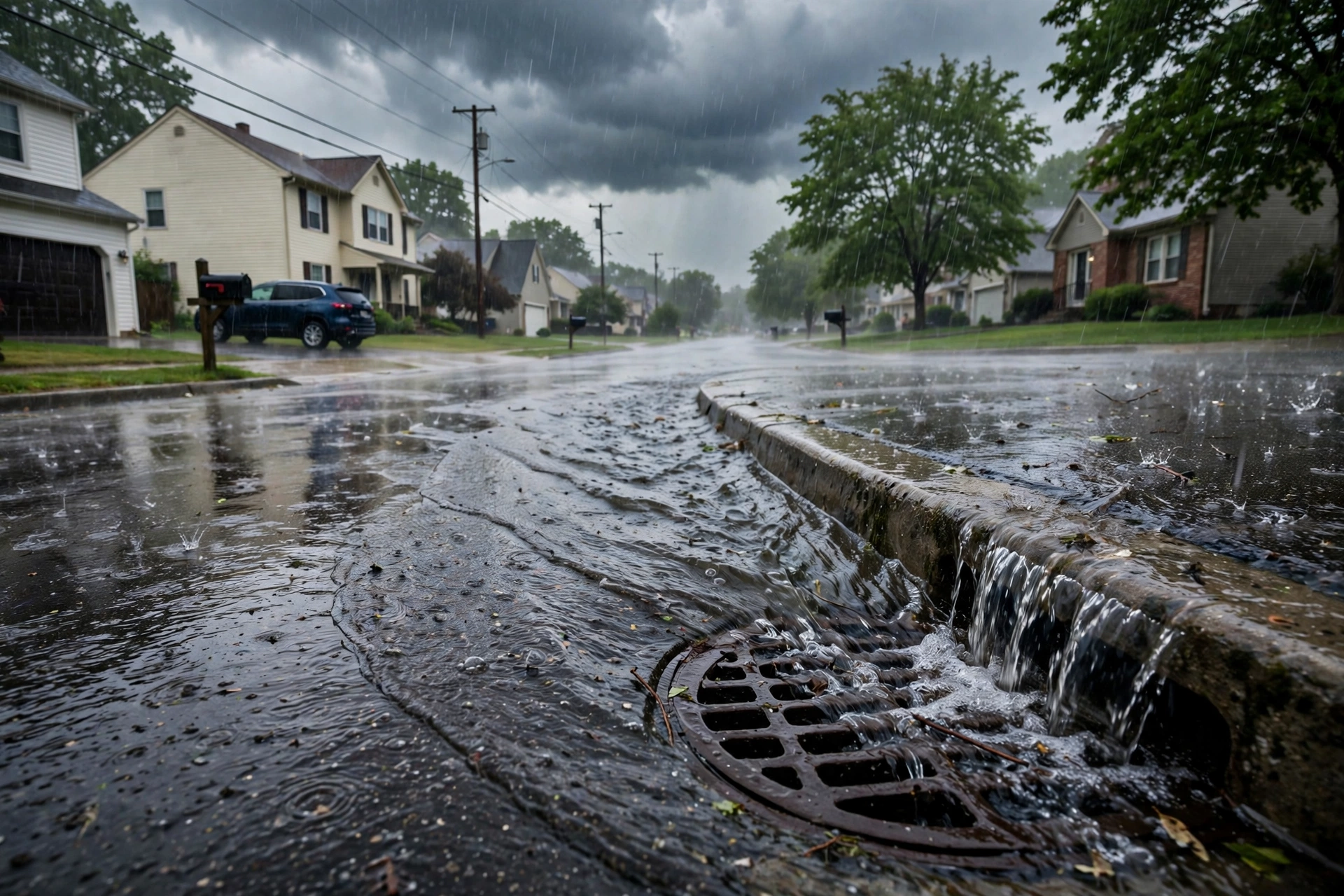
Rainwater has to go somewhere. When catch basins clog or storm lines collapse, it goes into your yard, your parking lot, or your basement. We clean, repair, and rebuild storm drainage so water leaves the way it should.
Storm Drains vs. Sanitary Sewers: What's the Difference?
Storm drainage is the network of grates, catch basins, yard drains, and underground pipes that carries rainwater and snowmelt away from your property. It is one of two separate systems with two separate jobs. Storm drains carry rainwater and snowmelt away from streets, yards, and parking lots, usually to local waterways or detention basins. Sanitary sewers carry wastewater from your home's plumbing to the treatment plant. They should never mix.
The confusion is understandable, because in many older Ohio cities they do mix. Combined sewer systems, common in older parts of Cleveland, Cincinnati, Columbus, Akron, and Toledo, carry both stormwater and sewage in one pipe. During heavy rain, those combined systems can overflow, which is a city infrastructure problem. The EPA regulates municipal stormwater discharges under its NPDES program, which is the federal framework behind the city's side of the system. But your private storm drainage, the catch basins, yard drains, and downspout lines on your property, is a separate system you own, and it is what this page covers.
Here is the practical distinction: if water backs up when you run the washing machine, that is the sanitary side. If water ponds in the yard or floods the basement only during or after rain, that is the storm side. Different systems, different fixes, and we handle both.
How Do You Know the Problem Is Storm Drainage, Not the Sewer?
Homeowners often call about a "sewer problem" that turns out to be a storm drainage problem. These are the signs that point to the storm side:
Standing water after storms, gone in dry weather. A sanitary problem does not care about the weather. If the issue appears with rain and disappears without it, water is not draining away, and that is a storm drainage failure.
Water ponding at the foundation or in window wells. Downspouts discharging at the foundation, clogged yard drains, or grading that slopes toward the house all push stormwater where it does the most damage.
Catch basins that stay full. The grate at the curb or in the parking lot should drain down after rain. If it holds water for days, the basin is full of sediment or the outlet line is blocked or collapsed.
Basement flooding that tracks rainfall. Water coming in during heavy rain, especially at the wall-floor joint, usually means stormwater is ponding against the foundation because the yard drainage failed.
Erosion channels or mulch washed across the yard. Water is running overland because the underground drains are not taking it. The yard is telling you the system gave up.
None of these respond to drain snaking or sanitary sewer repair. They need the storm system cleaned, repaired, or extended, which is a different trade skill with different equipment.
What Does Storm Drain Cleaning Involve?
Storm systems clog from the top down. Leaves, grass clippings, mulch, sediment, and trash wash into catch basins and yard drains with every rain, settle in the basin sump, and eventually block the outlet pipe. Cleaning reverses that:
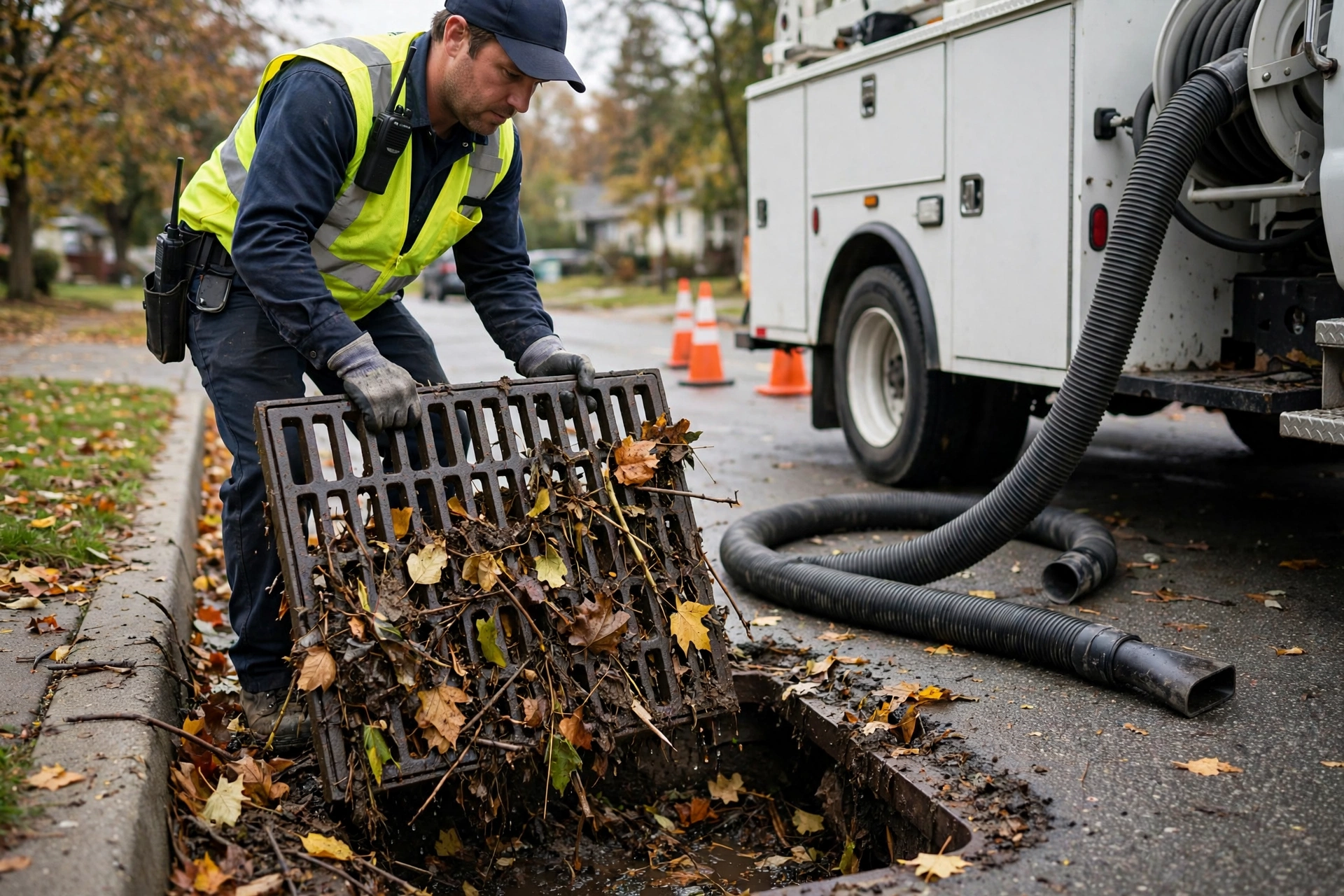
Catch basin cleaning. We vacuum out the basin: sediment, leaves, trash, and debris down to the sump floor. A basin with a clean sump catches the next round of debris instead of passing it into the pipe.
Line jetting. High-pressure water jetting scours the storm lines, pushing sediment, roots, and compacted debris through to the outlet. Storm lines are larger diameter than sanitary lines and take heavier jetting equipment.
Downspout and yard drain clearing. The small lines connecting your gutters and yard drains to the main storm line clog first because they are the smallest. We clear them individually so each inlet drains freely.
Camera inspection. After cleaning, we camera the lines to check for the structural problems cleaning cannot fix: separated joints, root intrusion, collapsed sections, and bellies holding standing water.
A clogged catch basin cannot do its job. Vacuuming it out restores the inlet before the next storm.
Cleaning is maintenance, not a one-time fix. Our catch basin cleaning and repair page covers the basin side in detail, including how often different properties need it.
What Storm Drain Repairs Do You Handle?
When cleaning is not enough, something is structurally wrong. These are the repairs we do most:
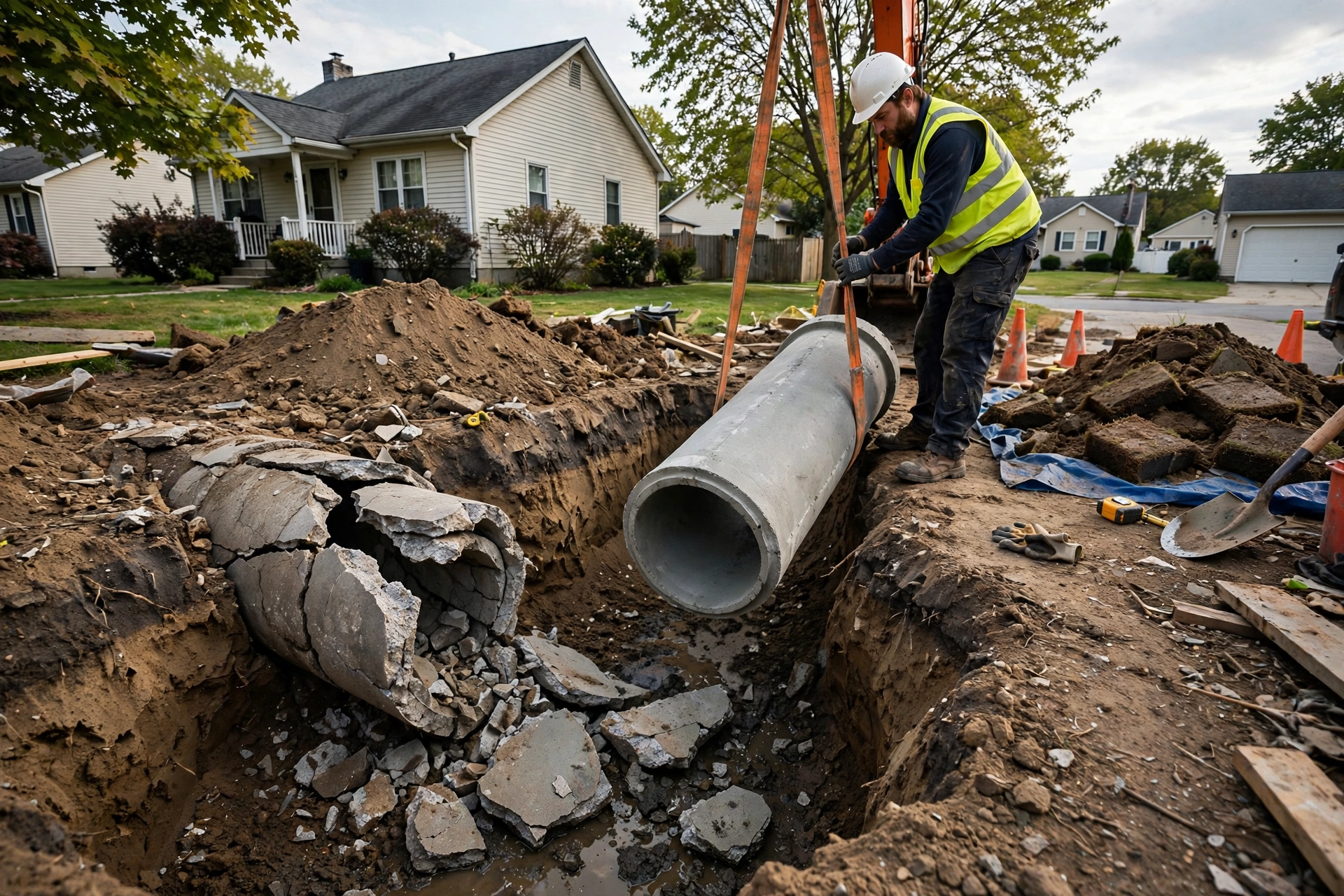
Collapsed or separated storm pipe. Old clay, concrete, and corrugated metal storm pipe fails the same way sanitary pipe does: joints separate, sections collapse, roots invade. We excavate and replace the bad section, or reline it where the layout allows.
Broken catch basin structures. The concrete or brick basin itself cracks, the frame settles, or the grate breaks. We rebuild or replace the structure and reset it to proper grade.
Downspout and yard drainage tie-ins. Downspouts dumping at the foundation get tied into the underground storm line. New yard drains, channel drains, and area drains get added where water collects.
New storm line installation. Properties with no underground drainage get a full system: inlets at the low spots, solid pipe to daylight or the storm main, proper slope throughout.
What do the most common storm drain problems look like?
Most storm drain service calls come down to one of these four problems:
Problem
Sign you will see
Typical fix
Clogged grate or catch basin
Basin stays full after rain; leaves and debris matted over the grate
Vacuum out sediment and debris; clear the outlet line
Collapsed or separated pipe
Standing water that never drains; sunken or settled soil above the line
Excavate and replace the failed section, or reline it where the layout allows
Standing water in low spots
Ponding in the yard or parking lot for days after storms
Add yard or area drains; extend lines to a working outlet
Sediment buildup in the line
Slow drainage that gets worse every season
High-pressure jetting, then a camera check for structural damage
Structural failure needs structural repair: excavating and replacing a collapsed storm pipe section.
For properties where surface water is the main enemy, a French drain installation is often part of the answer: a gravel-and-pipe system that intercepts groundwater and surface flow before it reaches the foundation.
Why Are Ohio's Storms So Hard on Drainage Systems?
Ohio gives storm drainage a uniquely rough ride, and it is worth understanding why your system keeps failing:
Cloudburst rain events. Ohio's spring and summer storms regularly drop inches of rain in a few hours. A system sized for average rainfall gets overwhelmed by peak intensity, and the overflow goes wherever gravity takes it.
Freeze-thaw ground movement. Ohio winters heave and settle the soil around buried pipe. Year after year, that movement separates joints and shifts grade, creating bellies that hold water and joints that leak sediment in.
Clay soil. Much of Ohio sits on heavy clay that drains poorly. When the soil is saturated, every drop of rain becomes surface runoff, which means the storm system has to handle the full volume, fast.
Mature trees. Ohio's older neighborhoods have big maples, oaks, and sycamores with aggressive root systems. Roots find the moisture in storm lines just like they find it in sanitary lines, and they pack joints and cracks until flow stops.
Combined sewer overflows. In combined-sewer cities, extreme rain can surcharge the whole system. Your private storm drainage cannot fix the city main, but keeping your side clear means your property sheds water instead of holding it.
Commercial lots live or die by drainage. A flooded parking lot means closed entrances, liability exposure, and customers who go elsewhere. We handle storm systems for retail centers, office parks, restaurants, churches, and HOA common areas across Ohio.
Commercial work centers on prevention. Scheduled catch basin cleaning, usually annual, keeps inlets and lines clear before storm season. We camera-inspect the underground lines to catch separations and collapses before they surface as sinkholes in the lot. And when the system needs repair or expansion, we do it in phases that keep the property open: one section at a time, excavated, repaired, and restored before we move to the next.
If you manage a property, the simplest conversation is the one before the flood. A maintenance schedule is far simpler than an emergency pump-out and a lot rebuild.
What Does Storm Drain Work Involve in Ohio?
Storm work ranges from a simple cleaning visit to a full system rebuild, so the plan follows the scope. These are the factors that set it:
Cleaning vs. repair. Catch basin vacuuming and line jetting are maintenance-planned. Excavation and pipe replacement are construction-planned. The camera inspection tells us which one you need.
Number of inlets and line length. One clogged yard drain is a small job. A commercial lot with twenty basins and a thousand requirementt of line is a project. Scope scales the plan directly.
Depth and access. Deep storm lines, lines under pavement, and lines under structures work more to reach and restore than shallow yard lines.
Restoration. Excavation in a lawn is one thing. Excavation through a paved parking lot or a concrete patio means cutting, removing, and repaving, which is a real work line.
New vs. existing. Extending a system with new inlets and lines is planned as installation. Tying into an existing system that mostly works is planned as a repair.
For the broader sewer process picture, see our Ohio sewer repair guide. For your property specifically, call (614) 350-5706: we will look at the drainage, tell you what is wrong, and give you a written fixed plan before any work starts.
Storm Drain Repair & Cleaning FAQs
It depends on which drain. The city or county owns the street drains, catch basins at the curb, and the public storm mains. You own everything on your property: yard drains, downspout tie-ins, and the private storm line connecting your lot to the public system. If water is ponding in your yard or at your foundation, that is almost always the private side, which means it is yours to fix.
Once a year at minimum, ideally in late fall after the leaves drop and before winter. Commercial lots with heavy traffic and leaf load sometimes need it twice a year. A basin that is half full of sediment in October will be a flooded parking lot after the first big spring storm.
Yes, and it is a common cause people miss. When yard and downspout drainage cannot get away, water ponds against the foundation and finds its way in through cracks, window wells, and the wall-floor joint. If your basement floods only during or right after heavy rain, suspect the storm drainage before you suspect the sanitary sewer.
Yes. Parking lots, retail centers, office parks, and HOA common areas all run on the same principle as residential systems, just bigger. We clean catch basins and lines, repair collapsed sections, and set up scheduled maintenance so the lot drains through every storm season.
Most likely. Standing water that lingers for days means the water has nowhere to go: a clogged or collapsed yard drain, a downspout discharging against the house instead of into a drain line, or grading that slopes toward the foundation. We diagnose the actual cause on site, because the fix for a clogged line and the fix for bad grading are completely different.
Related Services
Storm drainage connects to the rest of your property's water story. Our catch basin cleaning and repair service keeps inlets working, and French drain installation handles the groundwater and surface flow that overwhelms foundations. And when the problem turns out to be on the sanitary side after all, our trenchless sewer repair fixes it without digging up the yard we just got draining properly. One call sorts out which system is failing.
Water Standing Where It Should Not Be?
We will find out whether your storm system is clogged, collapsed, or just overwhelmed, and give you a written fixed plan for the fix.