Steel-era worker housing, century-old clay tile, and combined sewers across the Mahoning Valley. We camera your lateral, give you one honest diagnosis, and fix it trenchless or traditional with one upfront plan.
Last updated: October 13, 2026
Youngstown built its houses for steelworkers in the early 1900s, and the sewer lines underneath them are still the original clay tile.
For most of the 20th century, steel mills lined the Mahoning River, and Youngstown, Warren, and Niles grew up around them. Mill towns need housing fast, so the neighborhoods that rose between roughly 1900 and 1940 got vitrified clay tile sewer laterals with mortar joints, running from stone foundations out to street mains. The mills are gone, but the houses stayed, and so did their laterals. Today those lines are 90 to 120 years old, the mortar joints are crumbling, and the mature trees that shade these streets have spent decades probing every joint.
The Mahoning Valley has been rebuilding since the mills closed, and infrastructure is part of that story. The City of Youngstown has spent decades upgrading its sewer system under a federal consent decree reached in 2002 with the U.S. EPA and the State of Ohio to control combined-sewer overflows into the Mahoning River. An amended plan now moving through design calls for a major wet-weather treatment facility, with design due in 2027 and construction targeted for completion in 2030. The city is investing in its future. The question for homeowners is simpler: what is your own lateral doing? That pipe is yours, and a century of service leaves marks a camera can read in about an hour.
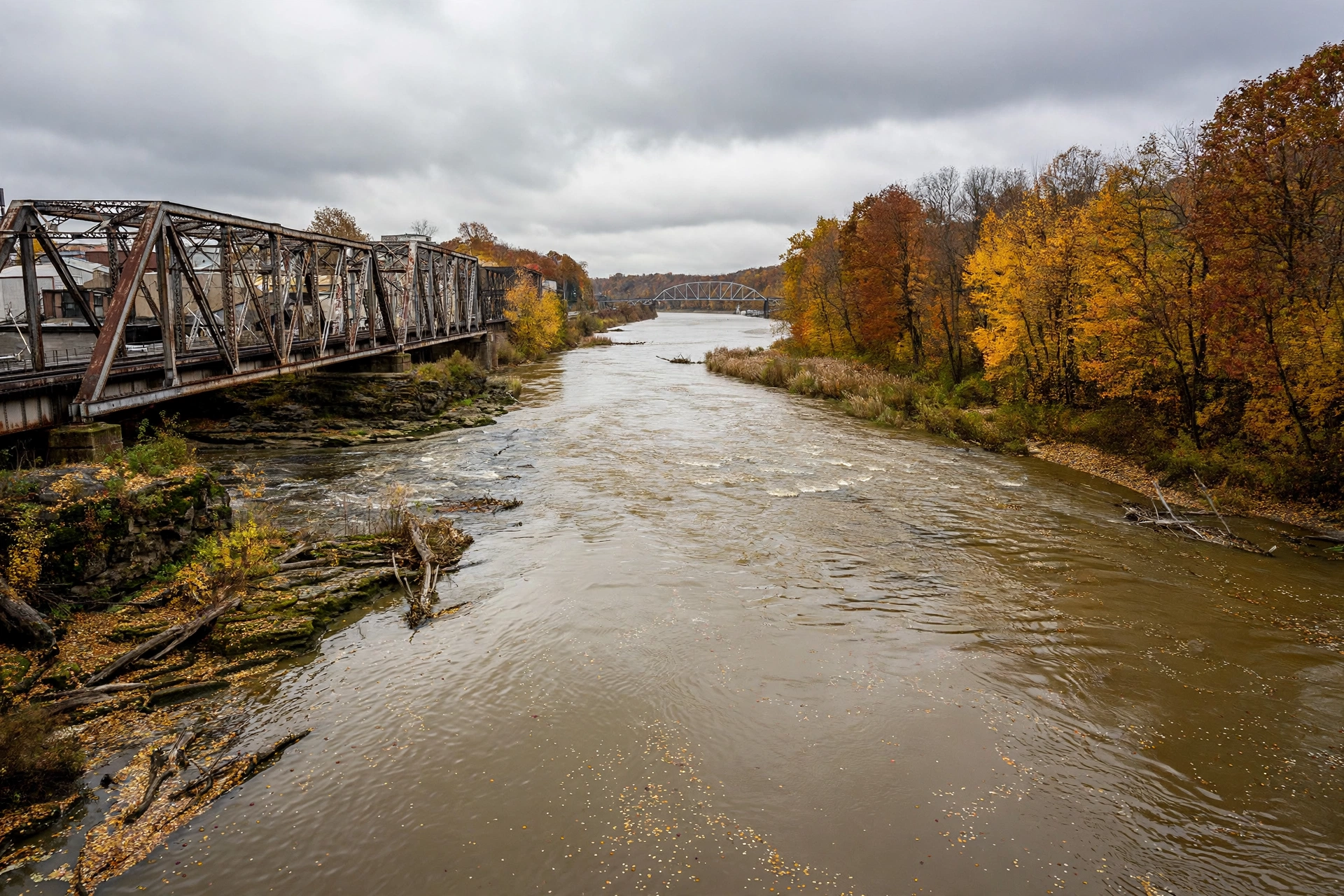
The Mahoning River, where the valley's steel mills once drove a century of homebuilding.
In Youngstown, the oldest laterals sit under the worker neighborhoods that ringed the mills: the south side, the west side, and blocks of early-1900s frame houses with stone foundations. Warren's downtown and near-downtown housing runs the same era, much of it clay tile with decades of root intrusion. Niles, a mill town in its own right, has dense blocks of early-1900s worker housing where the laterals have seen every winter since the town's industrial peak.
Later construction changed materials but not always fortunes. Post-war Youngstown and Warren added cast iron laterals that rust from the inside out, looking fine until the bottom of the pipe is paper-thin. The 1960s and 70s brought Orangeburg and thin-wall plastics to some subdivisions. And across the valley, northeast Ohio winters deliver the same freeze-thaw punishment as the rest of the region: water seeps into cracks and joints, freezes, expands, and wedges them wider, year after year.
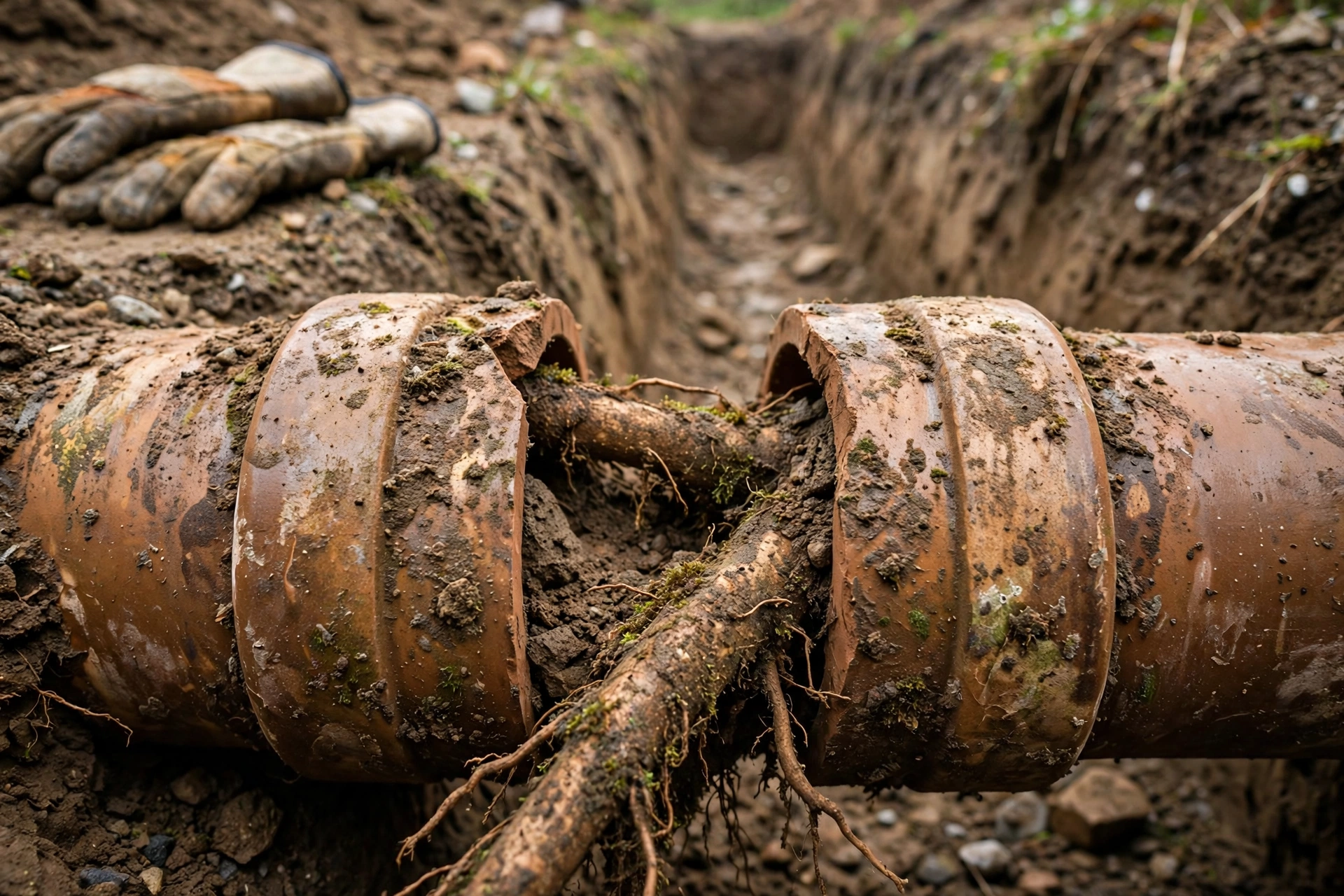
Excavated clay tile with root intrusion, the classic Mahoning Valley lateral after a century in the ground.
Youngstown's older core runs on combined sewers, one pipe for sewage and stormwater, and the city operates under a long-term federal plan to control wet-weather overflows into the Mahoning River. The City of Youngstown's wastewater department runs the collection system and treatment plant. Federal standards come from the U.S. EPA, and the Ohio EPA administers them statewide.
As everywhere, you own the lateral from your house to the public main. If one house backs up, the lateral is the prime suspect, and that is our territory. If the whole street backs up at once during a storm, the problem is likely in the public system, so call the city. One quick test: ask a neighbor. Solo backup means lateral; street-wide means main.
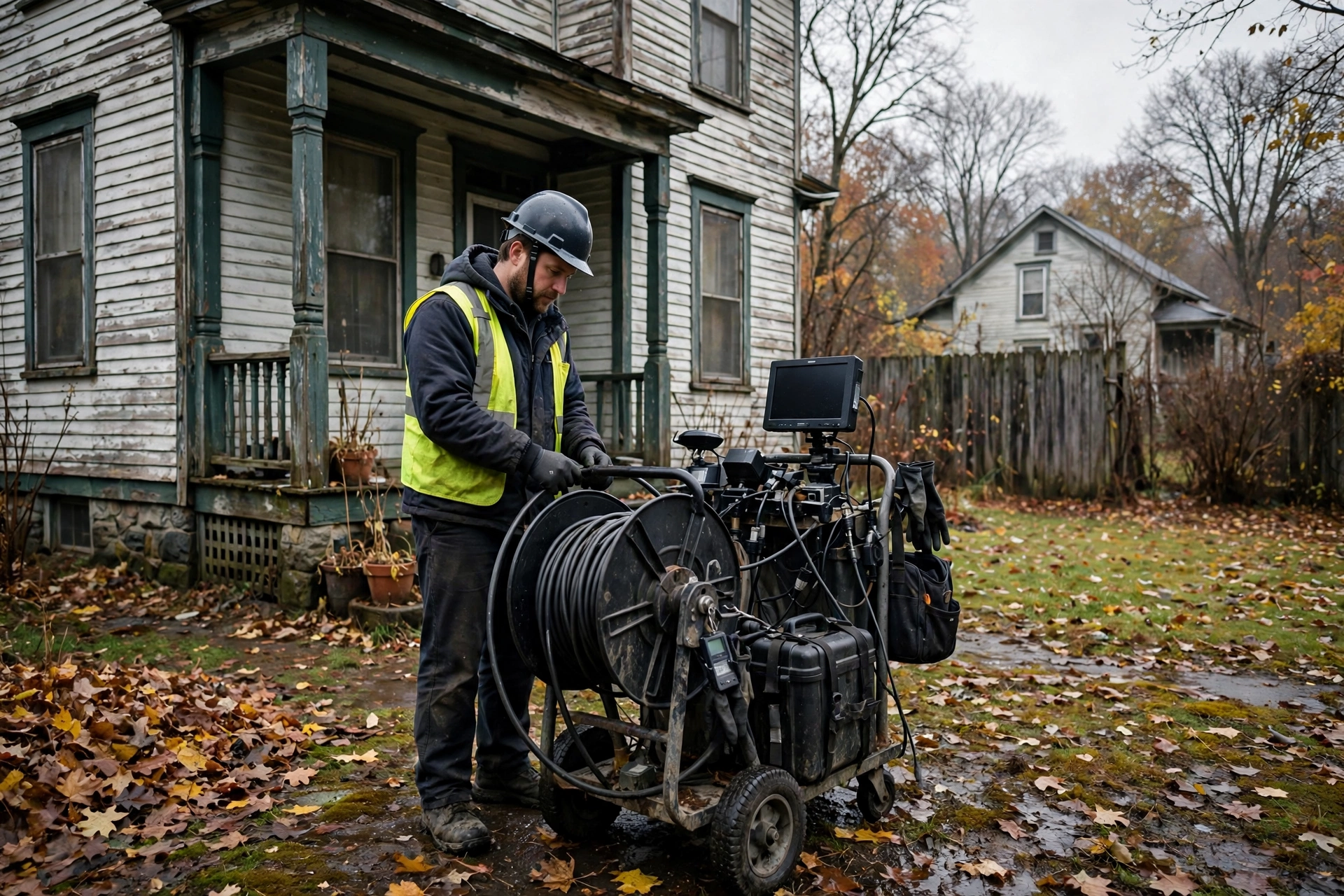
Same valley, different failure modes. Here is how sewer trouble shows up in each part of the metro, and how we fix it.
Where: Youngstown's older neighborhoods on combined sewers. The problem: one pipe carries sewage and stormwater together. The mechanism: heavy rain overloads the combined system, and pressure pushes sewage back toward the lowest drains in homes. The symptom: basement backups after downpours, sometimes with odors that linger for days. The fix: we camera the lateral, and where backups repeat we install a backwater valve that blocks main-line surges, or we replace a failing lateral trenchless.
Where: Warren's older streets. The problem: early-1900s clay tile laterals under a mature tree canopy. The mechanism: fine root hairs enter damp mortar joints and thicken year after year until they wedge joints apart and mat inside the pipe. The symptom: drains that slow and then recover, gurgling fixtures, roots showing up in the cleanout. The fix: hydro jetting clears the line so the camera can map the damage, and lining seals every joint for good.
Where: Niles's dense early-1900s blocks. The problem: original clay tile laterals, often running under narrow lots with little room for excavation. The mechanism: century-old mortar joints offset as soil settles, creating lips inside the pipe that catch solids and slow flow. The symptom: repeat clogs in the same fixtures, slow drains that snaking never quite fixes. The fix: pipe bursting replaces the line on its existing path, which matters on tight lots where a full trench would tear up everything.
Where: everywhere from Youngstown to Warren to Niles. The problem: northeast Ohio winters on brittle century-old pipe. The mechanism: water seeps into cracks and joints, freezes, expands, and wedges them wider, then spring thaw washes soil into the openings. The symptom: drains that slow every late winter, and lines that fail in clusters around February and March. The fix: a fall camera inspection catches cracks while they are still lining candidates instead of collapse jobs.
Three cities, one crew with a camera. Pick your city for local details.
The valley's anchor city: steel-era worker neighborhoods, combined sewers, and a century of clay tile.
An industrial city with early-1900s housing near downtown and post-war neighborhoods beyond it.
A compact mill town of dense worker-housing blocks, where original laterals run under tight lots.
Trenchless sewer repair replaces or lines your pipe with minimal digging, the right answer for the valley's old clay tile on tight mill-town lots. Sewer camera inspection shows you exactly what your lateral looks like before any repair work begins. Hydro jetting scours roots and buildup out of the line so the camera can see the real damage. And tree root removal clears the invaders, while lining or bursting keeps them from coming back.
Older Youngstown neighborhoods run on combined sewers that carry stormwater and sewage in one pipe. A hard storm can overload the system, and pressure pushes sewage back through the lowest drains in the house. A camera inspection shows whether your lateral is part of the problem, and a backwater valve can keep main-line surges out of your home.
Most likely vitrified clay tile with mortar joints, the standard for mill-town worker housing across the Mahoning Valley. After a century, the mortar crumbles, joints offset, and tree roots move in. A camera inspection shows exactly what you are dealing with, and these lines are often strong candidates for trenchless repair.
You own the lateral from your house to the public main, so lateral problems are ours to fix. The City of Youngstown runs the public sewer system and treatment plant. If one house backs up, suspect the lateral. If the whole street backs up at once, call the city, because the problem is likely in a public main.
Most trenchless jobs, lining or bursting, finish in one day. Traditional open-trench replacement usually takes two to four days, depending on length, depth, and what sits above the line. We put the timeline and the fixed plan in writing before any work starts.
Cities in the Mahoning Valley generally require permits for sewer lateral repair and replacement, with inspection before backfill in many cases. We pull the permits and coordinate inspections as part of every job, so the paperwork never falls on you.
Also serving Girard, McDonald, Lordstown, and the greater Youngstown metro. Major landmarks we work around include Mill Creek Park, the Mahoning River, the Covelli Centre, downtown Warren, and Eastwood Mall.
One inspection, one honest diagnosis, one upfront plan, anywhere in the Youngstown metro.
Call (614) 350-5706