From Cleveland's lake-effect winters to Cincinnati's hillsides, Ohio's soil and weather punish buried sewer lines. We repair and replace them, trenchless or traditional, with a camera inspection first and an upfront price before any work starts.
Last updated: October 13, 2026
One company for the whole lateral: from the cleanout at your house to the connection at the city main. Here are the services Ohio homeowners call us for most.
Fix or replace your sewer line through small access points instead of an open trench. Your yard, driveway, and landscaping stay intact.
Learn more →A resin-soaked liner goes inside your old pipe and hardens into a smooth, jointless new pipe: no digging, and roots can't get back in.
A bursting head breaks your old pipe apart underground while pulling a brand-new pipe in behind it. Ideal when the old line is too far gone to line.
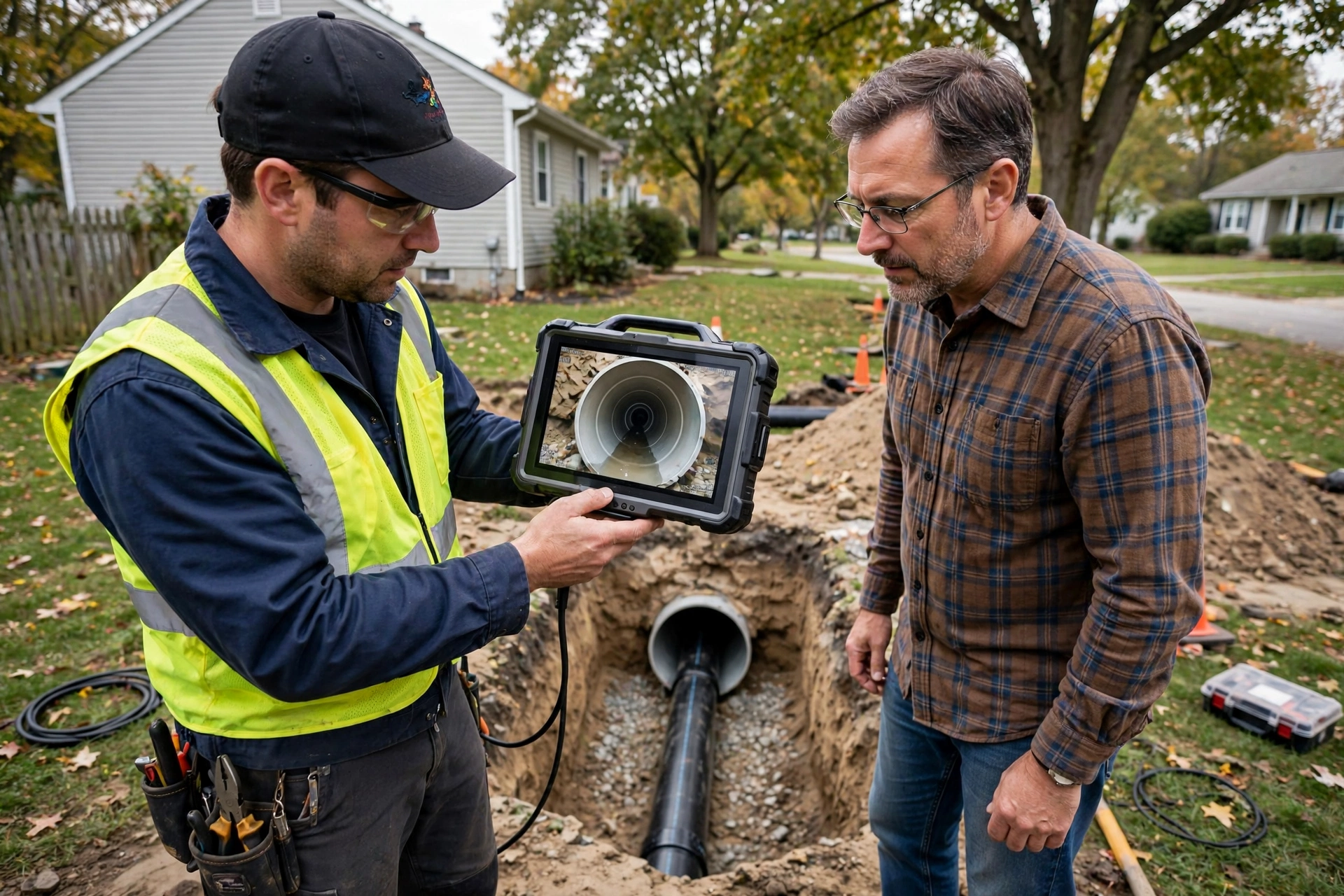
A waterproof camera travels your entire line and shows us exactly what's wrong, cracks, roots, bellies, collapses, so you never pay for guesswork.
High-pressure water scours grease, scale, and root masses off the inside of your pipes, restoring full flow without chemicals.
Ohio's maples and oaks hunt for water and find it in your sewer joints. We cut roots out mechanically, then fix the pipe so they can't return.
Sewage coming up through a basement drain can't wait. We clear the blockage, find the cause with a camera, and stop it from happening again.
Ohio basements and spring rains go together. A properly sized sump pump with battery backup keeps groundwater, and sewer backups, out of your basement.
Ohio isn't just unlucky, its geology and weather create a perfect storm for buried pipe. Here's what's actually happening underground.
Much of Ohio sits on dense glacial clay. Clay swells when wet and shrinks when dry, and that seasonal heaving pushes, twists, and shears buried pipe. Rigid clay tile and cast iron lines, common in homes built before 1970, can't flex with the movement, so joints separate and cracks open. Once a joint opens even a quarter inch, soil washes in and tree roots follow.
Water finds every hairline crack and open joint. When it freezes, it expands with enormous force and wedges the opening wider. Ohio's repeated freeze-thaw cycles, dozens per winter in most years, ratchet small defects into major breaks. February and March bring our busiest repair season, right as the ground thaws and weakened lines give way.
Three generations of pipe materials are still in the ground across the state. Pre-1960 homes often have vitrified clay tile with mortar joints that crumble, or cast iron that rusts from the inside out. The 1960s–70s brought Orangeburg, a tar-paper pipe that flattens and collapses after 50 years. If your home is over 40 years old and the sewer line has never been inspected, a camera look is the smartest money you can spend.
Unlike southern states, most Ohio homes have basements, and the sewer lateral exits through the basement wall below grade. That makes the basement floor drain the lowest point in the system. When the main line clogs or the city sewer surcharges during a storm, sewage backs up there first. A backwater valve on the lateral and a reliable sump pump are the two best defenses, and we install both.
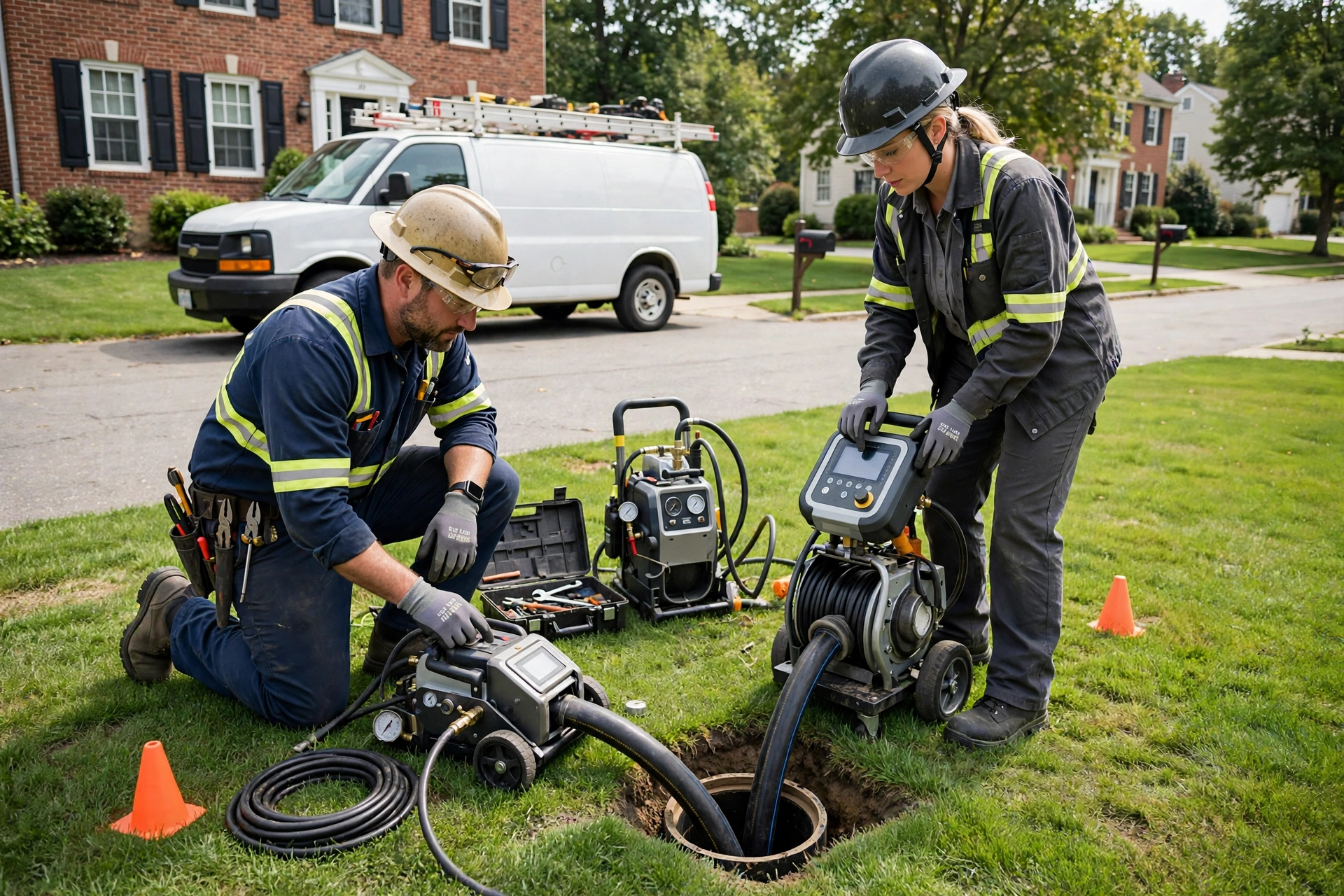
You'll always know what's wrong, what it costs, and what happens next before we lift a shovel, or a liner.
We run a camera through your entire line and record everything. You watch the footage with us: no taking our word for it.
We tell you exactly what's wrong, in plain language, and whether it's a spot repair, lining, bursting, or full replacement situation.
You get one written price before work starts. It doesn't change halfway through the job.
Most trenchless jobs finish in a day. Traditional replacements take longer, and we'll tell you the timeline upfront.
We camera the finished line, flow-test every fixture, and walk you through what was done before we leave.
Every job ends the same way: we show you the camera footage of the finished line before we leave.
Both methods fix sewer lines permanently. The right choice depends on your pipe's condition, your property, and your budget.
Trenchless repair, pipe lining or pipe bursting, wins whenever the line runs under something expensive: a driveway, a patio, mature landscaping, or a sidewalk the city will charge you to replace. It also wins on speed, most jobs finish in a single day. If your clay or cast iron line is cracked, root-invaded, or even partially collapsed, trenchless usually handles it. Here's exactly how both trenchless methods work.
Traditional excavation still has its place. If the line was installed with the wrong slope, has severe bellies in multiple spots, or runs somewhere we can't get trenchless equipment to, digging it up and starting fresh is the honest answer. Some collapsed Orangeburg lines fall in this camp too. We'll tell you straight which category you're in, the camera footage makes it obvious, and we show it to you.
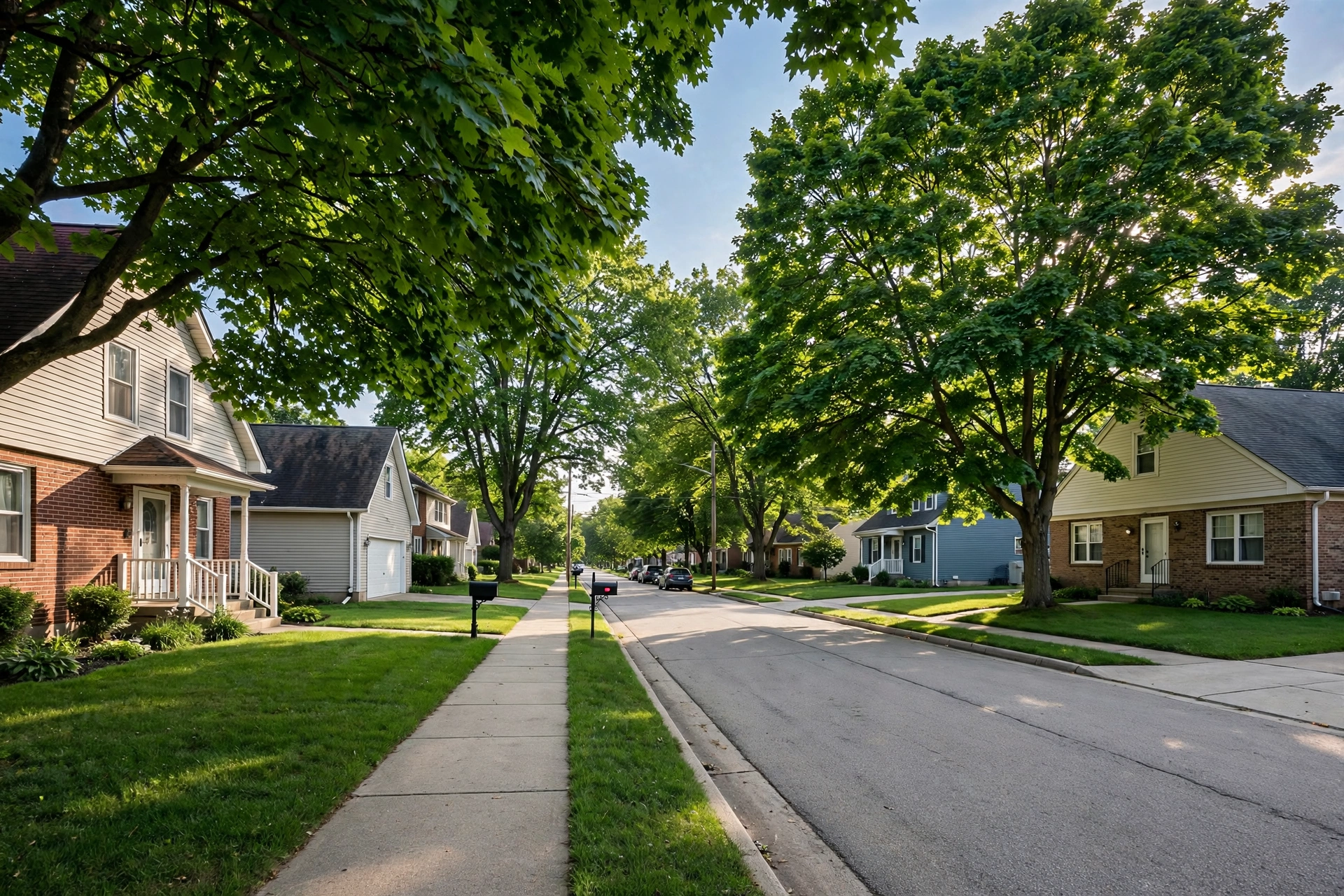
From Cleveland to Cincinnati, Ohio neighborhoods share the same underground problem: aging sewer lines in unforgiving soil.
No torn-up yard. No week-long project. Here is what homeowners across Ohio actually see when we are done.
Most trenchless repairs finish in one day. A camera inspection takes about an hour. Traditional excavation takes longer, typically two to four days depending on depth and length, because digging, pipe laying, and backfill each take real time.
With trenchless methods, no. We dig one or two small access pits, usually 4 by 4 feet, and everything else happens underground. Your lawn, driveway, and landscaping stay intact. Traditional digging requires an open trench along the pipe path, which we backfill and rough-grade when done.
We run the camera through the finished line and show you the footage before we pack up. You see the new pipe interior with your own eyes. Every job ends with a walkthrough: what we found, what we fixed, and what to watch for going forward.
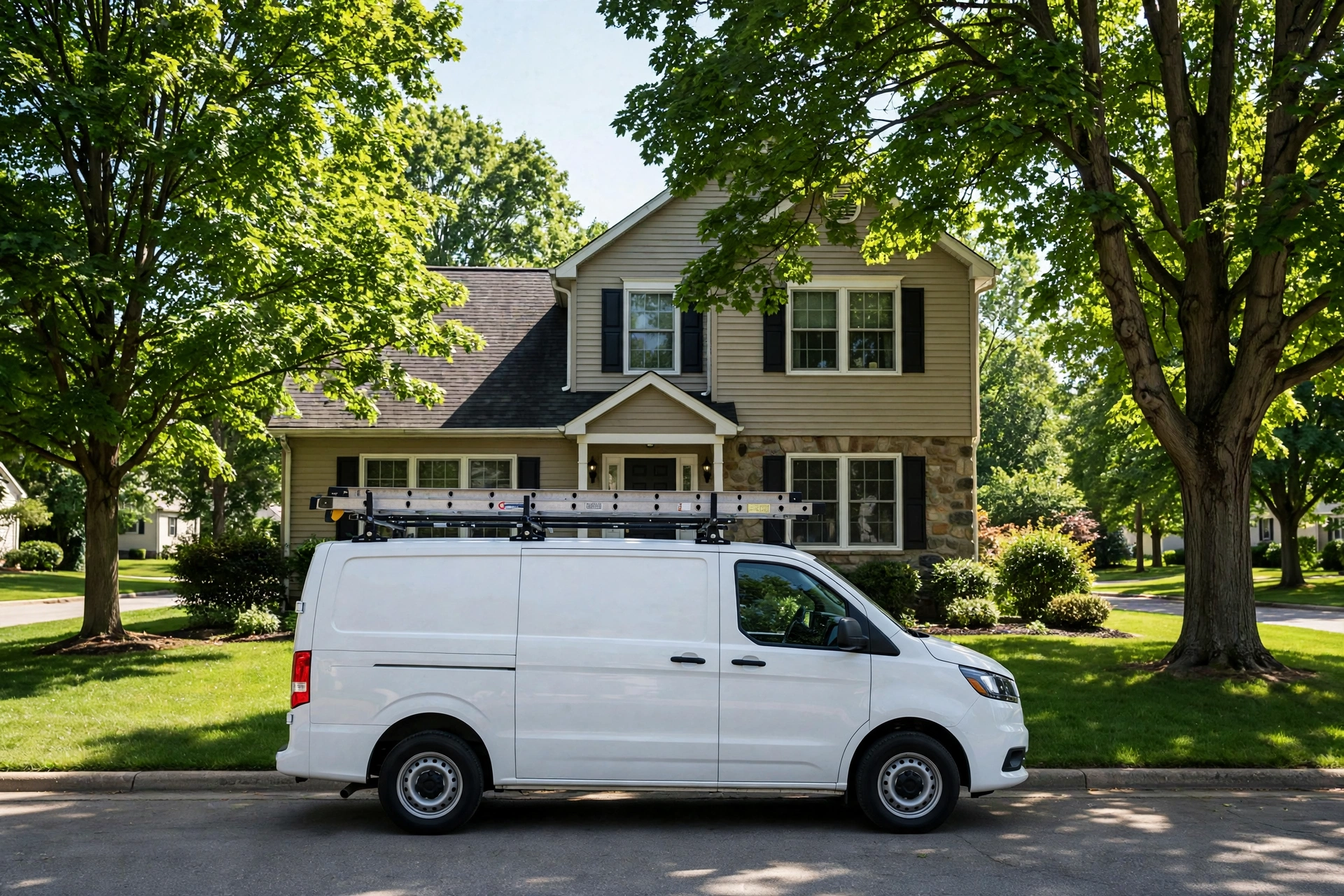
Done in a day, no trench across the lawn: this is what a finished trenchless job looks like.
Not the cheapest quote in town. The one you can check.
Yes, on every job. No exceptions. Anyone who prices your sewer repair without putting a camera in the ground first is guessing, and you pay for their guess. We show you the footage, point out exactly what's wrong, and price what we see.
Yes, in writing. The number we give you after the camera inspection is the number on the invoice. If we find something unexpected mid-job, we stop, show you, and agree on the change before continuing. No surprises.
Both. Some companies only dig because that's all they own equipment for. Some only do trenchless because digging eats their margins. We do both, so the recommendation follows your pipe's condition, not our equipment list.
We'll tell you straight. Collapsed Orangeburg, severe bellies, wrong slope, no access for equipment: these are real reasons to dig, and we'll explain exactly which one applies to you, with the camera footage to prove it.
If you're in Ohio, yes. Cleveland to Cincinnati, Toledo to Athens, we run crews statewide. One company, one phone number, same process everywhere.
We camera the finished line and show you before we leave. You see the new pipe with your own eyes. That's the whole proof, no trust required.
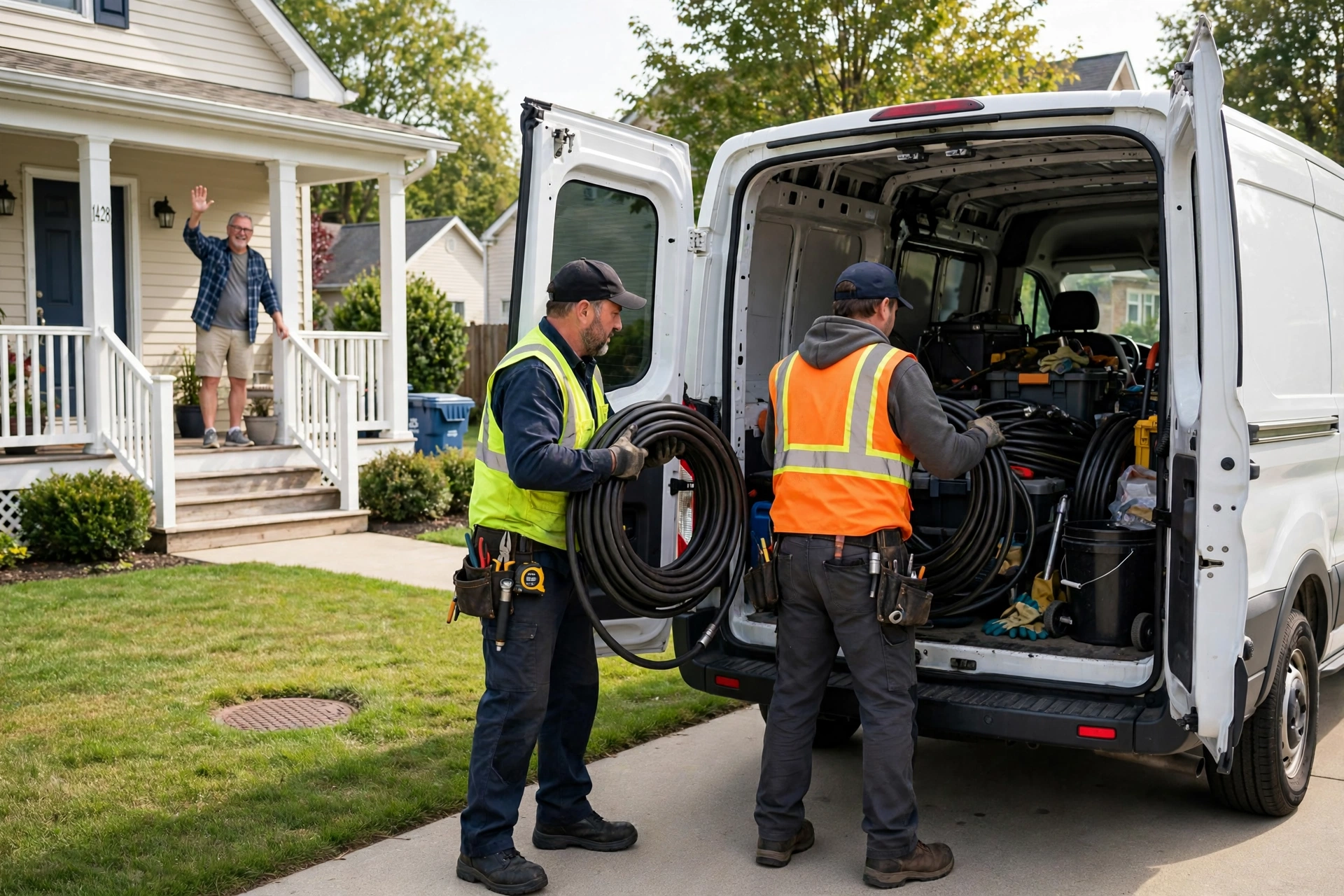
Running crews across the whole state: from the Lake Erie shore to the Ohio River. These are the regions we cover.
Our crews run statewide. If you're in Ohio, we can get to you.
Yes. Ohio Sewer Masters is built as a statewide company, running sewer line repair, replacement, and inspection work across Ohio: trenchless and traditional. If you're in Ohio and your sewer line is failing, call (614) 350-5706 and we'll tell you straight whether we can get to you.
Ohio's freeze-thaw cycles are brutal on buried pipe. Water seeps into tiny cracks and joints, freezes, expands, and wedges those cracks wider, winter after winter. Clay tile and cast iron lines in older homes take the worst of it. That's why we see a spike in cracked and separated sewer lines every February and March across the state.
In most cases, yes. Trenchless methods, pipe lining and pipe bursting, repair or replace your sewer line through one or two small access points instead of an open trench. Your driveway, landscaping, and sidewalk stay put. A camera inspection first tells us whether your line is a candidate.
It comes down to the pipe's overall condition, which we check with a camera. One bad spot in an otherwise solid line usually means a spot repair. Widespread cracking, collapse, or root intrusion through every joint usually means replacement makes more sense. We show you the camera footage and give you an upfront price for each option, then you decide.
They can. Most Ohio homes have basements, and the sewer lateral usually exits through the basement wall below grade. When the line clogs or breaks, sewage has nowhere to go but back up into the lowest drain, often a basement floor drain or laundry tub. A backwater valve and a working sump pump are the two best defenses.
Call (614) 350-5706 and tell us what's happening. Sewage backing into the home jumps to the front of the line, we route the nearest available crew and give you an honest arrival window. For non-emergencies we typically schedule inspections within a few days.
One call, one honest diagnosis, one upfront price. That's how we work, from Cleveland to Cincinnati.
Call (614) 350-5706