Trenchless Sewer Repair in Ohio
Your sewer line is failing, but your yard doesn't have to. Trenchless repair fixes or replaces the pipe underground through small access points, with no trench across your lawn, driveway, or landscaping.
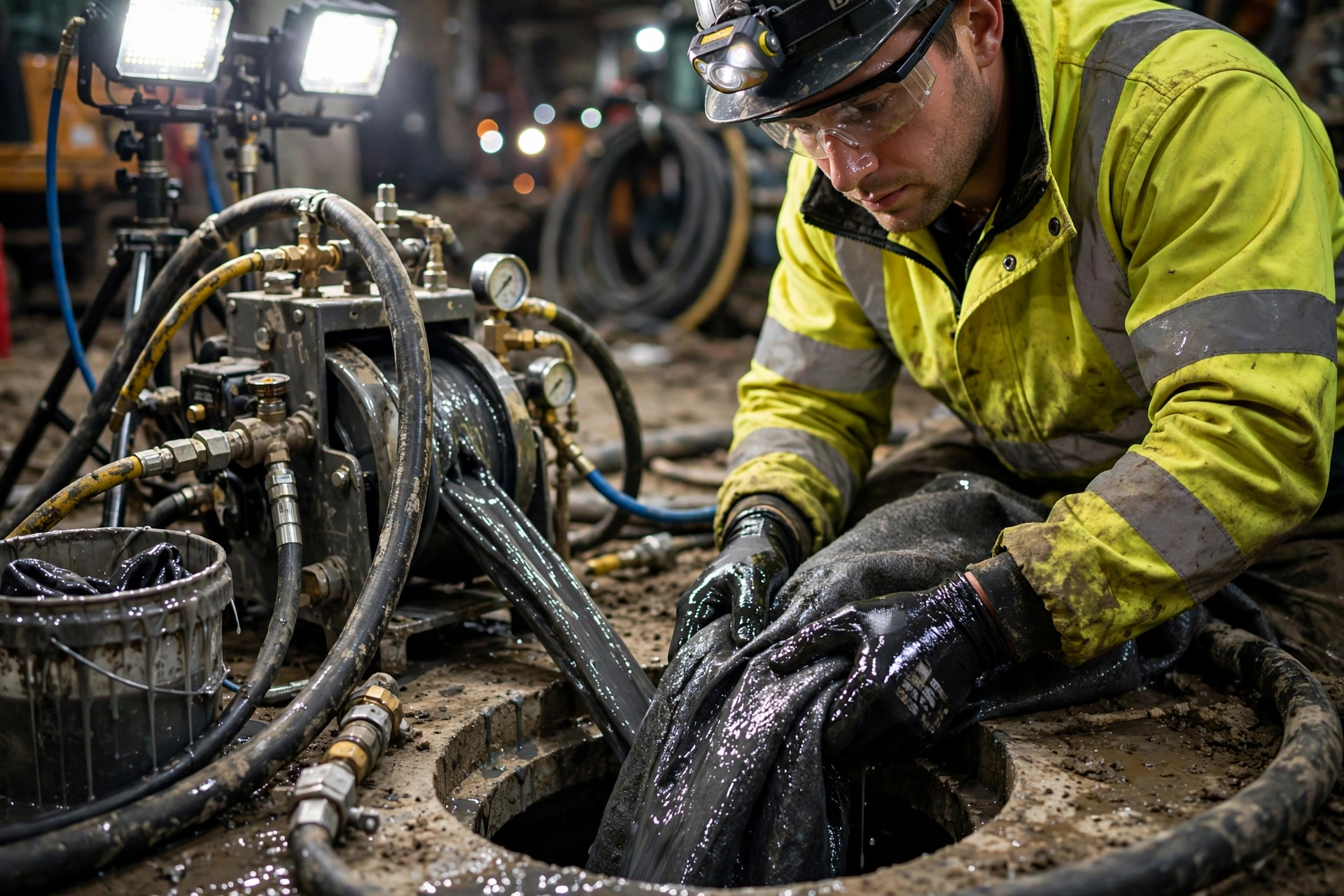
Your sewer line is failing, but your yard doesn't have to. Trenchless repair fixes or replaces the pipe underground through small access points, with no trench across your lawn, driveway, or landscaping.
Last updated: October 13, 2026
Trenchless sewer repair is a set of methods that fix or replace a sewer line through small access points instead of an open trench.
The main signs are slow drains across the whole house, gurgling toilets, sewage smells in the basement or yard, a soggy or sunken patch of lawn, and backups that keep returning after snaking. Here is what each symptom looks like, and what causes it.
"Trenchless" covers two different methods. Pipe lining (CIPP) builds a new epoxy pipe inside your old one, and it suits lines that still hold their shape. Pipe bursting shatters the old pipe and pulls brand-new pipe through, which handles collapsed or undersized lines. Here is the plain-language breakdown.
Pipe lining, cured-in-place pipe, or CIPP, creates a new pipe inside your old one. We saturate a flexible liner with epoxy resin, feed it into the damaged line, inflate it against the old pipe walls, and cure it with hot water, steam, or UV light. The result is a smooth, jointless pipe-within-a-pipe. Lining needs the old pipe to roughly hold its shape, so it suits cracked, root-invaded, or corroded lines that haven't fully collapsed. Diameter shrinks slightly, but the slick new surface actually flows better than rough old clay or cast iron.
Pipe bursting replaces the pipe entirely without digging it up. A powerful bursting head travels through the old line, shattering it outward, while new high-density polyethylene (HDPE) pipe follows right behind in the same path. Bursting handles worse damage than lining, including collapsed sections, and it can upsize the line if your old pipe was undersized. It needs entry and exit pits, so there's slightly more surface disruption than lining, but still nothing like an open trench.
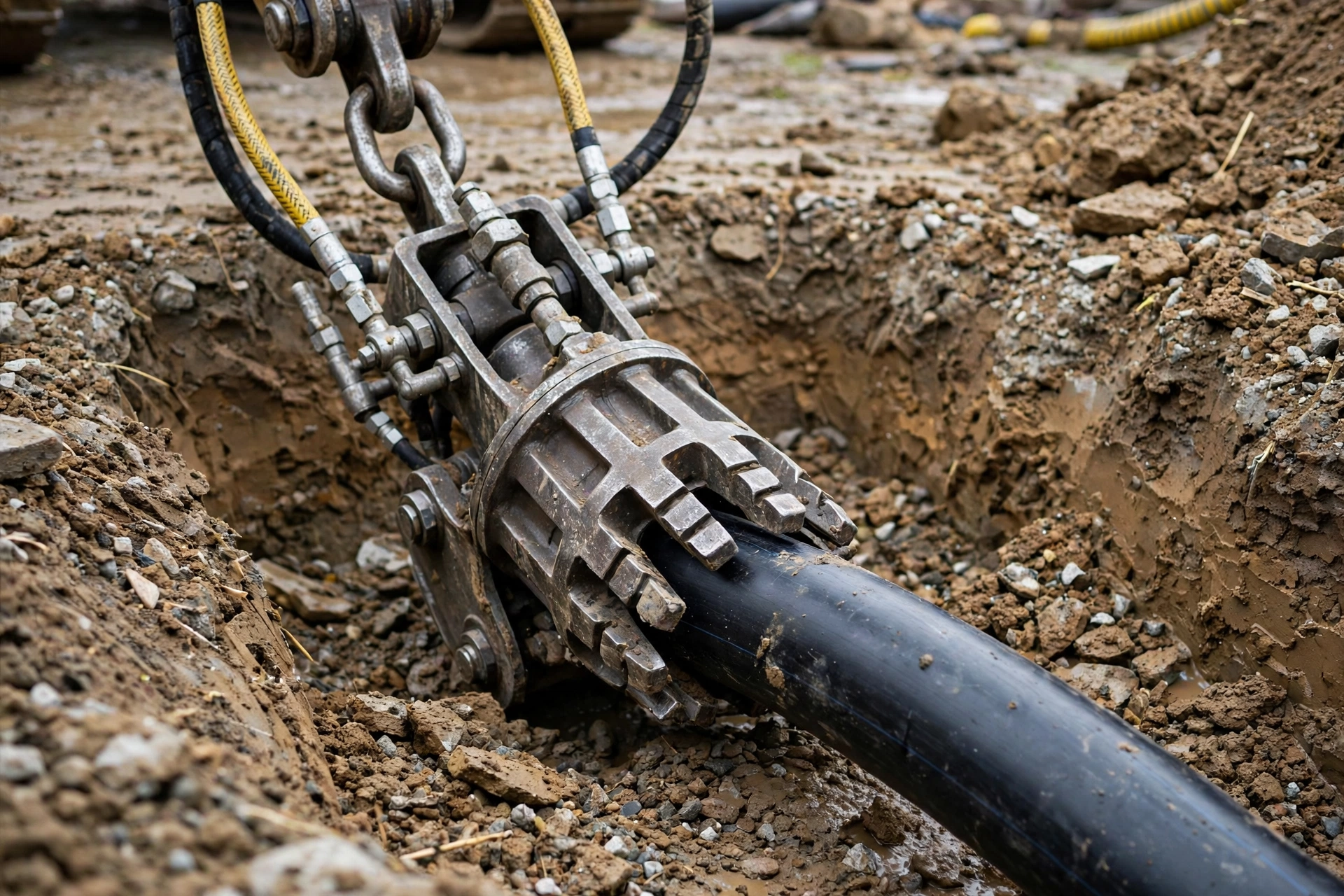
The bursting head shatters the old pipe outward while new HDPE pipe follows right behind: all underground.
The camera inspection decides. Lining wins when the pipe holds its shape and you want minimum disruption. Bursting wins when the pipe is collapsed, badly deformed, or undersized. Sometimes a line needs both, lining for one stretch, bursting for another. We show you the footage and explain the recommendation before you commit to anything.
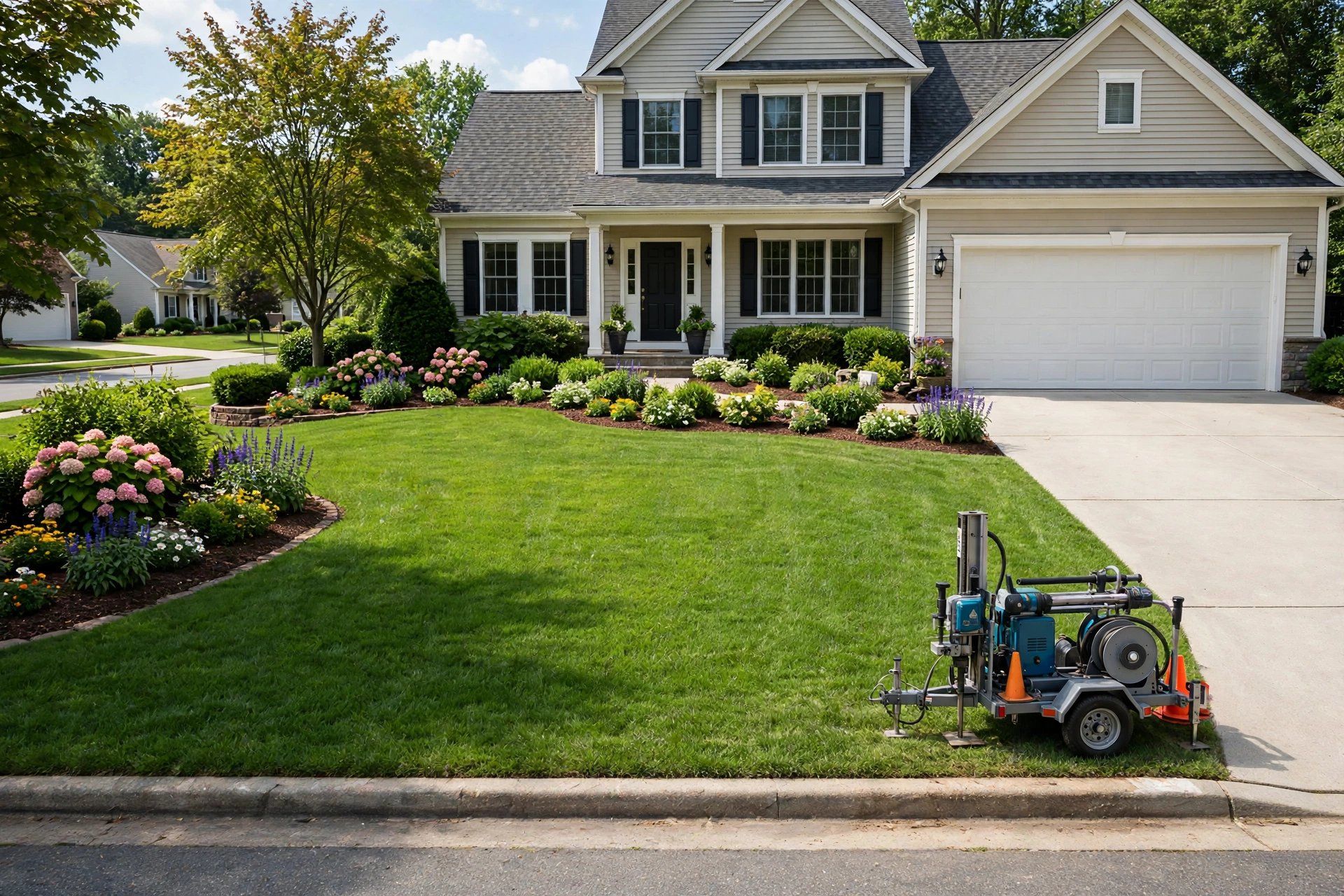
The biggest reason Ohio homeowners choose trenchless: the property looks exactly the same when we leave.
On lifespan: a CIPP liner carries a 50-year design life per industry material standards, and the HDPE pipe installed by bursting is engineered for 50 years or more. If you are weighing trenchless against digging a trench, here is the direct comparison.
| Factor | Trenchless | Traditional digging |
|---|---|---|
| Digging required | Small access points or two entry pits only | Full open trench along the line's path |
| Typical timeline | Often finished in one day | Typically two to five working days for a home |
| Landscape impact | Minimal: lawn, driveway, and landscaping between access points stay intact | Significant: the trench path is dug up and must be restored |
| Best suited for | Lines with repairable damage, and properties where digging would be costly to restore | Collapsed lines, wrong slope, or a route that must change |
Spot repair makes sense when the damage is limited to one section. Go with lining, bursting, or full replacement when damage spans the whole line, the grade is wrong, or fixes keep failing. Patching a line that is failing everywhere wastes money. These are the rules we actually use:
The honest version: we make more money on full replacements, and we'll still talk you out of one if a spot repair or lining will genuinely last. A camera doesn't lie, and neither do we.
Camera through the full line, recorded. We mark depths and defect locations from above ground.
Hydro jetting or mechanical descaling clears roots, scale, and sludge so the liner or bursting head has a clean path.
Liner goes in and cures, or the bursting head pulls new HDPE through, through small access points, not a trench.
Post-install camera run proves the new line is continuous, properly seated, and flowing. You watch it with us.
Access points get backfilled and patched. Most trenchless jobs finish in one day, and your yard looks like we were never there.
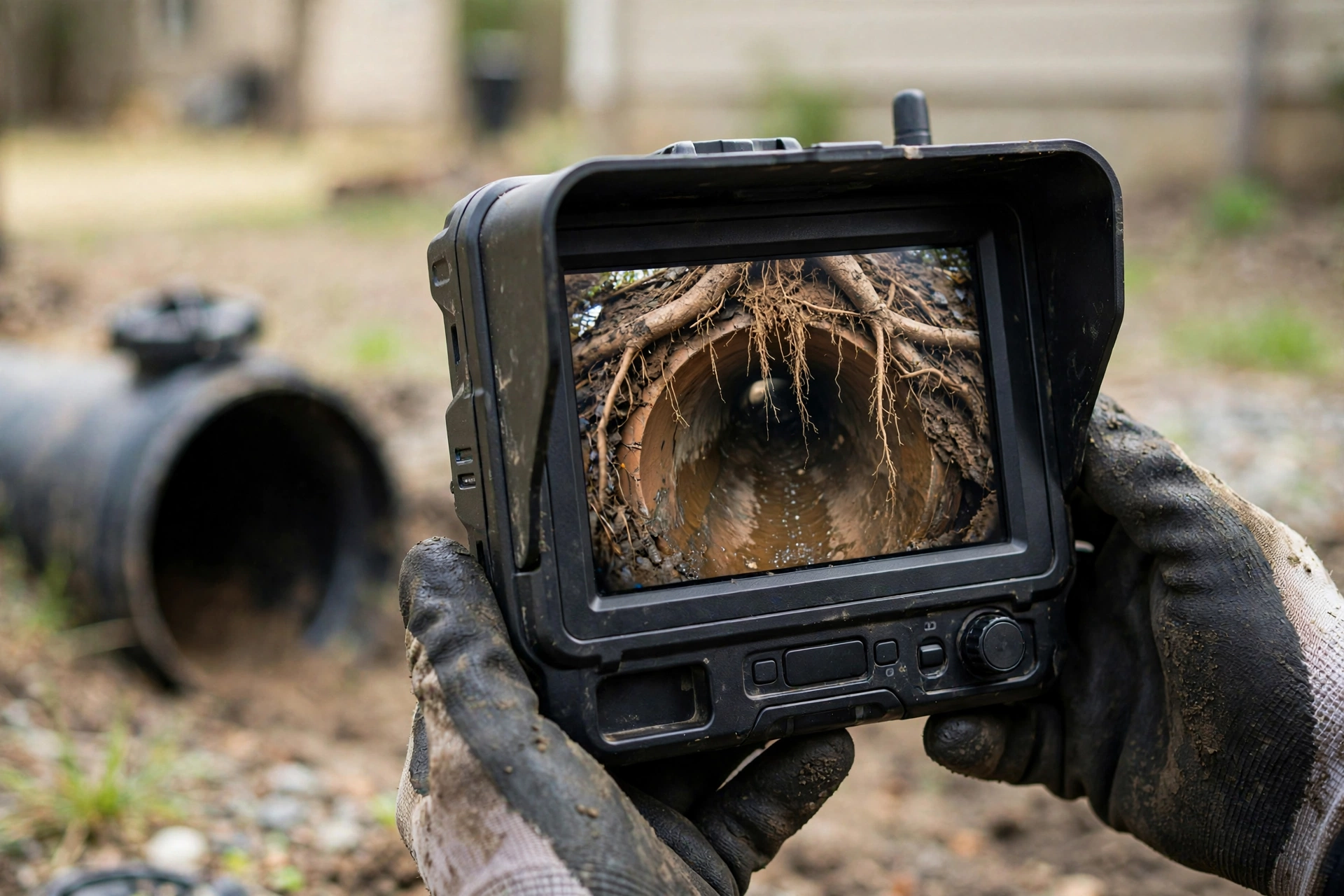
The post-install camera run proves the new line is continuous and flowing, you watch it with us.
Let's be straight: anyone quoting a price without seeing your line is guessing. But homeowners deserve a realistic range before they call. According to widely published national pricing data, trenchless sewer work typically runs $80 to $250 per linear foot, depending on method, pipe diameter, depth, and access. A straightforward 50-foot lining job often lands between $4,000 and $12,500 all-in. Pipe bursting usually costs more per foot than lining because of the equipment and pits involved, but it replaces the pipe entirely.
What moves your price up or down in Ohio specifically:
If your home uses a septic system instead of a city sewer connection, the U.S. EPA publishes homeowner guidance on septic and sewer systems explaining how the two differ and what each owner is responsible for.
Our full cost breakdown, including when trenchless actually costs less than digging, is in our Ohio sewer repair cost guide. And the only number that matters is yours: call (614) 350-5706 for a camera inspection and a written, fixed price.
Trenchless repair in Ohio typically runs $80 to $250 per linear foot depending on the method, pipe diameter, depth, and access, so a 50-foot line might land anywhere from $4,000 to $12,500. Those are statewide ballpark ranges, not a quote. A camera inspection of your specific line is the only way to get an exact price, and we give it to you in writing before work starts.
A properly installed CIPP liner or new HDPE pipe from pipe bursting is engineered to last 50 years or more. The new surface is jointless and seamless, which removes the weak points, separated joints and cracks, where roots and soil used to get in. It typically outlasts the original pipe it replaced.
It depends on the collapse. Pipe bursting handles many collapsed sections because the bursting head shatters the old pipe and pulls new pipe through the same path. Pipe lining needs the old pipe to roughly hold its shape, so a fully flattened or missing section usually rules lining out. The camera inspection tells us which category you're in.
Yes, clay tile and cast iron are actually the most common candidates we see in Ohio. Lining works inside both materials as long as the pipe still holds its basic shape. Bursting replaces either material entirely with new HDPE pipe. Orangeburg (tar-paper pipe from the 50s–70s) can usually be burst but often can't be lined, since it's too deformed.
Yes. Trenchless crews work year-round in Ohio. Resin curing is temperature-managed with hot water, steam, or UV equipment, so cold air doesn't stop a lining job. Frozen ground can actually make access easier: no mud. The main winter constraint is the same as any outdoor work: severe storms can delay a day, and we'll tell you upfront.
Almost always, yes. Ohio cities and counties require permits for sewer lateral work, trenchless included, and most require an inspection before the line is backfilled or put back in service. We pull the permits and schedule the inspections as part of the job, so you don't deal with the paperwork.
If trenchless isn't the whole story, these usually come up on the same jobs: a sewer camera inspection to diagnose first, hydro jetting to clear the line before lining, and tree root removal when Ohio's maples have packed the joints. For lines too far gone for any trenchless method, traditional excavation and replacement is still on the table, we'll tell you honestly which camp you're in.
One camera inspection gives us, and you, the real answer. Then you get a fixed written price before any work starts.
Call (614) 350-5706