Sewer Line Repair in Cleveland, OH
Lake-effect winters, century-old clay tile, and stone foundations. Cleveland is uniquely hard on sewer lines. We diagnose with a camera, fix it trenchless or traditional, and give you one upfront price.
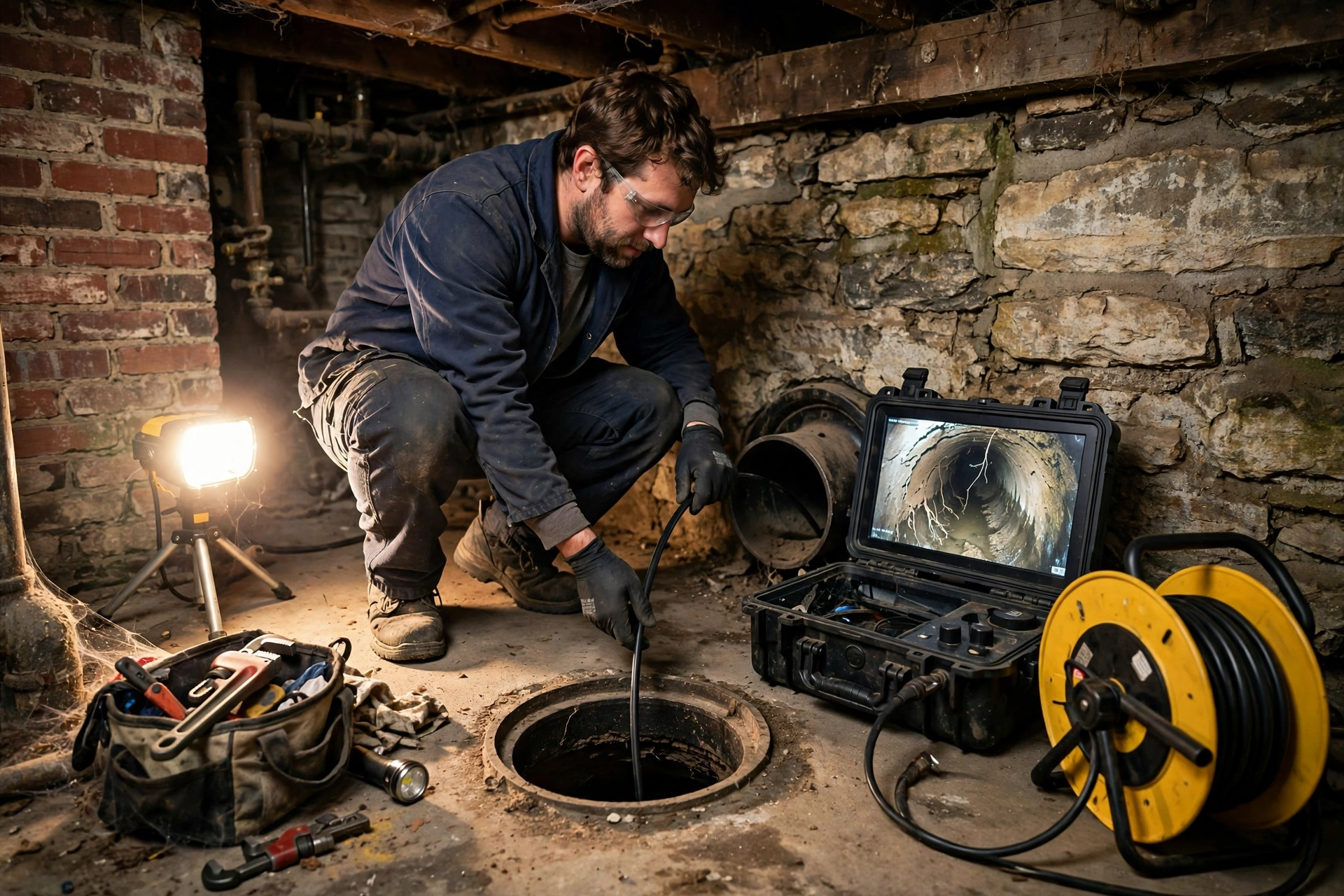
Lake-effect winters, century-old clay tile, and stone foundations. Cleveland is uniquely hard on sewer lines. We diagnose with a camera, fix it trenchless or traditional, and give you one upfront price.
Last updated: October 13, 2026
It's not bad luck, it's Lake Erie. Cleveland's winters deliver exactly the conditions that destroy buried clay and castiron pipe, year after year.
Cleveland sits in the lake-effect snow belt, which means long, wet winters with temperatures seesawing above and below freezing for months. Every cycle works like this: meltwater and groundwater seep into hairline cracks and mortar joints in your sewer line, the temperature drops, the water freezes and expands with tremendous force, and the crack wedges a little wider. Then it thaws, loose soil washes into the opening, and the next freeze starts from a worse position. Run that loop dozens of times per winter and even solid pipe eventually gives way.
The damage clusters in late winter for a reason. February into March is when the ground starts thawing from the top down while deeper soil is still frozen, water has nowhere to drain, hydrostatic pressure peaks, and weakened lines fail. If your drains slowdown every year around the same time, you're watching this cycle in real time. A camera inspection in fall, before freeze season, catches the cracks while they're still lining candidates instead of collapse jobs.
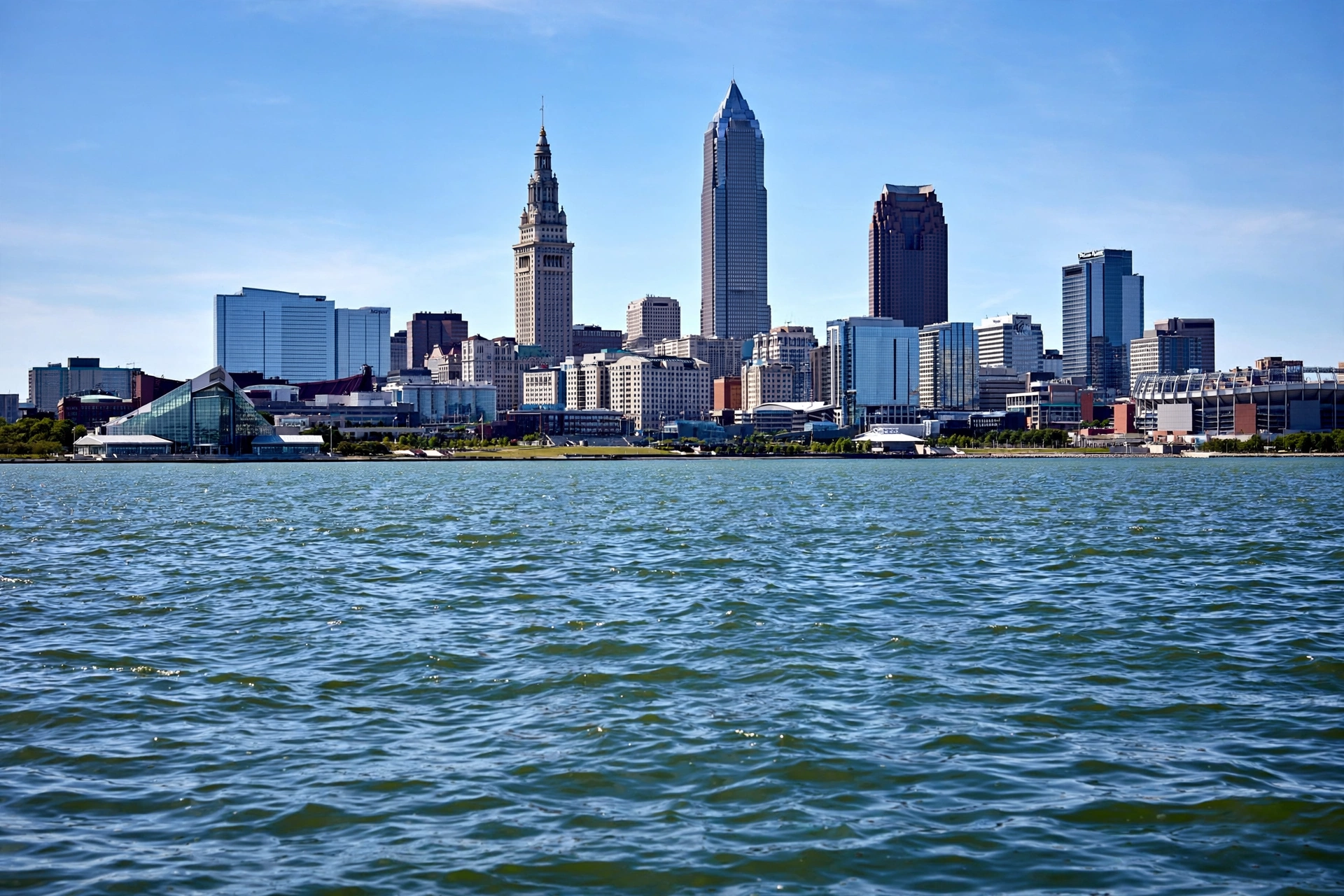
Cleveland's lake-effect winters are the number-one enemy of the city's century-old sewer lines.
Walk through Ohio City, Tremont, or West Park and you're looking at houses built between 1890 and 1940, and sewer lines to match. The typical Cleveland lateral from that era is vitrified clay tile with mortar-sealed joints, running from a stone or brick foundation wall out to the street. After 80 to 130 years, the mortar joints are crumbling, the clay sections have shifted with the soil, and the mature street trees, maples, oaks, elms, have spent decades pushing root hairs into every damp joint.
Mid-century homes in neighborhoods like West Park and the near-west suburbs often have cast iron inside transitioning to clay outside, and cast iron rusts from the inside out, it looks fine until the bottom of the pipe is paper-thin. The 1960s and 70s brought Orangeburg in some developments, a tar-paper pipe that flattens into an oval and eventually collapses. Whatever's down there, the camera tells us in about an hour, and the footage doesn't care what decade your house was built in.
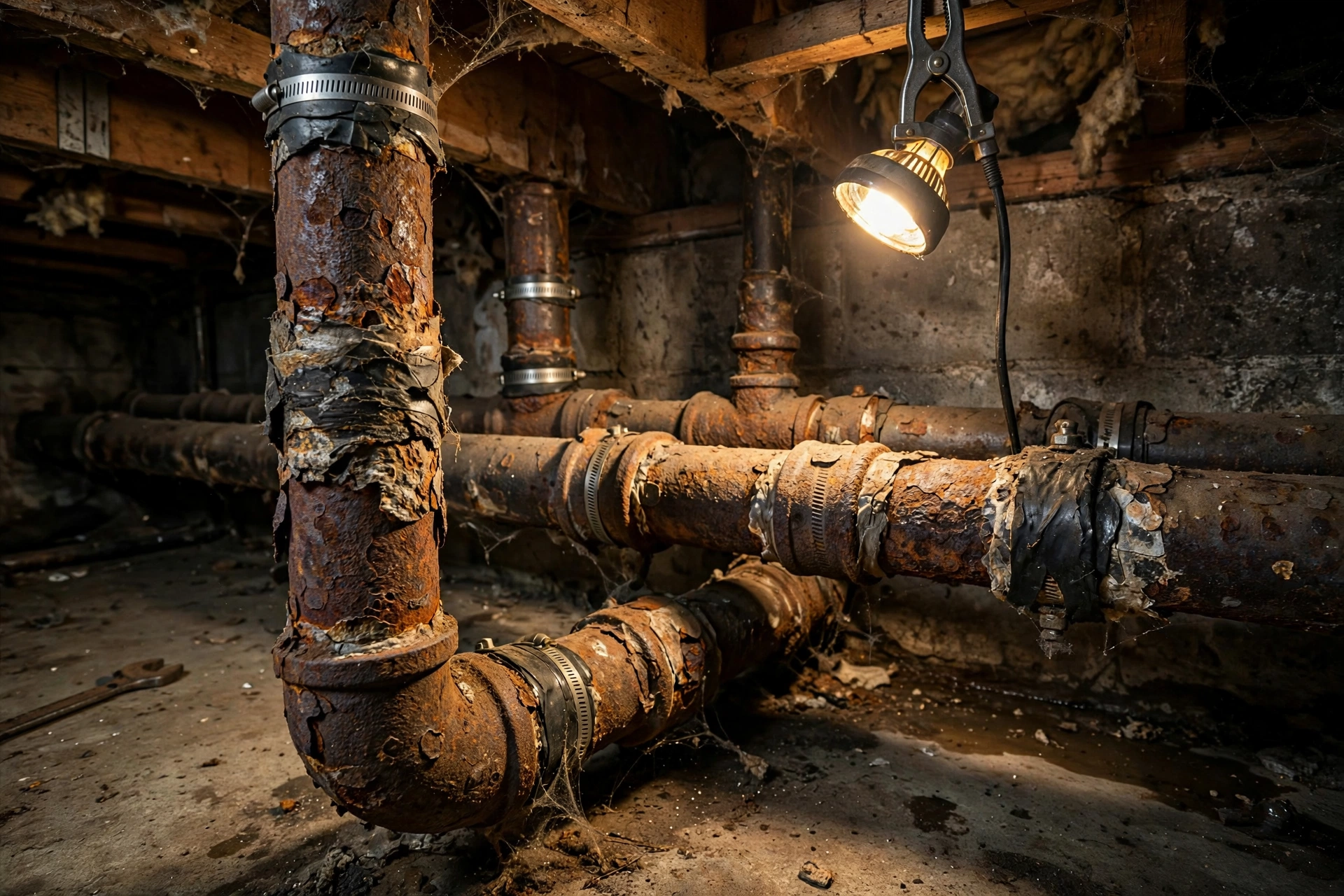
Cast iron rusts from the inside out, it looks fine until the bottom of the pipe is paper-thin.
Age of housing plus tree canopy predicts trouble better than anything. Ohio City and Tremont combine 120-year-old clay laterals with some of the city's biggest street trees, root intrusion is practically a rite of passage there. Detroit-Shoreway and Glenville have similar-era housing stock with the same clay-tile story. In Lakewood and Shaker Heights, the housing is slightly newer but the mature trees are relentless, and we see joint separation wherever clay tile meets shifting soil.
Parma's post-war ranches and split-levels tend toward cast iron laterals hitting the end of their lifespan right about now. And anywhere near the lake, Edgewater, the near-west side, the high water table keeps soil saturated, which accelerates joint failure and makes basements the first place a backup shows up. If you live near the West Side Market corridor or up around Cleveland Hopkins International Airport, the housing eras differ but the prescription is the same: camera first, then fix what's actually broken.
You own the sewer lateral from your house to where it connects with the public main, usually at the street or sidewalk. Everything in between, including the part under your yard and driveway, is your responsibility to maintain and repair.
Cleveland Water handles your drinking water, not sewers. The Northeast Ohio Regional Sewer District (NEORSD) manages the regional sewer system, treatment, and stormwater program. NEORSD was formed in 1972 and now operates three wastewater treatment plants serving more than one million people across 62 communities in Cuyahoga, Summit, and Lorain counties. Federal clean-water standards come from the U.S. EPA; the Ohio EPA administers them in Ohio and sets the statewide wastewater standards these systems operate under. If sewage is backing up in multiple homes on your street at once, that's likely a main-line problem, call NEORSD. If it's just your house, the lateral is the prime suspect, and that's our territory. One quick way to tell: ask a neighbor. Solo backup means lateral; street-wide means main.
Permits run through the City of Cleveland for lateral work, with inspection typically required before backfill. We pull the permits and schedule the inspection as part of the job.
Cleveland Water treats Lake Erie surface water and reports hardness around 7 grains per gallon (about 125 mg/L), moderately hard. That mineral load leaves gradual scale inside older pipes, narrowing the bore and giving grease and solids a rough surface to catch on. For Cleveland's many cast iron laterals, the longer-running threat is corrosion: treated water works on iron from the inside out, so century-old lines often look intact outside while the pipe bottom is paper-thin, which is exactly what a camera shows.
Maintain them on the lake's calendar, not yours. In Cleveland, spring snowmelt and rain push groundwater into every cracked joint, fall sends tree roots hunting for moisture before dormancy, and lake-effect freeze-thaw wedges small cracks wider all winter. A camera inspection every few years, plus the seasonal habits below, catches most problems while they are still cheap.
Cleveland's lake-effect winters deliver dozens of freeze-thaw cycles per season. Water seeps into pipe cracks and joints, freezes, expands, and wedges them wider, then thaws and lets soil wash in. By February and March, weakened clay tile and cast iron lines start failing in clusters. If your drains slow down every late winter, that's the pattern.
Most likely vitrified clay tile with mortar joints, possibly transitioning to cast iron where it exits your stone or brick foundation. After a century, the mortar joints crumble, roots from street trees push in, and sections offset. A camera inspection shows exactly what you're working with, many 1920s Cleveland laterals are prime candidates for trenchless lining.
In Cleveland, you own the lateral from your house to the connection at the public main: that part is yours to maintain. Cleveland Water handles drinking water; the Northeast Ohio Regional Sewer District (NEORSD) manages the regional sewer system and stormwater. If the problem is in your lateral, call a sewer contractor like us at (614) 350-5706. If sewage is coming up through multiple homes on your street, call NEORSD, it may be a main-line issue.
Yes. The City of Cleveland requires permits for sewer lateral repair and replacement, and the work typically needs inspection before backfill. We pull the permits and coordinate inspections as part of every job, it's baked into the written price, not an add-on surprise.
They don't usually break sound pipe, they exploit what's already weak. Cleveland's mature maples, oaks, and elms send fine root hairs into damp mortar joints; the roots thicken year after year until they wedge joints apart and fill the pipe. Once roots are inside, snaking only buys time. Lining or bursting the pipe removes the entry points for good.
Most trenchless jobs, lining or bursting, finish in one day. Traditional open-trench replacement usually takes two to four days depending on length, depth, and what's above the line (driveways, sidewalks, and mature trees all add time). We give you the timeline in writing before work starts, along with the fixed price.
Also serving Lakewood, Shaker Heights, Parma, Mentor, Elyria, Strongsville, and the greater Cleveland metro. Major landmarks we work around include the West Side Market, Edgewater Park, Cleveland Hopkins International Airport, Cleveland Clinic, and University Hospitals. We cover Cleveland's core residential ZIP codes, including 44102, 44105, 44106, 44111, and 44113.
One inspection, one honest diagnosis, one upfront price, anywhere in the Cleveland metro.
Call (614) 350-5706