Spot Sewer Repair in Ohio
When one section of your sewer line is bad and the rest is fine, you should not need to replace the whole thing. Spot repair fixes just the damaged section, proven by camera, with a written plan before we dig.
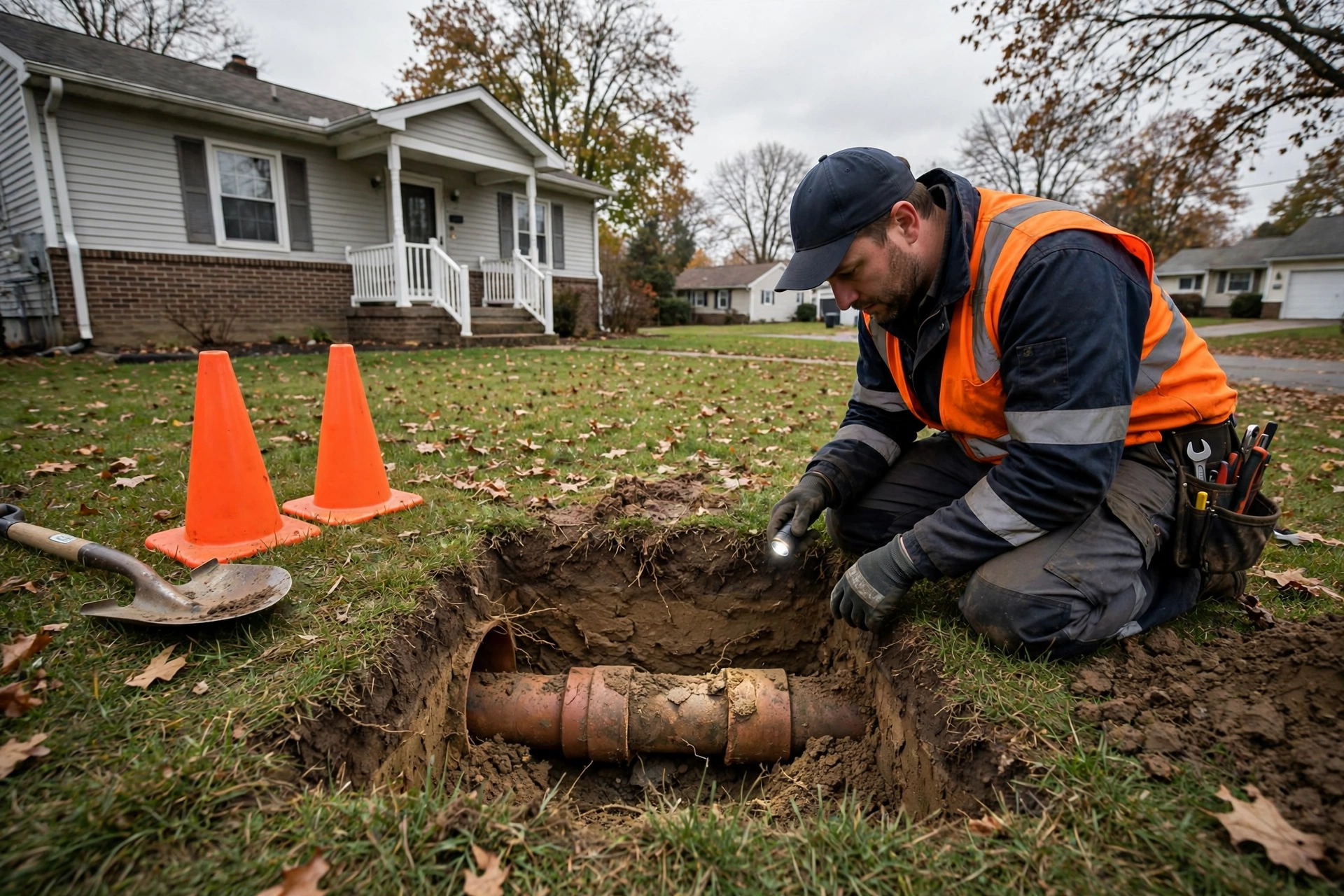
When one section of your sewer line is bad and the rest is fine, you should not need to replace the whole thing. Spot repair fixes just the damaged section, proven by camera, with a written plan before we dig.
Last updated: October 13, 2026
Spot sewer repair is a targeted fix in which only the damaged section of a sewer line is replaced or relined, while the rest of the line stays in place. It sits between doing nothing and replacing the entire lateral. The U.S. EPA publishes homeowner guidance on septic and sewer systems that can help you understand your line before you decide.
Spot repair makes sense when the damage is isolated: one bad joint, one crack, one belly, or one root-packed section, and the camera proves the rest of the line is sound. Fix the one bad part, leave the good pipe alone.
This is more common than most homeowners expect. A lateral runs 50 to 100 requirementt to the city main and does not age evenly: one joint separates while the others hold, one section settles into a belly while the rest keeps its slope. When the camera shows one bad actor in an otherwise healthy line, replacing the entire lateral is overkill.
Ohio's housing stock produces these cases constantly. A 1960s ranch in Columbus with a clay tile lateral might have one joint that shifted during a wet spring when the clay soil swelled, while the rest of the line sits undisturbed. A home in an older Cleveland suburb might have one section of cast iron that corroded faster because it sat in perpetually damp soil near a downspout, while the drier sections are fine. The pipe tells its own story, and the camera lets us read it.
The key word in all of this is "proven." Spot repair is only smart when the rest of the line has been inspected on camera and genuinely looks sound. Guessing, or scoping only the first twenty requirementt, is how spot repairs turn into repeat visits. We run the camera through the full line, from the house to the city main, before we ever recommend fixing just one section.
A proper camera diagnosis is not a quick peek. It is a full-length recorded survey of the lateral, and it is the entire basis for recommending a spot repair over a bigger job.
Here is what we are looking for, section by section. First, the defect itself: its exact type (crack, separated joint, belly, root intrusion, offset), its length, and its severity. A six-inch crack is a spot repair candidate. A six-foot section of crushed pipe might be too. Second, everything upstream and downstream of the defect: the condition of the pipe walls, the state of every joint, any scale buildup, any additional cracks. We are building a map of the whole line, not just admiring the one bad spot.
Third, the structural questions: is the pipe holding its shape and slope, or deforming along its length? One shifted joint in clay tile is a spot repair; every joint starting to separate is not. One belly in a straight line qualifies; a line installed with the wrong slope from the start needs regrading, not a patch.
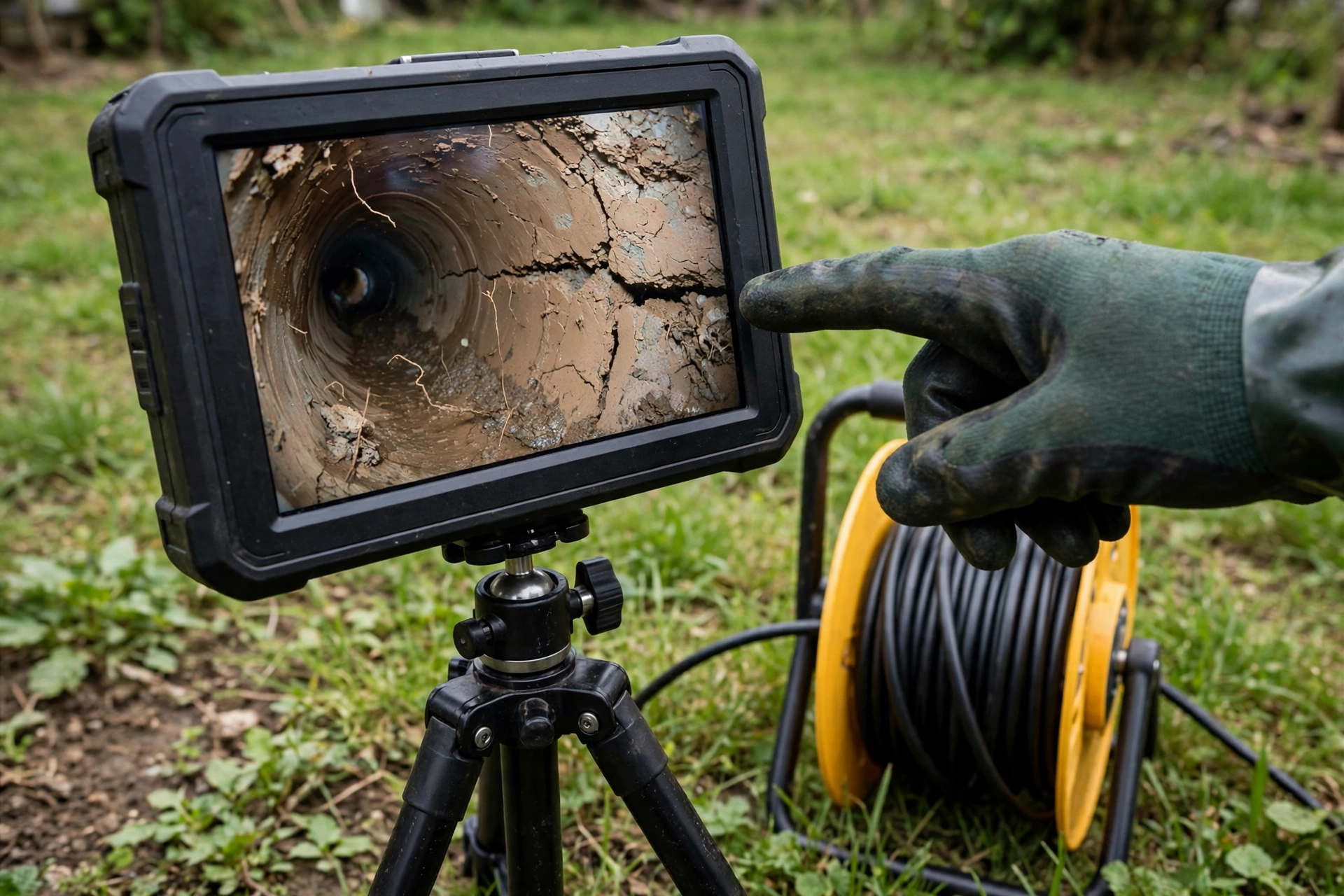
The camera survey maps the full line, not just the bad spot: that is what makes a spot repair a confident decision instead of a gamble.
You watch the footage with us, and we explain what you are seeing in plain language. If the line qualifies for a spot repair, you will see why. If it does not, you will see that too, and we will tell you so even though the bigger job is more work for us. A sewer camera inspection that talks you out of unnecessary work is still money well spent.
There are two ways to fix a single section, and the defect's location and condition decide which one fits. Both start the same way: we mark the exact location from the camera survey, pull the permit, and call in utility locates before any ground is opened.
This is the traditional approach, and it is still the right call for many defects. We open one targeted excavation, typically a few requirementt square, directly over the bad section. The damaged pipe comes out, new PVC goes in with proper fittings and couplings, the joints get sealed, and the section is tied into the existing line on both sides. We bed the new pipe in stone, backfill in compacted lifts so the ground does not settle later, and restore the surface. Most excavated spot repairs take a single day. The disruption is one hole, not a trench across your property, and Ohio municipalities inspect the work before backfill, which we schedule as part of the job.
A point repair, sometimes called sectional lining, fixes the bad section from inside with no digging. We requirementd a short resin-saturated liner, usually three to ten requirementt long, through a cleanout to the defect, inflate it, and cure it in place: a new jointless section exactly where the damage was. It suits cracks, single bad joints, and root intrusions in pipe that still holds its shape. It does not work for bellies, since a liner follows the existing sag, or for collapses with no shape left to line against.
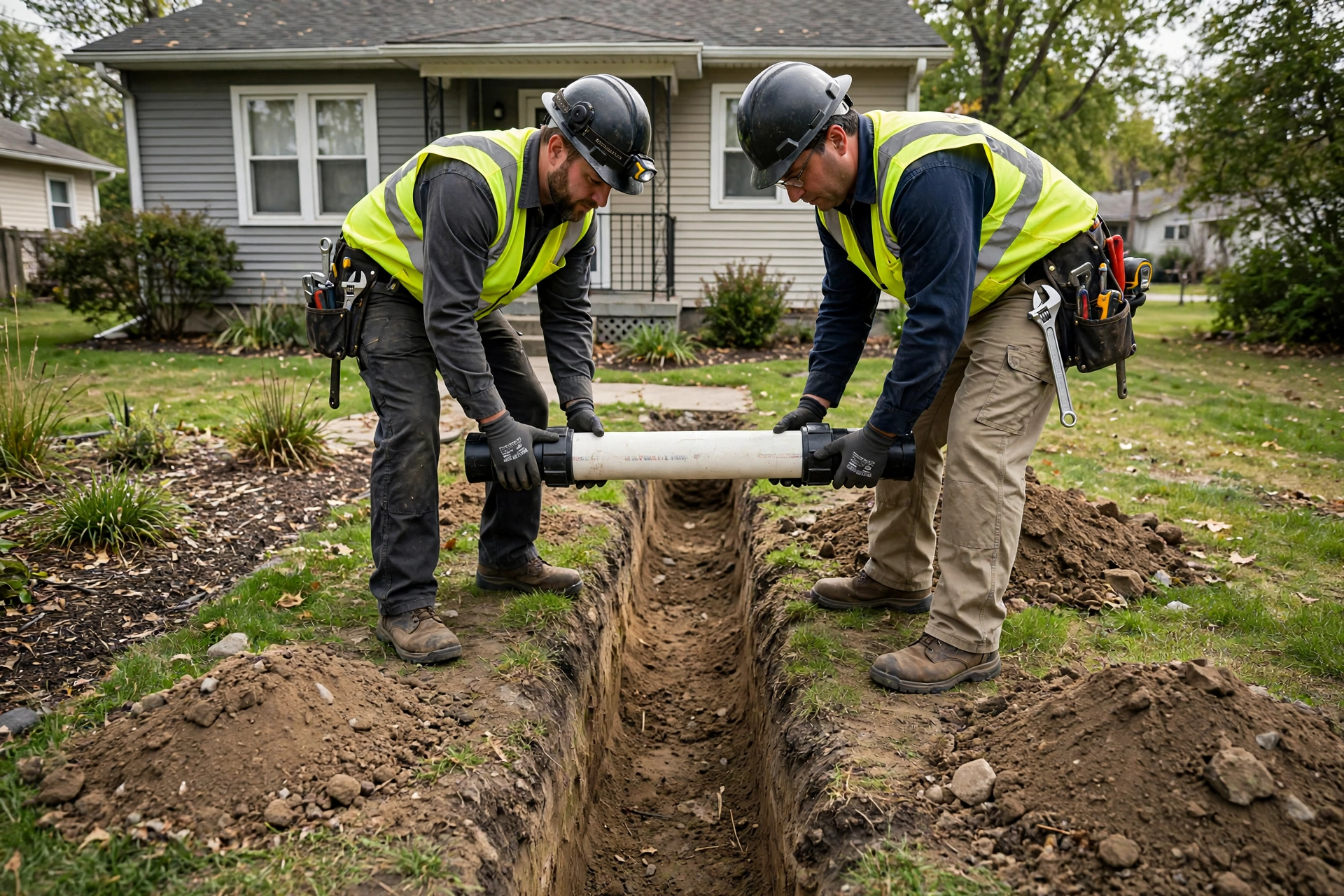
New PVC goes in with proper fittings and sealed joints, tied into the existing line on both sides: one section, done right.
Three questions decide it. First, what is the defect? Cracks and bad joints suit either method; bellies and collapses need excavation. Second, where is it? A defect under a driveway or a mature tree you want to keep pushes toward trenchless; a defect in open lawn makes excavation simple and simple. Third, what does the pipe around it look like? Trenchless point repair needs the neighboring pipe to hold its shape so the liner has something to bond against. We lay out both options with real plans and let the evidence, not our preference, make the call.
Spot repair is a waste when the line is failing everywhere. Fixing one section of a dying pipe is like patching one tire on a car with four bald ones: you will be back soon, and you will have paid twice.
Here is our honest rule, the one we use on our own recommendations. If the camera shows three or more significant defects, the line does not get a spot repair, it gets a replacement plan. If the pipe is Orangeburg, the tar-paper pipe used in the 50s through the 70s, and it is deforming along its length, a spot fix is a bandage on a pipe that is flattening everywhere. If the line was installed with the wrong slope, no section-level fix corrects the drainage problem; the grade is wrong and the whole run needs to be re-set. And if the pipe material is simply at the end of its life, with corrosion or cracking throughout, replacing one section just moves the next failure a few requirementt down the line.
Two spot repairs on the same lateral almost always work more than doing the full job once, because you deal with for mobilization, excavation, permits, and inspection twice. We have talked homeowners out of spot repairs when the footage showed a line that would need two more within a few years.
| Factor | Spot repair | Full line replacement |
|---|---|---|
| Scope | One damaged section, usually a few requirementt of pipe | The entire lateral, typically 50 to 100 requirementt |
| Digging | One small targeted excavation, or none at all with a trenchless point repair | A trench or multiple pits along the full run |
| Project length | Usually a single day | Longer, often several days |
| When it makes sense | One isolated defect with the rest of the line proven sound on camera | Three or more defects, wrong slope, or pipe material at the end of its life |
| When it is not the call | Orangeburg or end-of-life pipe, wrong slope, damage spread along the whole run | A sound line with one isolated defect: overkill and unnecessary |
There is also a middle ground worth knowing about. Sometimes the camera shows one section that is clearly bad and a second section that is borderline: aging, but not failed. In that case we plan both options, the spot repair now with eyes open about the second section, and the larger fix that handles both. You decide with the footage in front of you. What we will not do is sell you a spot repair while quietly knowing you will be calling us back in eighteen months.
Full-length camera run with the locator marking the defect's exact position and depth on the surface. You see the footage and the mark.
We pull the municipal permit and call in utility locates. Ohio cities require permits for lateral work, and inspections before backfill. Ohio EPA publishes statewide wastewater guidance if you want to read the rules behind the paperwork.
One targeted excavation over the defect, or cleanout access for a trenchless point repair. Sod and soil get separated so the lawn goes back cleanly.
Damaged section out, new PVC in with sealed fittings, bedded in stone and tied into the existing line. Municipal inspection happens here.
Backfill in compacted lifts, surface restored, and a final camera run proving the repaired section flows cleanly into the line on both sides.
Spot repair is usually the most straightforward way to fix a sewer line, because you are handling one section instead of fifty requirementt of pipe. But "straightforward" still depends on real factors, and anyone quoting a number without camera footage is guessing.
What moves your plan:
The number that matters is yours, for your defect, at your depth, under your yard. Our Ohio sewer repair guide walks through full work ranges for every repair type. For an exact figure, call (614) 350-5706: the camera inspection gives us everything we need to plan it in writing.
The camera head carries a small transmitter, and we track it from above ground with a locator wand that shows the depth and position in real time. We mark the surface directly over the defect, usually within a foot, and we measure the footage from the access point so we know exactly how far in it is. You watch the whole process, and we show you the mark before any digging starts.
The repaired section itself is brand-new pipe, so that part will outlast the rest of the line. The honest framing is this: a spot repair resets one section to zero years old while the rest of the line keeps its age. That is a great deal when the camera shows the rest of the pipe is sound. It is a poor deal when the rest of the pipe is nearly as bad as the section you are fixing, because you will be back for the next section soon.
Usually, yes, but only one small excavation at the defect, not a trench across the property. We open just enough ground to expose the bad section, replace it, and backfill. In some cases we can do a trenchless point repair instead, installing a short sectional liner through a cleanout with no digging at all. The camera footage and the location of the defect decide which approach fits.
Yes, and this is actually one of the best use cases for spot repair. Cutting and restoring one section of concrete is far simpler than tearing up a whole driveway for a full replacement. We cut a clean section, excavate, replace the pipe, backfill in compacted lifts, and restore the surface. A trenchless point repair avoids the concrete work entirely when the defect and access allow it.
It happens, though the camera usually tells the full story beforehand. Our written plan covers the defined scope: the section we agreed to replace. If we expose the pipe and find the damage extends further, we stop, show you, and give you a revised plan before doing more work. You are never billed for surprise footage, and you always see the evidence first.
Every spot repair starts with a sewer camera inspection: without full-length footage, a spot repair is a guess. When the defect turns out to be roots at a single joint, our tree root removal clears the line first. And when the camera shows damage spanning a long run instead of one section, trenchless sewer repair handles the whole line without a trench. Start at our Ohio sewer repair homepage for the full picture.
A camera inspection tells us, and you, whether a spot repair is the smart move or a waste. Then you get a fixed written plan.
Call (614) 350-5706