Sewer Line Repair in Greater Dayton

Miami Valley clay, a river at the doorstep, and historic-district tile lines. The Dayton region has its own recipe for sewer trouble. We diagnose with a camera, fix it trenchless or traditional, and give you one upfront price.

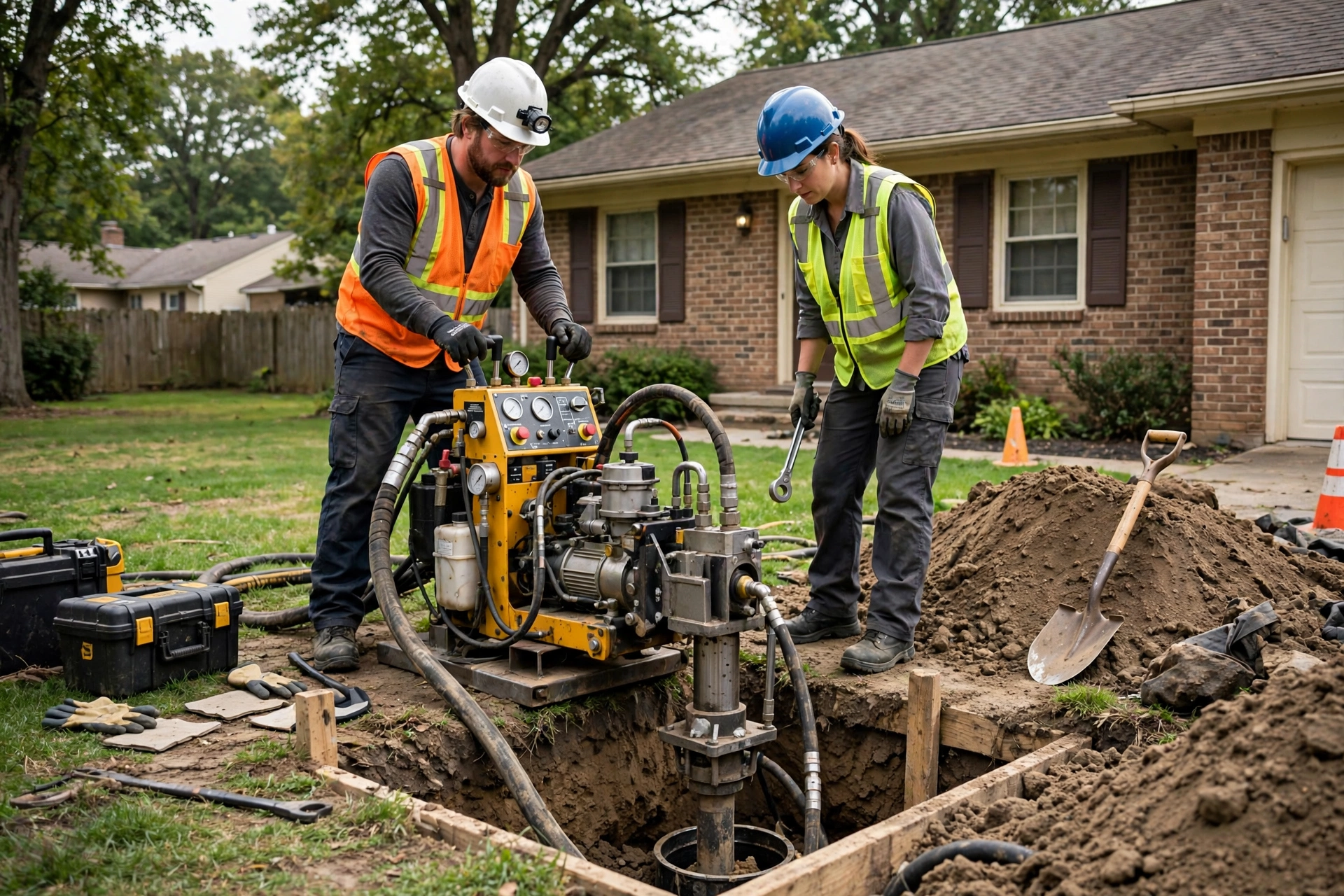
Two technicians operating trenchless sewer repair equipment at a Dayton Ohio home with a brick ranch house and green lawn

Last updated: October 13, 2026

Greater Dayton, Ohio

Why Does the Miami Valley Wear Out Sewer Lines?

Dayton is a river city set in a clay valley, and both of those facts show up in the pipe.

The Miami Valley was carved by the Great Miami River, and the ground it left behind is heavy glacial clay and riverbed soils that hold water. In neighborhoods near the river and its tributaries, the water table runs high for much of the year, so buried pipe sits in saturated soil that stresses joints and pushes groundwater into every weak point. Add freeze-thaw winters on top, and the region gets a steady cycle of expansion, contraction, and cracking that older pipe was never built to survive this long.

The housing eras tell the rest. Dayton's historic districts, the Oregon District and St. Anne's Hill, run 100-plus-year-old clay tile laterals under Victorian streets and mature trees. The post-war boom wrapped the city in suburbs like Kettering, Huber Heights, and Trotwood, where 1950s and 60s cast iron is rusting through right about now. Fairborn grew up around Wright-Patterson Air Force Base with a mix of older homes and fast-built housing. And the outer ring, Troy, Piqua, Xenia, Miamisburg, and Centerville, mixes genuine riverfront-era housing with decades of new construction. Different decades, different pipes, but the valley ground is the common thread.

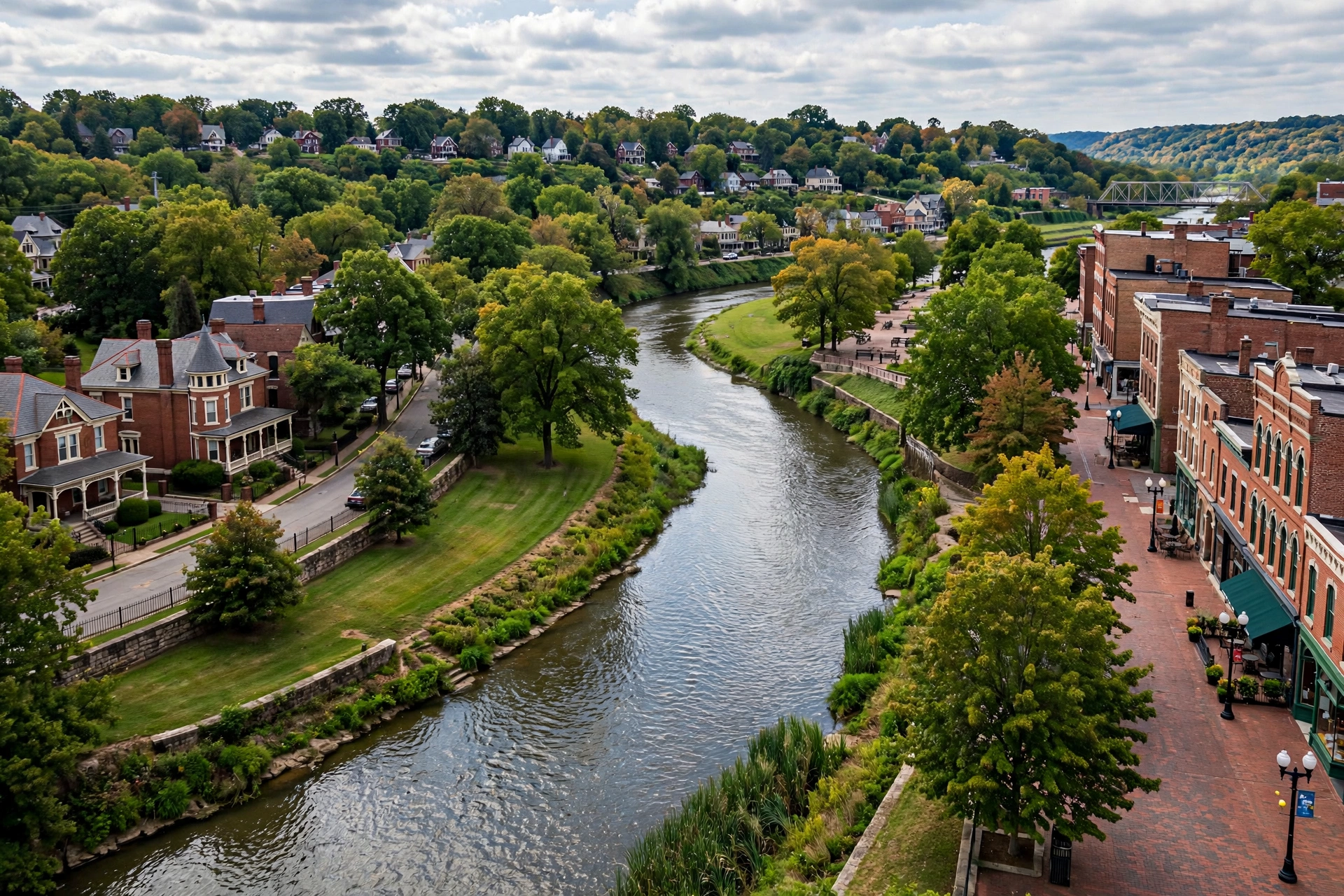
Great Miami River winding through a Dayton Ohio residential valley with historic brick homes and tree-lined streets

The Great Miami River shaped the valley soils that Dayton-area sewer lines sit in: heavy, wet, and relentless on old joints.

Who Handles What: Your Line vs. the City's System?

You own the sewer lateral from your house to where it connects with the public main, usually at the street or sidewalk. Everything on your side of that connection, including the part under your yard and driveway, is your responsibility to maintain and repair.

In Dayton proper, the City of Dayton Department of Water manages the public sewer system, from wastewater collection to the city's 72-million-gallon-per-day treatment facility, plus stormwater. Dayton's sanitary and storm systems are completely separate, which is part of how the city keeps sewer service reliable. Federal clean-water standards come from the U.S. EPA; the Ohio EPA administers them in Ohio. If sewage is backing up in multiple homes on your street at once, call the city's emergency line, that's likely a main-line problem. If it's just your house, the lateral is the prime suspect, and that's our territory. One quick way to tell: ask a neighbor. Solo backup means lateral; street-wide means main.

The suburbs run their own systems. Kettering, Beavercreek, Huber Heights, Fairborn, Troy, Xenia, Riverside, Centerville, Trotwood, Piqua, and Miamisburg each manage their public mains through their city or county utilities, so main-line calls there go to the local office, not Dayton. Your lateral is yours everywhere in the region.

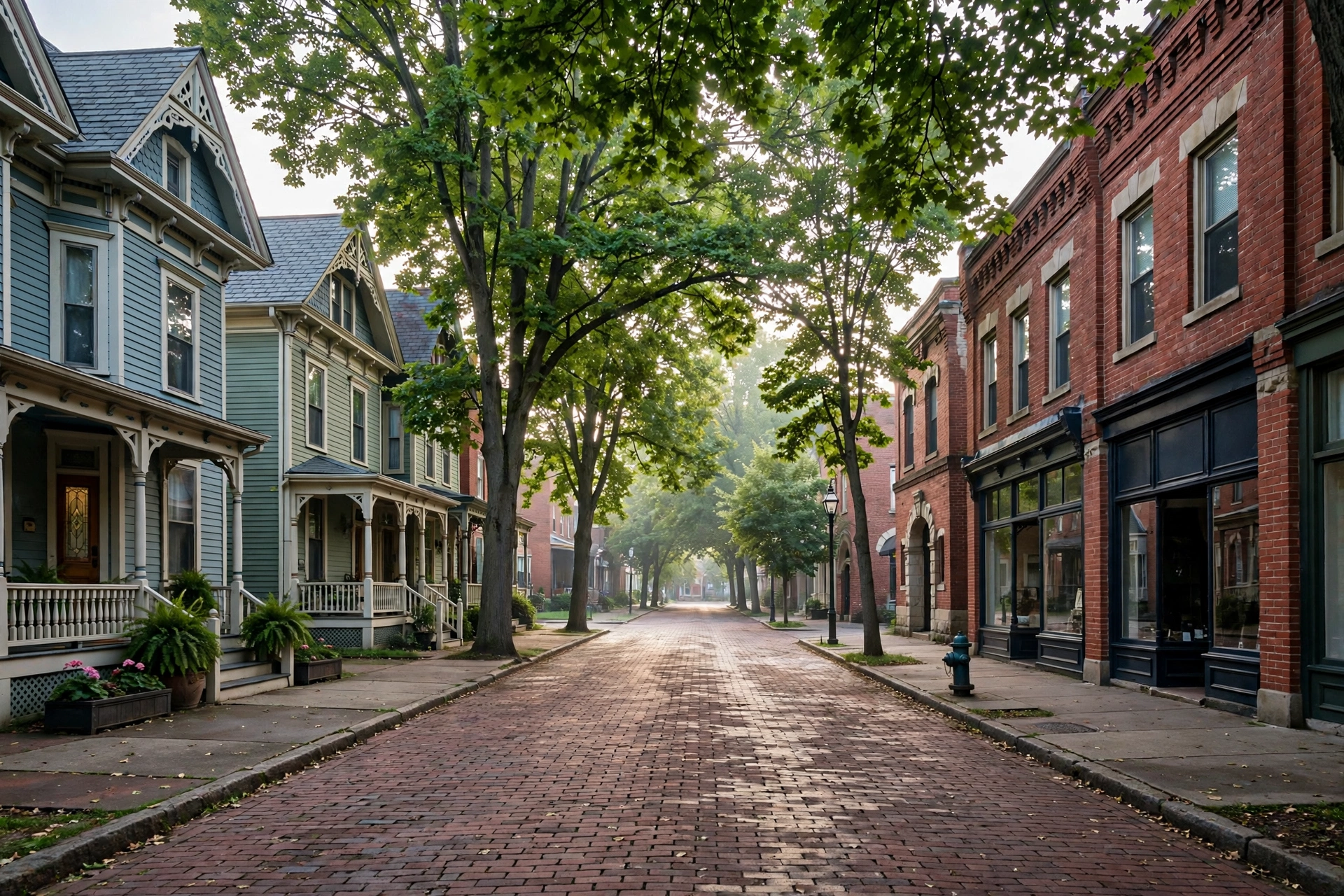
Historic brick street in a Dayton Ohio neighborhood with Victorian-era homes and mature trees over century-old clay sewer lines

Dayton's historic districts carry century-old clay tile laterals under brick streets and mature trees: prime root-intrusion territory.

Regional problem guide

The Sewer Problems We See Most in Greater Dayton

Four patterns cover the vast majority of Dayton-area calls: same valley ground, same physics, different pipes.

1. River-Adjacent Soils and Seasonal High Water Table

Where: Low-lying blocks near the Great Miami River and its tributaries, plus Riverside and Miamisburg neighborhoods close to the water.

How it happens: Water-influenced soils stay saturated long after rain stops. Hydrostatic pressure builds around the lateral, groundwater seeps into joints and cracks, and the surrounding soil never firms up enough to support the pipe.

The symptom: Slow drains and basement floor-drain backups that arrive in wet months and fade in dry ones.

The fix: Start with a sewer camera inspection to separate infiltration from a broken line, then line or repair the weak sections so groundwater stays out. In repeat-backup basements, a backwater valve stops the public system from pushing in.

2. Glacial Clay Expansion and Joint Separation

Where: Kettering, Beavercreek, Centerville, and hilltop suburbs across the region.

How it happens: Miami Valley clay swells when wet and shrinks in dry spells, and the seasonal movement grinds pipe sections against each other. Mortar joints in old clay tile loosen; rubber joints in newer pipe get stressed. Each freeze-thaw winter widens the gaps a little more.

The symptom: Drains that slow down a little more every year, sewage odors after wet weather, and soggy or sunken spots above the line.

The fix: Trenchless pipe lining seals every joint from the inside in a day, no long trenches through landscaping that struggles to recover in this soil.

3. Root Intrusion in Historic Districts

Where: The Oregon District, St. Anne's Hill, and older tree-canopy streets anywhere in the region.

How it happens: Century-old clay tile with mortar joints is the standard under Dayton's historic streets, and mature trees send fine root hairs into every damp joint. Roots thicken year after year, wedge joints apart, and eventually fill the pipe.

The symptom: Recurring clogs that a snake clears for a few months and always come back. Lowest-floor toilets bubble when the laundry drains.

The fix: Hydro jetting scours the roots out completely, then lining or bursting removes the entry points so they can't return. See our tree root removal service for the full process.

4. End-of-Life Cast Iron in Post-War Suburbs

Where: Kettering, Huber Heights, Trotwood, and 1950s-60s tracts in Fairborn and Xenia.

How it happens: Cast iron rusts from the inside out in persistently damp valley soil, thinning the pipe bottom until it flakes and collapses. It looks intact from the outside right up until it fails.

The symptom: Chronic slow drains, backups that keep returning, and eventually soil entering the pipe and clogging it.

The fix: Pipe bursting pulls a new HDPE line through the old cast iron's path with no long trench and no torn-up driveway.
Cities we serve

Greater Dayton Sewer Service: City by City

Every city below has its own page with local detail. Tap any card for that city's full sewer repair guide.

Dayton

The river city itself: historic-district clay tile in the Oregon District and St. Anne's Hill, plus every post-war pipe era the valley has produced.

Dayton sewer repair →

Kettering

The region's largest post-war suburb, where 1950s-60s cast iron laterals are hitting the end of their lifespan right about now.

Kettering sewer repair →

Beavercreek

Growing eastern suburb blending newer subdivisions with older sections, where settlement stress and early joint wear are the common culprits.

Beavercreek sewer repair →

Huber Heights

Mid-century suburb north of Dayton with heavy cast-iron and clay-tile housing stock, prime trenchless-bursting territory.

Huber Heights sewer repair →

Fairborn

Air Force base town bordering Wright-Patterson AFB, mixing older homes with fast-built housing where construction defects show up young.

Fairborn sewer repair →

Troy

Miami County seat along the Great Miami River, where river-adjacent soils and high seasonal water tables stress older lines.

Troy sewer repair →

Xenia

Greene County seat east of Dayton with historic-core clay tile and decades of post-war housing stock behind it.

Xenia sewer repair →

Riverside

Suburb along the Mad River east of Dayton, where low-lying blocks feel the seasonal water table first.

Riverside sewer repair →

Centerville

Established southern suburb where mature neighborhoods combine aging clay tile with root-hungry tree canopy.

Centerville sewer repair →

Trotwood

Northwest suburb with mature post-war neighborhoods and the cast-iron-and-clay pairing those eras are known for.

Trotwood sewer repair →

Piqua

Northern Miami County river town with a historic downtown core and older laterals that have seen many freeze-thaw winters.

Piqua sewer repair →

Miamisburg

Southern river town along the Great Miami with a historic downtown district and riverside soils that keep laterals wet.

Miamisburg sewer repair →
Local answers

Greater Dayton Sewer FAQs

It depends on where the failure is. You own the lateral from your house to its connection at the public main, that part is yours to fix. The City of Dayton Department of Water manages the public sewer system, including wastewater collection and its 72-million-gallon-per-day treatment facility. If multiple homes on your street are backing up at once, call the city at 937-333-4905, it may be a main-line issue. If it's only your house, the lateral is the suspect, and that's our work at (614) 350-5706.

Indirectly, yes. Neighborhoods near the Great Miami River and its tributaries sit over low, water-influenced soils with a high seasonal water table. That keeps the ground around your lateral saturated, which accelerates joint failure in older pipe and drives hydrostatic pressure against foundations. It doesn't flood your line, but it makes weak pipe fail sooner and makes basement backups show up first where the ground is lowest.

Most likely cast iron transitioning to vitrified clay tile, the standard pairing in Dayton's post-war boom years. The cast iron section rusts from the inside out and is often at the end of its life now, while the clay tile joints invite root intrusion from mature yard trees. A camera inspection shows which material is where and how much life is left, many 1960s Dayton laterals are prime candidates for trenchless bursting.

Yes, and the Miami Valley's heavy clay is one reason trenchless methods do so well here. Pipe lining seals the line from the inside through existing access points, and pipe bursting pulls a new pipe through the old one's path. Both avoid long open trenches in soil that turns to soup when wet. The main requirement is that the old pipe hasn't fully collapsed, which is why we run a camera first.

Yes. The City of Dayton requires permits for sewer lateral repair and replacement, with inspection typically required before backfill. Suburbs like Kettering, Beavercreek, and Huber Heights have their own permitting offices with similar rules. We pull the permits and coordinate the inspection as part of every job, it's included in the written price, not tacked on later.

Also serving Kettering, Beavercreek, Huber Heights, Fairborn, Troy, Xenia, Riverside, Centerville, Trotwood, Piqua, Miamisburg, Moraine, West Carrollton, Vandalia, and the greater Dayton metro. Major landmarks we work around include the Oregon District, St. Anne's Hill, the University of Dayton, Riverscape MetroPark, and the Wright-Patterson AFB area.

Related services

Sewer Services Across Greater Dayton

Not sure what your line needs? Most Dayton-area jobs start with a sewer camera inspection: an hour of footage that shows exactly what's wrong before anyone picks up a shovel. From there, most homeowners choose a trenchless path, trenchless sewer repair by lining or bursting, usually finished in a day. When roots are the whole problem, hydro jetting plus tree root removal clears the line and seals it against a comeback. Ask us about backwater valves too, if your basement floods in wet months.

Greater Dayton Sewer Problem? Get the Camera Truth First.

One inspection, one honest diagnosis, one upfront price, anywhere in the Dayton metro.

Call (614) 350-5706
📞