Sewer Line Repair in Troy, OH
River floodplain groundwater, century-old clay under Public Square, and a city-run sewer system. Troy's sewer problems are its own. We camera-diagnose every job and fix it trenchless or traditional.
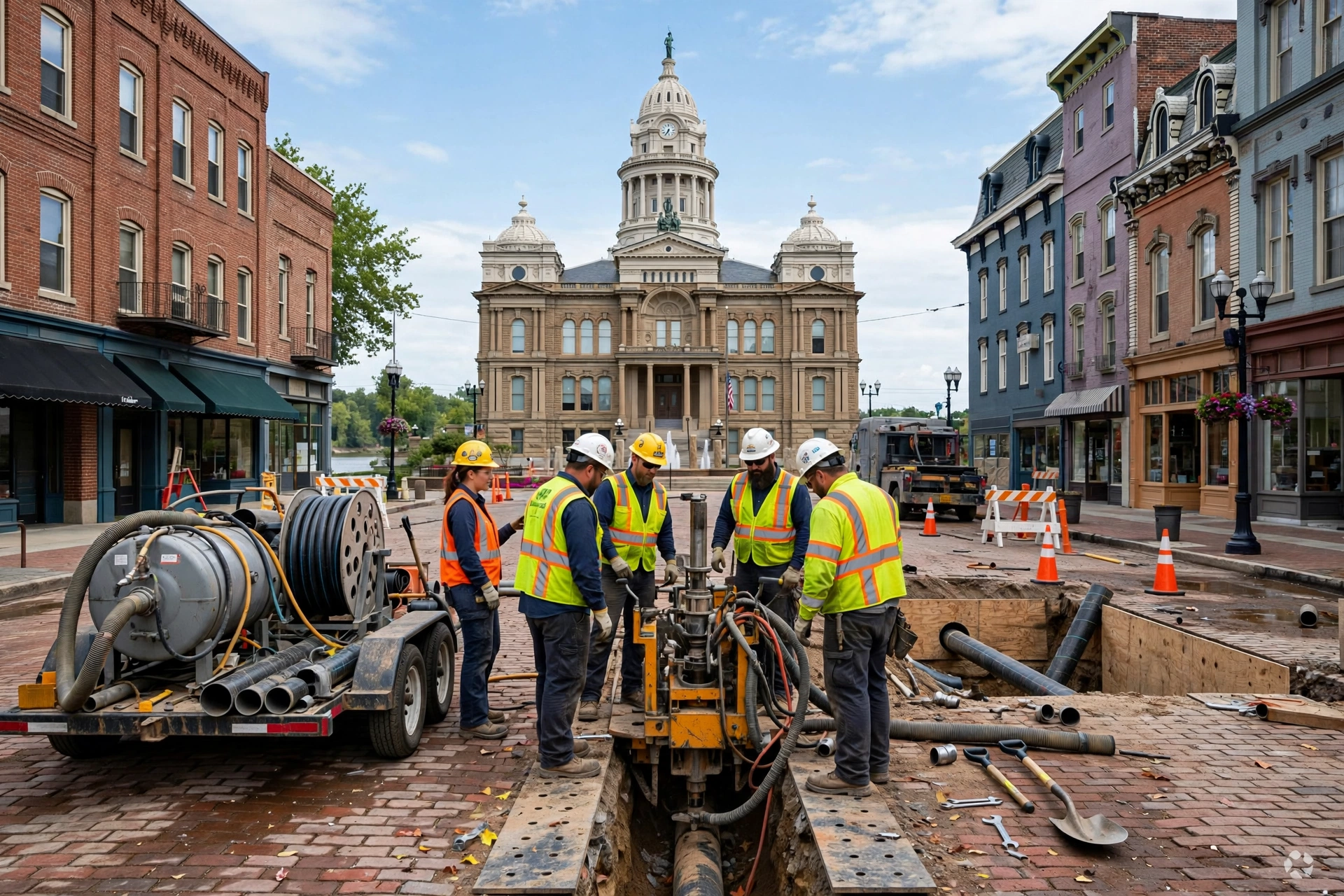
River floodplain groundwater, century-old clay under Public Square, and a city-run sewer system. Troy's sewer problems are its own. We camera-diagnose every job and fix it trenchless or traditional.
Last updated: October 13, 2026
Troy grew up on the Great Miami River, and the river's floodplain still sets the terms for every sewer line in town.
The floodplain keeps the water table high across much of the city. That means groundwater is always pressing against the outside of your lateral, waiting for a cracked clay joint or a separated connection to let it in. Plumbers call it infiltration, and it does three kinds of damage at once: it overloads the line with water it was never sized to carry, it drags fine silt inside that settles and hardens into restrictions, and it erodes the soil bedding around the pipe so sections settle and offset further. After any high-water event on the river, we recommend a camera check, because silt left inside a line turns into a concrete-like blockage if it is not jetted out.
Troy's water adds another slow stress. Miami County's groundwater runs very hard, with USGS regional assessments near 19 grains per gallon. That dissolved calcium and magnesium leaves mineral scale inside pipes over time, and in the floodplain's wet ground, scale plus silt infiltration is the combination that closes old lines fastest.
Troy's industrial heritage adds its own chapter. Hobart and the manufacturing base along the river built the city's prosperity, and the downtown that served those workers, the Public Square, the Miami County Courthouse, the 1800s brick commercial blocks, sits over some of the oldest sewer lines in Miami County. Clay tile laterals from the late 1800s and early 1900s are still in service under Main Street, with mortar joints that have been crumbling for decades and mature street trees working roots into every opening. Our trenchless sewer repair methods were made for exactly this: fixing century-old lines without disturbing a historic streetscape.
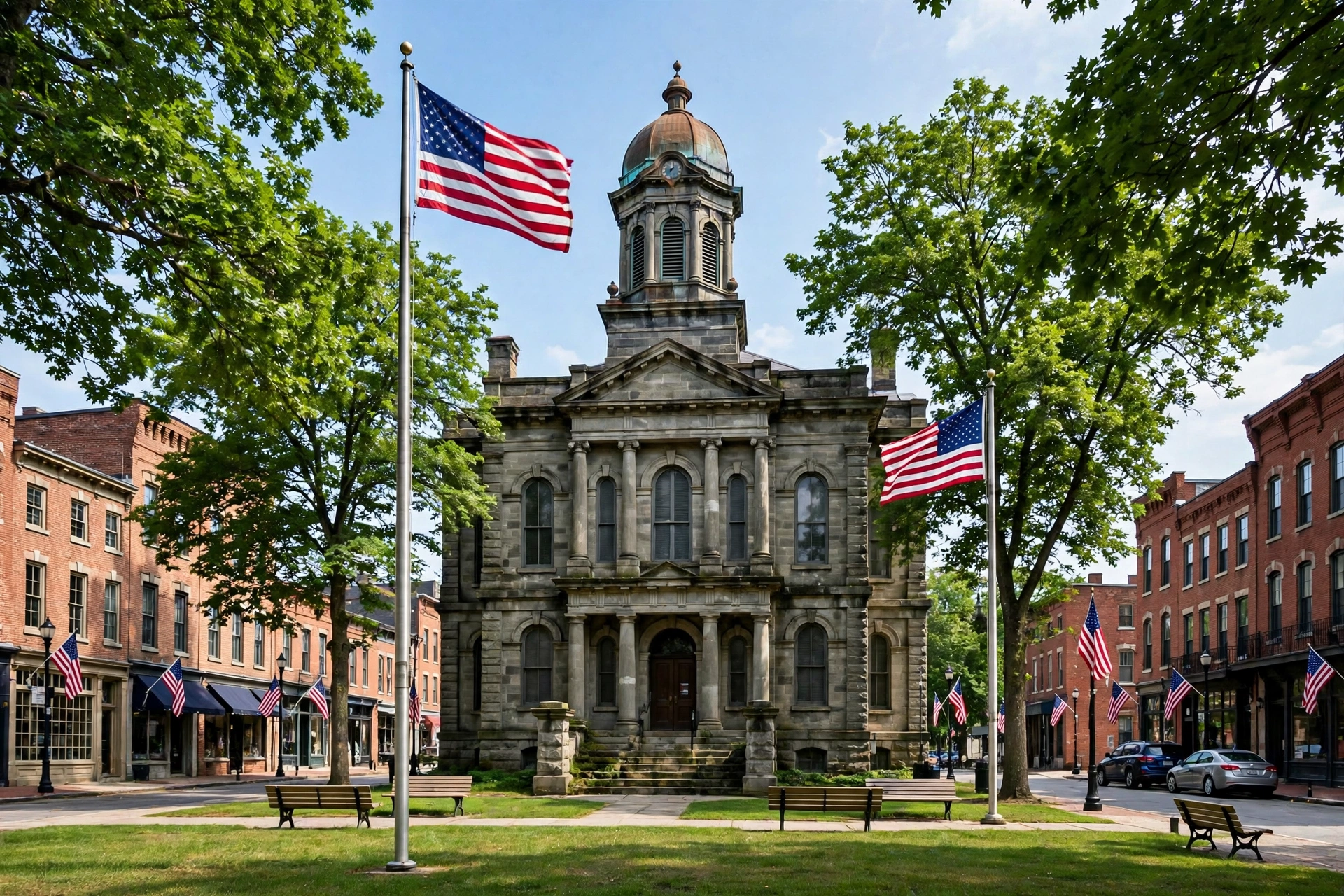
Troy's Public Square and the Miami County Courthouse: some of the city's oldest sewer lines run beneath downtown.
The city does, end to end. The City of Troy runs its own municipal sewer system, including the public mains and a wastewater treatment plant that treats an average of about 5.5 million gallons a day, serving Troy and surrounding parts of Miami County, with treated effluent discharged to the Great Miami River. The plant operates under a federal wastewater discharge permit, and the Ohio EPA sets Ohio's statewide wastewater rules. It is a fully municipal system, which makes Troy simpler to navigate than the county-run suburbs to the south.
The ownership split is the same as everywhere: the city owns the public mains, and you own the lateral from your house to the main. Your lateral is where nearly every Troy backup we see actually starts. Troy requires permits for sewer lateral work, with inspection typically before backfill, and we pull the permits and coordinate the inspections as part of every job.
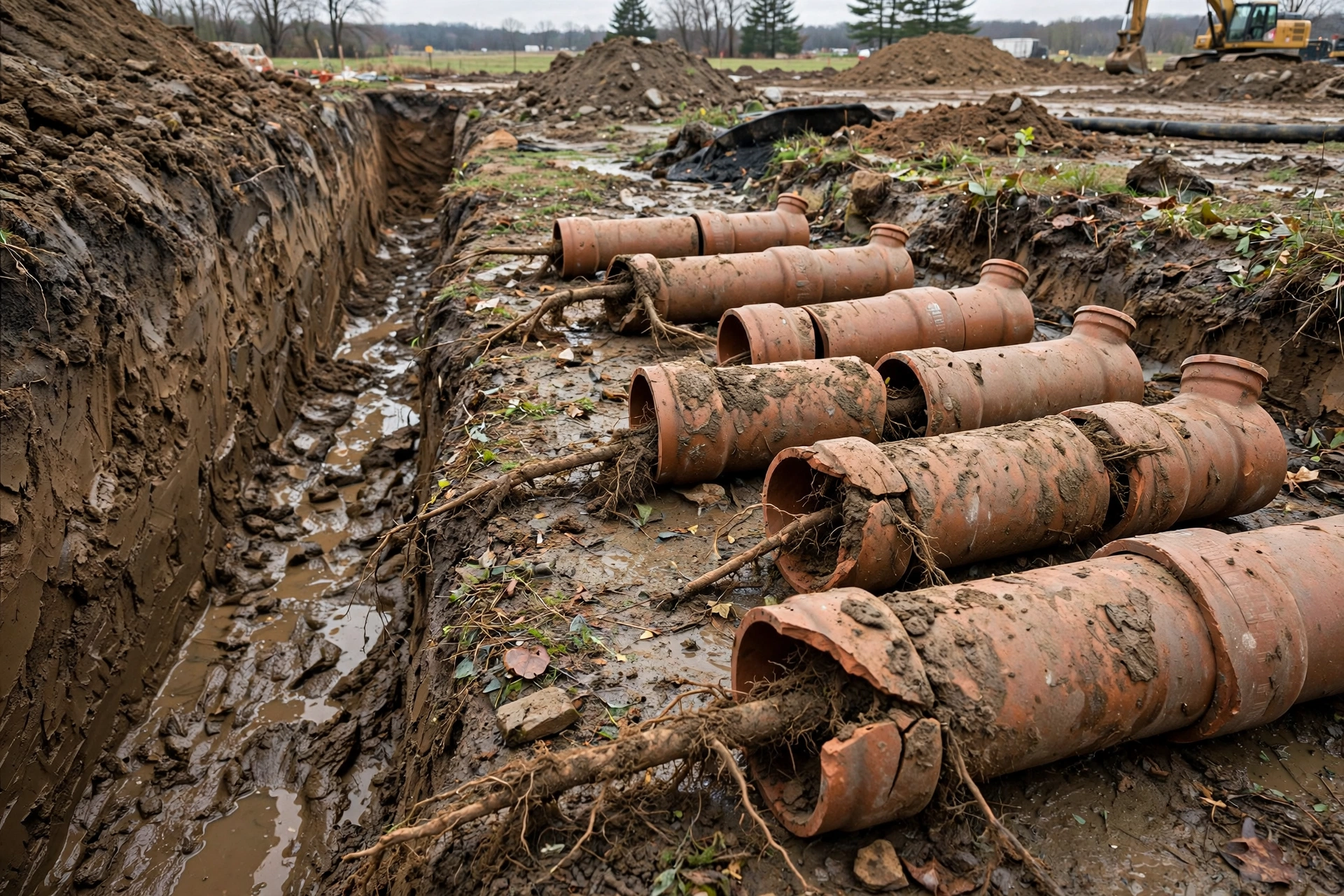
Offset clay tile joints like these are what our cameras find under Troy's oldest streets.
Some of the oldest sewer lines in Miami County. Downtown Troy around Public Square is one of the best-preserved historic downtowns in the region, and its sewer infrastructure matches its age. The clay tile laterals serving 100-plus-year-old commercial buildings have the full catalog of century-old problems: crumbled mortar joints, offset sections, root intrusion from the street trees, and in some cases partial collapses that have been narrowing the pipe for years. The Troy Strawberry Festival fills these same streets every June, which is a good reminder of how much life, and how much wastewater, flows through this small downtown.
The fix for a historic downtown is almost always trenchless. Lining seals the old clay line from the inside with a new structural pipe, and bursting replaces lines that have lost their shape, both without opening the street or disturbing the storefronts. Age alone never disqualifies a line: the camera shows whether the pipe holds enough shape for lining or needs bursting, and we recommend whichever the footage supports.
Installation issues, not age. Troy keeps growing west and south, with new subdivisions along corridors like South Dorset Road and Experiment Farm Road. The PVC laterals in these homes should last, but young lines fail from installation issues, not age: sections settle into bellies where waste collects, joints separate as backfill compacts over the first few years, or construction debris was left in the line. A ten-year-old home with a backing-up sewer is frustrating, but the fix is usually a targeted spot repair once the camera pinpoints the problem.
We work all over Troy: downtown around Public Square and the courthouse, through the west-side subdivisions, along the river corridors, and near Upper Valley Medical Center and Kettering Health Troy. We also serve Piqua to the north, Huber Heights to the south, and Dayton beyond that. At Ohio Sewer Masters, every job starts the same way: camera first, honest diagnosis, upfront plan.
Troy's water runs very hard, with USGS regional assessments near 19 grains per gallon from Miami County groundwater. That dissolved calcium and magnesium leaves mineral scale inside pipes over time, and in the floodplain's wet ground, scale plus silt infiltration is the combination that closes old lines fastest. A camera inspection finds the scale, and hydro jetting or a lining opens the pipe back up.
Follow the river's calendar. Troy's floodplain makes spring the infiltration season, roots peak in fall, and winter frost punishes shallow lines downtown. Seasonal attention that matches the river's moods keeps a century-old lateral or a ten-year-old PVC line ahead of trouble.
It can. The floodplain's high water table means groundwater constantly presses against cracked clay joints, infiltrating the line and carrying in silt. After high-water events, we recommend a camera check: silt settles inside the pipe and hardens into restrictions if it's not jetted out.
The city. The City of Troy runs its own municipal sewer system and wastewater treatment plant, which treats about 5.5 million gallons a day. Your lateral from the house to the public main is yours to maintain, call us at (614) 350-5706 for that part.
Often, yes. Age alone doesn't disqualify a line, condition does. We've lined and burst century-old clay laterals under historic downtowns without disturbing the streetscape. The camera shows whether the pipe holds enough shape for lining or needs bursting.
Newer PVC lines usually fail from installation issues, not age: sections settle into bellies where waste collects, joints separate as backfill compacts, or construction debris was left in the line. A camera inspection pinpoints it, and spot repairs fix most of these without replacing the whole run.
Yes. Troy requires permits for sewer lateral work, with inspection typically before backfill. We pull the permits and coordinate inspections as part of every job, it's baked into the written plan.
Also serving Piqua, Tipp City, Huber Heights, and Dayton. We work around Troy's Public Square, the Miami County Courthouse, the Great Miami River, Hobart, and Upper Valley Medical Center, right off I-75. Troy homes fall in ZIP code 45373.
One inspection, one honest diagnosis, one upfront plan, anywhere in Troy and Miami County.
Call (614) 350-5706