Huber Heights, Ohio
What Did Charles Huber's 10,707-Home Building Boom Leave Underground?
No city in Ohio has a more uniform housing story than Huber Heights, and that uniformity extends straight down to the sewer lines.
In 1956, developer Charles H. Huber started Ohio's first privately owned utility company and broke ground on his first plat of brick, single-family homes in what was then Wayne Township. Between 1956 and 1992, Huber Homes built 10,707 single-family homes and 2,258 multi-family units, earning the young city, incorporated in 1981, its longtime nickname: America's largest community of brick homes. The late 1950s also brought Interstate 70 through the township's northern section, locking in the growth corridor the city still follows.
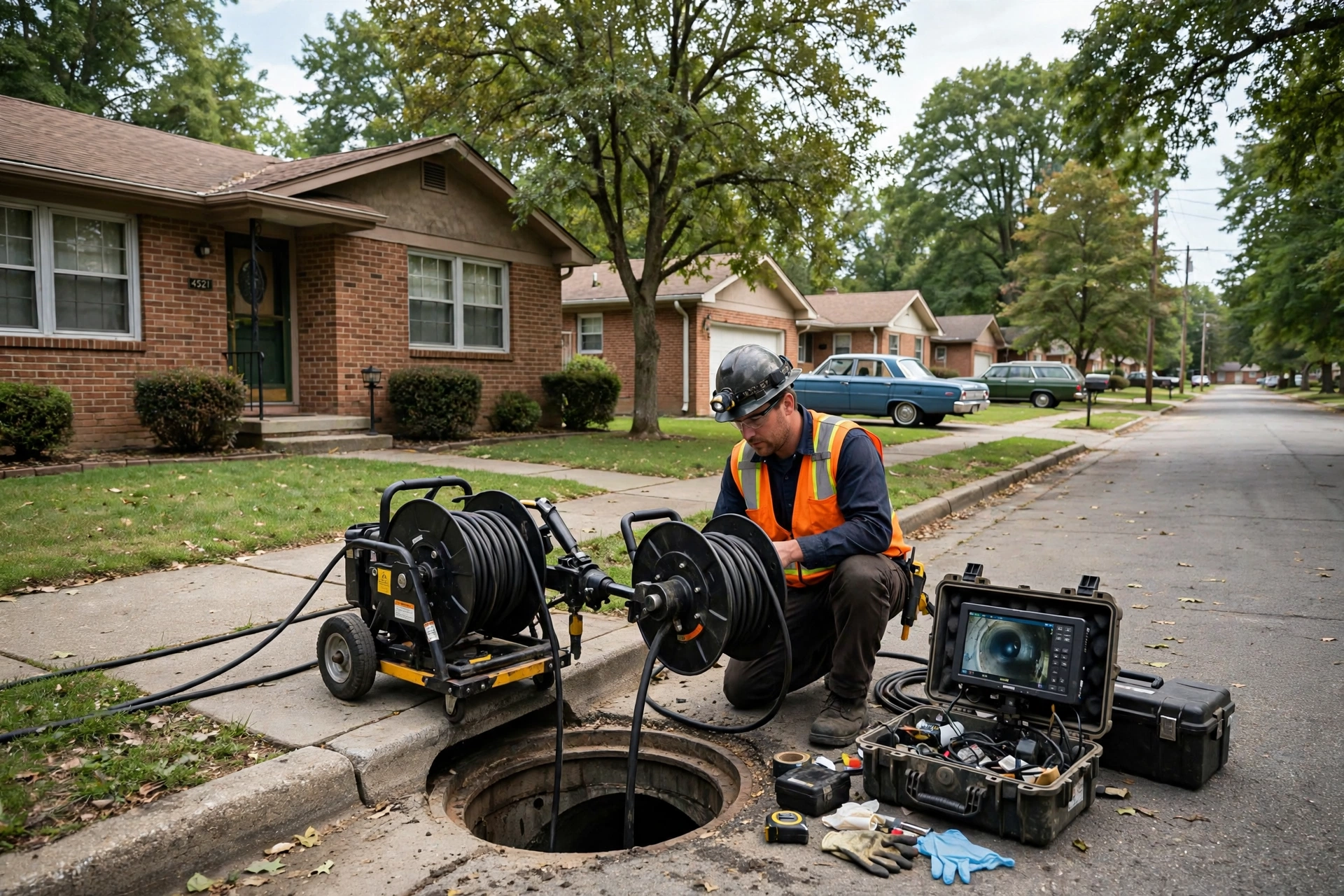
Those 1960s and 70s laterals went in with cast iron inside transitioning to clay tile outside, and later plats used clay tile throughout. Sixty years on, the cast iron is rusting from the inside out and the clay joints are separating, and because one builder put in most of it in the same decades, the failures arrive in waves across whole plats at once. When we camera-inspect a Huber Heights lateral, we usually know what we will find before the monitor lights up. Our trenchless sewer repair options were practically designed for neighborhoods like these.
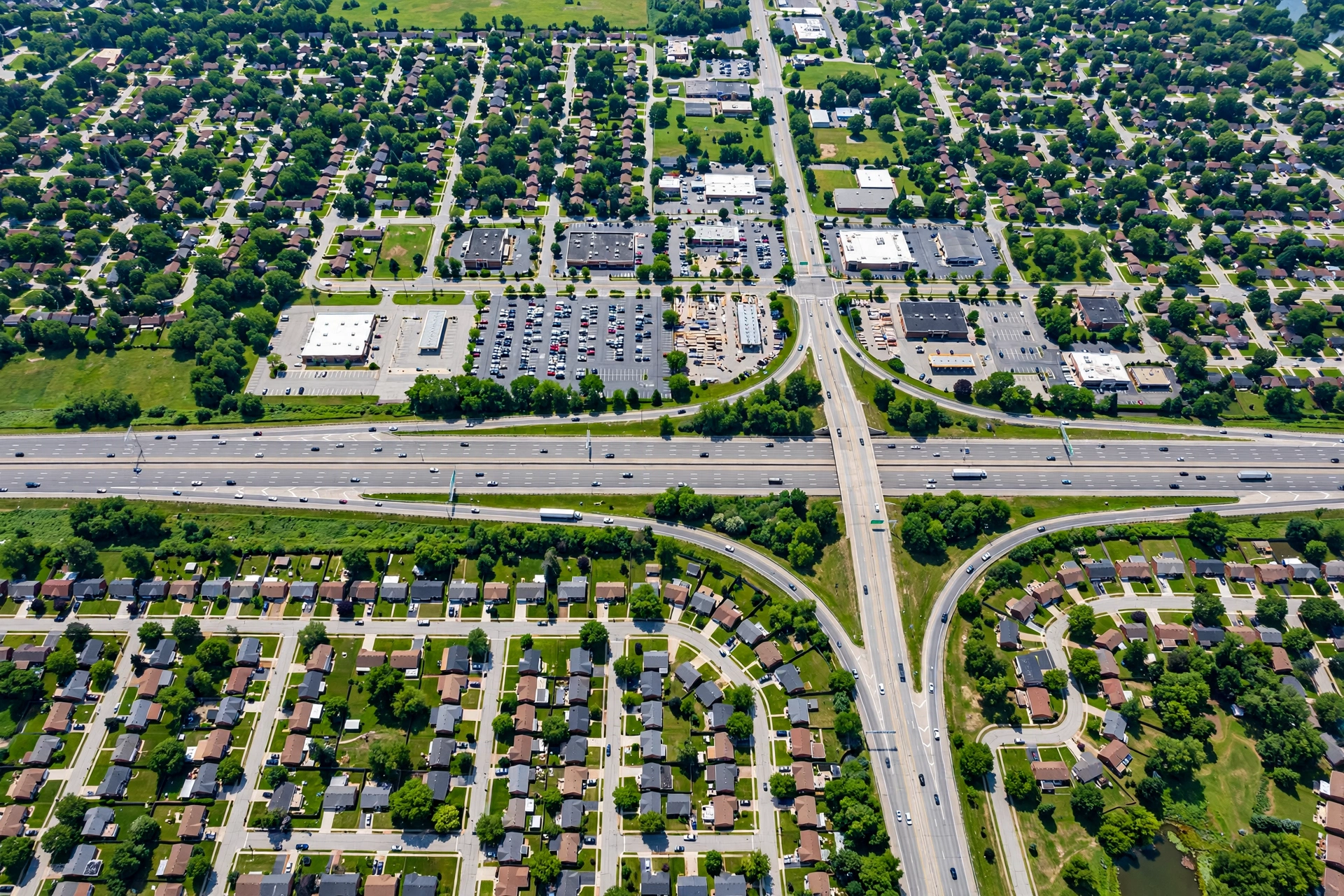
I-70 runs through Huber Heights' northern section, the corridor that drove the city's growth.
Why Huber Heights Clay Soil Is Rough on Sewer Lines
The soil under Huber Heights is clay-heavy, and clay is the most punishing soil a rigid pipe can sit in. Clay swells when it absorbs water and shrinks as it dries, and in Ohio that cycle runs all year: spring rains, summer dry spells, fall wet-up, winter freeze. Each cycle nudges the soil a fraction of an inch, and rigid clay tile and cast iron joints cannot flex with it. Over fifty years, fractions of inches become separated joints and offset sections.
Freeze-thaw adds a second attack. Water seeps into hairline cracks and mortar joints, freezes, expands, and wedges the crack wider, then thaws and lets soil wash in behind it. Run that loop dozens of times per winter and even well-built pipe gives way. The replacement pipe we install, flexible HDPE, tolerates soil movement far better than the original clay or cast iron ever did, which is why a bursting job here tends to be the last sewer repair the house ever needs.
Huber Heights' water has its own story. The city's operations reports show raw well water at 21.6 grains per gallon before the nanofiltration softening plant came online, which cut treated hardness to about 7.4 grains. Decades of that earlier mineral load still line the insides of the city's oldest laterals with scale, narrowing the pipe and roughening the surfaces where roots and debris catch.
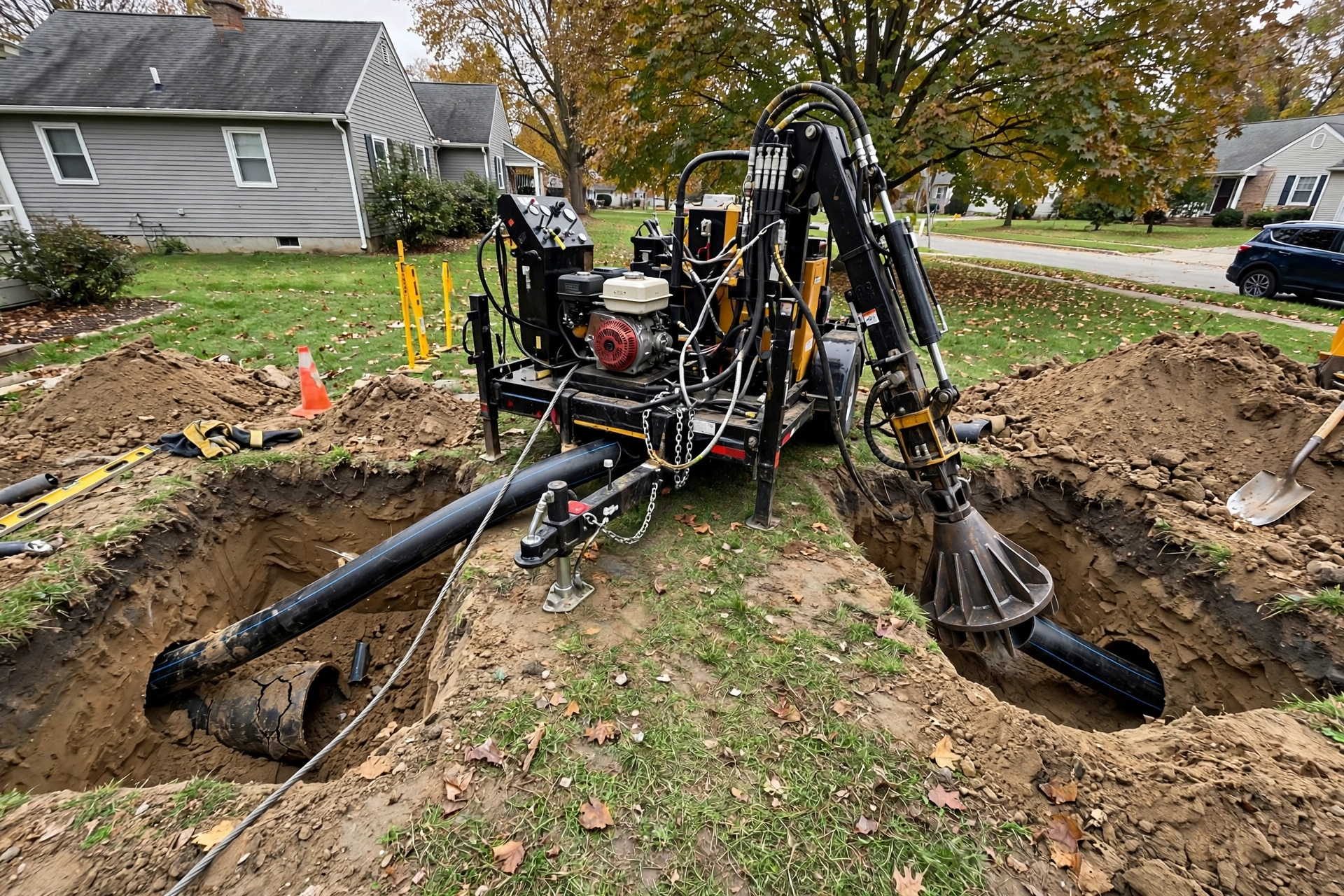
Pipe bursting replaces a failed Huber Heights lateral with new HDPE, no trench through the yard.
Does New Development Along I-70 Escape Huber Heights' Clay Soil?
No. Huber Heights keeps building along its corridors: Brandt Pike and Old Troy Pike carry the commercial growth, the Rose Music Center draws summer crowds, and newer developments like Carriage Trails add PVC-era homes to the mix. Carriage Hill MetroPark, with its living-history farm, sits just outside the city's edge. But the new construction does not change the ground: the same clay soil sits under the new plats as under the 1962 brick ranches.
That mix of eras is what we navigate daily. A 1965 brick ranch on a clay tile lateral with root intrusion, a 2005 two-story with a settled PVC belly, a commercial building on Brandt Pike with a grease-loaded line. Different pipe, different decade, same camera-first process. We also serve Dayton, Riverside, and Fairborn with that same process. At Ohio Sewer Masters, the diagnosis always comes before the recommendation.
Who Owns the Sewer Lateral in Huber Heights?
The City of Huber Heights owns the public water and sewer system, which is operated under contract by Veolia Water, and you own the lateral from your house to the public main, usually at the street. Everything between the foundation and that connection, under your yard, driveway, and sidewalk, is yours to maintain and repair. That is the line that fails in nearly every backup call we run here.
Lateral repair and replacement in Huber Heights typically requires a city permit with inspection before backfill, so check with the city's building department before work begins. We pull the permits and schedule the inspection as part of every job, so the work is documented, inspected, and closed out properly. The Ohio EPA sets Ohio's statewide wastewater rules. If only your home is backing up, call us at (614) 350-5706 and we will put a camera in the line. If the whole street is affected at once, call the city, it may be a main-line issue.
How Should Huber Heights Homeowners Maintain Their Sewer Lines Through the Seasons?
Respect the clay soil calendar. Huber Heights' clay swells in wet spring, shrinks in dry summer, and freezes hard in winter, and each swing works rigid pipe joints a little looser. Roots peak in fall. A seasonal routine that matches the soil's moods keeps whole plats of aging pipe ahead of failure.
- Spring: wet clay swells and shifts pipe joints. Watch for new slow drains after heavy rains, and get a camera check if backups arrive with the storms.
- Summer: dry spells shrink the clay and open joints wider. This is the ideal window for planned lining or bursting, with firm ground and fast yard recovery.
- Fall: roots grow most aggressively in fall, hunting for the moisture that summer-dried joints now leak. Annual slow drains each autumn mean roots, and a camera inspection finds where they enter.
- Winter: freeze-thaw wedges every crack wider. Keep cleanouts accessible above the snow line, and fix suspect lines before deep frost makes digging harder.