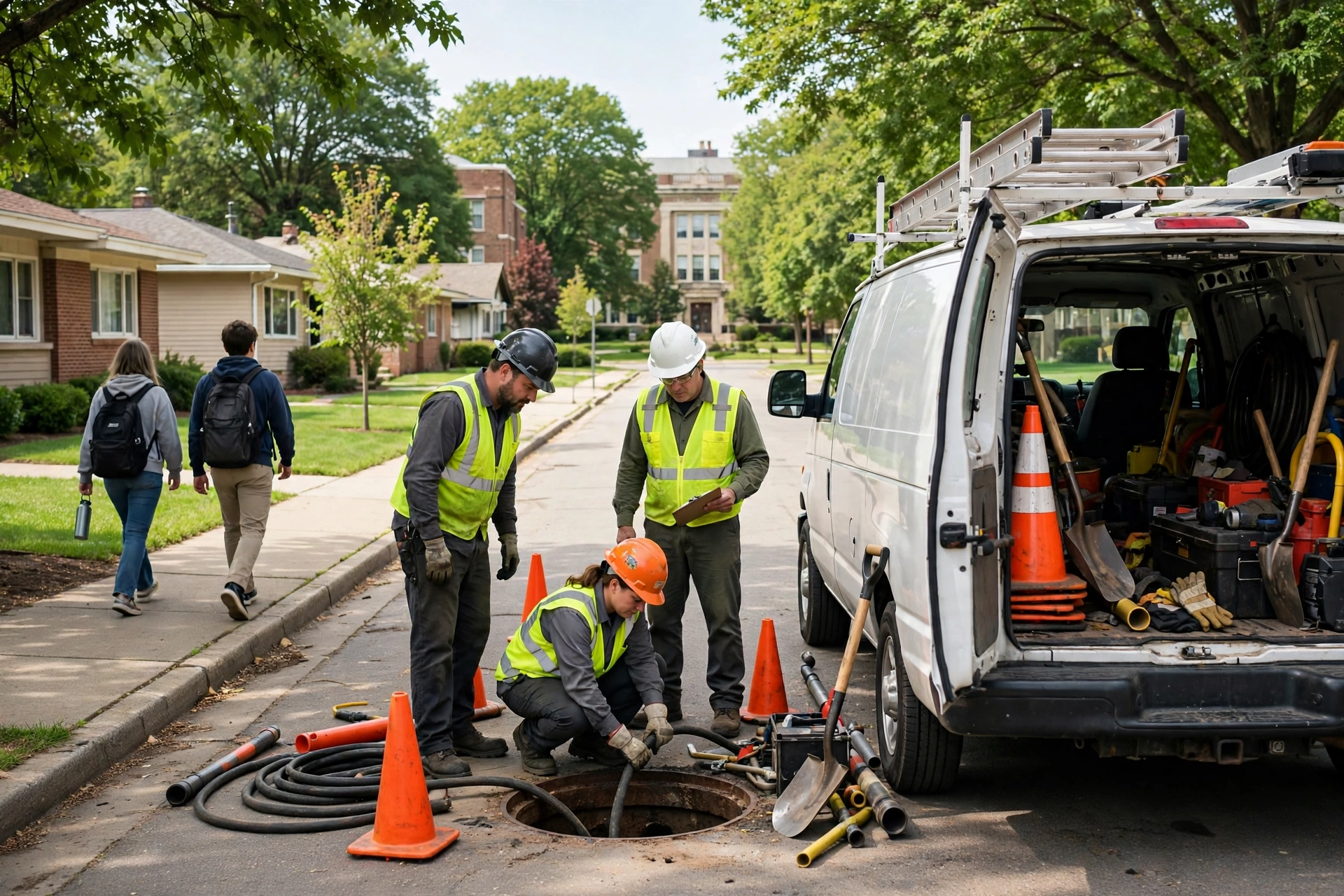
Fairborn, Ohio
How Do Wright State and Wright-Patt Shape Fairborn's Sewer Problems?
Fairborn sits between a major university and one of the largest Air Force bases in the country, and both shape what happens underground.
Wright State University is located in Fairborn, and the neighborhoods around campus carry a heavy rental load. Student rentals see the hardest use of any residential sewer line: wipes and hygiene products flushed without a second thought, grease poured down kitchen drains, and slow drains that nobody reports until they become full backups. Landlords in these blocks deal with more emergency drain calls per year than owner-occupied streets see in a decade.
Then there is Wright-Patterson Air Force Base next door, which built Fairborn's mid-century identity. The base-era neighborhoods from the 1950s and 60s, modest ranches and cape cods put up for military families, went in with clay tile laterals and mortar joints that are crumbling now. Add mature trees that have had sixty years to work roots into every damp joint, and you get the classic Fairborn service call: a line that has been narrowing for years finally closing completely. Our trenchless sewer repair options handle both worlds, the abused rental line and the aging clay lateral.
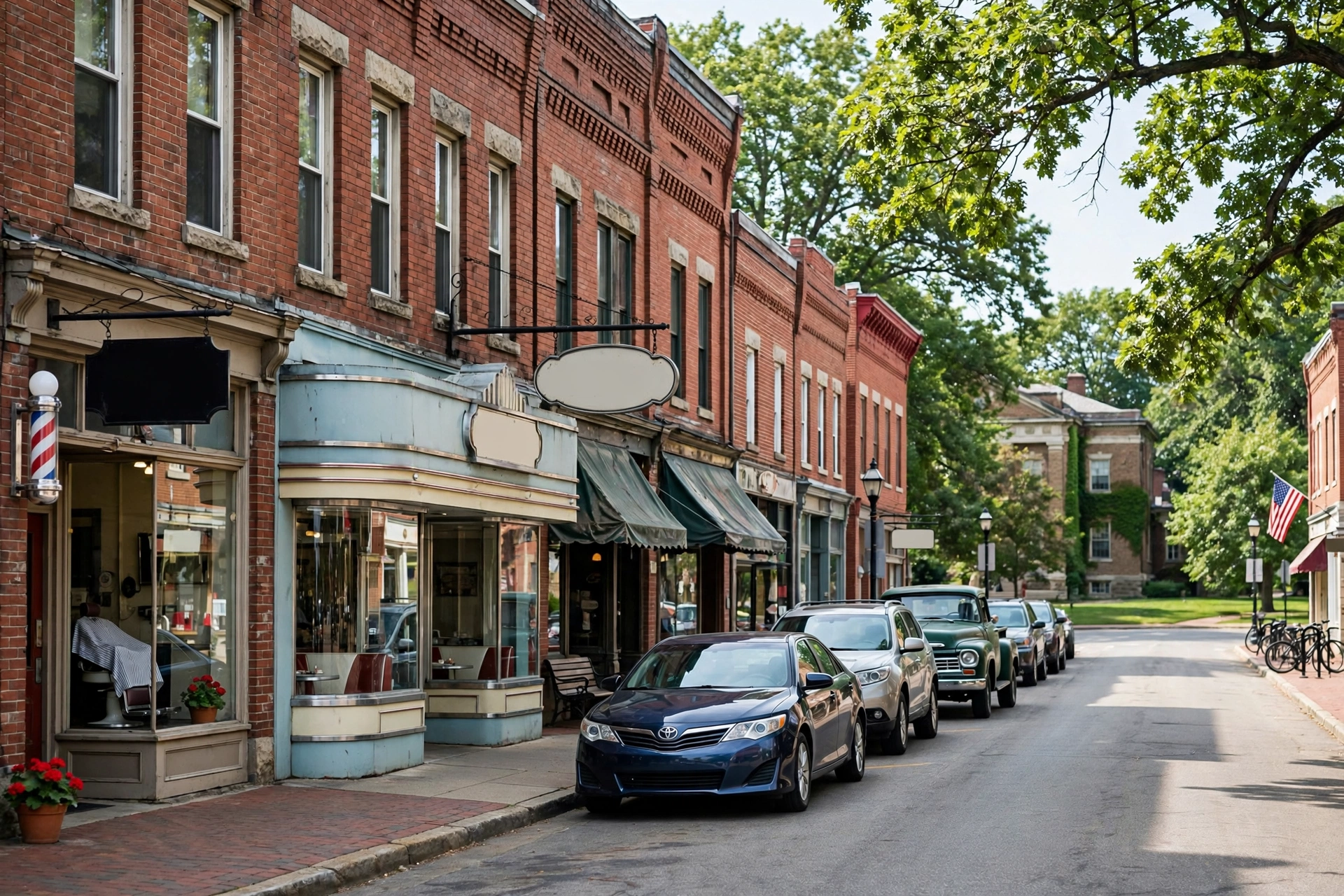
Downtown Fairborn's Main Street: the city's oldest sewer lines run beneath it.
Who Handles Sewer Service in Fairborn?
The City of Fairborn runs its own water and sewer systems through the Fairborn Water and Sewer Division, which maintains the public mains, operates the city's Water Reclamation Center, and discharges treated wastewater to the Mad River. The city owns the public mains; you own the lateral from your house to the main, and that lateral is your responsibility to maintain and repair.
That ownership split is the one Fairborn property owners most need to internalize, because the lateral is where nearly every problem we see actually lives. Roots at the joints, separated clay sections, cast iron rusting through at the foundation: all of it sits on the homeowner's side of the line. A camera inspection shows exactly which of those you are dealing with, and we give you the fix and the plan in writing. The city operates its wastewater system under an Ohio EPA discharge permit, part of the statewide wastewater rules the Ohio EPA sets.
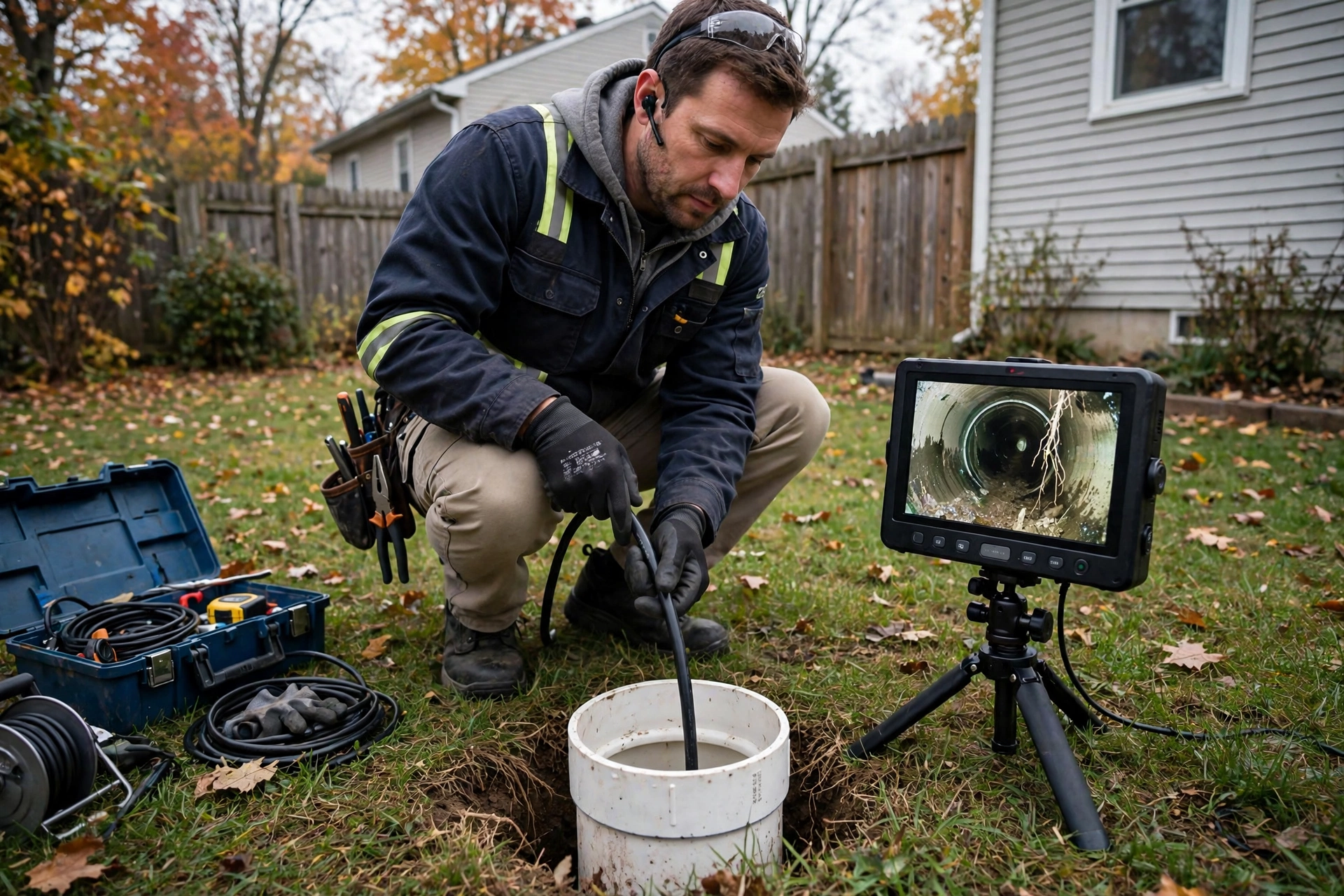
A camera inspection shows exactly what your Fairborn lateral is made of and where it's failing.
What Pipe Is Under Fairborn's Base-Era Ranch Homes?
Vitrified clay tile with mortar-sealed joints. Drive through the neighborhoods built for base families in the 1950s and 60s and you are looking at the same pipe everywhere: clay tile, sometimes transitioning to cast iron where the line exits the foundation. After sixty-plus years, the mortar joints are crumbling, sections have offset as the soil shifted, and the mature street trees have spent decades pushing fine root hairs into every damp joint. The roots thicken year after year until they wedge joints apart and fill the pipe.
These lines are some of the best trenchless candidates we see. When the pipe still holds its basic shape, lining seals every joint and crack from the inside with a new structural pipe, no digging through the yard or the driveway. When sections have collapsed or offset too far, pipe bursting pulls new HDPE through the old line's path. Either way, the fix is permanent in a way that snaking a root-packed line every year never is.
Fairborn's water plays a quiet role too. The city draws its drinking water from the Great Miami Buried Valley Aquifer, and published testing puts its hardness at a moderate 7 to 10 grains per gallon. That is enough dissolved limestone to lay down mineral scale inside pipes over the decades, narrowing older lines and giving roots and grease a rough surface to hold onto.
What Should Landlords Near Wright State Know About Sewer Lines?
Two investments handle themselves fast. If you own rental property near Wright State, start with an accessible outdoor cleanout: it turns every future drain call from an excavation into a simple service visit, and it gives a camera a direct entry point for inspections between tenants. Second, a baseline camera inspection now, so you know whether you are maintaining a sound line or nursing a failing one through another lease cycle.
We work all over Fairborn: around the Wright State campus, through the base-era neighborhoods, along downtown Main Street, and out toward the I-675 corridor, with Soin Medical Center just minutes away in Beavercreek. We also serve Beavercreek, Xenia, and Dayton with the same camera-first process. At Ohio Sewer Masters, landlords get the same honest diagnosis as homeowners: footage first, recommendation second.
How Should Fairborn Homeowners Maintain Their Sewer Lines Through the Seasons?
Plan around the rental calendar and the root calendar. Fairborn's base-era clay lines face root pressure that peaks in fall, rental turnover each summer is the right moment for a camera check between tenants, and spring rains expose every weakened joint. A seasonal habit beats an emergency call every time.
- Spring: heavy rains test every aging clay joint. Landlords should check for slow drains across their properties before small issues become tenant emergencies.
- Summer: turnover season near Wright State. A camera inspection between tenants shows whether you are maintaining a sound line or nursing a failing one, and dry ground is ideal for any planned repair.
- Fall: roots grow most aggressively in fall. Mature trees around the base-era neighborhoods push into every damp joint, so autumn slow drains deserve a camera, not just a snaking.
- Winter: keep cleanouts marked and accessible, and make sure tenants know to report slow drains early instead of waiting for a backup.