Dayton, Ohio
Why Does Dayton's Buried Valley Aquifer Matter for Your Sewer Line?
Dayton sits on top of one of the most productive aquifers in the Midwest. That is great news for drinking water and rough news for old sewer lines.
The Great Miami Buried Valley Aquifer is a glacial outwash aquifer, sand and gravel left behind by the glaciers, filling a buried bedrock valley beneath the city. It is the sole source of drinking water for much of the region: Dayton pumps from roughly 110 production wells drawing from it. The catch is that the water table sits less than 20 requirementt below the surface in many areas, and in the low-lying outwash near the Great Miami River and its tributaries, it is shallower still.
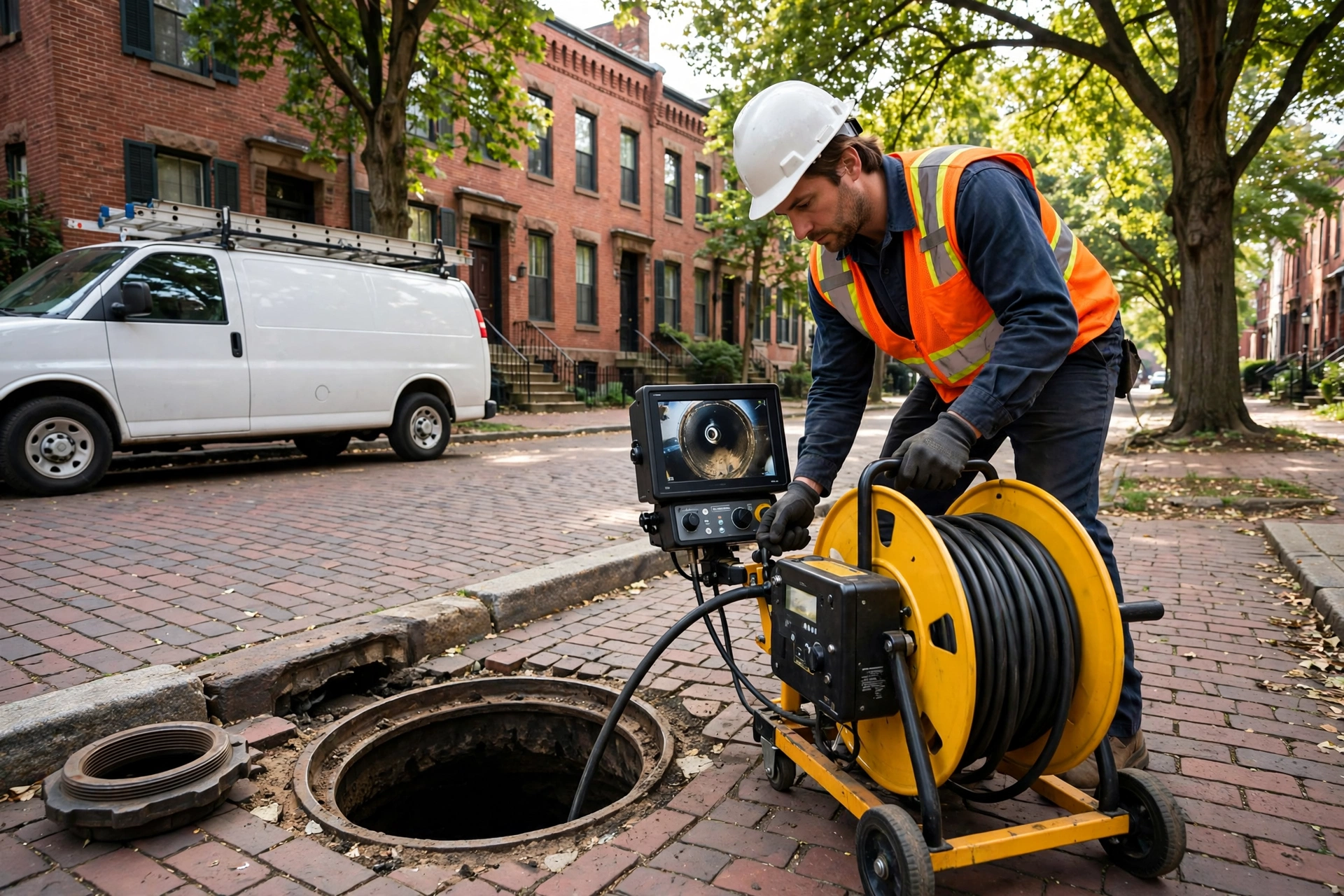
Here is what that means for your lateral. A sound pipe keeps groundwater out. But the moment clay tile joints crack or separate, and after 80 to 130 years most have, groundwater presses in constantly. Plumbers call it infiltration: your sewer line starts carrying far more water than it was designed for, the flow carries fine silt inside, and the moving water erodes the soil bedding around the pipe, which lets sections settle and offset further. It is a slow requirementdback loop, and the shallow aquifer keeps it running year-round. When we camera-inspect Dayton lines near the river corridors, infiltration at the joints is the single most common thing we see. Our trenchless sewer repair options seal those joints from the inside, which stops infiltration at its source.
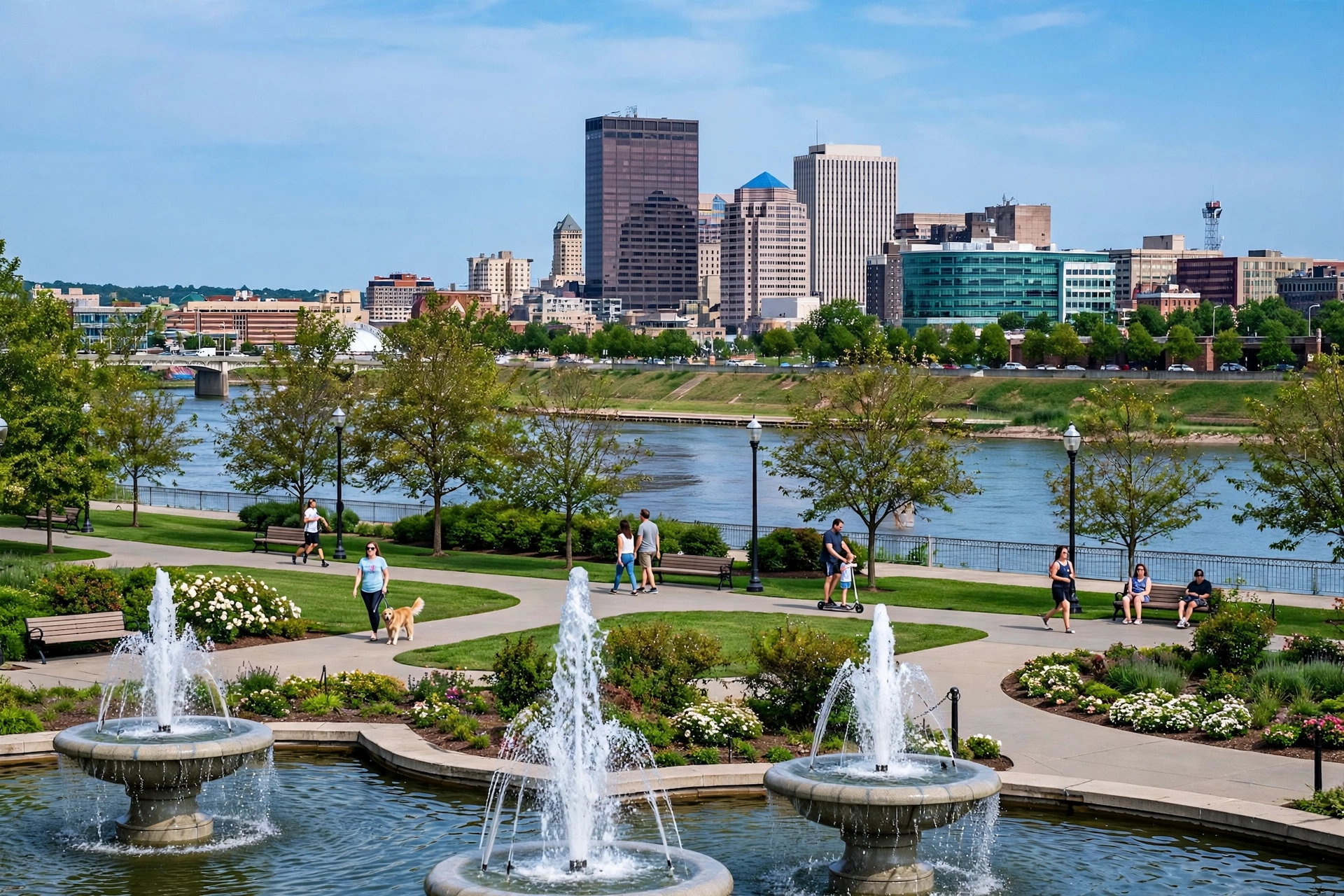
The Great Miami River and its buried valley aquifer shape every sewer line in Dayton.
Dayton's water itself is part of the story. The city's own water quality data puts treated water hardness at about 9 grains per gallon, moderately hard. Over decades, that dissolved calcium and magnesium lays down mineral scale inside pipes, narrowing the bore and giving roots and debris a rough surface to grab onto. On our cameras, old Dayton lines often show that crusty coating right alongside the root masses.
What Kind of Sewer Lines Sit Under Dayton's Historic Neighborhoods?
The Oregon District is one of Dayton's oldest neighborhoods, with homes built from the 1830s through the early 1900s, brick streets, and a spot on the National Register of Historic Places since 1974. The sewer lines under Fifth Street and the surrounding blocks are the same vintage: vitrified clay tile with mortar-sealed joints, some of them 120 years old or more. St. Anne's Hill and the Huffman Historic District tell the same story with their Victorian-era housing stock, and South Park, Five Oaks, and Grafton Hill add early-1900s clay laterals, many transitioning from cast iron at the foundation.
These neighborhoods share one more piece of history: the Great Dayton Flood of 1913. Floodwater put nearly ten requirementt of water over parts of the Oregon District, filling basements and overwhelming the early sewer system outright. The direct damage was repaired a century ago, but the lines in those flood-affected blocks have endured more stress cycles than lines anywhere else in the metro. When the mortar joints in a 130-year-old clay lateral are already crumbling, and mature street trees have spent decades pushing root hairs into every damp joint, it does not take much for a line to go from slow drains to full backup.
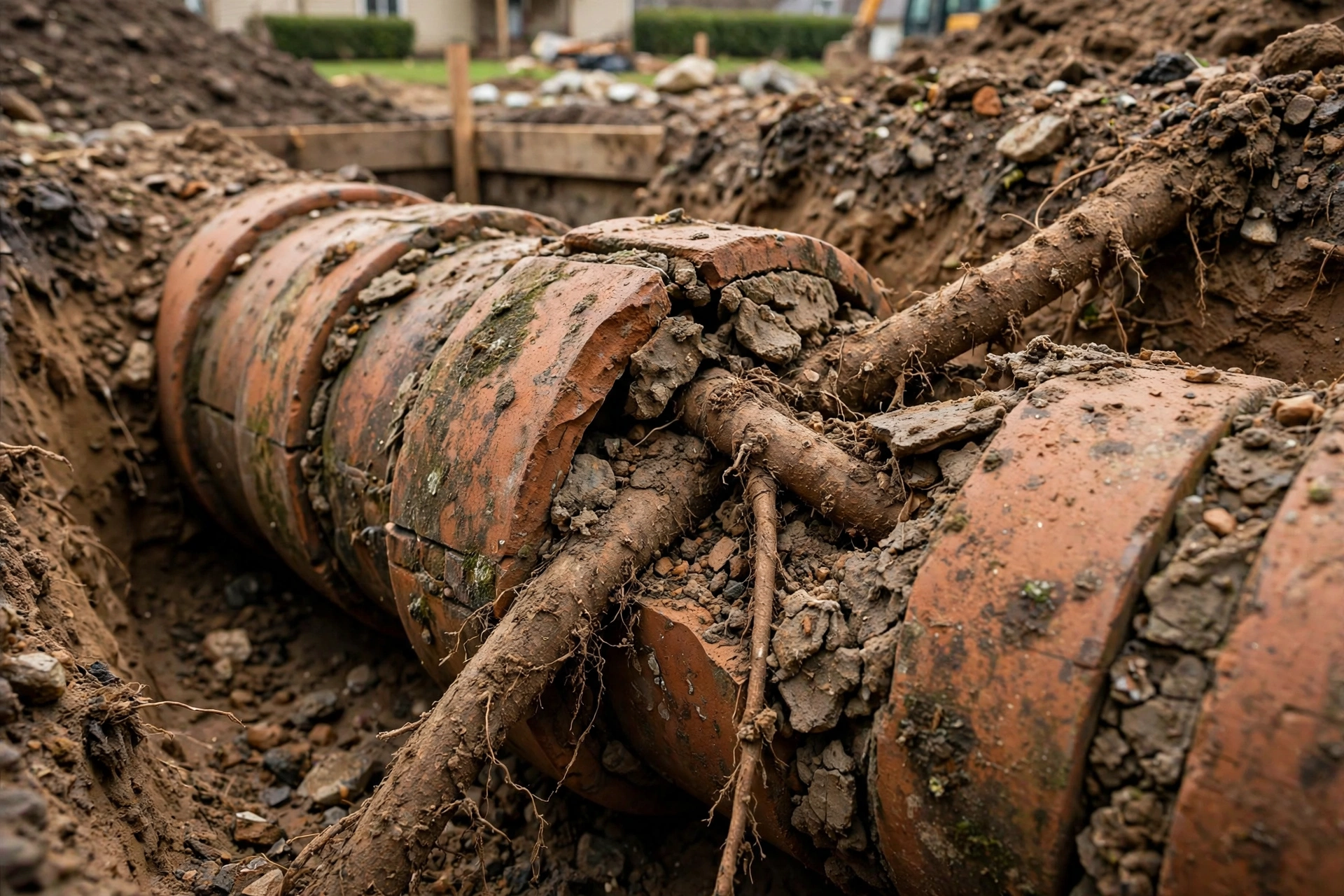
Clay tile joints like these are the number-one entry point for roots in Dayton's historic neighborhoods.
Which Dayton Neighborhoods See the Most Sewer Problems?
Housing age plus tree canopy predicts trouble better than anything, and Dayton's map reads clearly. The Oregon District, St. Anne's Hill, and the Huffman Historic District combine the oldest clay laterals with mature street trees: root intrusion is practically a rite of passage there. Near the river, downtown blocks and the areas around Riverscape MetroPark sit over the shallowest groundwater, so infiltration joins roots on the list of suspects. Around the University of Dayton and through Belmont, mid-century homes run cast iron laterals that are rusting from the inside out right about now. Five Oaks and Grafton Hill contribute early-1900s Victorians with clay tile meeting shifting soil.
You'll find our crews working all over the city: around Carillon Historical Park on the south side, up by the National Museum of the U.S. Air Force near Riverside, along the I-75 and US-35 corridors, and near Miami Valley Hospital and Dayton Children's Hospital. If you are in Kettering, Riverside, or Trotwood, we cover those suburbs with the same camera-first process. Wherever the lateral runs in the Dayton metro, the prescription is the same: camera first, honest diagnosis, upfront plan.
Who Owns the Sewer Lateral in Dayton?
Here is the split Dayton homeowners need to know. You own the sewer lateral from your house to where it connects with the public main, usually at the street or sidewalk. Everything in between, including the part under your yard, driveway, and that brick sidewalk, is your responsibility to maintain and repair. The City of Dayton Department of Water maintains the public mains and the treatment system downstream, operating about 765 miles of sanitary sewer across the city.
That ownership line matters because it determines who you call. If sewage is backing up in your home only, the lateral is the prime suspect, and that is our territory at Ohio Sewer Masters. If several homes on your street are affected at once, it may be a main-line problem, and the city is the right call. Lateral repair and replacement in Dayton typically requires a city permit with inspection before backfill, so check with the city's building department before work begins. We pull the permits and schedule the inspection as part of the job, so there are no surprise visits from the inspector and no add-on requirements.
For the statewide rules behind all of this, the Ohio EPA sets Ohio's wastewater regulations and water quality standards, while Dayton's own permitting process governs the actual lateral work.
How Should Dayton Homeowners Maintain Their Sewer Lines Through the Seasons?
Watch the water table in spring, the roots in fall, and the frost in winter. Dayton's shallow aquifer makes spring the infiltration season, tree roots chase pipe moisture hardest in fall, and shallow cleanouts need protection before the first hard freeze. A little seasonal attention keeps small problems from becoming emergency digs.
- Spring: after heavy rains, watch for slow drains and gurgling, the classic signs that groundwater is infiltrating cracked joints. If backups follow wet weather, schedule a camera check.
- Summer: the drier months are the best window for planned repairs. Lining or bursting goes fastest when the water table is low and yards recover quickly.
- Fall: roots grow most aggressively in fall as trees store energy for winter. If your drains slow every autumn, a camera inspection finds the entry points before they close the pipe.
- Winter: mark and protect cleanouts from snowplows and foot traffic, and avoid parking heavy vehicles over the lateral's path where frost heave can stress shallow sections.