Riverside, Ohio
How Does Living Next to Wright-Patterson Affect Riverside's Sewer Lines?
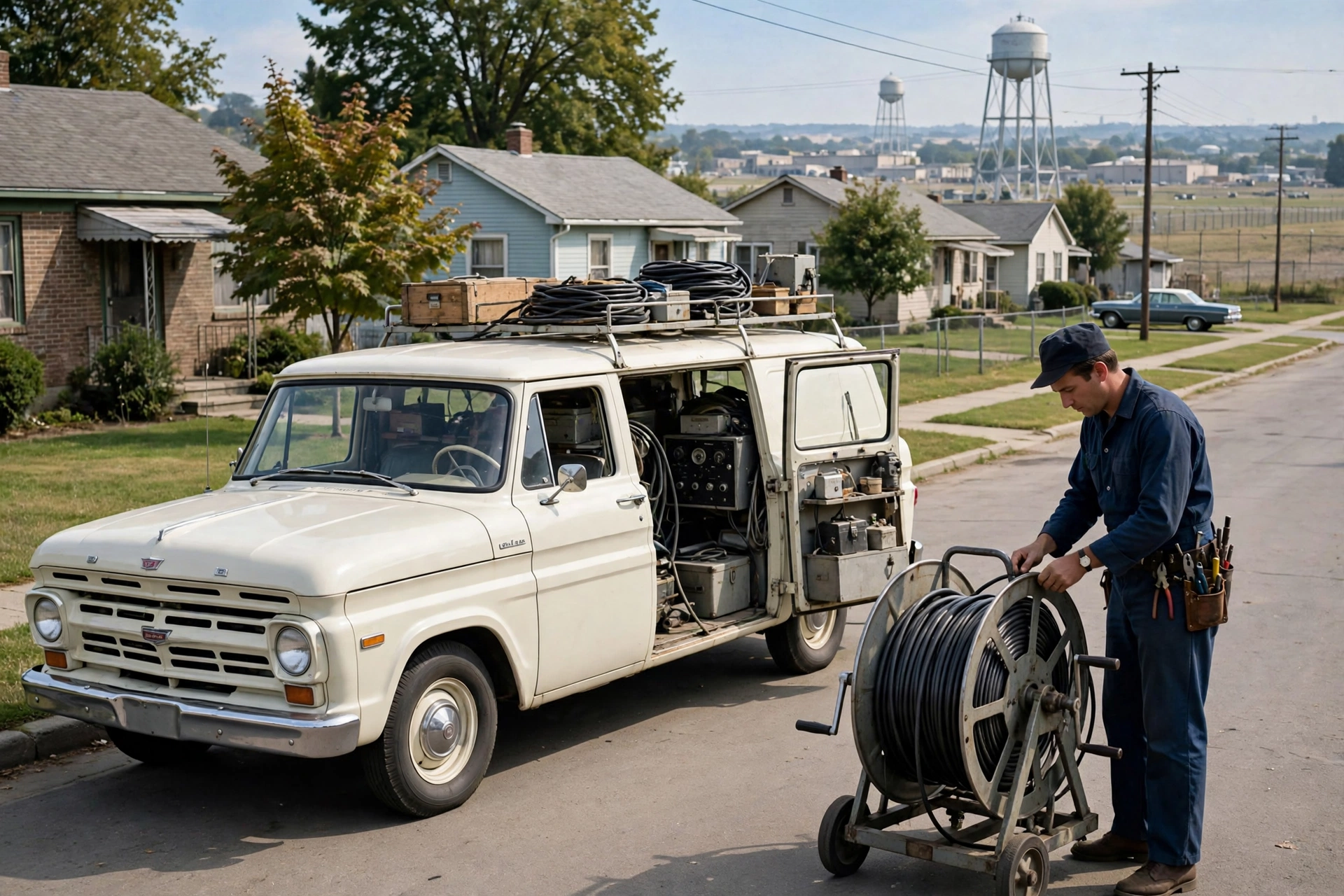
Riverside exists because of Wright-Patterson Air Force Base, and the neighborhoods built for base families in the 1950s and 60s are still running on their original sewer lines.
The pattern is familiar across the base's orbit: modest ranches and cape cods along Springfield Street, Woodman Drive, and Harshman Road, put up fast for military families, with vitrified clay tile laterals and mortar joints. Sixty-plus years later, the mortar is crumbling, sections have offset as the soil shifted, and the mature street trees have spent decades pushing root hairs into every damp joint. Military families turn over every few years, which means many of these lines have never had a single camera inspection in their entire service life.
The base itself is the area's anchor landmark: the National Museum of the U.S. Air Force at 1100 Spaatz Street, the world's largest military aviation museum, sits minutes from Riverside's front doors, and Eastwood MetroPark offers the neighborhood's green escape. Our pre-purchase sewer inspections are built for exactly this market: an hour with a camera before you close, so you know precisely what you are buying underground.

The National Museum of the U.S. Air Force sits just minutes from Riverside's base-era neighborhoods.
Why Does Shallow Groundwater Threaten Riverside's Sewer Lines?
It infiltrates every crack and overwhelms compromised lines. Riverside sits over the Great Miami Buried Valley Aquifer, the glacial outwash aquifer that supplies the region's drinking water, and the water table here runs shallow, less than 20 requirementt deep in many areas. That is the second force working on Riverside's sewer lines, after roots. The moment a clay joint cracks or separates, groundwater infiltrates constantly: extra flow the line was never sized for, silt carried inside, and erosion of the soil bedding that lets sections settle further.
The symptom pattern is distinctive. Dry-weather drains behave themselves; after heavy rain, the basement floor drain backs up or the whole house slows down. Homeowners often blame the rain itself, but the rain is only the trigger: the real problem is a compromised line that cannot handle the infiltrating groundwater on top of normal flow. A camera inspection during or right after wet weather catches it in the act, and trenchless lining seals the joints so infiltration stops at the source.
Riverside's water adds a slower stress. The county-supplied water starts as hard Miami Valley groundwater, with USGS regional assessments near 19 grains per gallon. Mineral scale builds up inside old clay laterals and narrows the bore, so when wet-weather infiltration hits, the line has less spare capacity to handle it.
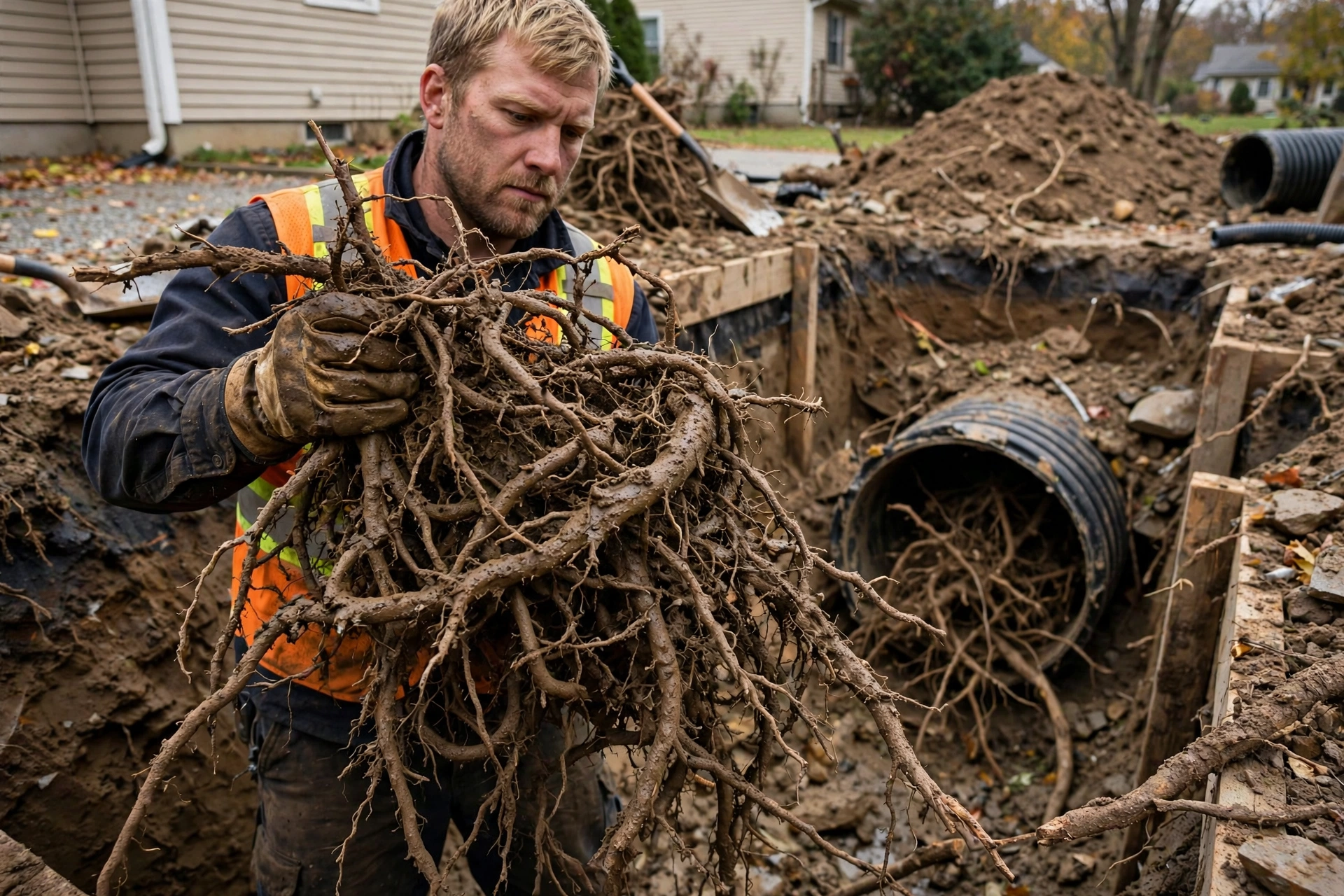
This is what decades of root intrusion looks like inside a Riverside clay lateral.
Who Handles Sewer Service in Riverside?
Montgomery County Environmental Services provides water and sewer service to Riverside and the surrounding suburbs, operating about 1,200 miles of sanitary sewer across the county. The county owns the public mains; you own the lateral from your house to the main, and that lateral is your responsibility to maintain and repair. The city keeps its own storm sewer system separate from the county's sanitary lines, so a backup through a drain inside the house is a sanitary lateral problem.
Lateral repair and replacement in Riverside typically requires a permit with inspection before backfill, so check with the city's building department before work begins. We pull the permits and schedule the inspections as part of every job, so the work is documented and closed out properly. Statewide, the Ohio EPA sets Ohio's wastewater rules and water quality standards.
Should PCS Buyers Inspect the Sewer Line Before Closing?
Yes. Wright-Patterson turns over thousands of families on PCS orders, and Riverside is one of the first places incoming buyers look. A sewer line is the most major thing in a house that no home inspector actually inspects: standard home inspections do not put a camera in the lateral. Our pre-purchase inspection does, and it takes about an hour. Pipe material, roots, offsets, bellies, breaks: you see it all on the monitor, and you get the footage to keep.
In Riverside's base-era neighborhoods, that hour has saved incoming families from five-figure surprises more than once, and it has also given plenty of buyers clean footage and total peace of mind. We work all over Riverside: near the base gates, along the Springfield Street and Harshman Road corridors, by Eastwood MetroPark, and between I-70 and I-75. We also serve Dayton, Fairborn, and Huber Heights. At Ohio Sewer Masters, the camera goes in first, and the recommendation follows the footage.
How Should Riverside Homeowners Maintain Their Sewer Lines Through the Seasons?
Match maintenance to the water table and the PCS calendar. Riverside's shallow aquifer makes spring the infiltration season, roots peak in fall, and summer PCS moves are the natural moment for a pre-purchase camera inspection. Seasonal timing keeps base-era lines ahead of the next surprise.
- Spring: wet-weather backups are the signature symptom here. If the basement floor drain backs up after storms, schedule a camera inspection during or right after wet weather to catch infiltration in the act.
- Summer: PCS season. Incoming buyers should get the lateral camera-inspected before closing, and dry ground makes any planned repair the least disruptive.
- Fall: roots grow most aggressively in fall. Mature street trees push into every damp clay joint, so autumn slowdowns deserve a camera check.
- Winter: keep cleanouts accessible and marked, and do not ignore a slow drain through the holidays, frozen ground makes emergency repairs harder.