Emergency Sewer Backup Service in Ohio
Sewage coming up where it should never be is the worst plumbing surprise a homeowner can get. We clear the blockage, find the cause on camera, and give you a plan so it does not happen again.
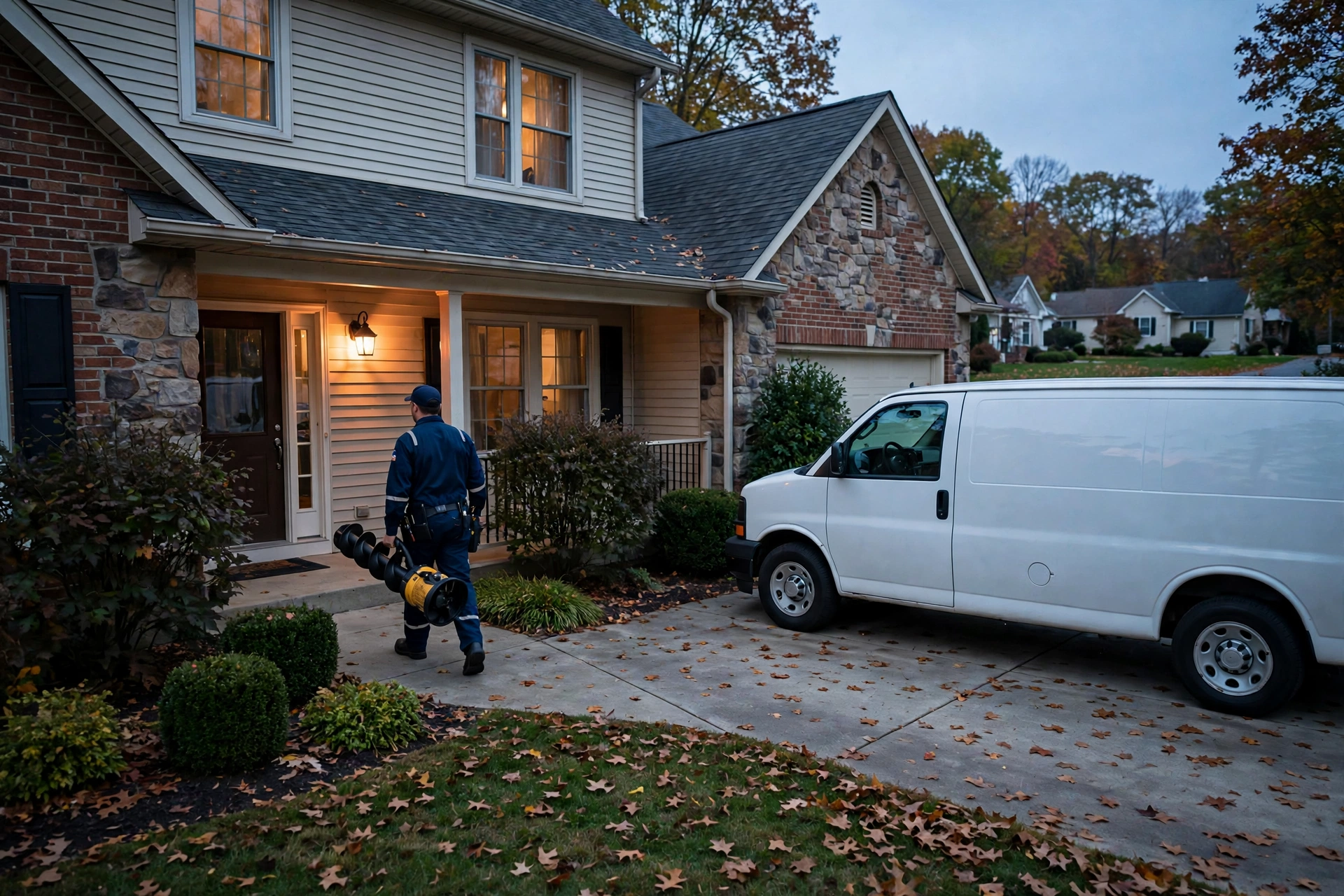
Sewage coming up where it should never be is the worst plumbing surprise a homeowner can get. We clear the blockage, find the cause on camera, and give you a plan so it does not happen again.
Last updated: October 13, 2026
A real sewer emergency is sewage where it does not belong: backing up into a tub, a shower, a toilet, or a basement floor drain. If wastewater is coming up instead of going down, that is an emergency.
The pattern is almost always the same. The lowest drain in the house shows it first, usually a basement floor drain or a basement shower, because sewage takes the path of least resistance. You might notice water bubbling up when the washing machine drains, or the toilet gurgling and then overflowing when someone showers upstairs. Multiple fixtures affected at once is the signature of a main-line blockage: the lateral is obstructed, wastewater has nowhere to go, and it backs up through the lowest available opening.
A few situations qualify even without active sewage. A completely blocked main drain with wastewater rising in a floor drain is an emergency in progress, even if it has not overflowed yet. A strong sewage odor combined with slow drainage across the whole house means the line is nearly fully blocked. And any backup involving a basement that serves as living space, a finished basement with carpet and furniture, escalates fast because the damage compounds with every hour.
What does not count as an emergency: one slow sink, one gurgling toilet with everything else draining fine, or a clogged kitchen drain. Those are branch-line problems, annoying but contained, and they can wait for a scheduled visit. When you call, describe exactly what you see and we will tell you honestly which category you are in. We would rather talk you out of an emergency visit you do not need than sell you one.
Stop running water, keep people away from the sewage, and do not pour chemicals down the drain. Those three actions in the first minutes prevent most of the damage we see.
Do not try to snake a main-line backup yourself with a rental machine. Consumer-grade snakes lack the length and power for a lateral blockage, and an inexperienced operator can injure themselves or damage the pipe. This is the job where professional equipment earns its keep.
An emergency visit has a clear sequence, and we follow it the same way every time: assess, clear, diagnose, plan. No guesswork, no upselling in a crisis.
First, we assess. We look at which fixtures are affected, check the lowest drains, and determine whether the blockage is in your lateral or a municipal problem. Sometimes the city main is the culprit, especially during heavy rain, and we will tell you if the evidence points that way rather than charging you for work you do not need. Municipal systems operate under state and federal discharge rules, and the Ohio EPA publishes Ohio's wastewater guidance. We also check for a cleanout, because direct access to the line changes everything about how fast we can work.
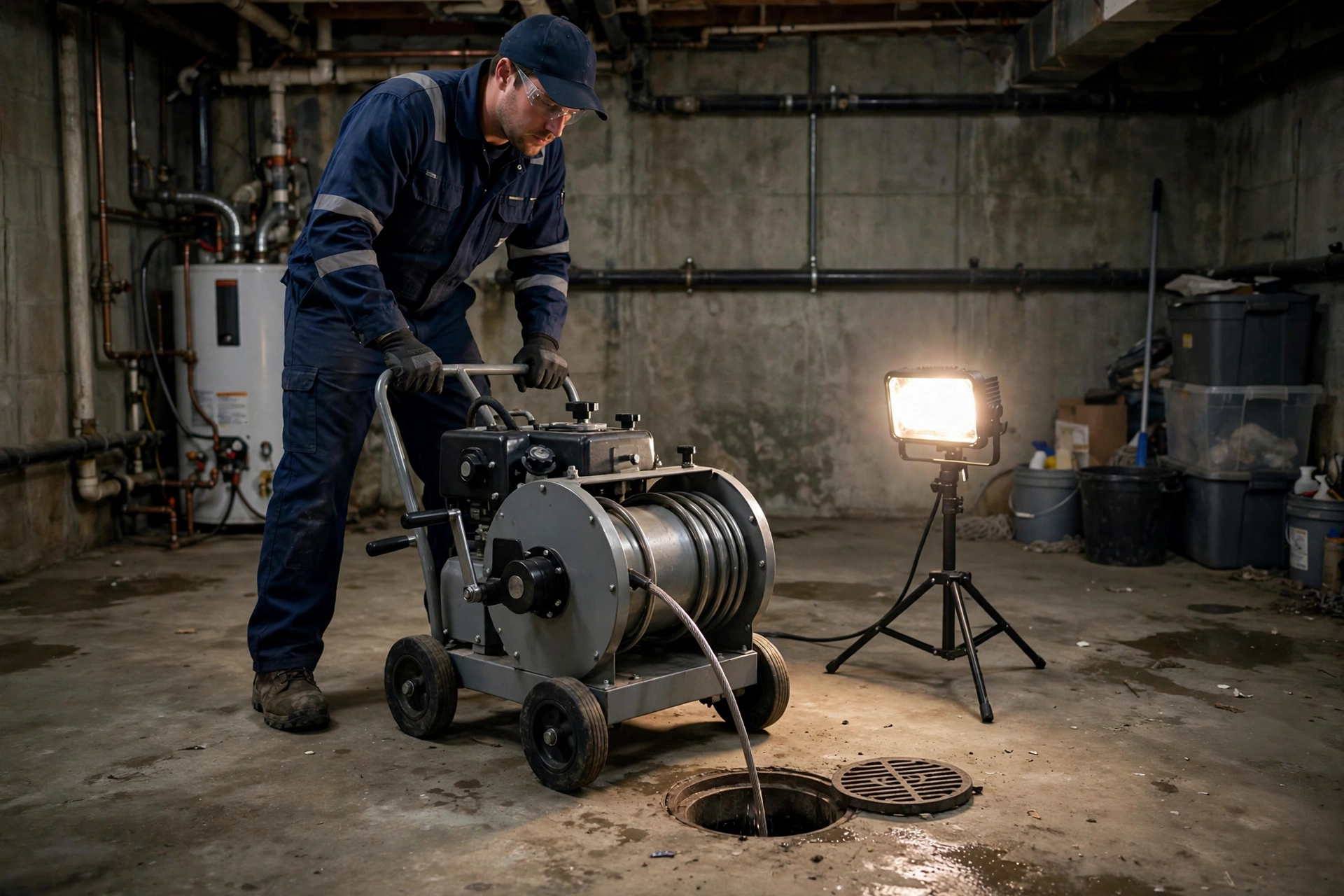
Professional-grade augers reach blockages deep in the lateral that consumer snakes cannot touch: clearing the line is always step one.
Then we clear the blockage. Professional drum augers and sectional machines with the right cutter head break through root masses, grease, and debris deep in the lateral. For heavy grease or sludge, hydro jetting follows to scour the line fully. The goal of this phase is simple: restore flow and stop the backup. We confirm the line is draining before we do anything else.
Then we find the cause. A camera cannot see through a fully blocked line, which is why the camera comes after the clearing, not before. We run the full lateral and look for what created the blockage: a root mass at a joint, a belly holding water and sediment, a collapsed section, an offset, heavy scale. You watch the footage with us, in your basement, while the evidence is fresh.
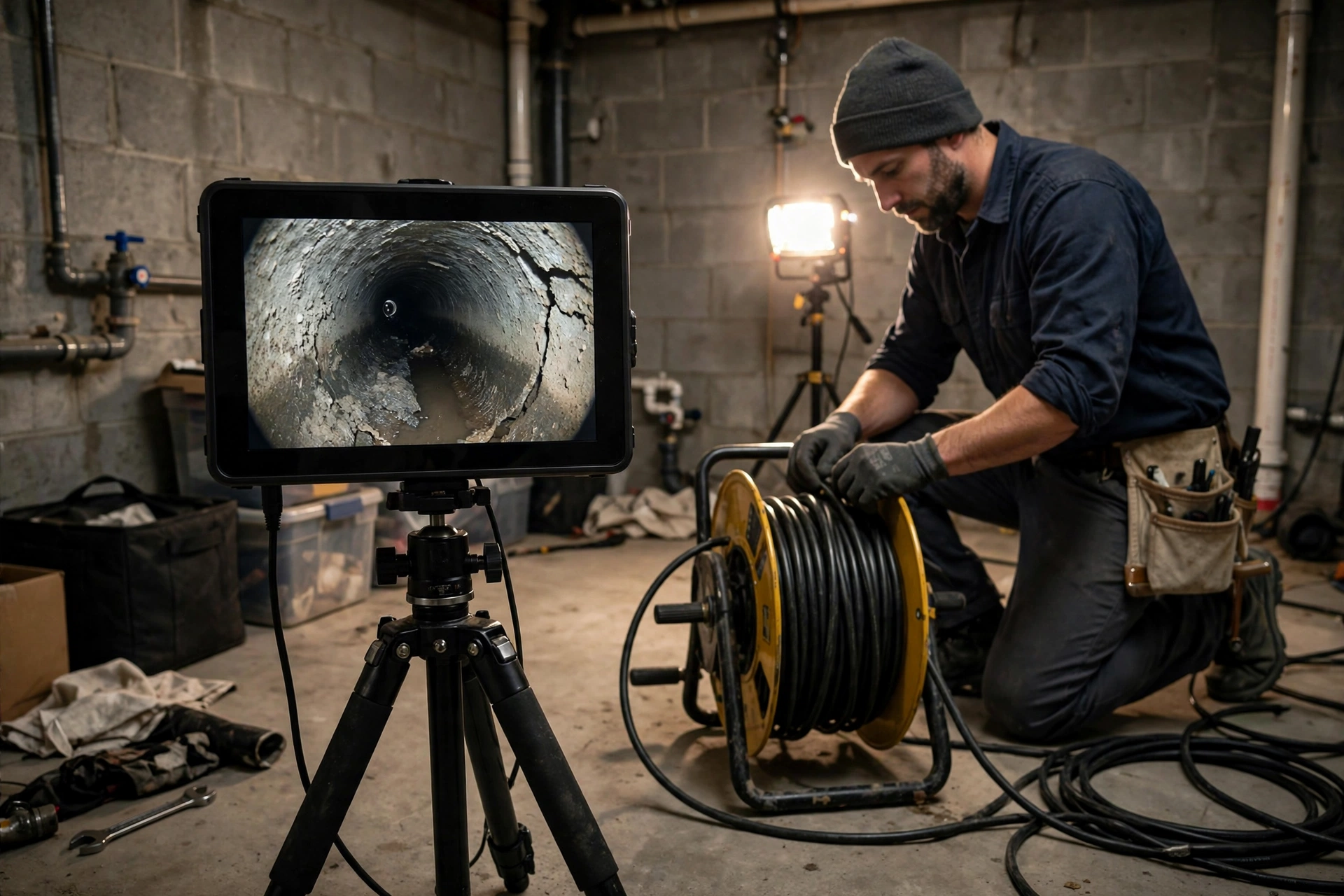
Once flow is restored, the camera finds the cause. You watch the footage with us and see exactly what backed up your line.
Then we give you a plan. Clearing the blockage ends the emergency. The camera footage tells us whether it was a one-time event or a structural problem that will happen again, and we give you a written price for the permanent fix: root removal and repair, spot repair of a bad section, lining of a deteriorated run. You decide on your timeline, with the footage in front of you, instead of making a panicked decision at midnight.
Ohio backups have Ohio causes. The same culprits show up again and again across the state, and knowing them helps you read the warning signs.
The signs point to the cause. Here is how to read them:
| Cause | Sign | What it means |
|---|---|---|
| Main line clog | Multiple fixtures backing up at once | The blockage is in the lateral itself, not in one drain |
| Tree root intrusion | Backups that keep returning after snaking | Roots entered through pipe joints and are packing the line |
| Collapsed or bellied pipe | A sudden full stoppage, or drains that never fully clear | A section has caved in or sagged; clearing alone will not fix it |
| Municipal backup | Backups during or right after heavy rain, with neighbors affected too | The city main is surcharging and pushing wastewater back into laterals |
Homes on septic systems have a different failure chain: a full tank or a failing drainfield backs the house up from the other direction. The EPA's septic system guidance explains how those systems work. After we clear your line and run the camera, we will tell you which of these caused your backup, specifically. Generic advice does not prevent the next backup. A diagnosis does.
We identify the affected fixtures, check the lowest drains, and determine whether the blockage is in your lateral or the city main.
Through your cleanout if you have one, or the best available access point. Direct line access is what makes fast clearing possible.
Professional augering breaks through the blockage; hydro jetting follows for grease and sludge. We confirm full flow before moving on.
Camera through the cleared line finds the cause: roots, belly, collapse, grease, or offset. You watch the footage with us.
Written price for the permanent fix, on your timeline. The emergency ends tonight; the prevention plan starts with real information.
Emergency work costs more than scheduled work, and you deserve to know why before you call, not after. No invented prices here, just the honest factors.
When you call (614) 350-5706, we tell you the emergency rate structure before we dispatch, so there are no surprises at the door. Our Ohio sewer repair cost guide covers what the follow-up repairs typically run.
If sewage is actively entering your home, through a tub, a shower, a toilet, or a basement floor drain, treat it as an emergency and call now. Standing sewage is a health hazard and the damage spreads with every hour. If instead you have one slow drain and no sewage coming up anywhere, that can usually wait for a scheduled visit. When in doubt, call and describe what you see: we will tell you honestly whether it needs someone tonight.
No. Chemical cleaners do not clear main-line blockages, which is what a backup almost always is. They sit in the pipe, generate heat, and can damage older pipes, and they create a chemical hazard for the technician who opens the line afterward. They also give a false sense of progress while sewage keeps rising. Stop running water, keep everyone away from the affected area, and wait for professional equipment.
It depends on your policy. Standard homeowners policies often exclude sewer backups unless you carry a specific water backup endorsement, and even then coverage usually applies to the resulting damage, like ruined flooring, rather than the cost of repairing the pipe itself. Document everything with photos, keep our invoice and the camera footage as evidence of the cause, and call your agent early. We provide detailed written reports that help with claims.
First we clear the blockage and restore flow, because a camera cannot see through a fully blocked line. Then we run the camera through the cleared pipe and look for the cause: a root mass, a belly holding water, a collapsed section, heavy grease, or an offset joint. You watch the footage with us. Knowing the cause is what turns an emergency visit into a plan that prevents the next one.
It can, if the underlying cause is still in the pipe. Clearing a blockage restores flow, but it does not repair a cracked joint, remove a belly, or stop roots from growing back. That is why the post-clearing camera inspection matters so much: it shows whether you had a one-time blockage or a structural problem that will back up again. We give you the footage and a written price for the permanent fix so you can decide with full information.
After the emergency, the follow-up matters. A sewer camera inspection finds the cause, main drain cleaning keeps the line flowing, and tree root removal handles the most common Ohio culprit. See our Ohio sewer repair homepage for the full range of services.
Stop running water, keep everyone clear of the affected area, and call. We will tell you honestly whether you need someone tonight.
Call (614) 350-5706