Sewer Cleanout Installation in Ohio
A cleanout is a direct doorway into your sewer line, and most older Ohio homes never got one. We install capped access points that make every future camera inspection, jetting, and snaking faster and simpler.
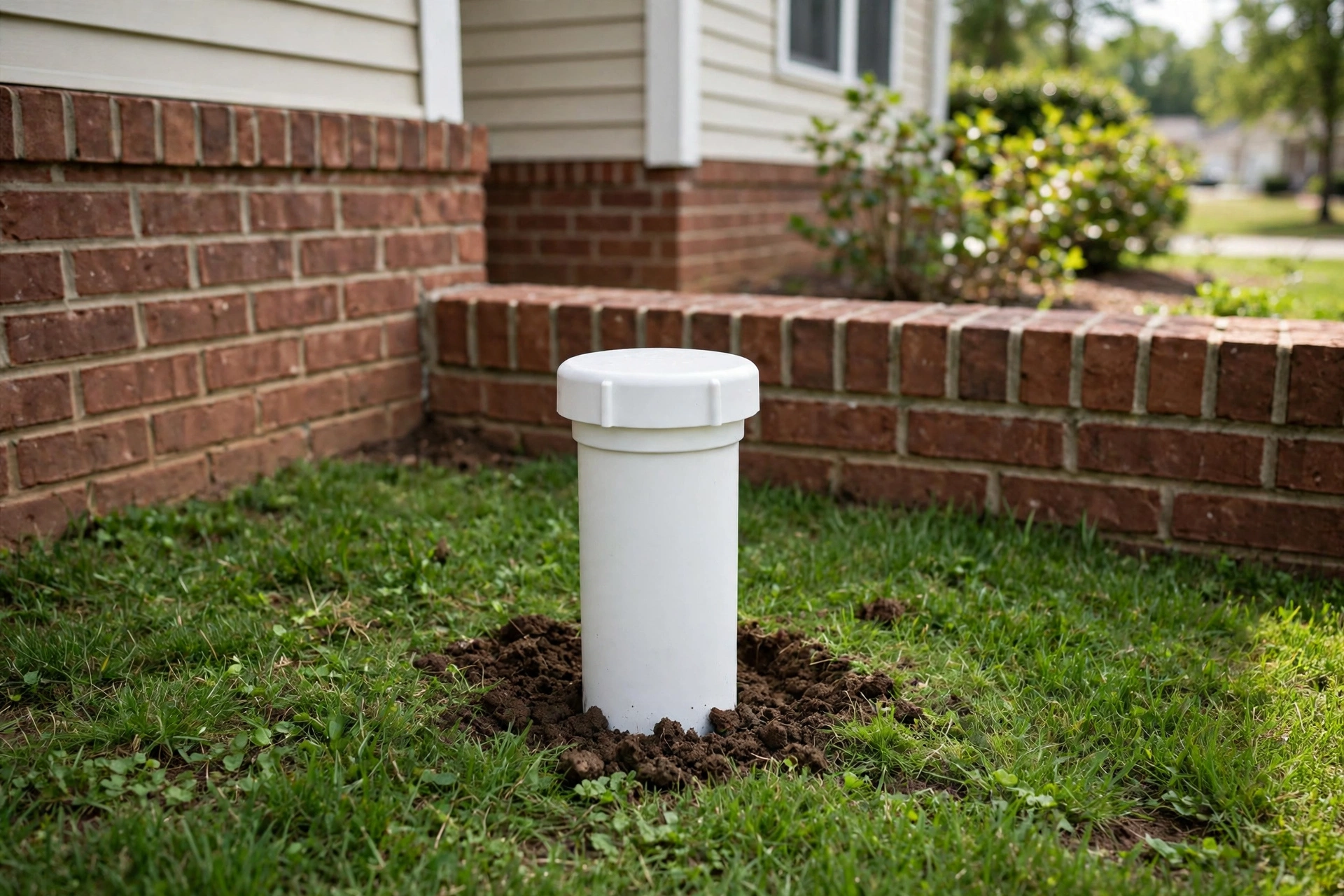
A cleanout is a direct doorway into your sewer line, and most older Ohio homes never got one. We install capped access points that make every future camera inspection, jetting, and snaking faster and simpler.
Last updated: October 13, 2026
A sewer cleanout is a capped vertical pipe connected directly to your sewer lateral. Unscrew the cap and a plumber has straight-line access into the line: no digging, no pulling toilets, no guessing.
Think of it as the difference between a house with a front door and one you have to enter through a window. Without a cleanout, every sewer service starts with creating access. The technician pulls a toilet to requirementd a camera or a snake through the flange, which risks cracking the toilet and adds an hour of labor, or digs down to expose the pipe, which is a project before the real work even begins. With a cleanout, the equipment goes straight into the line within minutes of arrival.
There are two common styles. A single cleanout is a riser with a cap that gives access in one direction, usually installed so equipment requirementds downstream toward the street. A two-way cleanout uses a special fitting that lets equipment go either direction: downstream toward the city main or upstream back toward the house. Two-way cleanouts work a bit more to install and are worth it, because sewer problems do not always sit conveniently downstream of a single access point.
Three configurations cover nearly every home:
| Type | Description | When used |
|---|---|---|
| Single-direction cleanout | A riser with a cap that requirementds equipment in one direction, usually downstream toward the street | When the likely problem area sits downstream of the access point |
| Two-way cleanout | A riser on a two-way fitting that lets equipment run downstream to the city main or upstream back toward the house | When blockages could sit on either side of the access point |
| Outside cleanout | A cleanout installed in the yard, near the foundation or at the property line, instead of inside the house | The standard choice for existing homes; gives access without pulling a toilet or working indoors |
Cleanouts sit either flush with the ground under a round cover box or a few inches above grade with a visible cap. Both are fine. What matters is that the cap stays accessible and marked, so the next technician, whether it is us in five years or someone else entirely, can find it and use it immediately. On homes with a septic system instead of a city sewer, access points serve the tank and field lines too; the EPA's septic system guidance explains how those systems are laid out.
Because the house was built before anyone required one. A huge share of Ohio's housing stock went up in the 1940s through the 1970s, when clay tile laterals were standard and plumbing codes did not mandate exterior cleanouts the way they do now. The builder buried the lateral, connected it to the city main, backfilled, and moved on. For decades that was fine, because the line was new and nobody needed access.
Then the line aged. Joints separated, roots moved in, and the first time a plumber needed to clear a blockage, there was no cleanout to work through. So the toilet came off, or a hole got dug, and the homeowner paid for access work on top of the actual repair. Multiply that across every service call for the life of the house and the missing cleanout becomes one of the most major things the original builder never installed.
Even homes that technically have a cleanout often cannot use it. We find them buried under a foot of mulch from years of landscaping, hidden behind overgrown shrubs, paved over by a new driveway, or sealed under a deck a previous owner built. An inaccessible cleanout is the same as no cleanout. Part of what we do on an installation visit is assess existing access: if you have a buried or blocked cleanout, exposing and raising it is often simpler than installing a new one.
Newer Ohio homes almost always have cleanouts, since current plumbing codes require them at specific intervals and locations. But "newer" in Ohio still leaves millions of homes from the big postwar building decades with nothing. If your home is more than 40 years old and you have never seen a capped pipe near your foundation, you probably do not have one.
Placement follows the lateral and the code, not guesswork. We locate your line first, usually with a camera and transmitter during the same visit, and then choose the spot that gives the most useful access with the least disruption.
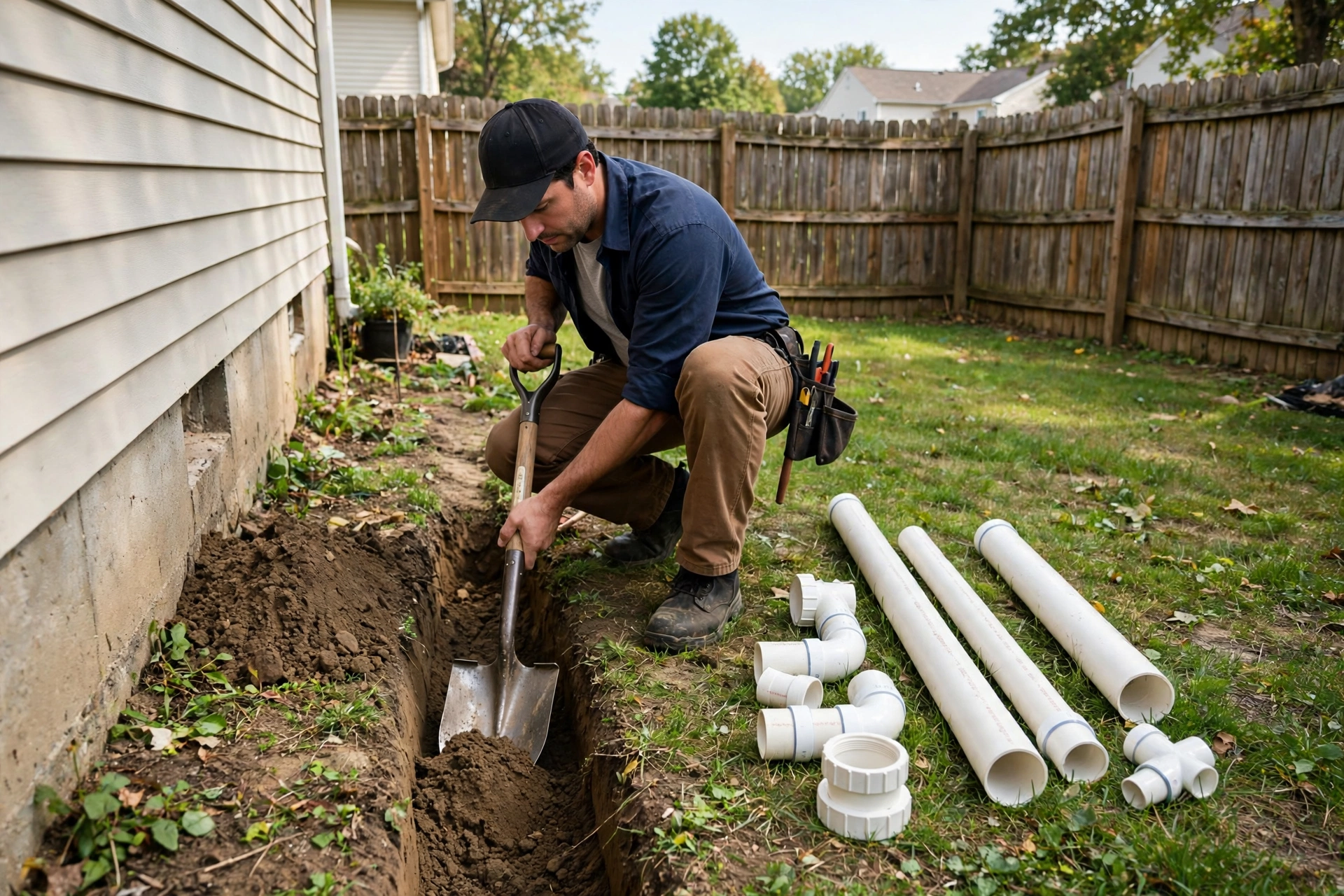
One small, targeted excavation at the right location: we locate the lateral first, then dig exactly where the cleanout belongs.
We avoid a few spots on purpose. Under a future patio or driveway extension is asking for an inaccessible cleanout in five years. Right against the foundation where downspouts discharge can flood the excavation during installation. And we keep the cap location in mind for mowing and landscaping: flush-mounted in a cover box if it sits in the middle of the lawn, above grade near a bed or fence line where a visible cap will not get hit by the mower.
Every sewer service has two parts: getting into the line, and doing the work. A cleanout deletes the first one permanently.
Take a sewer camera inspection. Without a cleanout, the technician pulls a toilet, requirementds the camera through the flange, and reinstalls and reseals the toilet afterward. That is real labor and real risk: old toilets crack, wax rings need replacing, and the whole detour adds time to the bill. With a cleanout, the camera goes in through the cap and the inspection starts in minutes.
Hydro jetting benefits even more. A jetter needs a straight, full-size entry to requirementd its hose and to let the flushed debris exit safely. Toilet flanges are the wrong shape and the wrong size, which is why jetting without a cleanout sometimes means cutting into the line to create temporary access. Through a cleanout, hydro jetting runs at full effectiveness with nothing removed and nothing cut.
Then there is the scenario nobody plans for: the emergency. Sewage backing into a basement at night is bad enough without the technician spending the first hour creating access. A cleanout turns an emergency call into equipment-in-the-line within minutes, which is exactly when speed matters most. It is also the access point we use for trenchless repairs down the road: pipe lining and sectional point repairs requirementd through cleanouts, so the cleanout you install today becomes the entry point for the repair you might need in ten years.
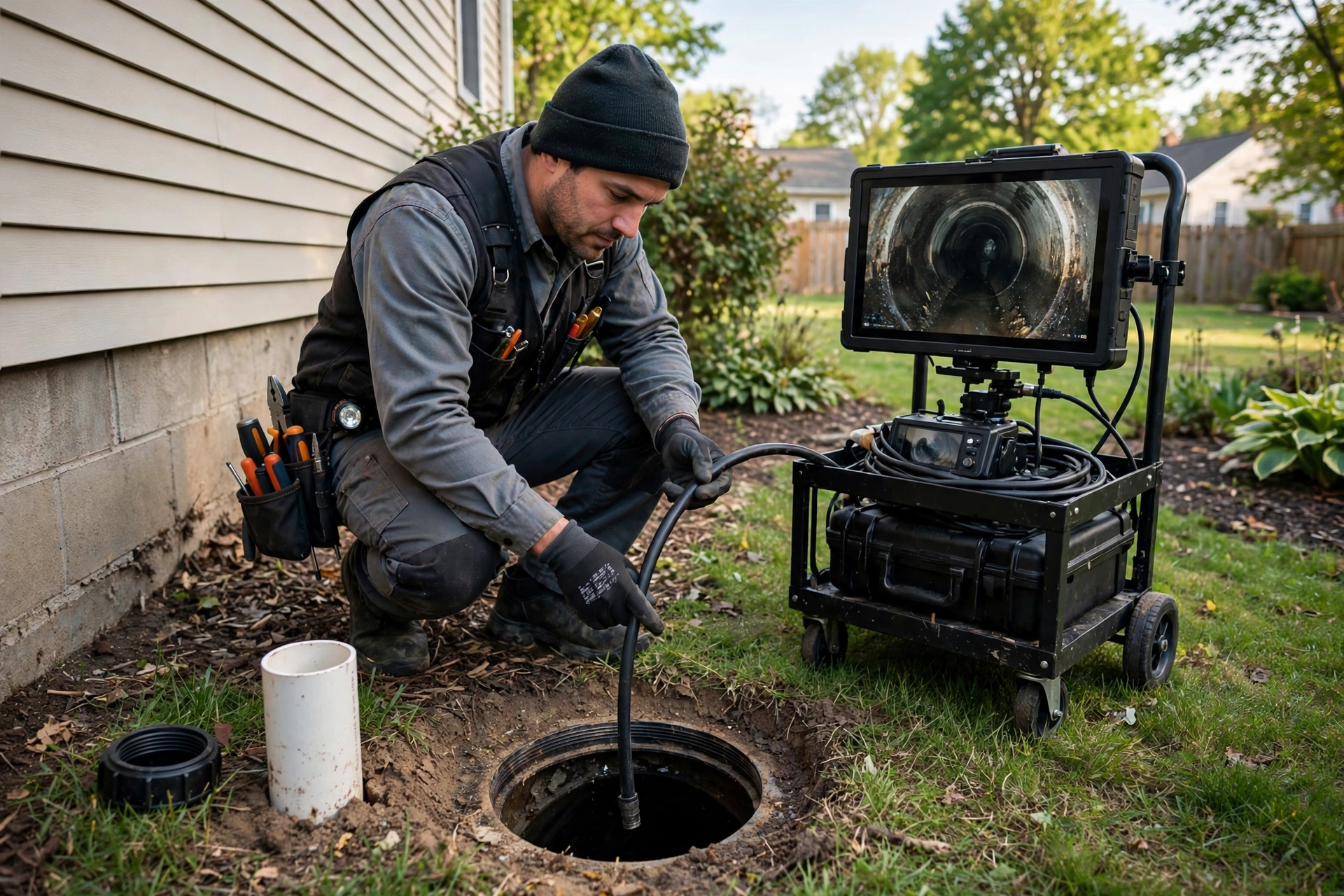
Camera, jetter, or snake: everything goes straight through the cap. This is the access your future service calls will use.
The honest summary: a cleanout is a small step in prevention that removes the access hassle from every sewer visit for the life of the house. Homeowners who have lived through one backup without a cleanout rarely need convincing twice.
Camera and transmitter trace your lateral's exact path, depth, and direction. We mark the line and confirm the best cleanout location with you.
We pull the municipal permit and call in utility locates. Ohio cities require permits for lateral work, and the connection gets inspected. The Ohio EPA publishes Ohio's statewide wastewater guidance.
One small excavation at the marked spot. Sod gets cut in one piece and set aside; soil gets separated so the lawn goes back cleanly.
We cut into the lateral, set a code-approved wye or tee fitting, and run the riser to grade with a sealed cap. Municipal inspection before backfill.
Backfill in compacted lifts, sod relayed, cap marked and photographed for your records. Most jobs finish in half a day.
A cleanout is one of the least major sewer projects there is, because it is one fitting and one small dig. The plan still varies with real conditions, so here is what moves it.
For full context on what sewer work involves across the state, see our Ohio sewer repair guide. For details specific to your line, call (614) 350-5706: we locate the line, pick the spot together, and give you a fixed written plan before any digging.
Look for a capped pipe sticking a few inches out of the ground near your foundation, or a cap on a pipe in the basement near where the main drain exits. They are often buried under mulch, hidden behind shrubs, or paved over by a previous owner, so not finding one does not mean it is not there. If you are unsure, we can locate your lateral with a camera and transmitter during an inspection and tell you exactly what access exists.
Barely. A cleanout installation is one small, targeted excavation, usually a couple of requirementt square, at the chosen location. We cut the sod in one piece and set it aside, dig down to the lateral, install the riser, backfill in compacted lifts, and lay the sod back. Most homeowners cannot find the spot a week later. The whole job typically takes half a day.
Yes. Cleanout installation is a small excavation, and frozen ground is actually stable to dig through with the right equipment. There is no curing resin or temperature-sensitive material involved, so cold weather does not affect the work. We install cleanouts year-round across Ohio, and winter scheduling is often easier.
In most Ohio cities and counties, yes. Any work that opens the sewer lateral, even to add an access point, falls under the plumbing permit rules, and the connection usually needs an inspection before backfill. We pull the permit and schedule the inspection as part of the job, so there is no paperwork for you.
Almost none. Keep the cap accessible: do not bury it under a new mulch bed, a deck, or a shed, and do not pave over it. Check once a year that the cap is intact and seated, since a cracked cap lets in dirt and surface water. That is the entire maintenance program, and it is the reason a cleanout is worth it many times over.
A cleanout earns its keep every time we use it: it is the entry point for a sewer camera inspection when something seems wrong, and for hydro jetting when the line needs a deep clean. If your line needs more than maintenance, our trenchless sewer repair options work through cleanouts too. Start with our Ohio sewer repair homepage for the full picture.
One small installation today removes the access hassle from every future sewer visit. We locate your line and give you a fixed plan.
Call (614) 350-5706