Sewer Line Repair in Other Ohio Cities

Beyond the big metros: 13 standalone Ohio cities, each with its own underground story. Camera inspection, trenchless repair, and traditional replacement, with one upfront plan and crews that travel statewide from Columbus.

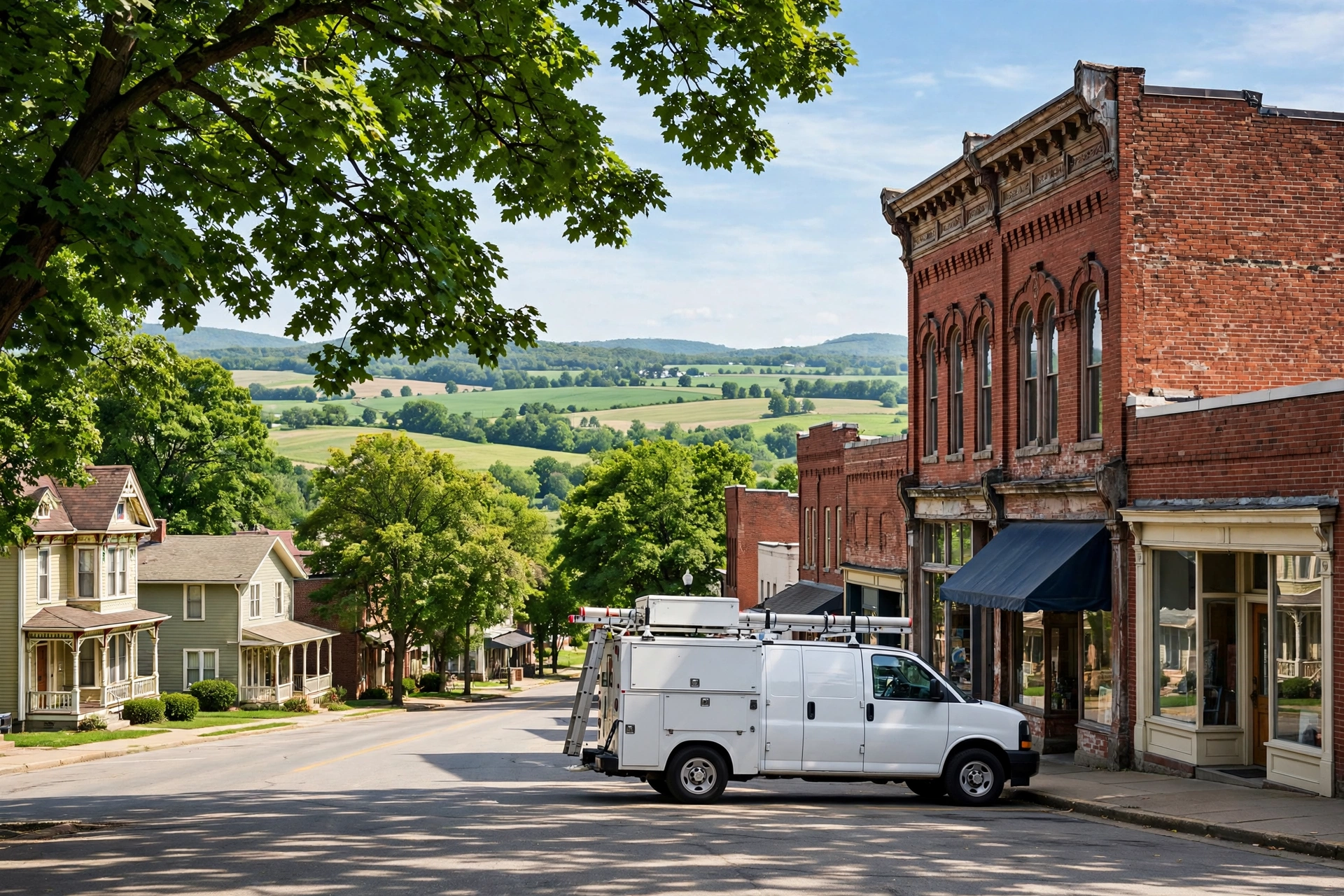
Ohio Sewer Masters service van on a tree-lined main street in a small Ohio city, historic brick storefronts and houses with rolling countryside beyond

Last updated: October 13, 2026

Statewide coverage

These Cities Are Not One Region, and That Is the Point

A flat lake-plain city and a river-hill town fail in completely different ways. Here is the honest breakdown of what the ground is like in each corner of this group.

The flat northwest: Findlay, Lima, Marion, Sidney. Old glacial lake bed: dead flat, heavy clay, and a water table that sits high most of the year. Sewer lines here fail from the outside in. Saturated soil presses on joints, groundwater infiltrates every crack, and clay that never dries out shifts with each freeze.

The north-central corridor: Mansfield, Ashland, Wooster, Springfield. Rolling glacial till country, college towns mixed with old manufacturing cities. Historic districts run clay tile, mid-century neighborhoods run cast iron, and student-rental streets near the campuses put harder use on old lines than a family home ever would.

The Lake Erie shore: Sandusky. Sandier lakeside soils, a high water table, and a tourism economy that keeps older buildings in hard service. Shoreline groundwater is relentless on joints, and the flat terrain means backups arrive with the rain.

The southern hills: Zanesville, Chillicothe, Athens, Portsmouth. Unglaciated Appalachian plateau: thinner soils over bedrock and shale, real slopes, and some of Ohio's oldest downtowns. The story here is age plus gravity, century-old clay tile in historic districts and hillside laterals whose sections drift out of alignment over decades of slow soil movement.
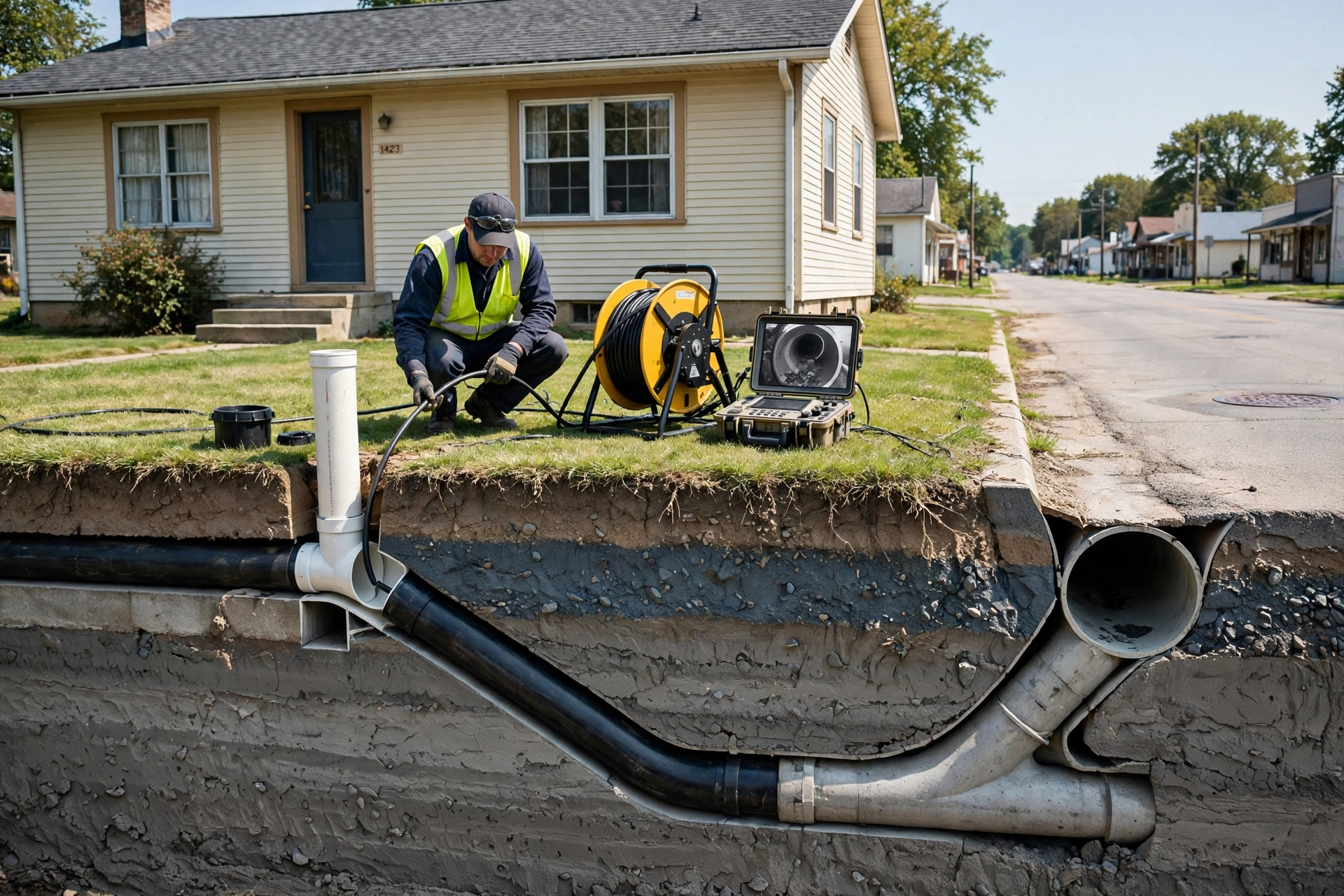
Technician requirementding a sewer camera cable into a cleanout at a 1950s Ohio ranch house, camera reel and monitor on the lawn, flat clay soil cutaway showing the lateral to the street

The prescription is the same everywhere in Ohio: camera first, then fix what is actually broken.

Pipe Generations in These Cities

Homes built before about 1945, the historic cores of Chillicothe, Zanesville, Portsmouth, Sidney, and Springfield's older districts, run vitrified clay tile with mortar joints. After the better part of a century, those joints are the weak point: roots push in, sections offset, and soil washes into the gaps.

The mid-century wave, 1950s through 1970s ranches and split-levels in Mansfield, Lima, Marion, and around every city on this list, runs cast iron that is rusting from the inside out right now. It looks fine from above while the bottom of the pipe turns paper-thin, which is why a line that worked for 60 years suddenly starts backing up every few months. Newer construction is PVC, which holds up far better, though no pipe survives a collapsed joint or a hillside shift unscathed.

Your Line vs. Your City's System

The rule is the same in every Ohio municipality: you own the lateral from your house to the public main, including the part under the street. The city owns the main. The Ohio EPA sets the statewide wastewater standards, and federal standards come from the U.S. EPA, but neither fixes your lateral. If only your house backs up, the lateral is the prime suspect. If the whole block backs up, call your city's utility. Permits run through your city's engineering or building department, with inspection typically required before backfill, and we pull them as part of the job.
Regional patterns

Common Sewer Problems in These Cities

Groundwater infiltration on the flat lake plain

Cities: Findlay, Lima, Marion, Sidney, Sandusky. Condition: high water table plus clay or sandy lakeside soil that stays saturated. Mechanism: groundwater pushes into every cracked joint while saturated soil keeps constant pressure on the pipe. Symptom: backups that arrive with rain, sump pumps that never rest. Fix: camera inspection to find infiltration points, then trenchless lining to seal the line watertight.

Century-old clay tile in historic downtowns

Cities: Chillicothe, Zanesville, Portsmouth, Sidney, Springfield. Condition: clay tile with crumbled mortar joints, among the oldest laterals in the state. Mechanism: joints give way after 80 to 120 years, roots push in, sections offset. Symptom: recurring backups in the oldest homes, snaking that buys less time each visit. Fix: root removal for relief, pipe bursting or lining for good.

Hillside laterals drifting out of alignment

Cities: Athens, Portsmouth, Chillicothe, Zanesville. Condition: clay tile laterals on slopes in the southern hills. Mechanism: decades of slow soil movement push pipe sections out of line at the joints. Symptom: gurgling drains after rain, a dip in the yard along the line to the street. Fix: camera inspection to map the offsets, then bursting or open-trench replacement of the misaligned run.

Cast iron reaching end-of-life in mid-century neighborhoods

Cities: Mansfield, Lima, Springfield, Marion, and the post-war rings around every city here. Condition: 1950s to 1970s cast iron laterals. Mechanism: corrosion thins the pipe from the inside out until it flakes and sags. Symptom: chronic slow drains, gurgling toilets, backups that return weeks after snaking. Fix: camera inspection to measure remaining wall, then trenchless replacement before a collapse forces a dig.

13 cities

Other Ohio Cities We Serve

Each city below has its own local page with neighborhood detail, housing-era pipe notes, and answers specific to that community. Find yours.

Springfield, OH

Former manufacturing hub in Clark County: the historic districts run clay tile, while mid-century east-side blocks lean cast iron.

Sewer line repair in Springfield →

Mansfield, OH

Richland County seat midway between Columbus and Cleveland: older neighborhoods near downtown still run original clay laterals under mature trees.

Sewer line repair in Mansfield →

Findlay, OH

Flat lake-plain city in Hancock County: high water table and clay soil mean joints fail where groundwater never lets up.

Sewer line repair in Findlay →

Lima, OH

Allen County's oil-town-turned-industrial city: Victorian-era homes near downtown run century-old clay tile.

Sewer line repair in Lima →

Marion, OH

President Harding's hometown on the flat central-Ohio plain: historic downtown laterals ringed by mid-century cast iron.

Sewer line repair in Marion →

Wooster, OH

College town home to the College of Wooster: leafy older streets on clay tile, surrounded by Wayne County farmland.

Sewer line repair in Wooster →

Sandusky, OH

Lake Erie waterfront city: high water table, sandy lakeside soils, and a tourism economy that keeps older buildings in hard service.

Sewer line repair in Sandusky →

Zanesville, OH

Muskingum County seat famous for its Y-bridge: historic districts run old clay tile under brick streets, and the river valley keeps soil damp.

Sewer line repair in Zanesville →

Athens, OH

Ohio University college town in the Appalachian foothills: hard-used rental lines plus hillside homes where slopes shift pipe sections.

Sewer line repair in Athens →

Chillicothe, OH

Ohio's first capital in Ross County: its 19th-century downtown still runs some of the state's oldest clay laterals.

Sewer line repair in Chillicothe →

Sidney, OH

Shelby County seat along the I-75 corridor: historic-square buildings on clay tile beside post-war neighborhoods on cast iron.

Sewer line repair in Sidney →

Ashland, OH

Small college city anchored by Ashland University: older homes near campus run clay tile, mid-century blocks run cast iron.

Sewer line repair in Ashland →

Portsmouth, OH

Ohio River city at the edge of Shawnee country: floodplain soils and the historic Boneyfiddle district make for old, damp laterals.

Sewer line repair in Portsmouth →

We travel statewide from Columbus, so these 13 cities get the same service as the big metros: camera inspection, trenchless repair, and traditional replacement with one upfront plan.

Related services

Services for These Ohio Cities

Trenchless Sewer Repair

Lining and pipe bursting that replace your lateral without tearing up the yard, driveway, or a historic-district brick sidewalk.

Trenchless options →

Sewer Camera Inspection

The starting point for every job: we see exactly what is in your line and show you the footage.

How inspection works →

Hydro Jetting

High-pressure water that scours grease, scale, and root hairs off the pipe walls, the right prep before lining.

Jetting details →

Tree Root Removal

Clearing root masses from clay tile joints, with an honest read on whether the line is worth saving.

Root removal →
Water and seasons

How Do Water Quality and Seasons Affect Sewers in These Cities?

Many of these cities sit on former lake plains or glacial till, which means moderately hard to hard groundwater. Hard water leaves mineral scale inside pipes, narrowing them over decades and giving roots more texture to grip. It is a slow process, but on a 50-year-old clay lateral in Lima or Marion, scale plus roots is a common combination we find on camera.

What sewer maintenance makes sense each season?

Spring: heavy rains test every weak joint. If your basement drain gurgled during the last big storm, get a camera inspection before the next one. Summer: roots grow fastest now. If you have mature trees near your lateral, this is when intrusion accelerates. Fall: schedule cleaning before the ground freezes, especially in northern cities like Sandusky and Findlay. Winter: watch for slow drains that signal a freeze-related belly or offset joint.

Local answers

Other Ohio Cities Sewer FAQs

Yes. We work statewide, and these 13 cities are regular service territory, not exceptions. Call (614) 350-5706 and we will schedule a camera inspection or repair visit like any other service call.

It does. Flat lake-plain ground, like you find around Findlay, Lima, and Marion, usually means a high water table and heavy clay soil. Saturated soil presses on pipe joints and lets groundwater infiltrate cracked lines, which is why camera inspections in these cities often find joint separation and infiltration alongside the usual root damage. A line that stays underwater most of the year fails differently than one that drains freely.

It can be. On slopes, like the hillside neighborhoods around Athens, Portsmouth, and Chillicothe, decades of slow soil movement push clay pipe sections out of alignment at the joints. The gaps let soil wash in and roots follow the moisture. If your hillside home's drains gurgle after rain, or a dip appears in the yard along the line to the street, offset joints are the prime suspect, and a camera inspection confirms it in about an hour.

Most do. Permits typically run through the city engineering or building department, and many cities require an inspection before the trench gets backfilled. The rules and requirements vary from city to city, which is normal for municipal work in Ohio. We pull the correct permit for your city and handle the inspection as part of every job, so you never have to sort it out yourself.

Almost never. You own the lateral from your house to where it connects with the public main, even the part that runs under the street. The city owns the main itself. The quick test: if only your house backs up, the lateral is the prime suspect and that is our territory. If the whole block backs up at once, call your city's utility, the problem is likely in the main.

Sewer Problem Anywhere in Ohio? Get the Camera Truth First.

One inspection, one honest diagnosis, one upfront plan, in all 13 of these cities and statewide.

Call (614) 350-5706
📞