Sewer Line Repair in Zanesville, OH
Two rivers, clay-rich soil, and a pottery town's worth of century-old pipe: Zanesville's sewer problems are baked into its ground. We camera-diagnose every job and fix it trenchless or traditional.
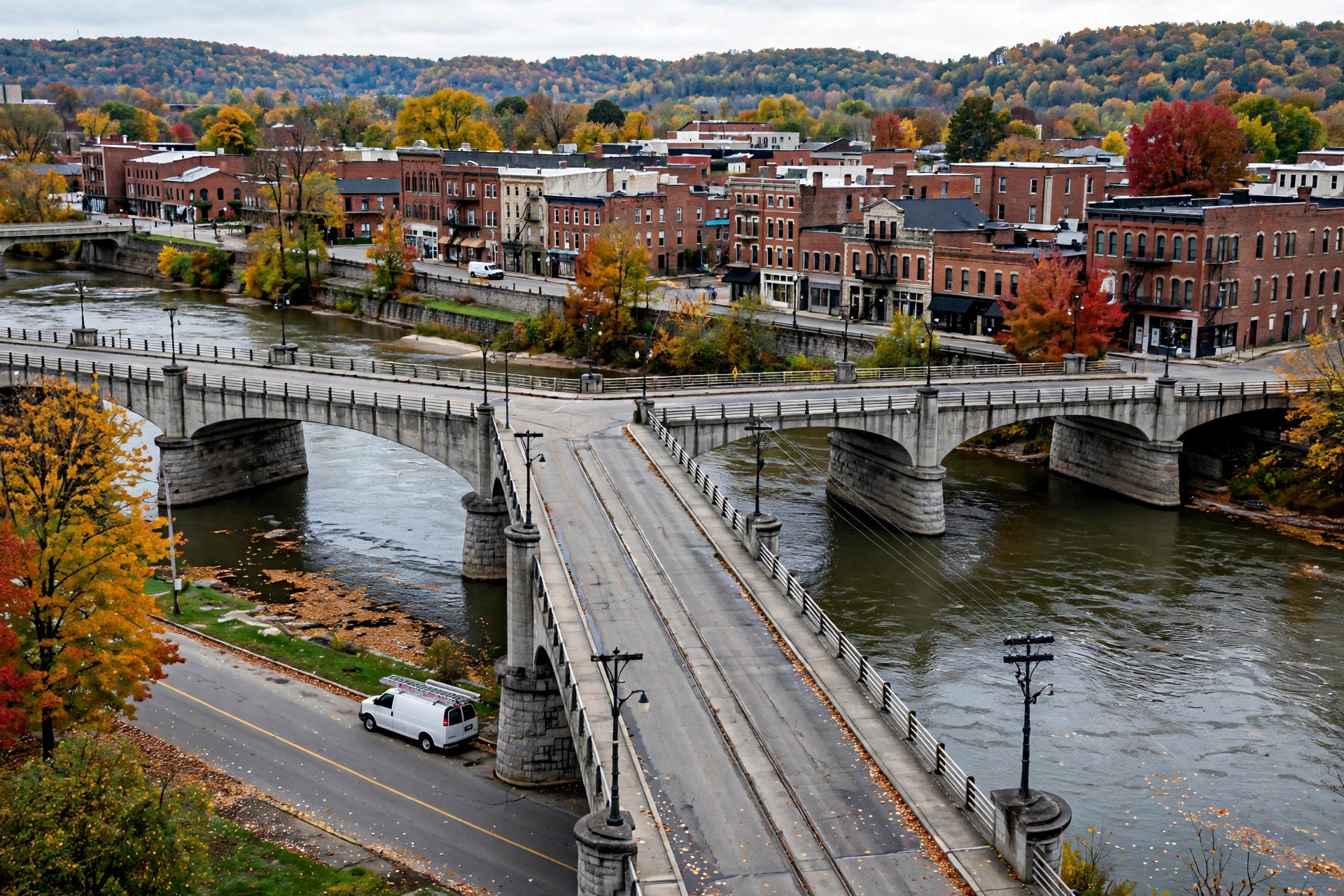
Two rivers, clay-rich soil, and a pottery town's worth of century-old pipe: Zanesville's sewer problems are baked into its ground. We camera-diagnose every job and fix it trenchless or traditional.
Last updated: October 13, 2026
Zanesville exists because of its rivers, the Licking flows into the Muskingum right at downtown, and those rivers keep the ground around them wet year-round.
The mechanism is straightforward. Near the confluence and along both riverbanks, the water table sits high, so the soil around your sewer lateral stays saturated. Saturated soil presses groundwater into every weak point in the pipe: hairline cracks, crumbling mortar joints, connections that have pulled apart. When the rivers run high, that pressure spikes, and laterals that were barely holding start taking on water faster than they can drain it. The result is backups that show up during and after wet periods, then mysteriously clear up when things dry out.
Even without dramatic flooding, riverside soil never fully stabilizes. It shifts with every wet-dry cycle, and each shift works pipe joints a little looser. Homes near the river, downtown, the Putnam historic district across the Y-Bridge, and the low streets along the Muskingum, see infiltration problems far more often than homes on the higher ground north and south of town. If your drains slow down whenever the rivers rise, a camera inspection will show you exactly where the water is getting in.
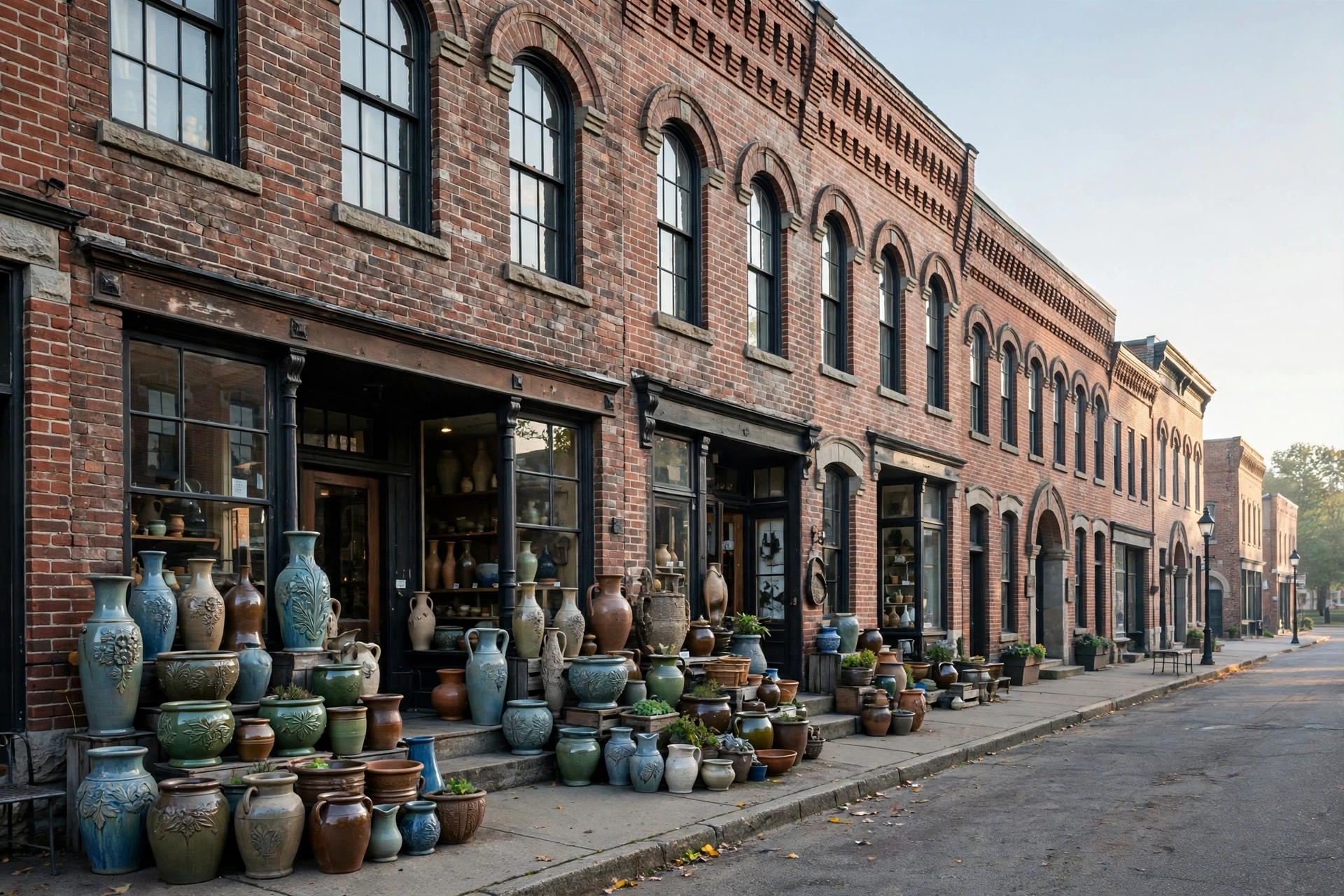
Zanesville's pottery heritage runs deep, and the same clay-rich soil that built the industry keeps working sewer joints loose.
Zanesville was once called the Pottery Capital of the World, and the pottery boom filled the city with early-1900s worker housing, nearly all of it plumbed with vitrified clay tile laterals. After a century, the mortar joints on those lines are crumbling, sections have settled and offset, and roots from mature neighborhood trees have pushed into every damp opening. The irony of Zanesville is that the same clay-rich earth that made the city famous keeps heaving and shrinking around those clay pipes, working the joints apart season after season.
Mid-century homes, the post-war ranches and split-levels on the north and south ends, typically run cast iron inside transitioning to clay outside, and that cast iron is rusting from the inside out right about now. Newer subdivisions along the I-70 and US-40 corridors are mostly PVC, which handles the soil movement better, but even PVC fails where a joint was never properly seated. Whatever's under your house, the camera tells us in about an hour, and many of Zanesville's old clay laterals turn out to be strong candidates for trenchless sewer repair, which renews the line without digging up the whole yard.
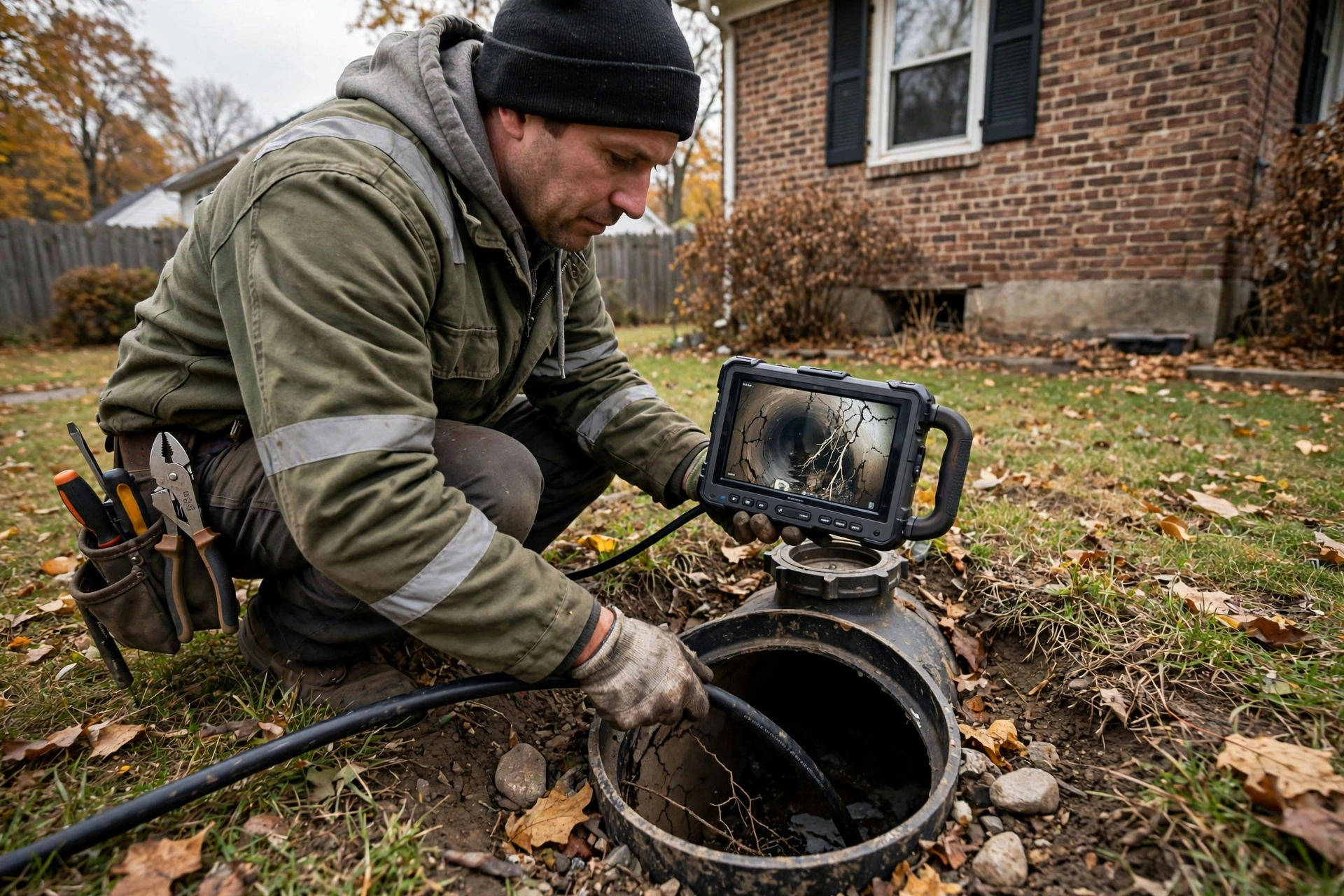
A camera inspection shows exactly what a century of clay soil movement has done to your lateral, before you commit to any fix.
Age of housing plus closeness to water predicts trouble here. Downtown and the Putnam historic district, right at the river confluence, combine the oldest clay laterals in the city with the highest water table, and we see joint separation and root intrusion there constantly. The older neighborhoods along the Muskingum, south of downtown, have the same story: century-old pipe in perpetually damp ground.
On the north end and the south hill, post-war housing is hitting the age where cast iron laterals rust through from the inside, and the clay soil's seasonal heaving works every joint loose a little more each year. Out along I-70 and the US-40 corridor, the housing is newer, but poorly seated PVC joints and construction-era shortcuts still fail. From the Y-Bridge to the newest subdivision, the prescription is the same: camera first, then fix what's actually broken.
You own the sewer lateral from your house to where it connects with the public main, usually at the street. Everything in between, including the section under your yard and driveway, is yours to maintain and repair. The City of Zanesville Utilities Department runs the public water, sewer, and sanitation systems. Zanesville homeowners also see a combined sewer overflow line on the city utility bill, a sign that older combined sewers still run under parts of the city.
If sewage is backing up in your home but your neighbors are fine, the lateral is the prime suspect, and that's our territory. If multiple homes on your street are backing up at once, call the city, it may be a main-line problem. Lateral work typically requires a city permit with inspection before backfill, and we pull the permits and schedule the inspection as part of every job. If you are handling the paperwork yourself, check with the city's building department before work begins. Statewide, the Ohio EPA sets the wastewater standards that Ohio's utilities follow.
Zanesville's groundwater runs hard to very hard, a direct product of the limestone bedrock and glacial deposits of the Muskingum Valley. That heavy mineral load deposits scale inside older pipes much faster than average, narrowing the bore and giving grease and solids a rough surface to catch on. In Zanesville's older neighborhoods, where cast iron laterals are already fighting decades of corrosion, hard-water scale is the second blow that turns slow drains into full blockages.
Maintain them on the rivers' calendar. In Zanesville, spring rains and high water where the Muskingum and Licking rivers meet push groundwater into cracked joints, fall sends tree roots hunting for moisture before dormancy, and winter freeze shifts soil and wedges small cracks wider. A camera inspection every few years, plus the seasonal habits below, catches most problems while they are still minor.
The Muskingum and Licking rivers meet right at downtown, and the water table near the confluence runs high. When the rivers run high, groundwater presses into every cracked joint in nearby laterals, overloading them with infiltration. Even without flooding, the perpetually damp riverside soil shifts more, which opens pipe joints wider over time. Homes near the river see infiltration backups far more than homes on the higher ground north and south of town.
Most likely vitrified clay tile with mortar joints. Zanesville's pottery boom left the city with a huge stock of early-1900s worker housing, and nearly all of it was plumbed with clay tile laterals. A century later the mortar joints are crumbling, sections have shifted in the clay soil, and roots have found their way in. A camera inspection shows exactly what you're working with, and many of these lines are prime candidates for trenchless lining.
The soil doesn't break sound pipe, it works the joints loose. The clay-rich soil around Zanesville, the same clay that made the city the Pottery Capital of the World, swells when wet and shrinks when dry. That seasonal swelling and shrinking heaves rigid clay tile and cast iron sections up and down, year after year, until joints separate and sections offset. Once a joint opens, roots and groundwater do the rest.
Lateral repair and replacement in Zanesville typically requires a city permit, with inspection before the trench is backfilled. We pull the permits and coordinate the inspection as part of every job, it's built into the written plan, not a surprise add-on.
Most trenchless jobs, lining or bursting, finish in one day. Traditional open-trench replacement usually takes two to four days depending on length, depth, and what's above the line. Zanesville's clay soil digs slower than sand, which can add time to traditional excavation, one more reason trenchless is popular here. We give you the timeline in writing before work starts.
Also serving Newark, Lancaster, and the surrounding Muskingum County area. Major landmarks we work around include the Y-Bridge, the Muskingum River waterfront, Genesis Hospital, the Zane Grey Museum, and the I-70 and US-40 corridors. Service ZIP codes: 43701 and 43702 (PO boxes).
Riverside, historic district, or suburb, one inspection tells us exactly what's happening underground.
Call (614) 350-5706