Newark, Ohio
Why Does Newark's Clay Soil Punish Sewer Lines?
Newark sits on some of the heaviest glacial clay in central Ohio, and that clay is the reason so many sewer lines here shift, separate, and fill with roots.
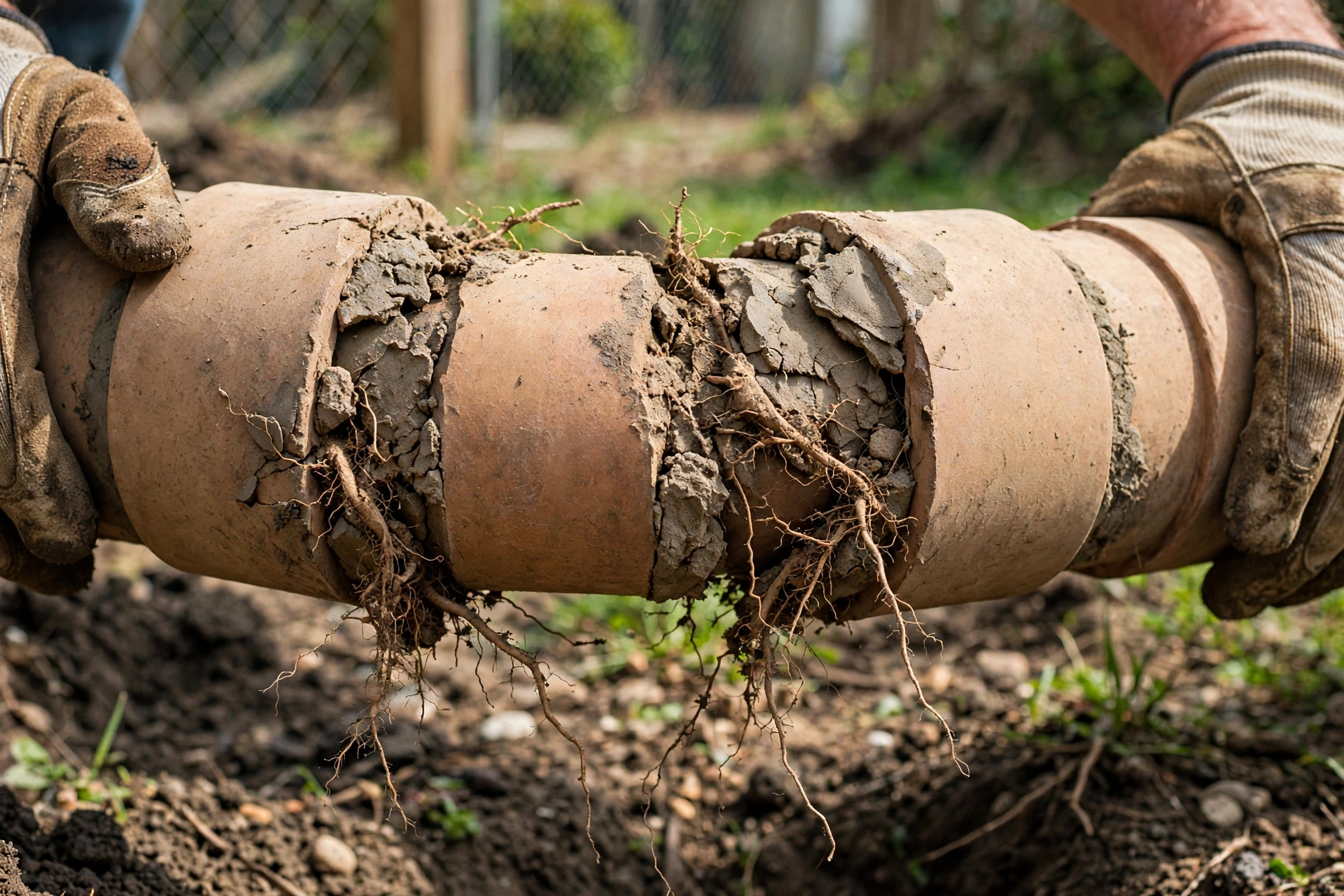
The glaciers left central Ohio a blanket of dense clay till, and around Newark it is the classic Miamian clay loam: it holds water, drains poorly, and swells when wet and shrinks when dry. That shrink-swell cycle nudges the ground around your lateral a fraction of an inch every season. Clay tile and cast iron pipe cannot flex, so joints open, sections offset, and roots move into every gap. Once a joint opens in clay, the soil washes into the pipe and the opening only gets worse.
The Licking River and Raccoon Creek lowlands add a second problem. In the lower parts of Newark the water table sits high, keeping the clay saturated and pressing groundwater into every cracked joint, a process called infiltration. Saturated clay also loses bearing strength, so the pipe bedding shifts under load. Then winter arrives: water trapped in cracks freezes, expands, and wedges the damage wider. Run that cycle year after year and even a solid line eventually gives way, which is why Newark backups cluster in late winter and spring.
Downtown Newark's 19th-century streets hide some of the oldest clay sewer laterals in Licking County.
What Kind of Pipes Are Under Newark's Older Homes?
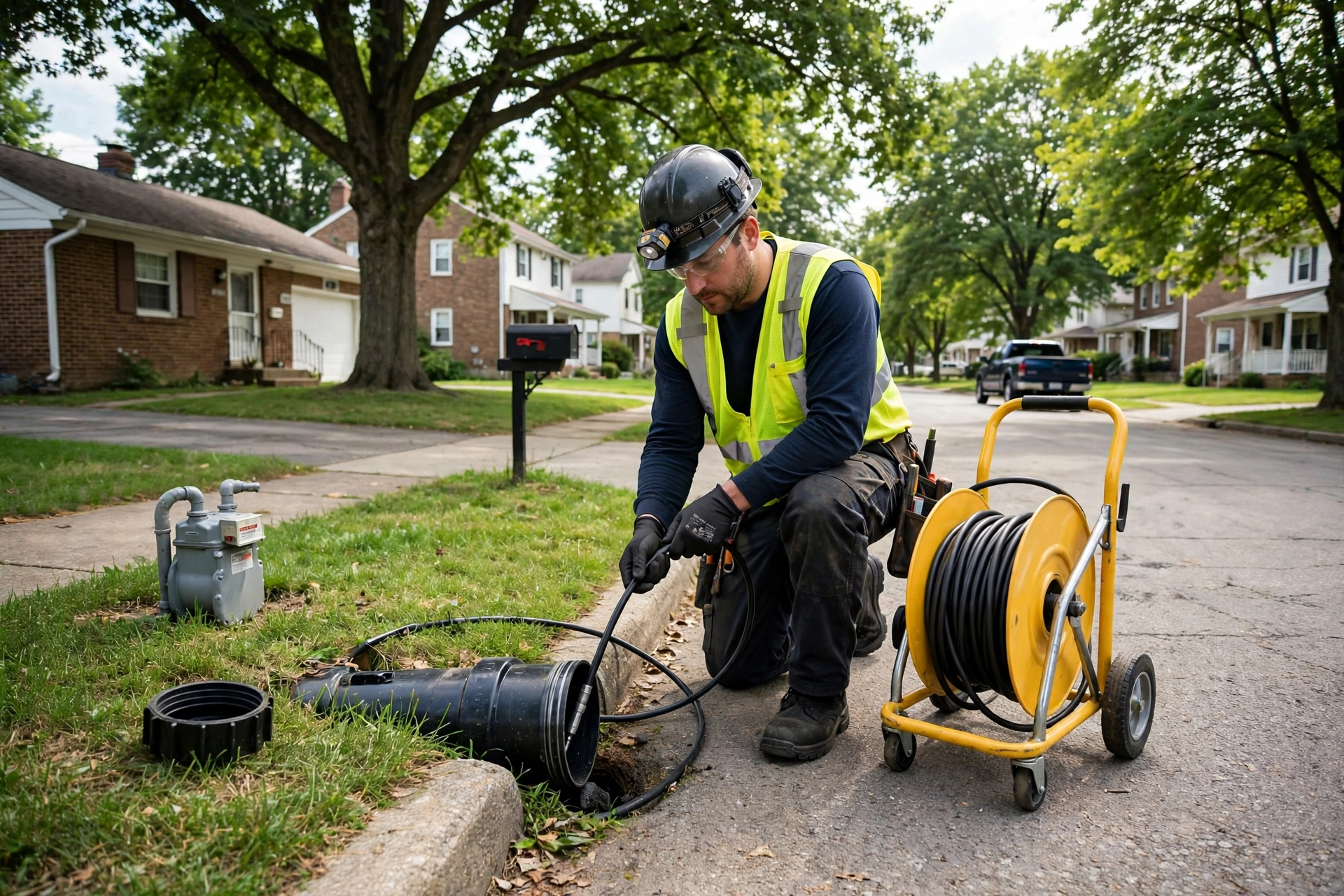
Downtown Newark's housing stock runs from about 1890 to 1940, and the sewer lines match: vitrified clay tile with mortar-sealed joints, running from stone or brick foundations out to the street. After 80 to 130 years the mortar joints crumble, the clay sections shift in the heavy soil, and the mature street trees spend decades pushing root hairs into every damp joint. A camera inspection tells us in about an hour whether the line is a lining candidate or needs bursting.
Cherry Valley and the 1960s and 70s subdivisions tend toward cast iron inside transitioning to clay outside, and cast iron rusts from the inside out, looking fine until the bottom of the pipe is paper-thin. Northgate and the newer builds run PVC, which holds up well but can develop low bellies where trench backfill settled. A few 1950s and 60s tracts still have Orangeburg, a tar-paper pipe that deforms into an oval and eventually collapses. Whatever is down there, the camera shows it plainly.
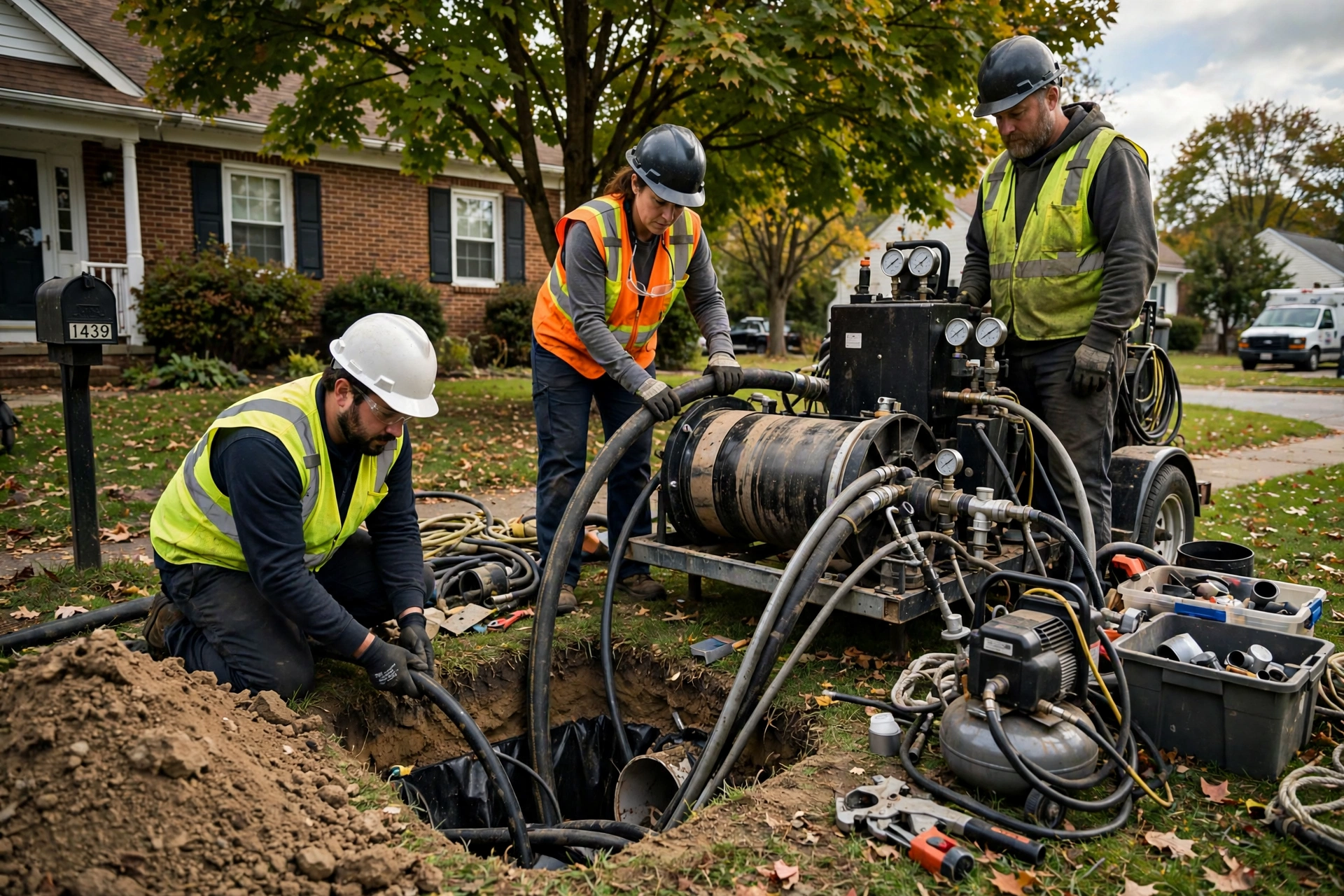
Pipe bursting replaces a failed Newark line through small access pits, so the yard and driveway stay intact.
How Does Newark's Water Quality Affect Your Sewer Line?
Newark's 2024 water quality report lists hardness at 118 milligrams per liter, a moderately hard supply similar to Columbus's. Over time those minerals leave scale inside aging cast iron and galvanized laterals, narrowing the bore and giving grease and solids a rough surface to catch on. In Newark's older homes, hard-water scale and root intrusion often team up, so a camera inspection should look for both.
Which Newark Neighborhoods See the Most Sewer Trouble?
Age of housing plus tree canopy predicts trouble better than anything. The downtown historic district and the streets around Courthouse Square combine 100-plus-year-old clay laterals with some of the city's biggest street trees, so root intrusion is practically routine there. Cherry Valley's 1960s and 70s homes are hitting the age where cast iron reaches the end of its life. The north end along the SR-79 corridor mixes eras, and the pipe problems change block by block.
Elevation matters too. Low areas near the Licking River deal with infiltration and high water tables, while homes on higher ground fight the shrink-swell clay cycle instead. Out toward Buckeye Lake, older cottages converted to year-round homes often still run their original lines. If you live near the Canal Market District or up by Licking Memorial Hospital, the housing eras differ but the prescription is the same: camera first, then fix what is actually broken.
How Should Newark Homeowners Maintain Their Sewer Lines Through the Seasons?
Year-round prevention beats emergency repair: keep gutters and downspouts discharging away from the lateral in spring, schedule a camera check in fall when tree roots grow most aggressively, and protect shallow cleanouts from winter freeze. Never pour grease down drains, since it congeals faster in cold lines and catches on every rough spot.
- Spring: heavy rains saturate Ohio's clay soil and raise water tables. If drains gurgle or slow after a storm, groundwater may be infiltrating cracked joints, so schedule a camera check rather than just clearing the drain.
- Fall: roots push hardest in fall as trees seek water before dormancy. Homes with big maples, oaks, or willows near the lateral are worth a camera inspection for root entry.
- Winter: freeze-thaw cycles shift soil and widen cracks, and shallow cleanouts can freeze. Keep grease out of drains all winter, since it congeals faster in cold pipes and narrows the flow.
Who Owns What: Your Lateral vs. Newark's System?
Here is the split Newark homeowners need to know. You own the sewer lateral from your house to where it connects with the public main, usually at the street or sidewalk. Everything in between, including the part under your yard and driveway, is your responsibility to maintain and repair. The City of Newark Division of Water and Wastewater runs the public side: the city owns the mains and treats wastewater at its own facilities, not your lateral. Start at the city's water and wastewater services page for rates, programs, and project updates.
Newark is also mid-way through a combined-sewer cleanup: the city is implementing an Ohio EPA-approved Long-Term Control Plan, including the 16 North Sewer Separation Project, which separates stormwater from the sanitary system so wet-weather backups decline over time. The city's treatment facilities discharge under permits issued through the federal NPDES program administered in Ohio by Ohio EPA.
When the line is failing, trenchless sewer repair is often the smartest fix in Newark: lining or bursting renews the pipe through small access pits instead of an open trench across your yard. Homeowners in Reynoldsburg and Pickerington face the same clay-soil problems and get the same options. Lateral work in Newark goes through city permits: Newark's rules put the work of building-sewer installation and connection on the property owner, and work needs to meet city requirements before backfill, so check with the Division of Water and Wastewater on what your project needs before it starts. We pull the permits and coordinate the inspection as part of every job.
Learn more about Ohio Sewer Masters and how we work across central Ohio.