Reynoldsburg, Ohio
Why Are Reynoldsburg's 1960s Ranches Hitting Sewer Trouble Now?
Reynoldsburg boomed in the 1960s and 70s along East Main Street and SR-256, and entire streets were plumbed with the same cast iron at the same time. That pipe is all aging out together.
Cast iron sewer pipe lasts roughly 50 to 75 years, and the math is simple: a lateral installed in 1965 is now 60 years old and rusting from the inside out. The cruel part is that it looks solid from the outside while the bottom of the pipe thins to paper. Scale builds up on the rough interior over the decades too, so slow drains are often part corrosion and part narrowing. When one house on a 1960s street fails, the neighbors' lines are usually close behind because they share the same pipe, the same soil, and the same birthday.
Many of these ranches are slab-on-grade, which changes the stakes. The sewer line runs under the concrete slab and out to the street, and homeowners understandably fear that a repair means breaking up the floor. That is exactly the situation trenchless sewer repair was made for: lining rebuilds the pipe from the inside, and bursting pulls a new line through the old one's path, so the slab stays intact in the great majority of cases.
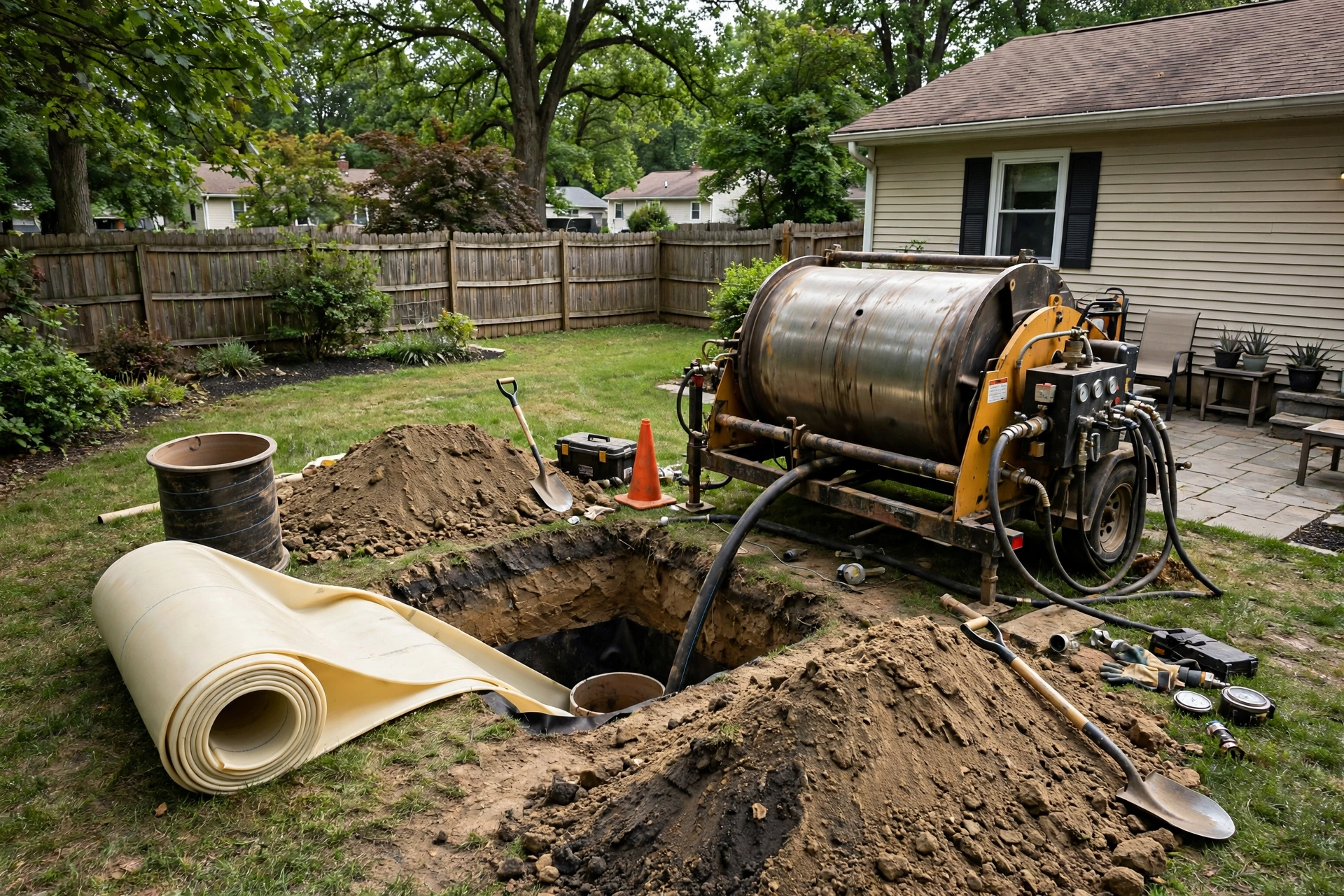
Cast iron rusts from the inside out: it looks fine until the bottom of the pipe is paper-thin.
What Pipes Are Under Reynoldsburg Homes?
The 1960s and 70s ranches and split-levels that define Reynoldsburg typically run cast iron inside the house, sometimes transitioning to clay tile where the line exits to the yard. A few tracts from that era used Orangeburg, the tar-paper pipe that deforms into an oval and eventually collapses, and the camera spots it immediately. The east side and the newer subdivisions toward Pickerington run PVC, which holds up well apart from occasional bellies where trench backfill settled during construction.
Slab construction deserves its own note because it is so common here. With no basement and no crawlspace, the entire lateral under the house is inaccessible except through the cleanout, which makes the camera inspection even more important: it is the only way to see the pipe's condition without opening the slab. When the camera shows a line that still holds its shape, lining seals it for decades. When it shows collapse, bursting replaces it through small pits outside.
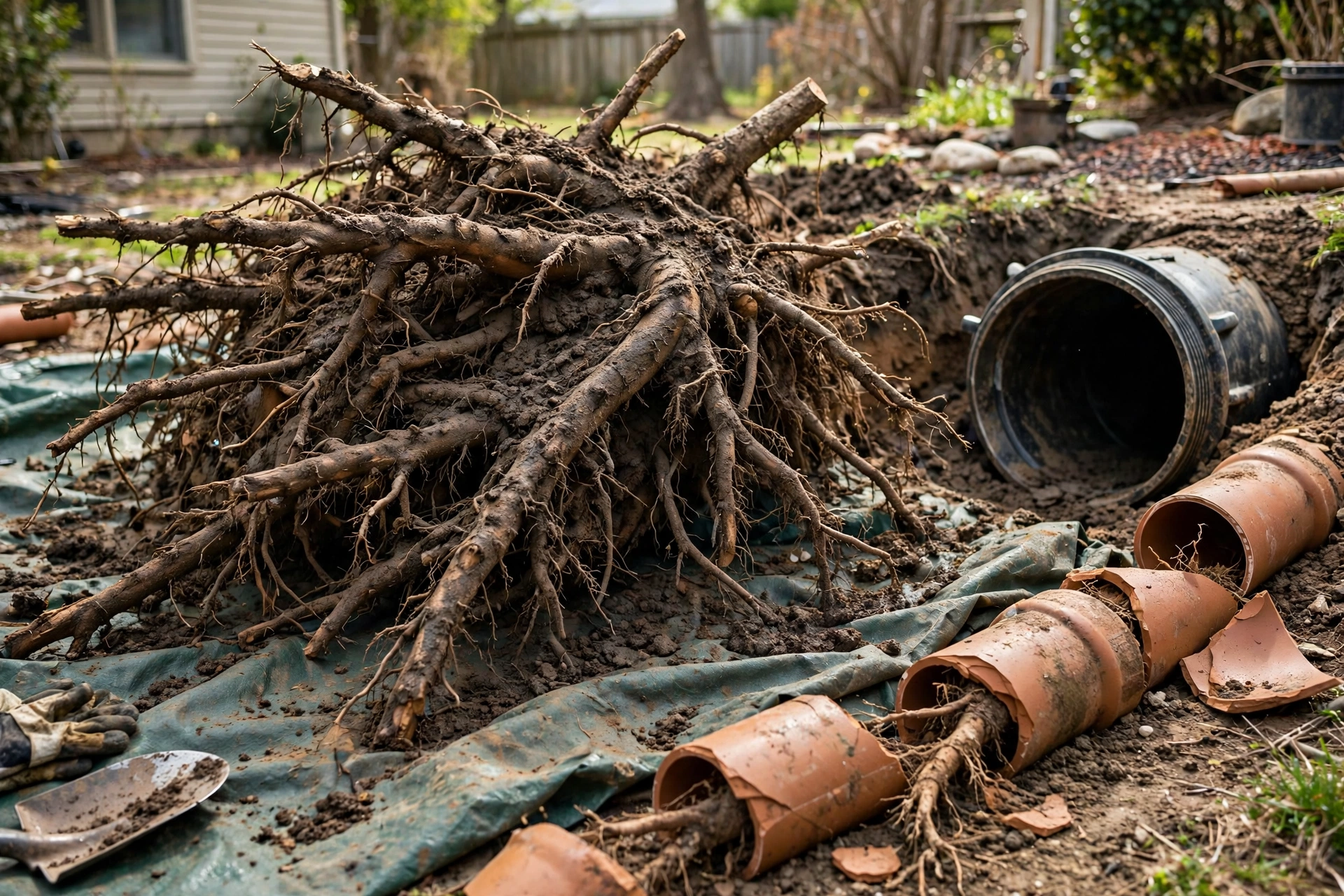
Pipe bursting replaces a failed line through small access pits, with no trench across the yard.
How Does Reynoldsburg's Water Quality Affect Your Sewer Line?
Water from the City of Columbus is softened to about 120 parts per million, roughly 7 grains per gallon, which the city calls moderately hard and optimal for corrosion control. That mineral content still leaves light scale inside older cast iron and galvanized lines over decades, narrowing the pipe and giving grease and solids a rough surface to catch on, which is why unsoftened homes tend to see more slow drains.
Which Reynoldsburg Neighborhoods See the Most Sewer Trouble?
The older ranch neighborhoods along the East Main Street corridor and around SR-256 lead the list: 1960s cast iron, slab construction, and mature trees all in the same package. Areas near Blacklick Creek and the lower elevations deal with high water tables on top of aging pipe, where groundwater infiltrates cracked joints and overloads laterals during wet periods. The Huber Park area and the mid-century streets east of downtown follow the same pattern.
The far east side toward Pickerington is newer PVC and calls far less often, which confirms the rule: in Reynoldsburg, sewer trouble follows the 1960s building boom. Whether you are near Mount Carmel East or out by the Tomato Festival grounds each summer, the process is the same: camera first, then fix what is actually broken.
How Should Reynoldsburg Homeowners Maintain Their Sewer Lines Through the Seasons?
Year-round prevention beats emergency repair: keep gutters and downspouts discharging away from the lateral in spring, schedule a camera check in fall when tree roots grow most aggressively, and protect shallow cleanouts from winter freeze. Never pour grease down drains, since it congeals faster in cold lines and catches on every rough spot.
- Spring: heavy rains saturate Ohio's clay soil and raise water tables. If drains gurgle or slow after a storm, groundwater may be infiltrating cracked joints, so schedule a camera check rather than just clearing the drain.
- Fall: roots push hardest in fall as trees seek water before dormancy. Homes with big maples, oaks, or willows near the lateral are worth a camera inspection for root entry.
- Winter: freeze-thaw cycles shift soil and widen cracks, and shallow cleanouts can freeze. Keep grease out of drains all winter, since it congeals faster in cold pipes and narrows the flow.
Who Owns What: Your Lateral vs. Reynoldsburg's System?
You own the sewer lateral from your house to where it connects with the public main, usually at the street. The City of Columbus Department of Public Utilities handles the public mains and treatment for Reynoldsburg: your suburb's collection lines tie into Columbus's regional sewer system, and Columbus supplies water and sewer service to most of Franklin County. Service details are on Columbus's public utilities page. The lateral in between, including the section under your slab and yard, is yours to maintain and repair. If several homes on your street back up at once, that points to a main-line issue worth reporting to the city. If it is just your house, the lateral is the prime suspect.
Columbus treats the wastewater at its regional plants, which discharge under federal NPDES permits administered in Ohio by Ohio EPA. Lateral work in Reynoldsburg requires a city permit; check with the City of Reynoldsburg building department on inspection requirements before work begins.
Homeowners in Pickerington and Gahanna work under the same ownership rules, and we pull the permits and coordinate inspections as part of every job. Learn more about Ohio Sewer Masters and how we work across the east side.