Sewer Line Repair in Gahanna, OH
The Herb Capital sits where three creeks join, and all that water keeps the water table high under Gahanna's clay soil. We camera-diagnose every job and fix it trenchless or traditional, with one upfront plan.
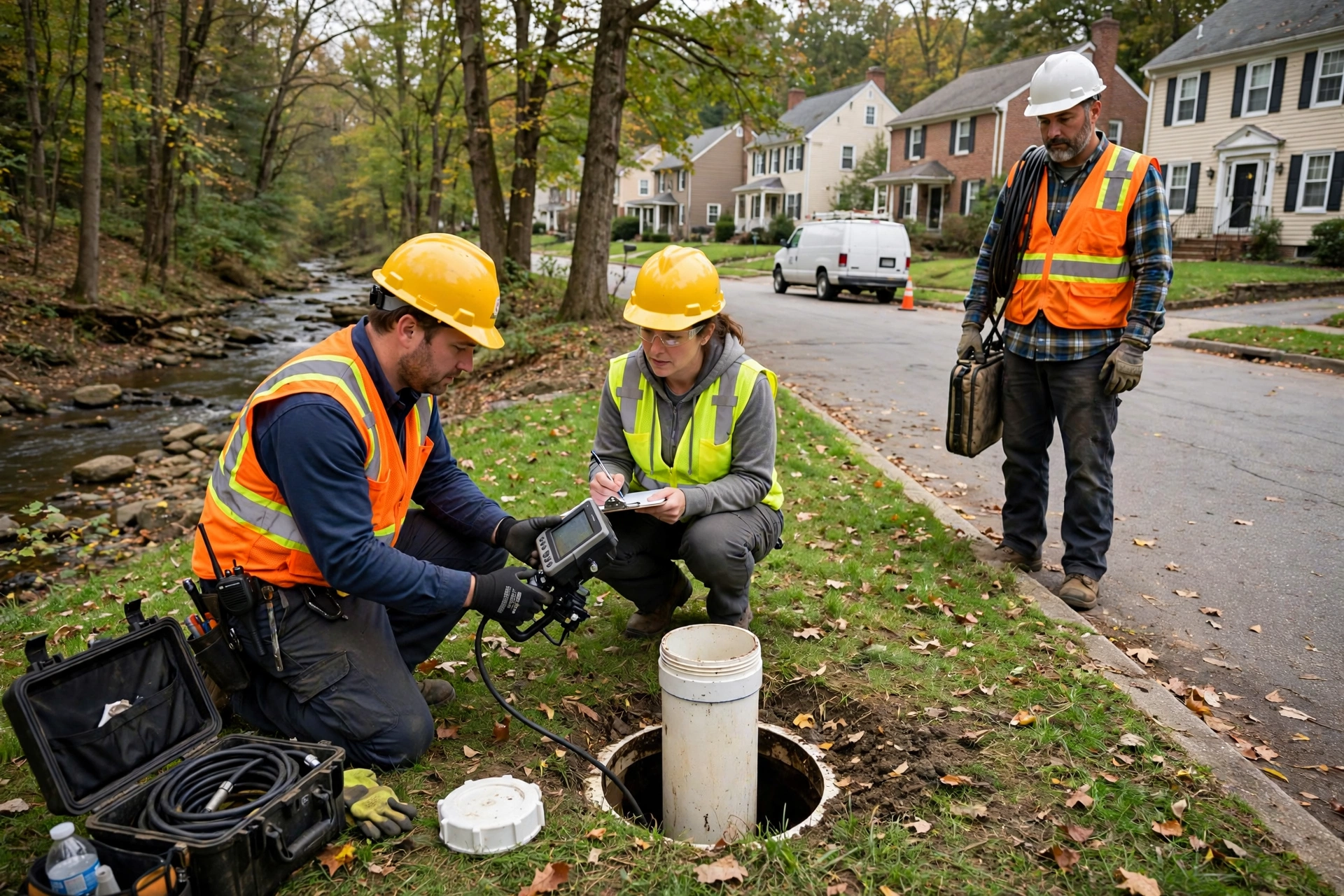
The Herb Capital sits where three creeks join, and all that water keeps the water table high under Gahanna's clay soil. We camera-diagnose every job and fix it trenchless or traditional, with one upfront plan.
Last updated: October 13, 2026
Gahanna is the Native American word for three creeks joined together, the original name of Big Walnut Creek, and it explains the city's number-one sewer problem: water, everywhere underground.
Big Walnut Creek and its tributaries wind through Gahanna, and the creek corridor keeps the water table high across much of the city. Groundwater presses into every cracked joint and separated connection in your lateral, a process called infiltration, overloading the pipe with clear water during wet periods. Drains slow down or back up when nothing is actually blocked, which confuses homeowners until the camera shows the real story.
The rest of Gahanna sits on the same dense glacial clay as the rest of central Ohio: slow drainage, shrink-swell movement with the seasons, and downspouts pushing roof water toward foundations and laterals. Winter freeze-thaw wedges every crack wider. In Gahanna, the pipe fights water from below and soil movement from the sides at the same time.
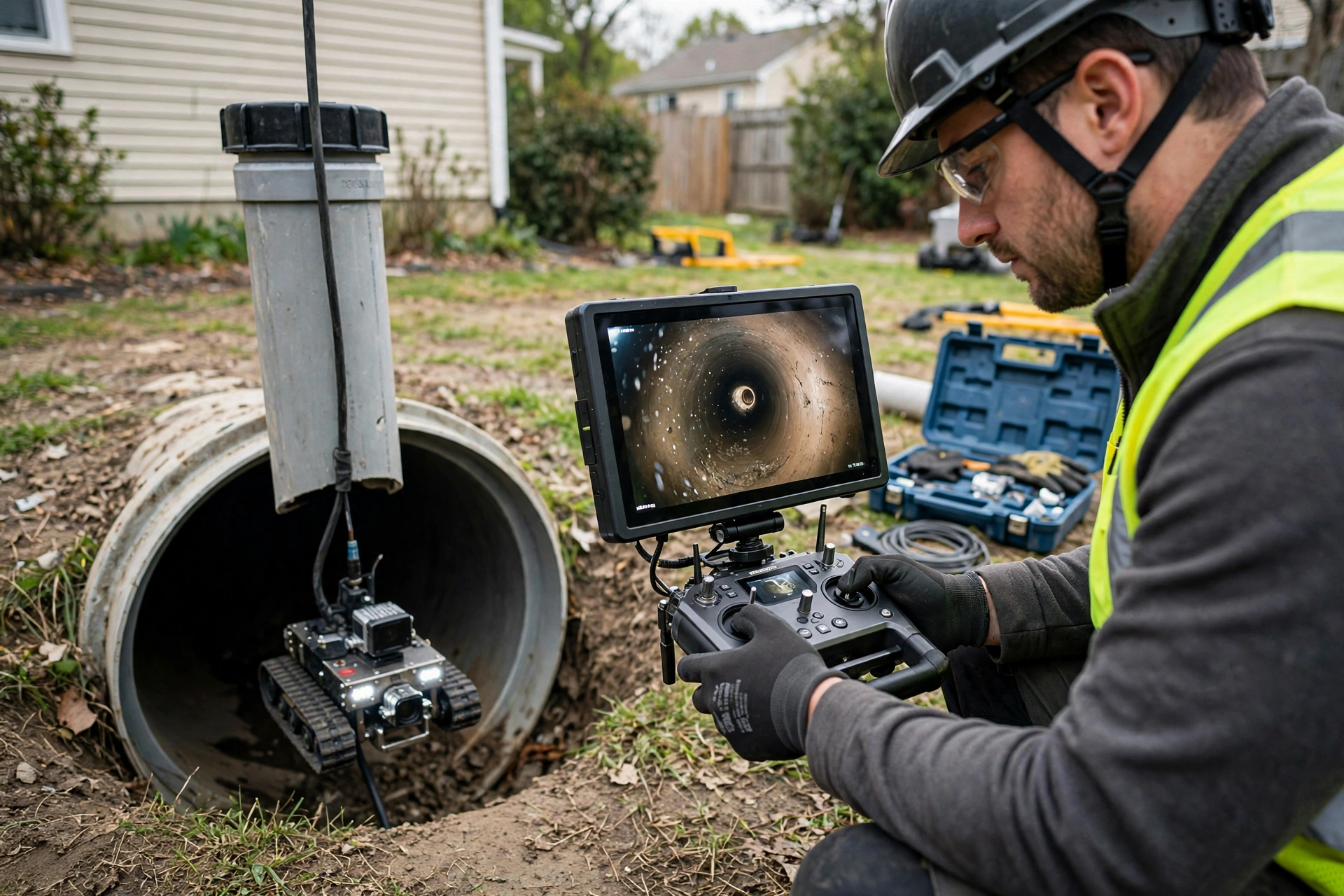
Trenchless lining renews a Gahanna lateral from the inside, so the garden beds and patio stay exactly as they are.
The old village around Mill Street runs clay tile laterals from the early 1900s, with mortar joints that have been crumbling for a century. The 1960s through 80s subdivisions that fill most of Gahanna run cast iron inside transitioning to clay tile or early PVC outside, and that cast iron is entering its failure window now, rusting from the inside out. Some tracts from the 60s and 70s hide Orangeburg, the tar-paper pipe that deforms and collapses, and the camera spots it in minutes.
The Creekside area and the newest builds run modern PVC and rarely trouble anyone. The pattern is familiar by now: in Gahanna, sewer trouble follows pipe age, and the 1970s subdivisions are all aging together, which is why whole streets start calling within a few years of each other.
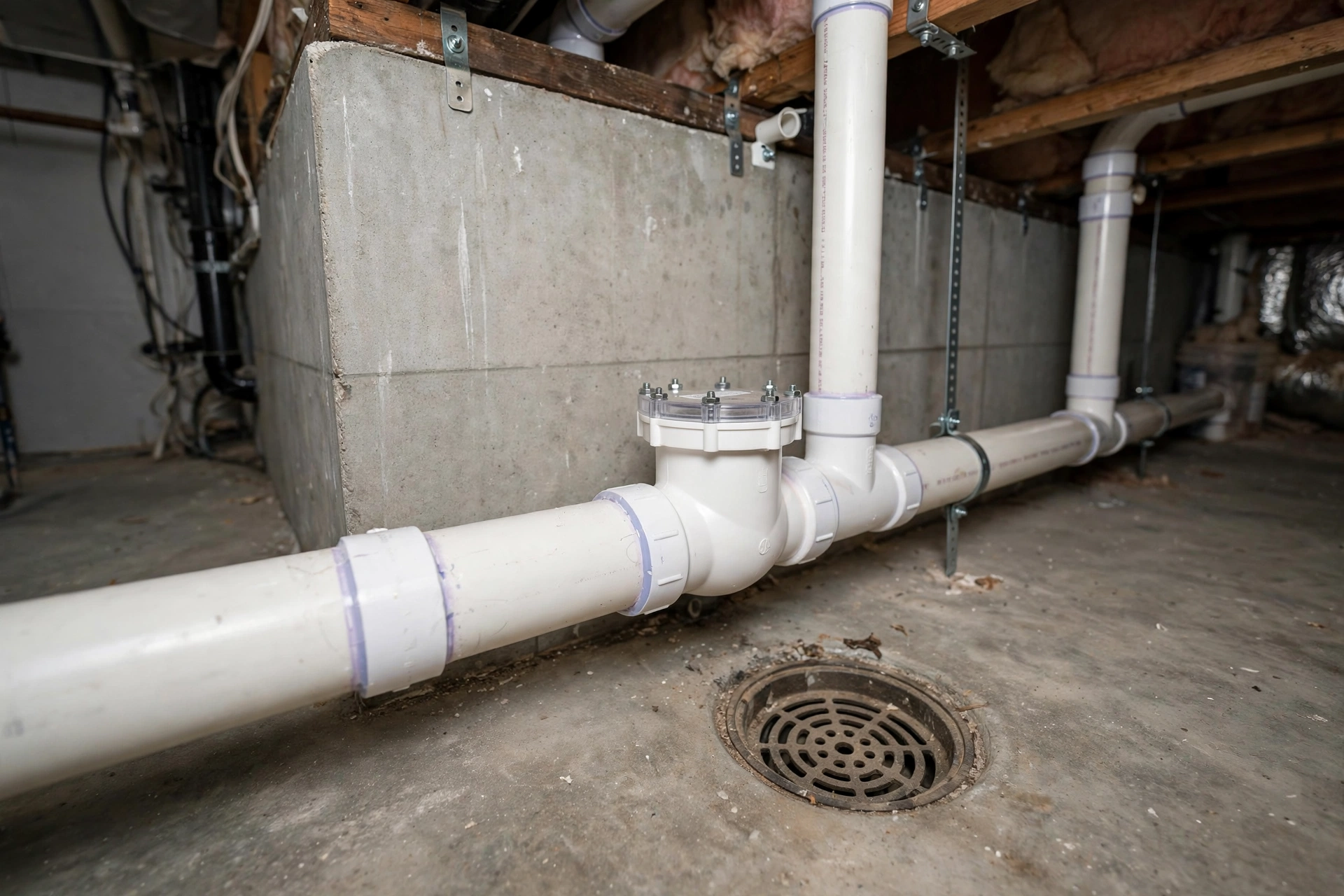
A camera inspection takes about an hour and shows exactly what your Gahanna lateral is made of.
Water from the City of Columbus is softened to about 120 parts per million, roughly 7 grains per gallon, which the city calls moderately hard and optimal for corrosion control. That mineral content still leaves light scale inside older cast iron and galvanized lines over decades, narrowing the pipe and giving grease and solids a rough surface to catch on, which is why unsoftened homes tend to see more slow drains.
The old village near Mill Street leads with century-old clay in the high water table corridor, the toughest combination in the city. The 1970s subdivisions are where cast iron is aging out in clusters, since entire tracts share the same pipe vintage. Low areas along Big Walnut Creek fight infiltration on top of aging pipe, and the Rocky Fork area mixes eras block by block.
The Creekside district and the newest subdivisions run modern pipe and call far less, which confirms the rule: in Gahanna, sewer trouble follows pipe age and the creek. Whether you are walking the Herbal Cocktail Trail or visiting the Ohio Herb Center, the prescription is the same: camera first, then fix what is actually broken.
Year-round prevention beats emergency repair: keep gutters and downspouts discharging away from the lateral in spring, schedule a camera check in fall when tree roots grow most aggressively, and protect shallow cleanouts from winter freeze. Never pour grease down drains, since it congeals faster in cold lines and catches on every rough spot.
You own the sewer lateral from your house to where it connects with the public main, usually at the street. The City of Columbus Department of Public Utilities handles the public mains and treatment for Gahanna: your suburb's collection lines tie into Columbus's regional sewer system, and Columbus supplies water and sewer service to most of Franklin County. Service details are on Columbus's public utilities page. The lateral in between, including the part under your yard and driveway, is yours to maintain and repair. If several homes on your street back up at once, that points to a main-line issue worth reporting to the city. If it is just your house, the lateral is the prime suspect.
Columbus treats the wastewater at its regional plants, which discharge under federal NPDES permits administered in Ohio by Ohio EPA. Lateral work in Gahanna requires a city permit; check with the City of Gahanna building department on inspection requirements before work begins.
Because Gahanna yards are famously well planted, trenchless sewer repair is the natural fit: lining or bursting renews the pipe through small access pits instead of an open trench through the garden. Homeowners in Westerville and Reynoldsburg choose it for the same reasons, and we pull the permits and coordinate inspections as part of every job. Learn more about Ohio Sewer Masters and how we work across the northeast suburbs.
Gahanna is the Native American word for three creeks joined together, the original name of Big Walnut Creek, and those creeks keep the water table high across the city. In the low ground near Big Walnut Creek, groundwater presses into cracked joints and separated connections, overloading laterals during wet periods. Homes near the creek see infiltration-driven backups that clearing alone will not fix, the pipe itself needs to be sealed by lining or replaced by bursting.
Most likely cast iron inside the house transitioning to clay tile or early PVC outside, the standard recipe for 1970s Gahanna subdivisions. At 50 years old, the cast iron is entering its failure window, rusting from the inside out while it looks solid from the outside. Some tracts from that era also hide Orangeburg, the tar-paper pipe that deforms and collapses. A camera inspection shows exactly which material you are dealing with.
Not with trenchless methods, which matters in the Herb Capital. Pipe lining rebuilds your lateral from the inside and pipe bursting pulls a new line through the old one's path, so we only dig small access pits at each end. Your garden beds, plantings, and hardscaping stay in place. We plan the access points around the landscaping you want to protect.
Yes. The City of Gahanna requires permits for sewer lateral repair and replacement, with inspection typically required before backfill. We pull the permits and coordinate the inspection as part of every job, so it is included in the written plan rather than showing up as a surprise later.
Age plus water. The old village around Mill Street runs clay tile laterals going back to the early 1900s, with mortar joints that have been crumbling for a century, and the whole area sits in the Big Walnut Creek corridor with a high water table. Old pipe plus constant groundwater pressure plus mature trees equals root intrusion and infiltration working together. Trenchless lining or bursting renews these lines without disturbing the historic village streetscape.
Also serving New Albany, Westerville, Blacklick, and Reynoldsburg. Landmarks we work around include Creekside Park, the Ohio Herb Center, Big Walnut Creek, and Mount Carmel St. Ann's. Service ZIP code: 43230.
One inspection, one honest diagnosis, one upfront plan, anywhere in the Gahanna area.
Call (614) 350-5706