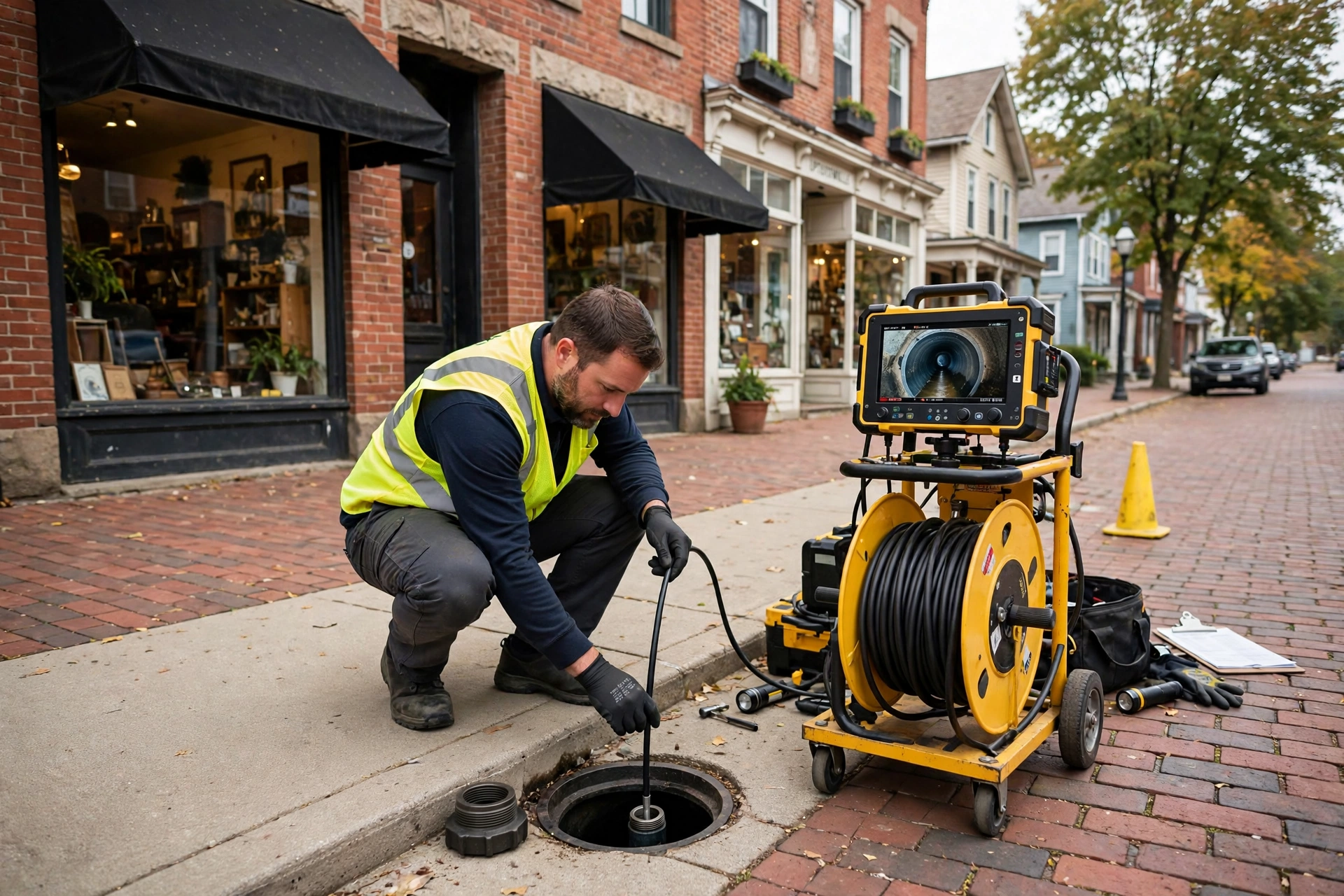
Westerville, Ohio
Why Does Westerville Mix Three Eras of Sewer Trouble?
Few suburbs pack as much pipe history into one zip code: an 1800s village core, a 1960s to 80s subdivision boom, and a creek corridor that keeps the ground wet.
Uptown Westerville and the old village run clay tile laterals from the 1800s and early 1900s, with mortar joints that have been crumbling for a century and street trees that have had just as long to invade them. The subdivisions that spread north and east from the 1960s through the 1980s run cast iron inside transitioning to clay or early PVC outside, and that cast iron is rusting from the inside out right on schedule. The newest builds run PVC and rarely trouble anyone.
Then there is Alum Creek, which cuts through the city and keeps the water table high along its corridor. Groundwater presses into cracked joints and separated connections, overloading laterals during wet periods, and receding high water leaves silt inside the pipe that hardens into restrictions. Add the dense clay soil that drains slowly everywhere else, and Westerville laterals take punishment from age, roots, and water all at once.
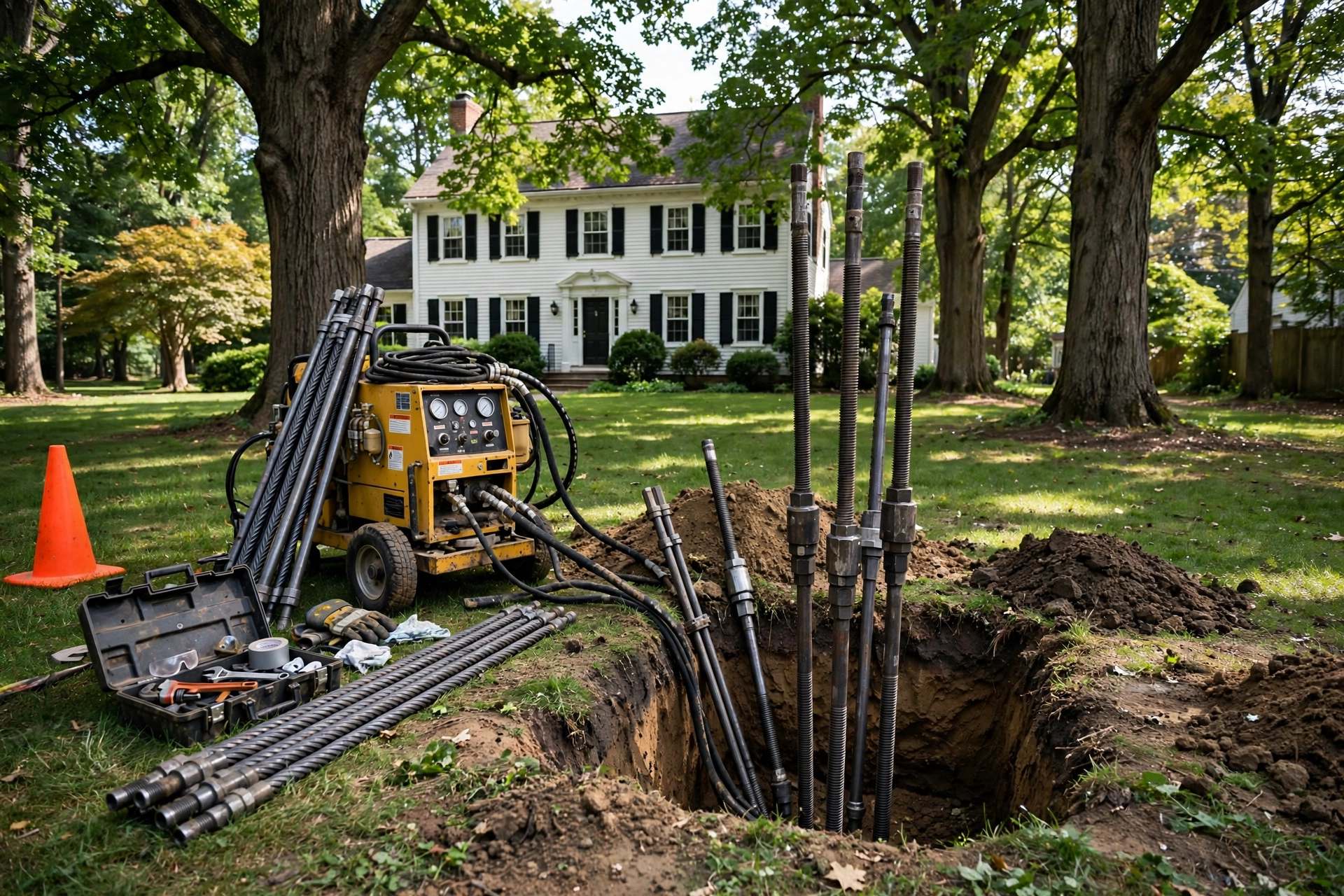
In Uptown's oldest homes, the camera inspection starts where the clay tile exits the stone foundation.
What Pipes Are Under Westerville Homes?
Uptown and the streets around Otterbein University: 1890s to 1930s clay tile from stone or brick foundations, the classic college-town housing stock. The 1960s to 80s subdivisions: cast iron inside, clay or early PVC outside, with the cast iron now entering its failure window. The Hoover Reservoir area and the 1990s builds: PVC, generally sound but with occasional bellies where trench backfill settled during the boom.
The Otterbein area deserves a landlord's note. Student rentals around campus hide lateral problems for years: tenants report slow drains late, maintenance gets deferred, and roots keep growing the whole time. A camera inspection between tenants is the simplest protection a landlord can buy, because it catches a lining job before it becomes a replacement.
The Otterbein University area mixes century-old clay laterals with student rentals that hide problems for years.
How Does Westerville's Water Quality Affect Your Sewer Line?
Westerville's own water quality report lists average hardness around 7 grains per gallon, about 119 parts per million, a moderately hard supply. That mineral content settles as scale inside water heaters and fixtures, and over decades it coats the inside of older drain and sewer lines too. On aging cast iron, scale plus grease is the classic recipe for a slow drain that keeps coming back.
Which Westerville Neighborhoods See the Most Sewer Trouble?
Uptown Westerville and the old village lead with the oldest clay and the most mature street trees. The Otterbein campus area follows with the same old pipe plus rental deferred maintenance. Neighborhoods along the Alum Creek corridor fight infiltration and silt from the high water table, and the 1970s subdivisions are where cast iron is aging out in clusters. The Hoover Reservoir area sees water-table pressure on its 70s and 80s lines.
The far north side and the newest subdivisions run PVC and call far less, which confirms the pattern: in Westerville, sewer trouble follows pipe age, tree canopy, and the creek. Whether you are strolling the Uptown farmers market or hiking Inniswood Metro Gardens, the prescription is the same: camera first, then fix what is actually broken.
How Should Westerville Homeowners Maintain Their Sewer Lines Through the Seasons?
Year-round prevention beats emergency repair: keep gutters and downspouts discharging away from the lateral in spring, schedule a camera check in fall when tree roots grow most aggressively, and protect shallow cleanouts from winter freeze. Never pour grease down drains, since it congeals faster in cold lines and catches on every rough spot.
- Spring: heavy rains saturate Ohio's clay soil and raise water tables. If drains gurgle or slow after a storm, groundwater may be infiltrating cracked joints, so schedule a camera check rather than just clearing the drain.
- Fall: roots push hardest in fall as trees seek water before dormancy. Homes with big maples, oaks, or willows near the lateral are worth a camera inspection for root entry.
- Winter: freeze-thaw cycles shift soil and widen cracks, and shallow cleanouts can freeze. Keep grease out of drains all winter, since it congeals faster in cold pipes and narrows the flow.
Who Owns What: Your Lateral vs. Westerville's System?
You own the sewer lateral from your house to where it connects with the public main, usually at the street. The public side is split here: the City of Westerville runs its own water system through its municipal water division, with details on the city's water page, while wastewater flows into the regional City of Columbus system for treatment. The lateral in between, including the part under your yard and driveway, is yours to maintain and repair. If several homes on your street back up at once, that points to a main-line issue worth reporting to the city. If it is just your house, the lateral is the prime suspect.
Columbus treats the wastewater at its regional plants, which discharge under federal NPDES permits administered in Ohio by Ohio EPA. Lateral work in Westerville requires a city permit; check with the City of Westerville building department on inspection requirements before work begins.
Because Uptown's streetscape and the subdivision landscaping both matter, trenchless sewer repair is the natural fit: lining or bursting renews the pipe through small access pits instead of an open trench. Homeowners in Gahanna and Delaware choose it for the same reasons, and we pull the permits and coordinate inspections as part of every job. Learn more about Ohio Sewer Masters and how we work across the north side.