Sewer Line Repair in Dublin, OH
Muirfield's mature trees, the Scioto River's high water table, and Dublin's mix of historic and 1980s housing each attack sewer lines differently. We camera-diagnose first, then fix it trenchless or traditional.
Muirfield's mature trees, the Scioto River's high water table, and Dublin's mix of historic and 1980s housing each attack sewer lines differently. We camera-diagnose first, then fix it trenchless or traditional.
Last updated: October 13, 2026
Dublin grew up along the Scioto River, and the river's fingerprints are all over the city's sewer problems: high water tables, saturated clay, and infiltration.
In the low-lying ground near the Scioto and along Indian Run, the water table sits high enough that groundwater presses into every cracked joint and separated connection in your lateral. That infiltration loads the pipe with clear water it was never sized to carry, so drains slow down or back up during wet stretches even when nothing is actually blocked. The saturated glacial clay also loses bearing strength, letting pipe bedding shift and joints separate further.
Away from the river, Dublin sits on the same dense clay till as the rest of central Ohio: poor drainage, shrink-swell movement with the seasons, and downspouts that push roof water straight toward foundations and laterals. Winter freeze-thaw wedges every crack a little wider. The pattern is consistent across the city, only the details change by neighborhood.
The Scioto River keeps water tables high across Dublin, which makes infiltration a constant threat to cracked laterals.
Historic Dublin, the High Street district and the old village, holds pre-1940 homes with vitrified clay tile laterals and mortar joints, now joined by a century of mature tree roots. Muirfield Village and the 1970s and 80s subdivisions typically run cast iron inside the house transitioning to clay tile or early PVC outside, and a few 1960s and 70s tracts still hide Orangeburg, the tar-paper pipe that deforms and collapses with age.
Cast iron deserves special attention in Dublin because so much of it is hitting the end of its life right now. It rusts from the inside out, so a 1980s lateral can look intact from the outside while the bottom of the pipe is paper-thin. Newer subdivisions run PVC, which holds up well but can develop low bellies where trench backfill settled during the building boom. The camera tells us which story your house is living.

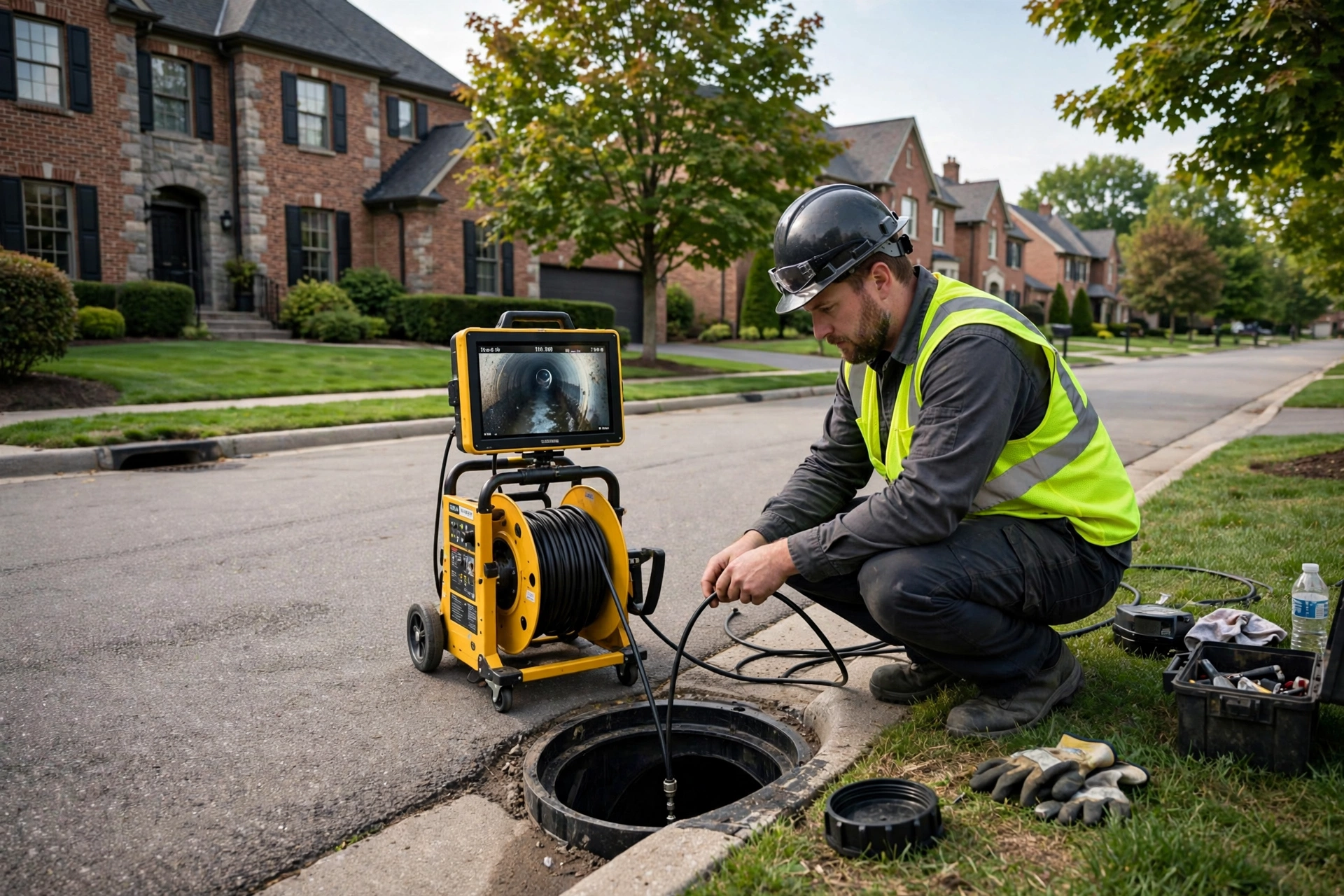
A camera inspection shows exactly what your Dublin lateral is made of and where it is failing.
Water from the City of Columbus is softened to about 120 parts per million, roughly 7 grains per gallon, which the city calls moderately hard and optimal for corrosion control. That mineral content still leaves light scale inside older cast iron and galvanized lines over decades, narrowing the pipe and giving grease and solids a rough surface to catch on, which is why unsoftened homes tend to see more slow drains.
Muirfield Village leads the list: 40 to 50-year-old laterals running under one of the most mature tree canopies in the suburbs, which makes root intrusion the default diagnosis. The historic Dublin district has century-old clay dealing with the same root pressure on a smaller scale. Low areas near the Scioto River and Indian Run fight infiltration, and the 1980s subdivisions along the US-33 and SR-161 corridor are where cast iron is aging out all at once.
Bridge Park and the newer riverfront development run modern PVC and rarely call us, which tells you something: in Dublin, the trouble follows the age of the pipe and the size of the trees above it. If you are near the Dublin Community Recreation Center corridor or out by the Tartan fields, the housing eras differ but the process is the same: camera first, then fix what is actually broken.
Year-round prevention beats emergency repair: keep gutters and downspouts discharging away from the lateral in spring, schedule a camera check in fall when tree roots grow most aggressively, and protect shallow cleanouts from winter freeze. Never pour grease down drains, since it congeals faster in cold lines and catches on every rough spot.
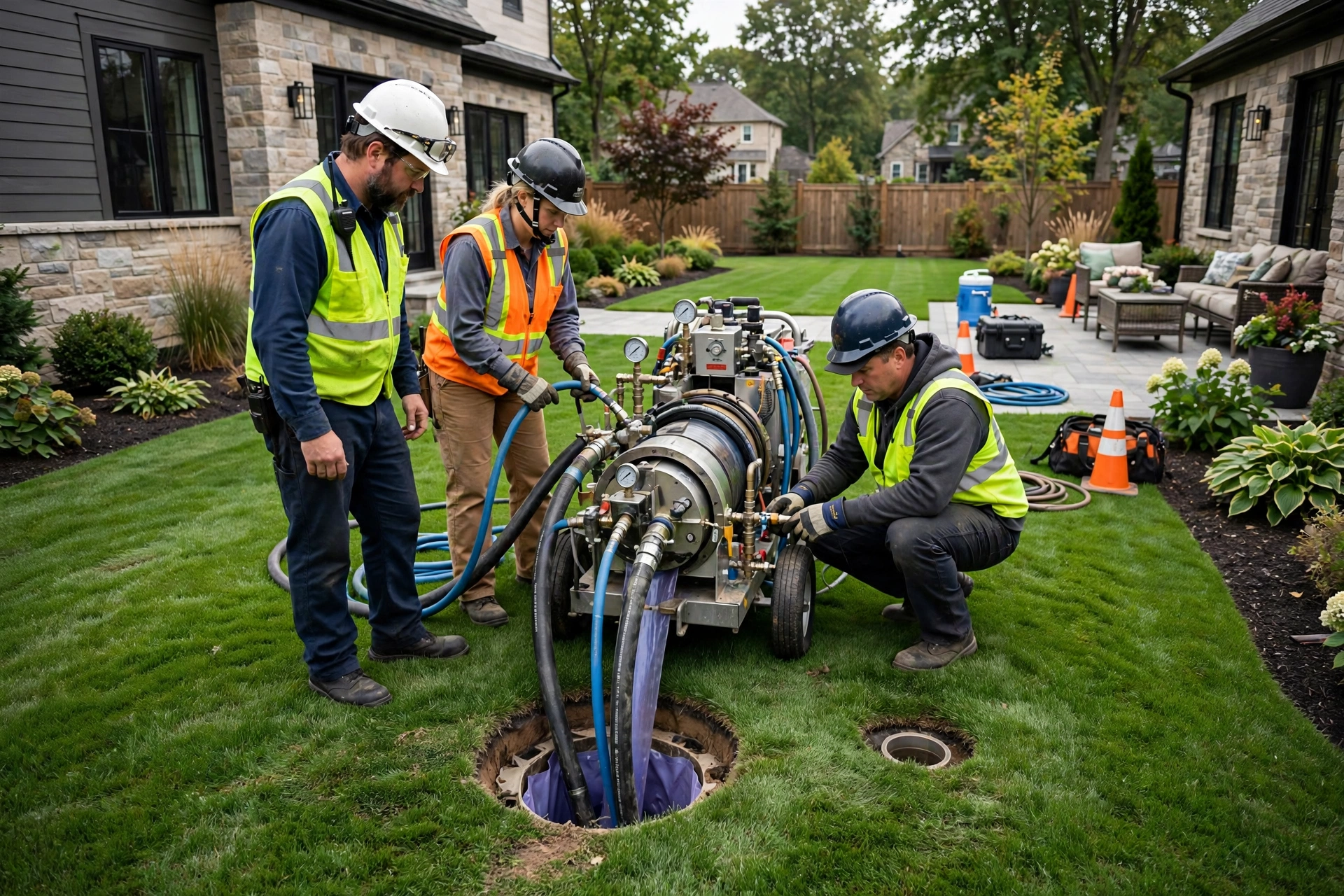
Because it renews the pipe with only small access pits at each end, leaving irrigation, stone hardscaping, and mature plantings intact. Dublin yards are investments, and HOA standards do not forgive a torn-up lawn. Open-trench replacement cuts straight through all of it and leaves you rebuilding for a season, while trenchless sewer repair lines the pipe from the inside or bursts a new HDPE line through the old one's path with almost nothing disturbed on the surface.
Homeowners in Hilliard and Upper Arlington make the same calculation for the same reasons. Lateral work in Dublin requires a city permit; check with the City of Dublin building department on inspection requirements before work begins, and we pull the permits as part of the job. Your water and sewer service comes from the City of Columbus: Dublin's collection system ties into Columbus's regional treatment plants, with service details on Columbus's public utilities page. That treatment meets federal NPDES discharge permits administered in Ohio by Ohio EPA. Learn more about Ohio Sewer Masters and how we work across the northwest suburbs.
They are the number-one threat to older Muirfield laterals. Muirfield Village's mature oaks and maples send fine root hairs into any damp clay tile joint, and the roots thicken year after year until they wedge joints apart and fill the pipe. If your Muirfield home still has its original 1970s or 80s lateral, a camera inspection will show whether roots have found it, and lining the pipe seals every entry point for good.
Typically cast iron inside the house transitioning to clay tile or early PVC outside, now 40 years old and entering the failure window. Cast iron rusts from the inside out, so it can look fine until the bottom of the pipe is paper-thin. Clay sections from that era have rubber gasket joints that hold up better than old mortar, but they still shift in Dublin's clay soil. A camera inspection shows exactly where your line stands.
It causes infiltration, which can look and requirementl like a backup. In low-lying areas near the Scioto River and Indian Run, groundwater presses into cracked joints and separated connections, overloading the lateral with clear water until drains slow or back up during wet periods. The fix is sealing the entry points, usually by lining or bursting the damaged sections, not just clearing the drain.
Not with trenchless methods. Pipe lining rebuilds your lateral from the inside and pipe bursting pulls a new line through the old one's path, so we only dig small access pits at each end. Your irrigation lines, hardscaping, and plantings stay in place, which matters a lot in Dublin where yards are a real investment and many neighborhoods have HOA standards to meet.
Yes. The City of Dublin requires permits for sewer lateral repair and replacement, with inspection typically required before backfill. We pull the permits and coordinate the inspection as part of every job, so it is included in the written plan rather than showing up as a surprise later.
Also serving Hilliard, Powell, Plain City, and Upper Arlington. Landmarks we work around include Bridge Park, Muirfield Village Golf Club, Indian Run Falls, and OhioHealth Dublin Methodist Hospital. Service ZIP codes: 43016, 43017.
Muirfield, historic Dublin, or the 161 corridor, one inspection tells us exactly what is happening underground.
Call (614) 350-5706