Marysville, Ohio
How Did Marysville's Boom-Town Growth Affect Sewer Lines?
The Marysville Auto Plant opened in 1982, and the subdivisions built for its workforce went up fast. Fast-built tracts are where sewer lines settle, sag, and fail early.
When whole neighborhoods rise in a few seasons, trench backfill does not always get the compaction it needs. Over the years, PVC sections settle into low bellies where the ground gives way beneath them. Wastewater slows through the sag, solids settle out, and homeowners get repeat blockages in the same spot that snaking clears for a few months and never truly fixes. It is the signature Marysville subdivision problem, and it has nothing to do with how well you maintain your drains.
Uptown tells the older story: 1900 to 1950 clay tile with mortar joints, mature trees, and a century of root intrusion. The outskirts add a third chapter, homes still on septic with old clay or Orangeburg lines that were only meant to reach a tank. Three eras of pipe, three different failure modes, and the camera sorts them out in about an hour.
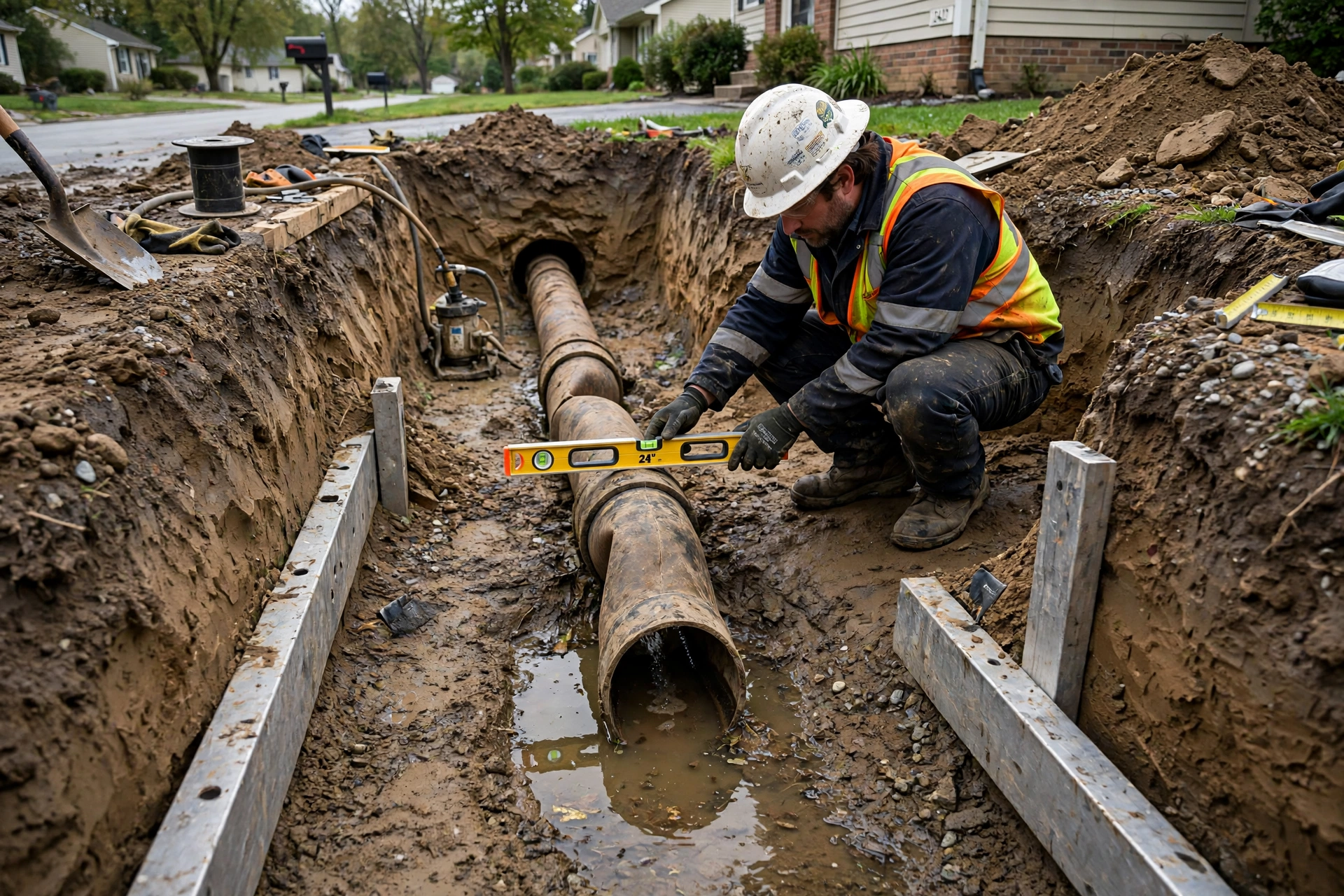
In Marysville's boom-era subdivisions, trenchless replacement fixes settlement bellies without tearing up the street.
What Pipes Are Under Marysville Homes?
Uptown Marysville and the historic district: 1900 to 1950 vitrified clay tile from stone or brick foundations, with crumbling mortar joints and mature tree roots. The 1980s through 2000s subdivisions: PVC, generally sound except where backfill settlement created bellies. A few 60s and 70s tracts run cast iron or hide Orangeburg, the tar-paper pipe that deforms and collapses with age.
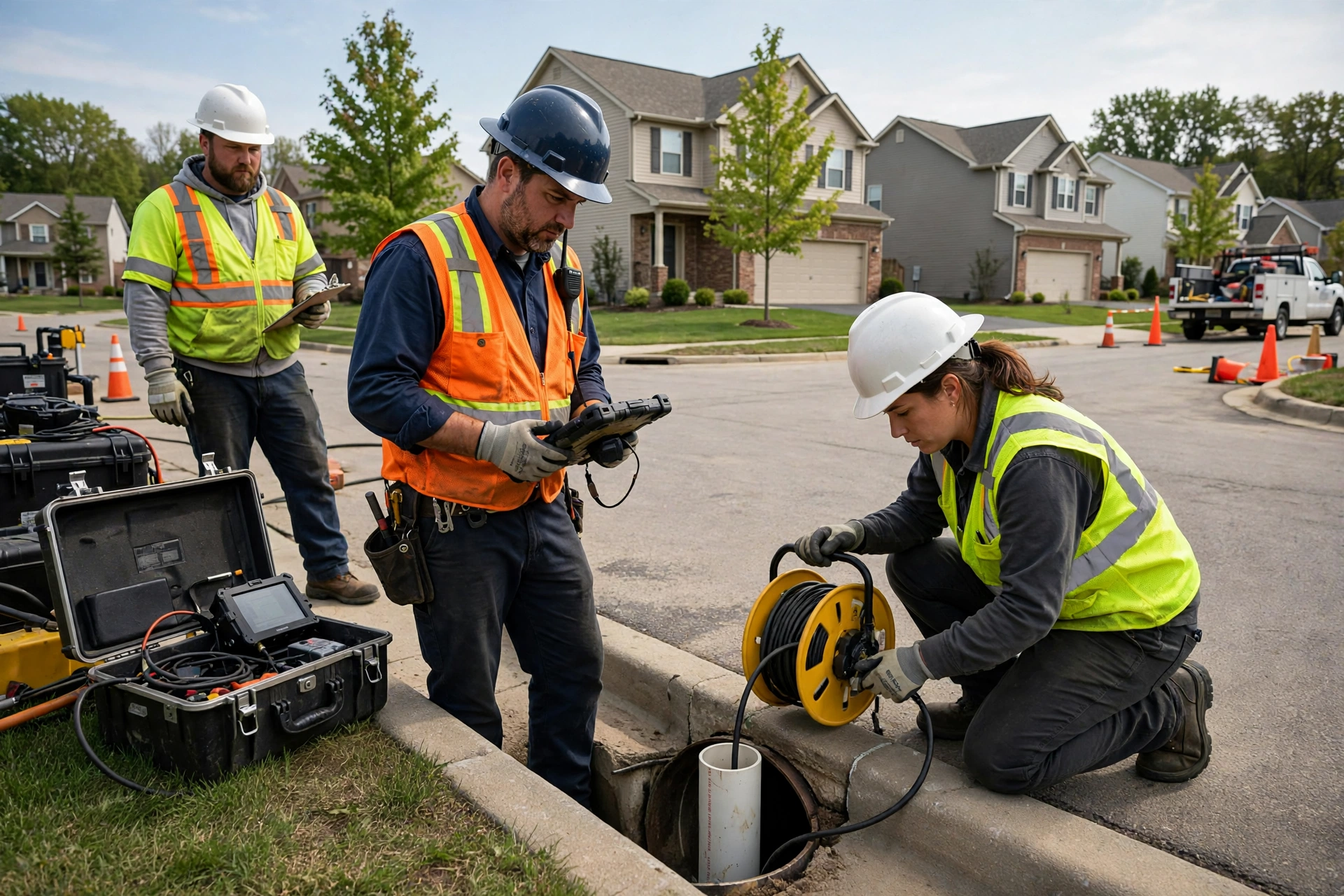
The belly problem confuses homeowners because the pipe is not broken, it has sagged. Snaking clears the symptom, the sag remains, and the blockage returns. A mild belly can sometimes be lined; a deep one needs the section replaced or burst. The camera measures the sag precisely, so the fix matches the actual problem instead of the guess.
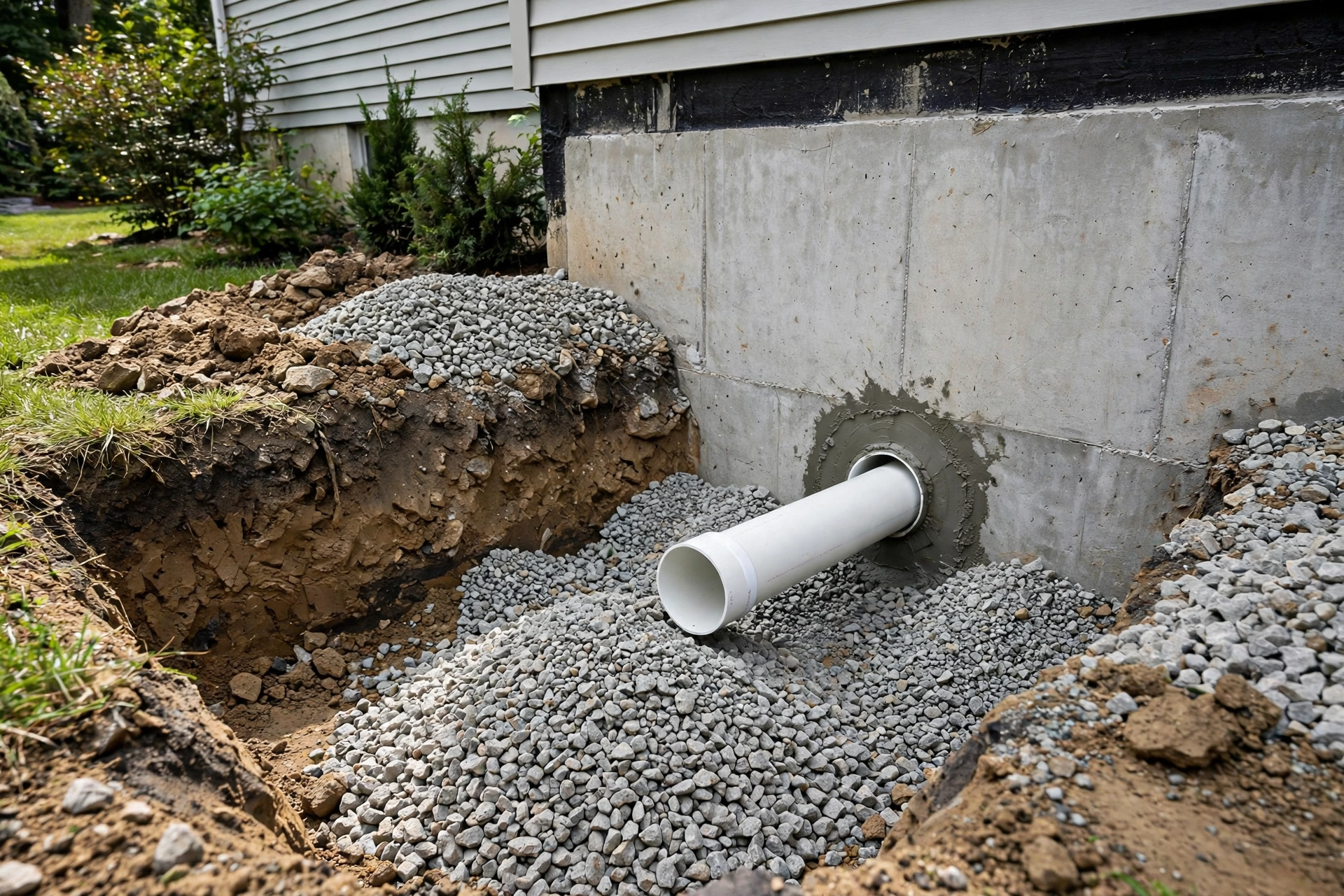
The camera shows whether your Marysville line has a belly, root intrusion, or corrosion, and exactly where.
How Does Marysville's Water Quality Affect Your Sewer Line?
Marysville's water blends Mill Creek surface water with groundwater wells, and the city's water quality report notes that water picks up naturally occurring minerals as it travels through the ground. That mineral load shows up as scale in water heaters and fixtures, and over decades it coats older drain and sewer lines as well. On aging cast iron, scale plus grease is the classic recipe for a slow drain that keeps coming back.
Which Marysville Neighborhoods See the Most Sewer Trouble?
Uptown Marysville and the historic district lead with century-old clay and mature trees. The 1980s and 90s subdivisions off the US-33 corridor are where settlement bellies cluster, since the tracts went up fastest during the boom. Low areas near Mill Creek deal with high water tables on top of aging pipe. The outskirts toward the covered-bridge country mix septic systems with old clay farmhouse laterals awaiting conversion.
The newest subdivisions run modern PVC with better compaction practices and call far less, which confirms the pattern: in Marysville, sewer trouble follows the boom years. Whether you are Uptown for the farmers market or out by the Honda plant on 33, the prescription is the same: camera first, then fix what is actually broken.
How Should Marysville Homeowners Maintain Their Sewer Lines Through the Seasons?
Year-round prevention beats emergency repair: keep gutters and downspouts discharging away from the lateral in spring, schedule a camera check in fall when tree roots grow most aggressively, and protect shallow cleanouts from winter freeze. Never pour grease down drains, since it congeals faster in cold lines and catches on every rough spot.
- Spring: heavy rains saturate Ohio's clay soil and raise water tables. If drains gurgle or slow after a storm, groundwater may be infiltrating cracked joints, so schedule a camera check rather than just clearing the drain.
- Fall: roots push hardest in fall as trees seek water before dormancy. Homes with big maples, oaks, or willows near the lateral are worth a camera inspection for root entry.
- Winter: freeze-thaw cycles shift soil and widen cracks, and shallow cleanouts can freeze. Keep grease out of drains all winter, since it congeals faster in cold pipes and narrows the flow.
Who Owns What: Your Lateral vs. Marysville's System?
You own the sewer lateral from your house to where it connects with the public main, usually at the street. The City of Marysville runs the public side itself: the city operates its own water treatment plant and its Water Reclamation Facility, with service details on the city's official site. The lateral in between, including the part under your yard and driveway, is yours to maintain and repair. If several homes on your street back up at once, that points to a main-line issue worth reporting to the city. If it is just your house, the lateral is the prime suspect.
Marysville's city specs govern service-line work: inspections must be scheduled at least 24 hours in advance through the city utility office, and new taps have to meet city standards, so check with the city before lateral work begins. The city's treatment facility discharges under federal NPDES permits administered in Ohio by Ohio EPA.
Because Marysville's problem is so often a belly or a bad section rather than a full-line failure, trenchless sewer repair fits well: lining bridges mild sags and bursting replaces collapsed sections through small pits. Homeowners in Dublin and Delaware choose it for the same reasons, and we pull the permits and coordinate inspections as part of every job. Learn more about Ohio Sewer Masters and how we work across Union County.