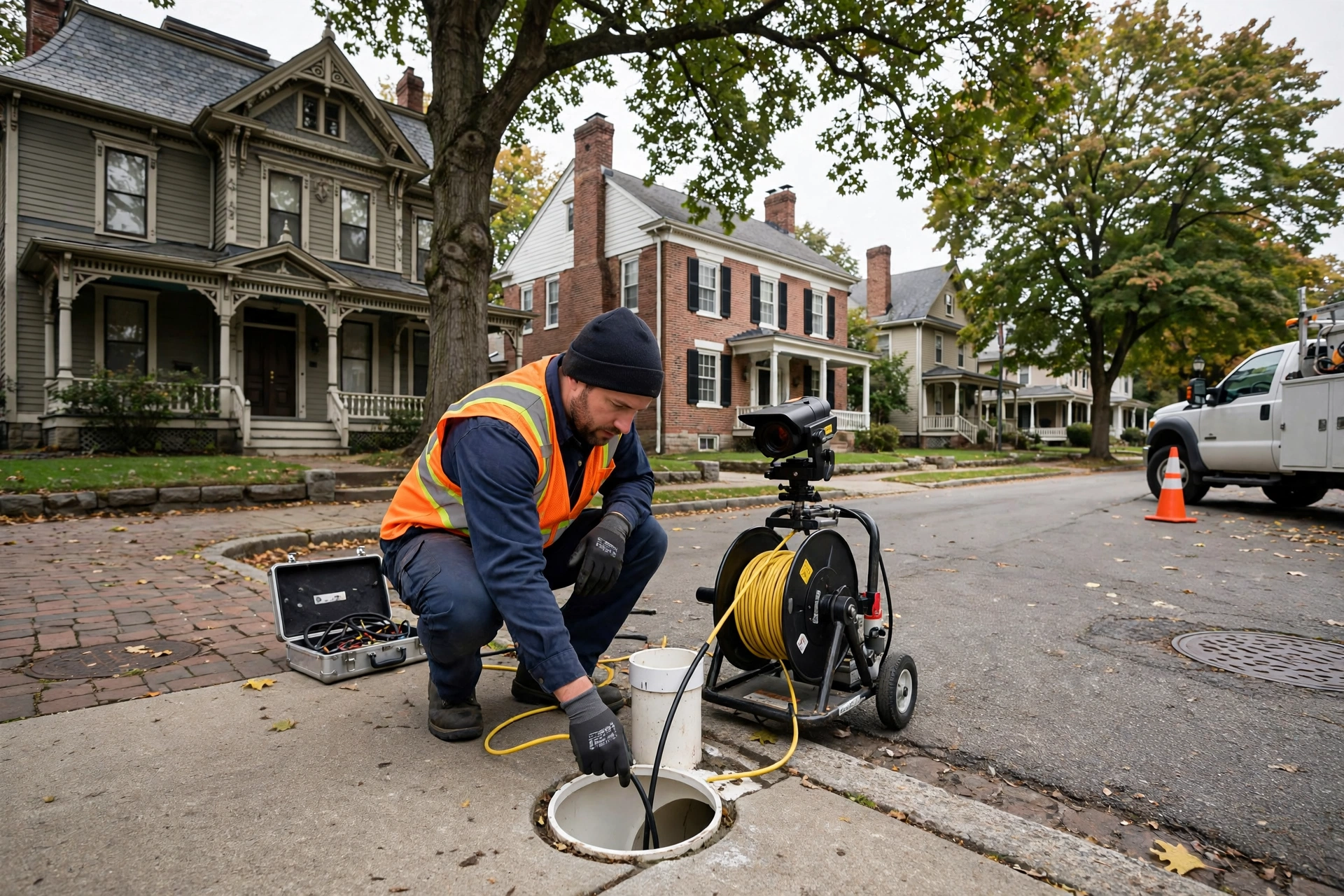
Delaware, Ohio
Why Do Delaware's Oldest Streets Have the Worst Laterals?
Downtown Delaware was laying sewer pipe in the 1800s, and some of those same clay laterals are still in the ground, failing a little more every year.
Three things stack up against the oldest streets. First, the pipes are simply the oldest in the city: vitrified clay tile with mortar-sealed joints, installed when the mortar was expected to last and nobody planned for a second century. Second, the mature street trees have had just as long to invade them, pushing root hairs into every damp joint until the roots thicken and wedge the joints apart. Third, Delaware sits on dense glacial clay that shifts with the seasons and drains poorly, working every joint loose a fraction of an inch at a time.
The result is predictable. Camera inspections on pre-1940 Delaware homes so often find the same picture: root masses at the joints, offset sections, and mortar that has turned to sand. The good news is that age alone does not disqualify a line. If the pipe still holds its shape, trenchless sewer repair can renew it from the inside without disturbing the historic streetscape.
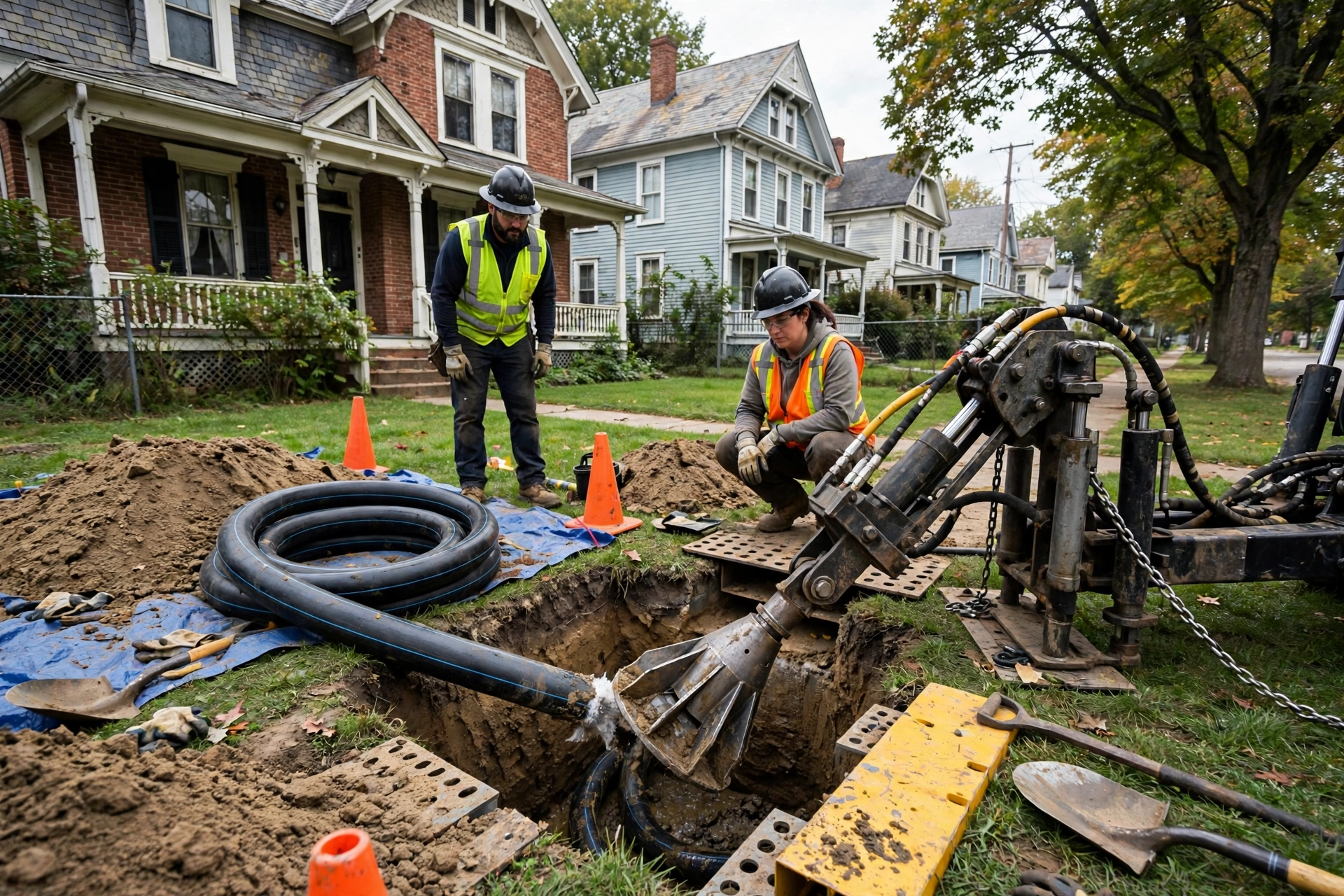
Pipe bursting replaces a failed Delaware lateral through small access pits, leaving the yard and sidewalk alone.
What Pipes Are Under Delaware Homes?
The downtown historic district and the streets around Ohio Wesleyan University run 1890s to 1930s clay tile from stone or brick foundations, the classic college-town housing stock. Mid-century neighborhoods added cast iron inside transitioning to clay outside, and cast iron rusts from the inside out, looking fine until the bottom of the pipe is paper-thin. The north side and the newer subdivisions off US-23 run PVC, which holds up well apart from occasional bellies where trench backfill settled.
The OWU area deserves a special note. Student rentals around campus often hide lateral problems for years: tenants report slow drains late, landlords defer maintenance, and tree roots keep growing the whole time. By the time anyone calls, a lining job has sometimes become a full replacement. Landlords who camera-inspect between tenants catch these problems while they are still minor to fix.
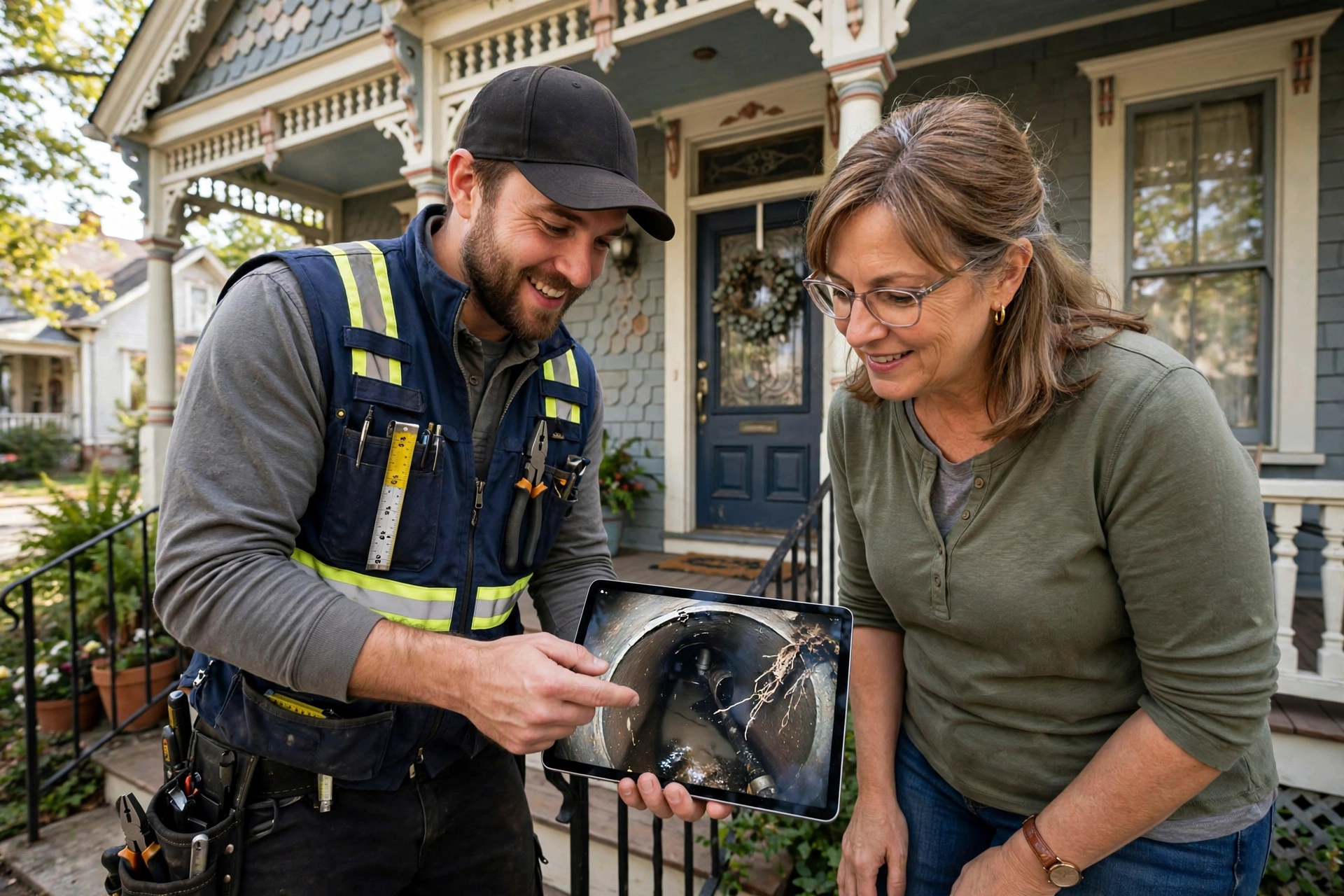
A camera inspection takes about an hour and shows exactly what your Delaware lateral is made of.
How Does Delaware's Water Quality Affect Your Sewer Line?
Delaware blends Olentangy River water with groundwater from deep wells, and studies of the city's Penry Wellfield found groundwater hardness above 525 milligrams per liter. Blended at the plant, the supply still carries enough dissolved calcium and magnesium to leave scale in fixtures, water heaters, and aging pipes. In older cast iron laterals, that scale narrows the bore and gives grease and solids a rough surface to catch on.
Where Do Delaware Sewer Calls Cluster?
The downtown historic district leads by a wide margin: the oldest clay, the biggest trees, the most root intrusion. The Ohio Wesleyan campus area follows, with old rentals and mature canopy combining into the same story. Low ground near the Olentangy River deals with infiltration and high water tables, where groundwater overloads cracked laterals during wet periods. Mingo Park area homes and the mid-century streets east of downtown tend toward cast iron reaching the end of its life.
The north side along the US-23 corridor is mostly newer PVC and calls us far less, which confirms the pattern: in Delaware, sewer trouble follows pipe age and tree canopy. Whether you are near the Delaware County Fairgrounds in September or up by Grady Memorial Hospital, the process is the same: camera first, then fix what is actually broken.
How Should Delaware Homeowners Maintain Their Sewer Lines Through the Seasons?
Year-round prevention beats emergency repair: keep gutters and downspouts discharging away from the lateral in spring, schedule a camera check in fall when tree roots grow most aggressively, and protect shallow cleanouts from winter freeze. Never pour grease down drains, since it congeals faster in cold lines and catches on every rough spot.
- Spring: heavy rains saturate Ohio's clay soil and raise water tables. If drains gurgle or slow after a storm, groundwater may be infiltrating cracked joints, so schedule a camera check rather than just clearing the drain.
- Fall: roots push hardest in fall as trees seek water before dormancy. Homes with big maples, oaks, or willows near the lateral are worth a camera inspection for root entry.
- Winter: freeze-thaw cycles shift soil and widen cracks, and shallow cleanouts can freeze. Keep grease out of drains all winter, since it congeals faster in cold pipes and narrows the flow.
Who Owns What: Your Lateral vs. Delaware's System?
You own the sewer lateral from your house to where it connects with the public main, usually at the street. The City of Delaware Public Utilities runs the public side: its wastewater division collects and treats sewage before returning it to the Olentangy River, with details on the city's utilities page. The lateral in between is the property owner's responsibility, including on rental properties. If sewage is backing up across multiple homes on your street at once, that points to a main-line problem worth reporting to the city. If it is just your house, the lateral is the prime suspect.
Two notes for Delaware addresses. First, just outside city limits the Delaware County Regional Sewer District takes over sewer service, so confirm which provider serves your address before planning work. Second, lateral work inside the city requires a permit; check with the City of Delaware building department on inspection requirements before work begins. Area treatment plants discharge under federal NPDES permits administered in Ohio by Ohio EPA.
Homeowners in Marysville and Dublin work under the same ownership rules, and we pull the permits and coordinate inspections as part of every job. Learn more about Ohio Sewer Masters and how we work across central Ohio.