Upper Arlington, Ohio
Why Do Upper Arlington's Century-Old Laterals Fail Differently?
South of Lane Avenue, the pipes are as old as the Garden City plan itself: 1915 to 1940 clay tile running under some of the most valuable landscaping in central Ohio.
Old Arlington was built as a planned Garden City suburb, with curving streets, generous setbacks, and a permanent canopy of oaks and maples. That canopy is the beauty of the neighborhood and the enemy of its sewer lines. Fine root hairs seek out every damp clay tile joint, then thicken year after year until they wedge joints apart and fill the pipe. The mortar joints have been crumbling for the better part of a century, and the dense clay soil shifts with the seasons, opening every joint a little wider.
North of Lane Avenue tells a different story. The post-war housing boom filled those grid streets with ranch homes running cast iron inside and clay tile outside, and that cast iron is now rusting from the inside out right on schedule. Two halves of one city, two pipe materials, two failure timelines, and the camera sorts out which one your house is living with in about an hour.
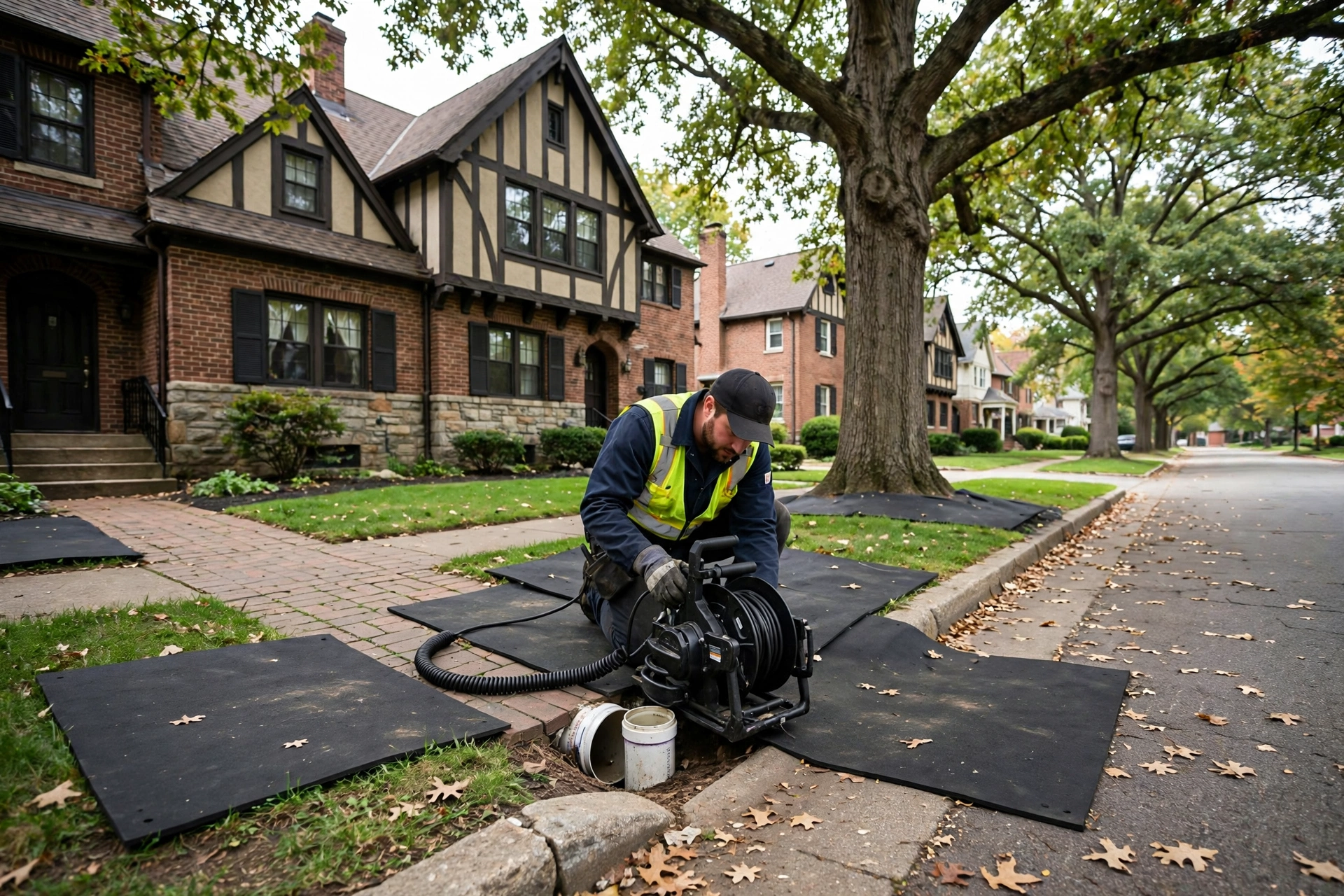
In Old Arlington, the camera inspection starts at the cleanout beside the foundation, no digging required.
What Pipes Are Under Old Arlington Homes?
The 1915 to 1940 brick and stone period-revival homes south of Lane Avenue run vitrified clay tile with mortar-sealed joints from stone or brick foundations. After 85 to 110 years, the mortar has largely turned to sand, sections have shifted in the clay soil, and the mature canopy has spent decades invading every opening. It is the classic Upper Arlington lateral, and many of them still line beautifully if the pipe holds its shape.
The 1950s and 60s ranches north of Lane run cast iron inside transitioning to clay outside, and cast iron fails from the inside out: scale narrows it, rust thins the bottom wall, and one day the pipe gives way. The west edge near the Scioto River adds high water table pressure, where groundwater infiltrates cracked joints during wet periods. Whatever the era, the footage does not care what decade your house was built in.
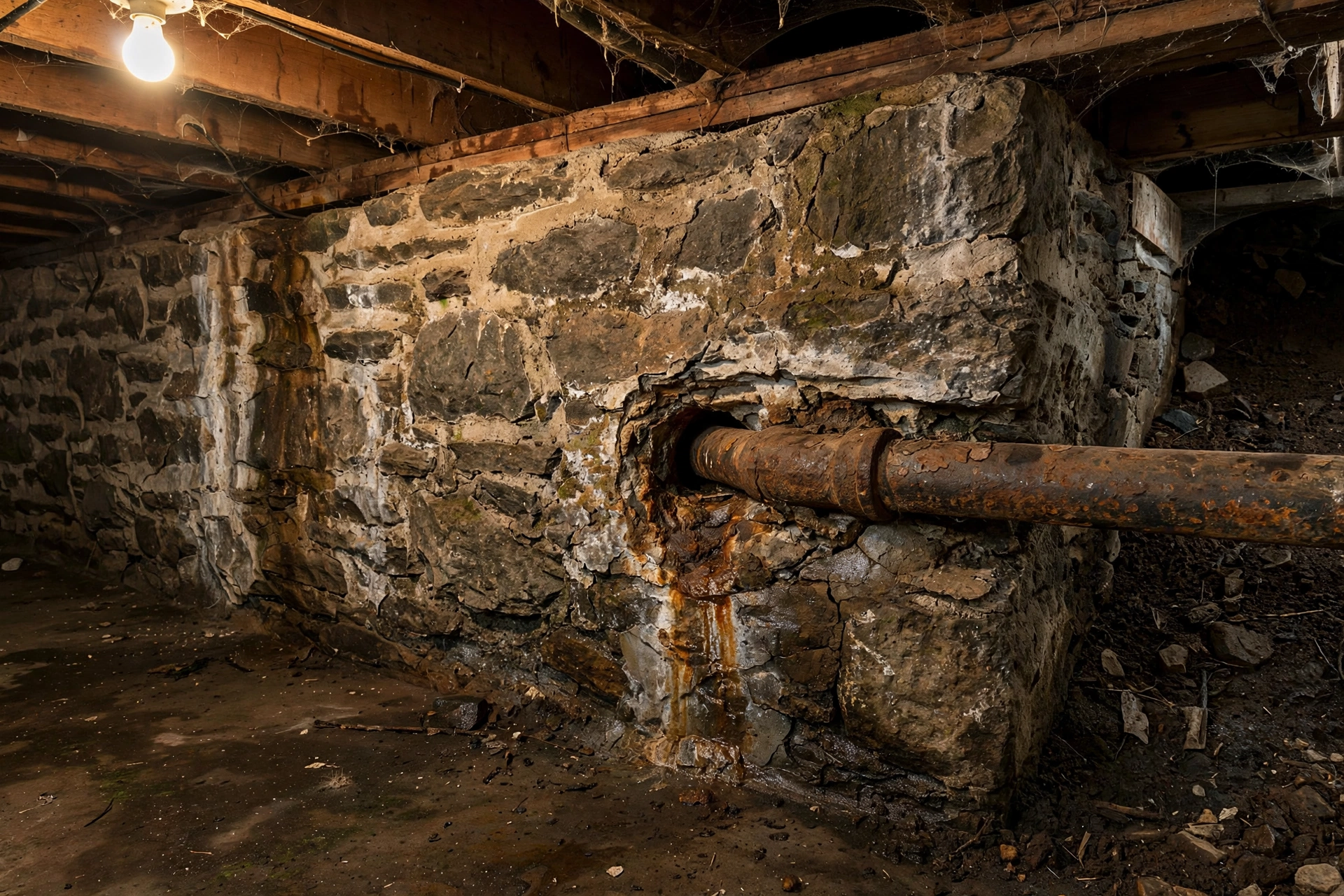
The cast iron to clay transition at the foundation wall is the most common failure point in mid-century UA homes.
How Does Upper Arlington's Water Quality Affect Your Sewer Line?
Water from the City of Columbus is softened to about 120 parts per million, roughly 7 grains per gallon, which the city calls moderately hard and optimal for corrosion control. That mineral content still leaves light scale inside older cast iron and galvanized lines over decades, narrowing the pipe and giving grease and solids a rough surface to catch on, which is why unsoftened homes tend to see more slow drains.
Which Upper Arlington Neighborhoods See the Most Sewer Trouble?
Old Arlington, the National Register historic district south of Lane Avenue, leads with century-old clay and the heaviest tree canopy. The Tremont Road corridor and the streets around the Mallway combine the same old pipe with mature trees. North of Lane, the 1950s and 60s ranch tracts are where cast iron is aging out in clusters. The west edge near the Scioto River deals with infiltration from the high water table on top of aging pipe.
Kingsdale area homes and the northern subdivisions run newer pipe and call far less, which confirms the pattern: in Upper Arlington, sewer trouble follows pipe age and canopy density. Whether you are shopping the Tremont Center or walking Miller Park, the prescription is the same: camera first, then fix what is actually broken.
How Should Upper Arlington Homeowners Maintain Their Sewer Lines Through the Seasons?
Year-round prevention beats emergency repair: keep gutters and downspouts discharging away from the lateral in spring, schedule a camera check in fall when tree roots grow most aggressively, and protect shallow cleanouts from winter freeze. Never pour grease down drains, since it congeals faster in cold lines and catches on every rough spot.
- Spring: heavy rains saturate Ohio's clay soil and raise water tables. If drains gurgle or slow after a storm, groundwater may be infiltrating cracked joints, so schedule a camera check rather than just clearing the drain.
- Fall: roots push hardest in fall as trees seek water before dormancy. Homes with big maples, oaks, or willows near the lateral are worth a camera inspection for root entry.
- Winter: freeze-thaw cycles shift soil and widen cracks, and shallow cleanouts can freeze. Keep grease out of drains all winter, since it congeals faster in cold pipes and narrows the flow.
How Does Trenchless Repair Protect Landscaping and Hardscaping?
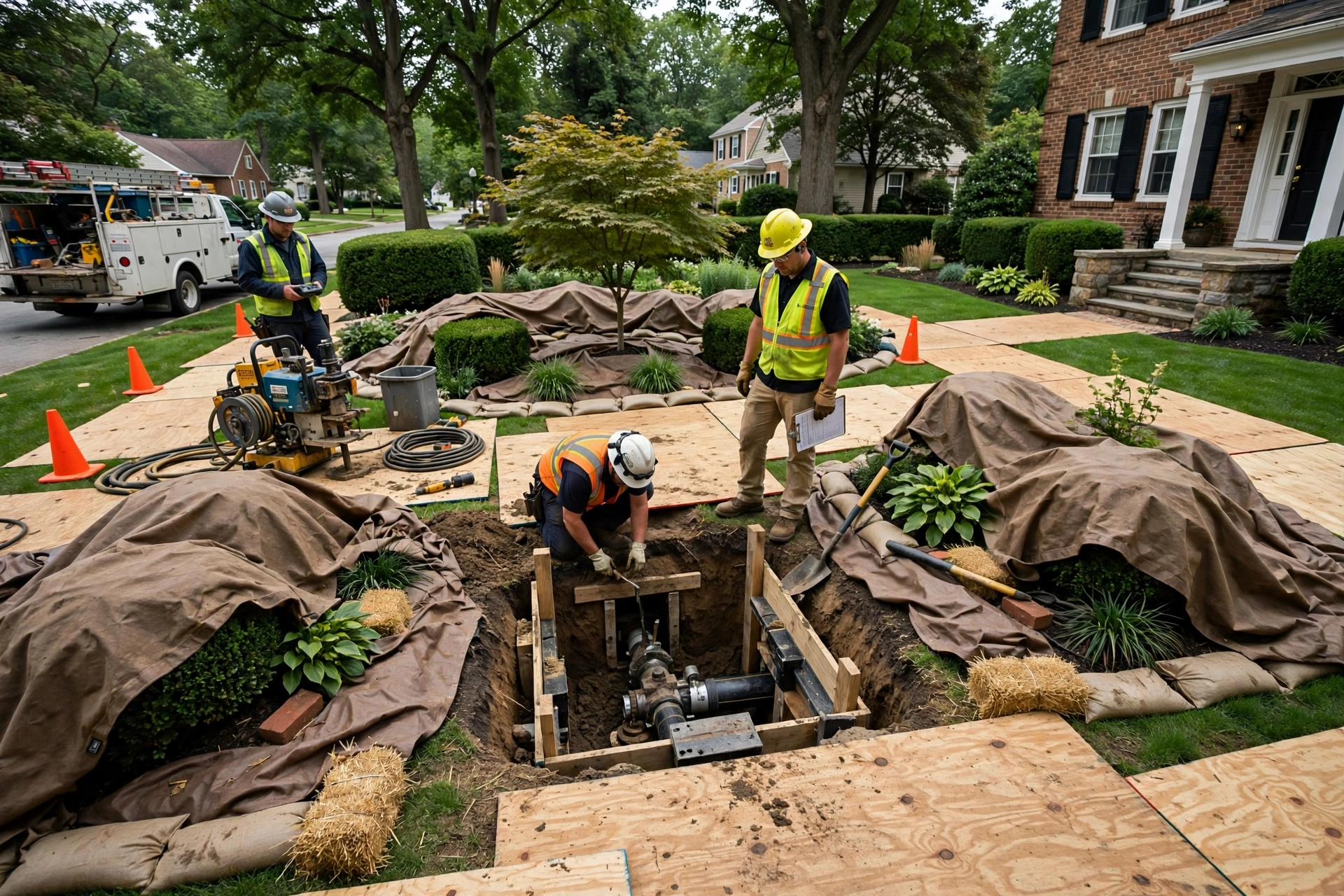
By renewing the pipe with only small access pits at each end, planned around what you want to keep. In Upper Arlington, the yard is often worth protecting as carefully as the house: mature plantings, brick patios, stone walls, and irrigation represent serious investment, and open-trench replacement cuts straight through all of it. Choosing trenchless sewer repair avoids that entirely: lining rebuilds the pipe from the inside, and bursting pulls a new HDPE line through the old one's path.
Homeowners in Dublin and Hilliard make the same calculation for the same reasons, and we pull the permits and coordinate inspections as part of every job. Water and sewer service for Upper Arlington comes from the City of Columbus: the suburb's collection lines tie into Columbus's regional sewer system, with service details on Columbus's public utilities page. That wastewater is treated at Columbus's regional plants, which discharge under federal NPDES permits administered in Ohio by Ohio EPA. Learn more about Ohio Sewer Masters and how we work across the northwest suburbs.