Lancaster, Ohio
What Makes Lancaster's Ground Different for Sewer Lines?
Lancaster sits near the edge of the glaciated plains, where flat clay country gives way to the rolling hills of Hocking Hills country, and each side of that line attacks pipe differently.
On the west side of town, it is classic central Ohio clay till: dense, slow-draining, swelling when wet and shrinking when dry, working every rigid joint loose a fraction of an inch at a time. On the rolling ground to the east, the problem is slope. Rainwater saturates the hillsides, soil creeps downhill over the years, and rigid clay or cast iron pipe cannot flex with it, so joints separate and sections offset into sharp steps.
Downtown adds age to the mix. The historic district's laterals go back to the 1800s: vitrified clay tile with mortar joints that have been crumbling for a century, running under brick streets and mature trees. Freeze-thaw wedges every crack wider each winter. It is a lot for a buried pipe to survive, which is why Lancaster's oldest lines fail in clusters, and why the camera is always the first step.
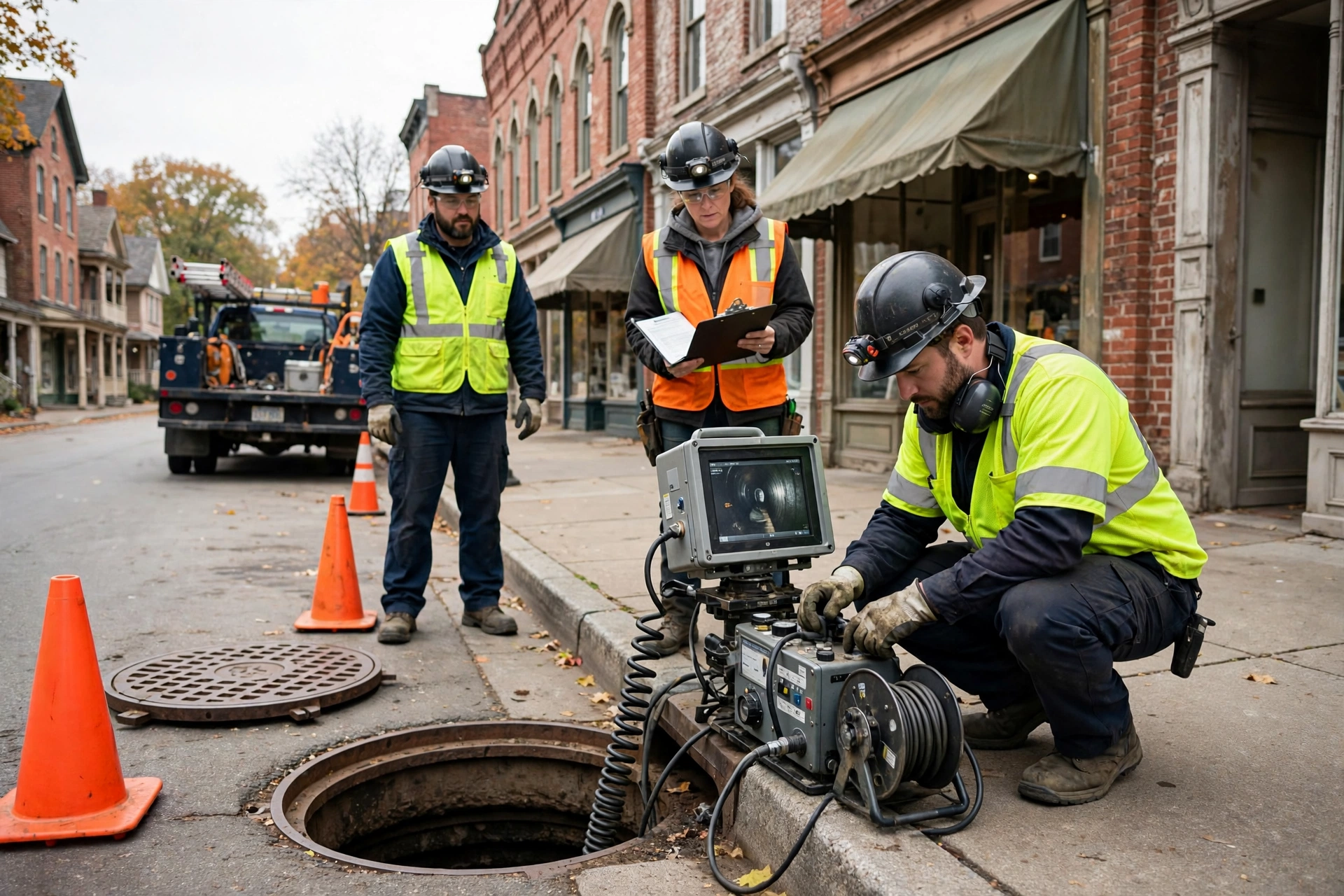
Trenchless methods renew Lancaster's historic-district laterals without disturbing the streetscape.
What Pipes Are Under Lancaster's Historic Homes?
Downtown and the surrounding historic neighborhoods run 1890s to 1930s clay tile from stone or brick foundations, now joined by a century of tree roots at every mortar joint. Mid-century streets added cast iron inside transitioning to clay outside, and cast iron rusts from the inside out, looking fine until the bottom of the pipe is paper-thin. The north side and the corridors toward US-33 run newer PVC, and the outskirts still hold homes on septic with old clay or Orangeburg lines that were only ever meant to reach a tank.
That last group deserves attention. As city sewer extends outward, homeowners converting from septic to city sewer sometimes inherit a failing lateral along with the connection. Tying a broken clay or collapsed Orangeburg line into the main just moves the problem downstream. A camera inspection before the conversion tells you whether the line can be lined or needs bursting, and it is far simpler than discovering the failure after the city signs off.
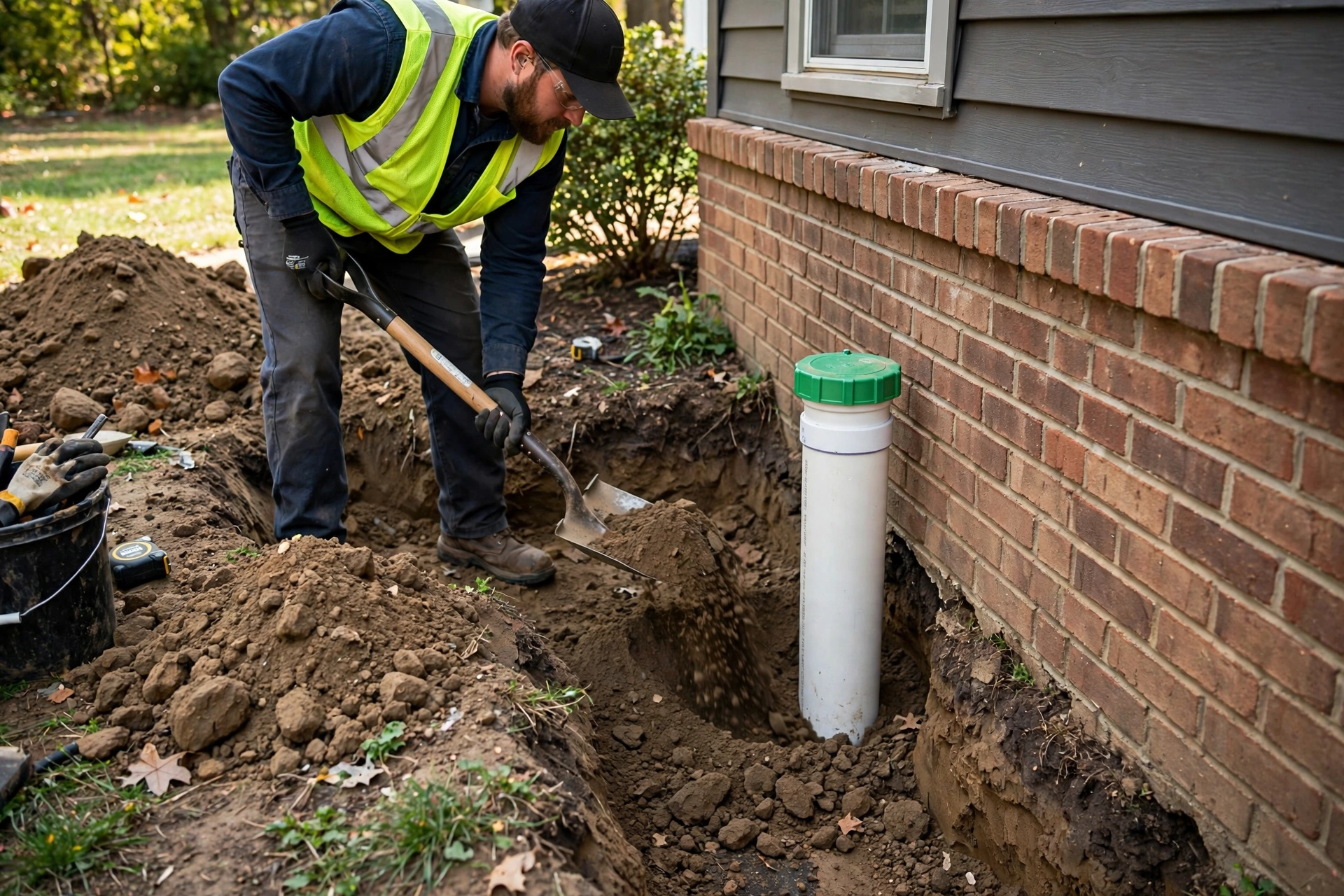
A century of root growth at crumbling mortar joints: the classic Lancaster historic-district lateral.
How Does Lancaster's Water Quality Affect Your Sewer Line?
Lancaster's water comes from wells in the Hocking River Valley Aquifer, and the city's water quality report notes that dissolved minerals settle out when water is heated, building up in water heaters, shower heads, and glass doors. The city also monitors manganese, a naturally occurring mineral that can blacken fixtures and slough off inside lines. That same mineral content lays down scale in aging drain and sewer pipes, narrowing cast iron and giving grease and solids more surface to cling to.
Which Lancaster Neighborhoods See the Most Sewer Trouble?
The historic downtown district leads with the oldest clay and the most mature street trees, the textbook root-intrusion combination. The slopes near Rising Park and the east side see offset joints from soil creep on the rolling ground. Mid-century neighborhoods along Memorial Drive and the US-22 corridor are where cast iron is aging out. The outskirts toward the covered-bridge country mix septic conversions with old clay farmhouse laterals.
The north side near the Ohio University Lancaster campus and Fairfield Medical Center runs newer pipe and calls far less, which confirms the pattern: in Lancaster, sewer trouble follows pipe age, tree canopy, and slope. Whether you are downtown for the Lancaster Festival or out near the Hocking Hills, the process is the same: camera first, then fix what is actually broken.
How Should Lancaster Homeowners Maintain Their Sewer Lines Through the Seasons?
Year-round prevention beats emergency repair: keep gutters and downspouts discharging away from the lateral in spring, schedule a camera check in fall when tree roots grow most aggressively, and protect shallow cleanouts from winter freeze. Never pour grease down drains, since it congeals faster in cold lines and catches on every rough spot.
- Spring: heavy rains saturate Ohio's clay soil and raise water tables. If drains gurgle or slow after a storm, groundwater may be infiltrating cracked joints, so schedule a camera check rather than just clearing the drain.
- Fall: roots push hardest in fall as trees seek water before dormancy. Homes with big maples, oaks, or willows near the lateral are worth a camera inspection for root entry.
- Winter: freeze-thaw cycles shift soil and widen cracks, and shallow cleanouts can freeze. Keep grease out of drains all winter, since it congeals faster in cold pipes and narrows the flow.
Who Owns What: Your Lateral vs. Lancaster's System?
You own the sewer lateral from your house to where it connects with the public main, usually at the street. The City of Lancaster runs the public side itself: its Division of Water operates the city's water system, and the city owns the sanitary sewer mains and reviews and approves each sewer connection point. See the City of Lancaster water division page for utility details. The lateral in between, including the part under your yard and driveway, is yours to maintain and repair. If several homes on your street back up at once, that points to a main-line issue worth reporting to the city. If it is just your house, the lateral is the prime suspect.
Because the city approves connection points and reviews sewer service plans, check with the City of Lancaster building department on permit and inspection requirements before lateral work begins. Treatment facilities discharge under federal NPDES permits administered in Ohio by Ohio EPA.
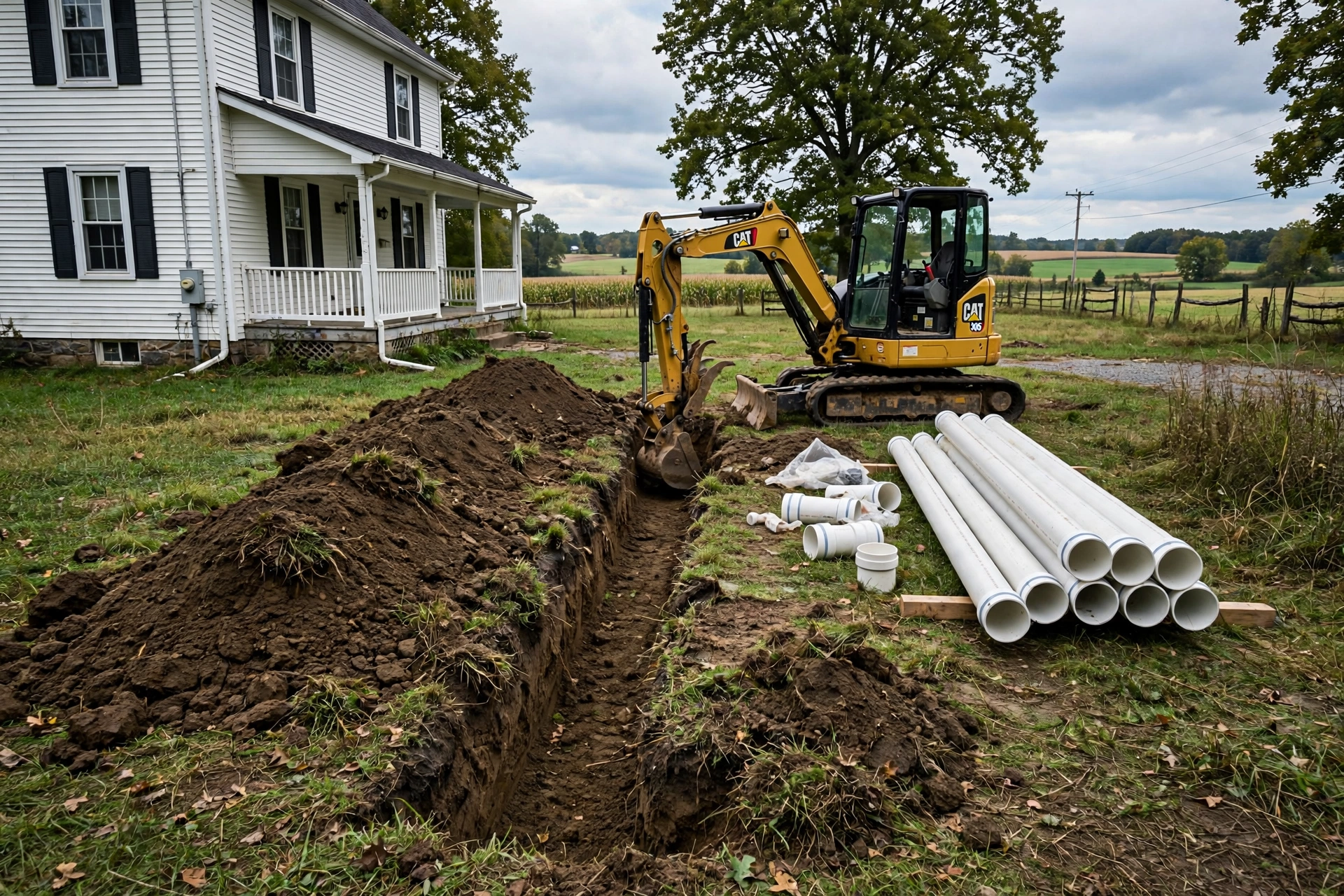
Because the historic district's streetscape matters, trenchless sewer repair is the natural fit downtown: lining or bursting renews the pipe through small access pits instead of an open trench down a brick street. Homeowners in Pickerington and Reynoldsburg choose it for the same reasons, and we pull the permits and coordinate inspections as part of every job. Learn more about Ohio Sewer Masters and how we work across Fairfield County.