Sewer Line Repair in Portsmouth, OH
A river city behind a famous floodwall: high groundwater, flood silt, and 150-year-old clay lines. We camera-diagnose every Portsmouth job and fix it trenchless or traditional.
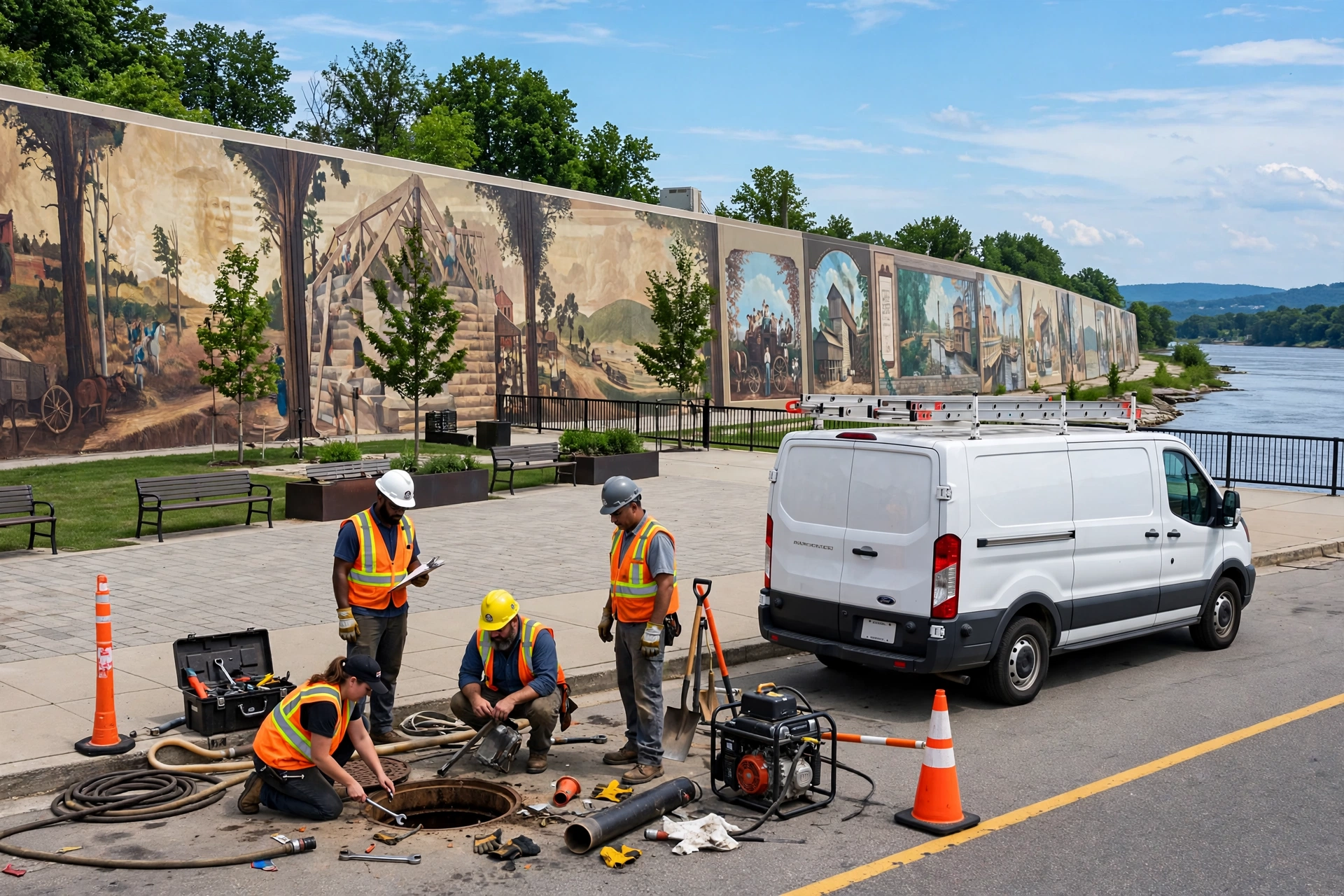
A river city behind a famous floodwall: high groundwater, flood silt, and 150-year-old clay lines. We camera-diagnose every Portsmouth job and fix it trenchless or traditional.
Last updated: October 13, 2026
Portsmouth sits where the Scioto River meets the Ohio, and the famous floodwall murals tell the story: this city has always lived with river water.
The 1937 flood put most of Portsmouth underwater and led to the construction of the floodwall, the 2,000-foot concrete wall now covered in murals depicting two centuries of local history. The wall protects the city from surface flooding. What it doesn't stop is groundwater. When the Ohio and Scioto run high, the water table behind the wall rises just the same, pressing into every cracked joint and separated connection in nearby sewer laterals. Infiltration overloads lines that were already marginal, and backups show up during and after high water, then clear when the rivers drop.
Receding water brings the second problem: silt. Floodwater and high groundwater carry fine silt that settles inside the pipe and hardens into blockages. The 1937 flood deposited deep layers of silt across the whole city, and laterals running through that old flood sediment sit in shifting, silty soil that never fully compacts. If your drains slow down whenever the rivers rise, a camera inspection will show exactly where the water and silt are getting in.
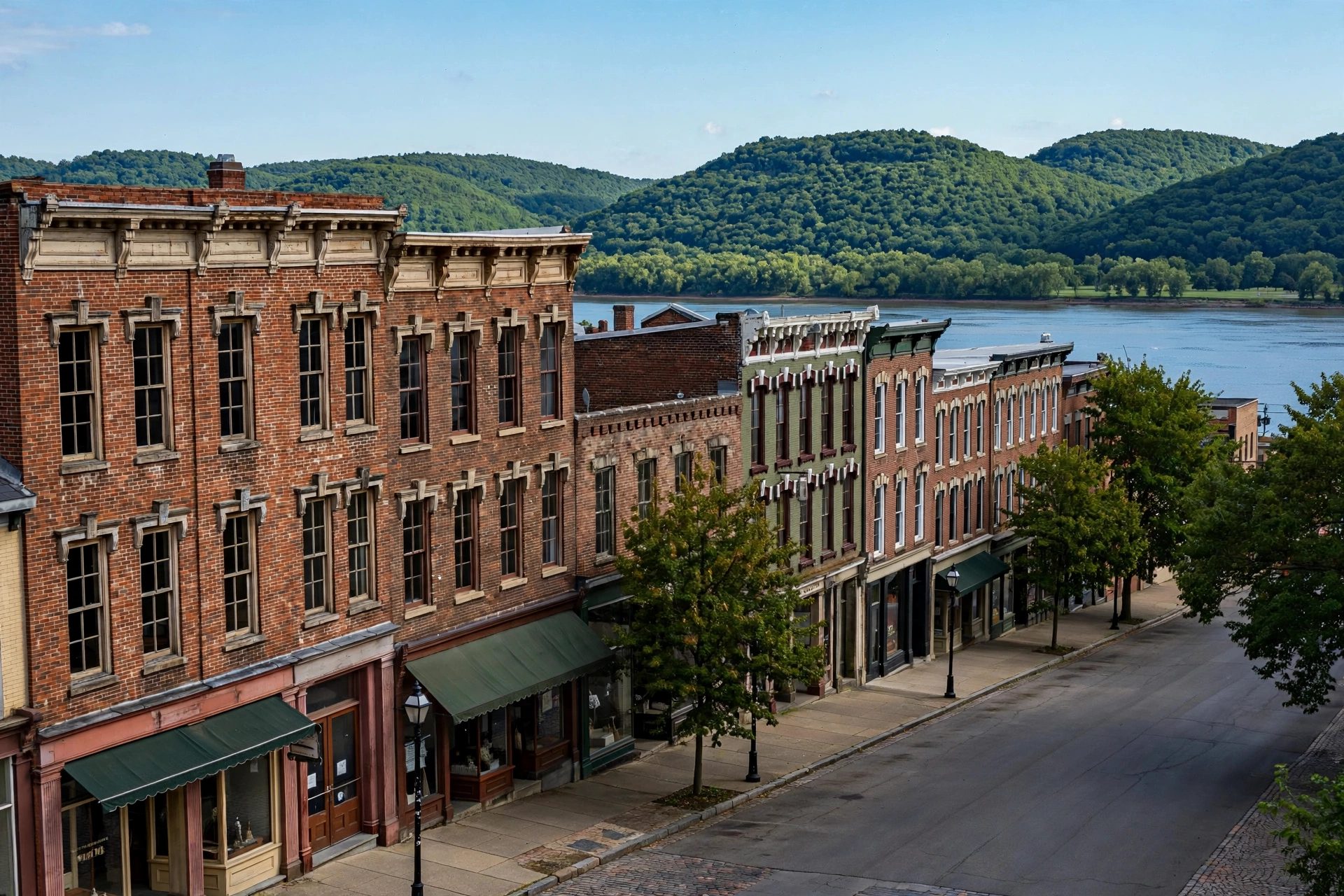
Boneyfiddle's 19th-century buildings sit on some of the oldest sewer laterals in southern Ohio.
Portsmouth grew up as an industrial river city, steel, shoes, and river trade, and the housing built for that workforce is plumbed to match its era. Boneyfiddle's 19th-century buildings and the early-1900s worker homes on the east and west sides run on vitrified clay tile laterals with mortar joints. After a century or more, the mortar has crumbled, sections have offset in the silty river-valley soil, and roots from mature trees have pushed into every damp opening.
Mid-century homes typically have cast iron inside transitioning to clay outside, and that cast iron is rusting from the inside out right about now. The industrial legacy adds one more wrinkle: in some older districts, laterals run through fill soil from a century of construction and river dredging, which settles unevenly and works joints loose faster than undisturbed ground. Whatever's down there, the camera tells us in about an hour, and trenchless sewer repair is usually the right call in the historic districts, since it renews the line without disturbing 150-year-old buildings or brick streets.
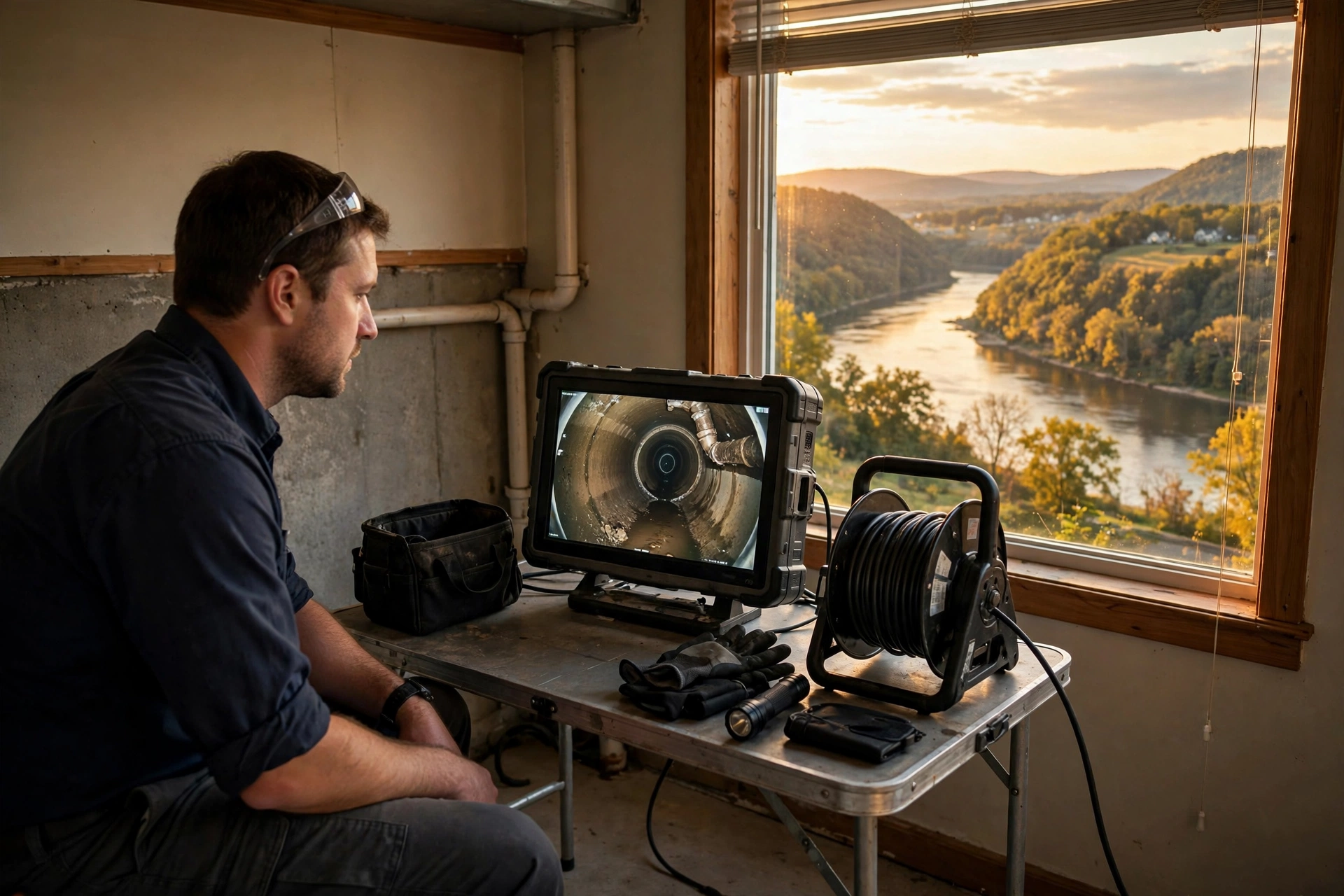
A camera inspection shows exactly what river groundwater and a century of silt have done to your lateral.
Age of housing plus closeness to the rivers predicts trouble here. Boneyfiddle and downtown combine the city's oldest clay laterals with the lowest ground near the confluence, and we see joint separation and root intrusion there constantly. The east end and west side worker neighborhoods, early-1900s housing from the steel and shoe eras, are all hitting the end of their clay tile lifespan at roughly the same time.
Sciotoville and the neighborhoods along the US-52 corridor have a mix of eras, and the low streets anywhere near the rivers see the most infiltration regardless of pipe age. Out toward Shawnee State University and Southern Ohio Medical Center, the institutional buildings are newer, but the surrounding residential streets are not. From the floodwall murals to the hilltops, the prescription is the same: camera first, then fix what's actually broken.
You own the sewer lateral from your house to where it connects with the public main, usually at the street. Everything in between, including the section under your yard and driveway, is yours to maintain and repair. The City of Portsmouth owns and maintains the public mains.
If sewage is backing up in your home but your neighbors are fine, the lateral is the prime suspect, and that's our territory. If multiple homes on your street are backing up at once, call the city, it may be a main-line issue. For new sewer connections, Portsmouth's public works department requires a sewer line application and permit, and the pipe work must be done by a drain layer holding a city permit. Lateral work typically requires a city permit with inspection before backfill, and we pull the permits and schedule the inspection as part of every job. Outside city limits, the Scioto County Sanitary Engineer handles the county sewer systems. The Ohio EPA sets the statewide wastewater standards these systems follow.
Portsmouth's surface water plant treats Ohio River water, a moderately hard regional supply. That mineral load leaves gradual scale inside older pipes, narrowing the bore and giving grease and solids a rough surface to catch on. For Portsmouth's industrial-era cast iron laterals, the longer-running threat is corrosion: treated water works on iron from the inside out, thinning the pipe bottom long before anything looks wrong at the surface, which is exactly what a camera shows.
Maintain them on the rivers' calendar. In Portsmouth, spring high water where the Ohio and Scioto rivers meet pushes groundwater into cracked joints, fall sends tree roots hunting for moisture before dormancy, and winter freeze shifts soil and wedges small cracks wider. A camera inspection every few years, plus the seasonal habits below, catches most problems while they are still minor.
Portsmouth sits at the confluence of the Ohio and Scioto rivers, and the water table in the river valley stays high. When the rivers run high, groundwater presses into every cracked joint in nearby laterals, overloading them with infiltration. The floodwall protects the city from surface flooding, but it does nothing about groundwater, which rises behind the wall just the same. If your drains slow down whenever the rivers rise, infiltration is the likely culprit.
Most likely vitrified clay tile with mortar joints. Boneyfiddle's 19th-century commercial and residential buildings were plumbed in the clay tile era, and after well over a century the mortar joints are crumbling, sections have offset, and roots have pushed in. A camera inspection shows the exact condition. Trenchless methods are ideal here because they renew the line without disturbing the historic streetscape.
The flood itself is long gone, but what it left behind matters. The 1937 flood, which put most of Portsmouth underwater and led to the floodwall's construction, deposited deep layers of silt across the city. Laterals running through that old flood sediment sit in shifting, silty soil that never fully compacts, which works pipe joints loose over time. And every high-water event since has repeated a smaller version of the same silt infiltration inside the pipes.
Lateral repair and replacement in Portsmouth typically requires a city permit, with inspection before the trench is backfilled. We pull the permits and coordinate the inspection as part of every job, it's built into the written plan, not a surprise add-on.
Most trenchless jobs, lining or bursting, finish in one day. Traditional open-trench replacement usually takes two to four days depending on length, depth, and what's above the line. In the historic districts, trenchless is usually the better choice, since open excavation around 150-year-old buildings and brick streets gets complicated fast. We give you the timeline in writing before work starts.
Also serving Chillicothe, Athens, and the surrounding Scioto County area. Major landmarks we work around include the floodwall murals, the Boneyfiddle historic district, Shawnee State University, Southern Ohio Medical Center, the Ohio and Scioto river confluence, and the US-52 and US-23 corridors. Service ZIP codes: 45662 and 45663.
One inspection, one honest diagnosis, one upfront plan, anywhere in the Portsmouth area.
Call (614) 350-5706