Sewer Line Repair in Chillicothe, OH
Ohio's first capital has some of the state's oldest sewer lines, and the Scioto River keeps the ground around them wet. We camera-diagnose every job and fix it trenchless or traditional.
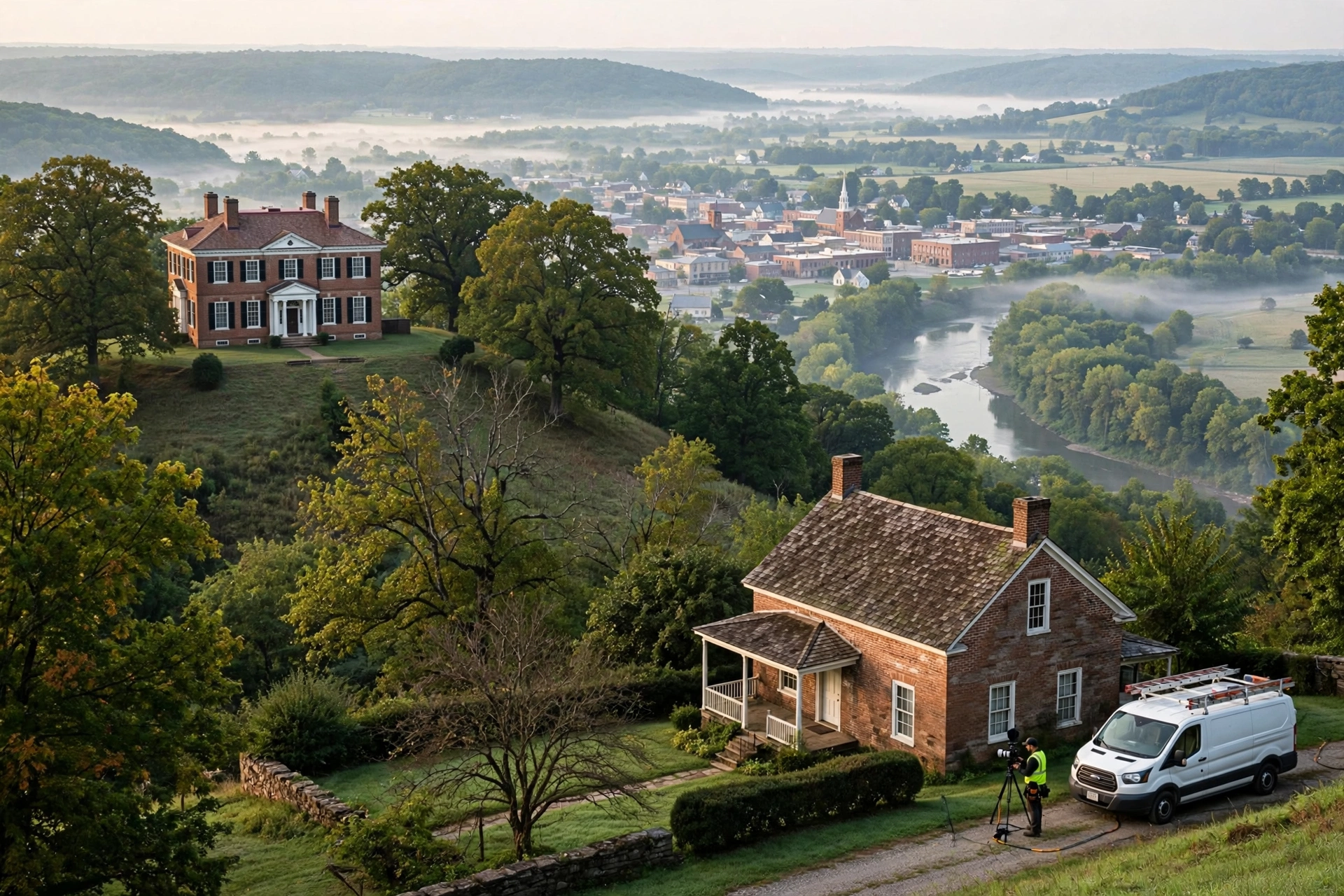
Ohio's first capital has some of the state's oldest sewer lines, and the Scioto River keeps the ground around them wet. We camera-diagnose every job and fix it trenchless or traditional.
Last updated: October 13, 2026
Chillicothe was Ohio's first state capital in 1803, and its historic core has been continuously occupied ever since. That means some of the oldest sewer lines in the state.
The historic districts, downtown, the streets around the old canal corridor, the early neighborhoods north toward Adena, were built out in the 1800s and early 1900s, and their laterals are vitrified clay tile with mortar-sealed joints, the standard of the era. A century or more later, the mortar has crumbled, sections have settled and offset in the Scioto valley soil, and roots from mature street trees have pushed into every damp joint. These aren't lines that fail suddenly; they fail gradually, with slow drains and recurring clogs that get a little worse every year.
The good news is that age alone doesn't condemn a line. We've lined and burst century-old clay laterals all over southern Ohio. What matters is condition, and the camera shows us that in about an hour. Many of Chillicothe's historic clay lines still hold enough shape for trenchless sewer repair, which renews the pipe without disturbing the historic streetscape or the old stone foundations these homes are known for.
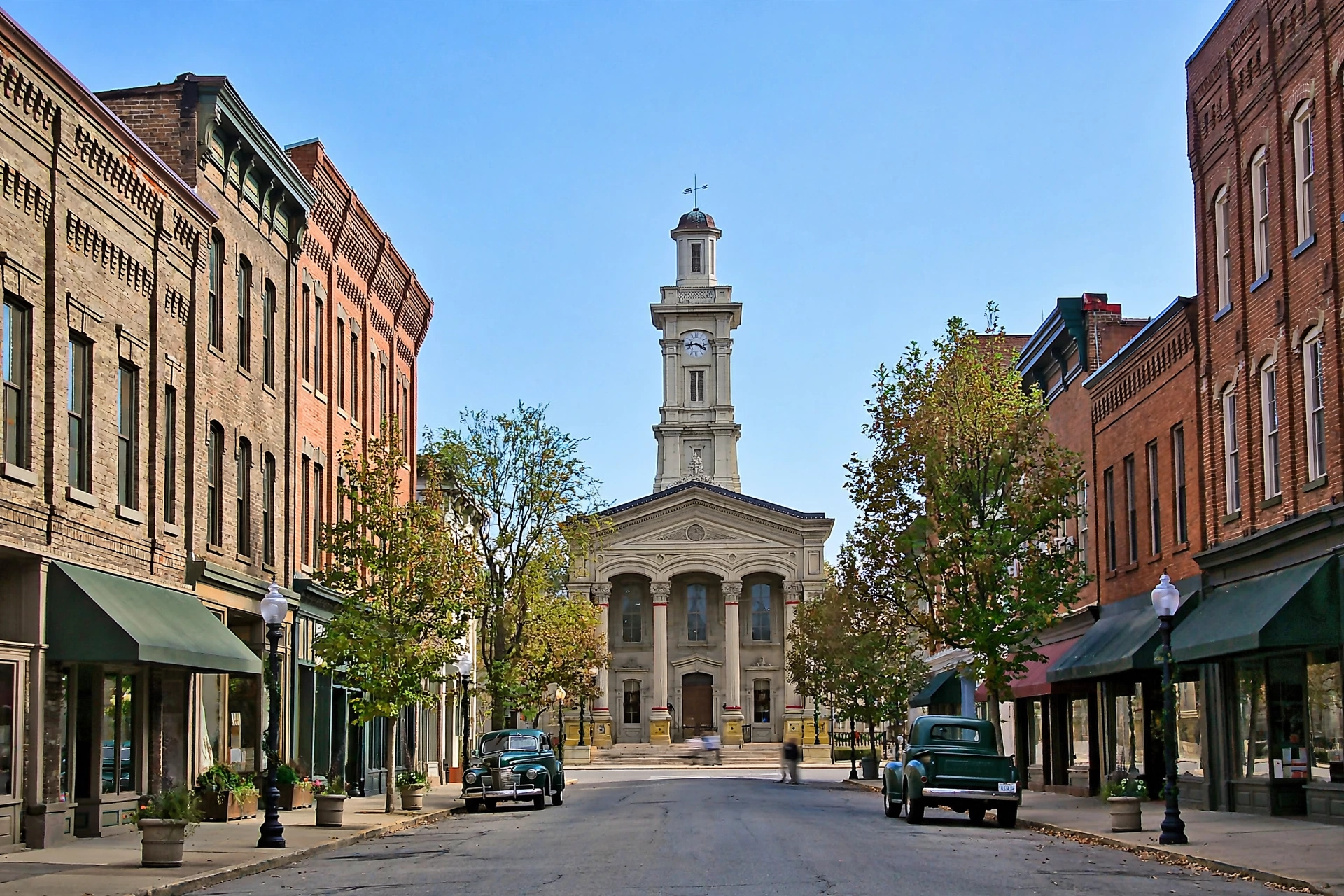
Downtown Chillicothe dates to Ohio's first capital era, and its clay sewer laterals are nearly as old as the buildings.
The Scioto River runs right past Chillicothe, and the river valley keeps the water table high. That means laterals in the low parts of town spend much of the year in saturated soil, with groundwater pressing into every weak point: hairline cracks, crumbling joints, separated connections. When the Scioto rises, that pressure spikes, and lines that were barely holding start taking on water faster than they can drain.
The second problem arrives when the water recedes. River water and high groundwater carry fine silt, and as flows normalize, that silt settles inside the pipe and hardens into a concrete-like restriction. We've camera-inspected lines after wet seasons that looked half-full of poured cement. If you live anywhere near the river and your drains slow down in the weeks after high water, silt infiltration is the likely culprit, and hydro jetting followed by a camera check is the fix.
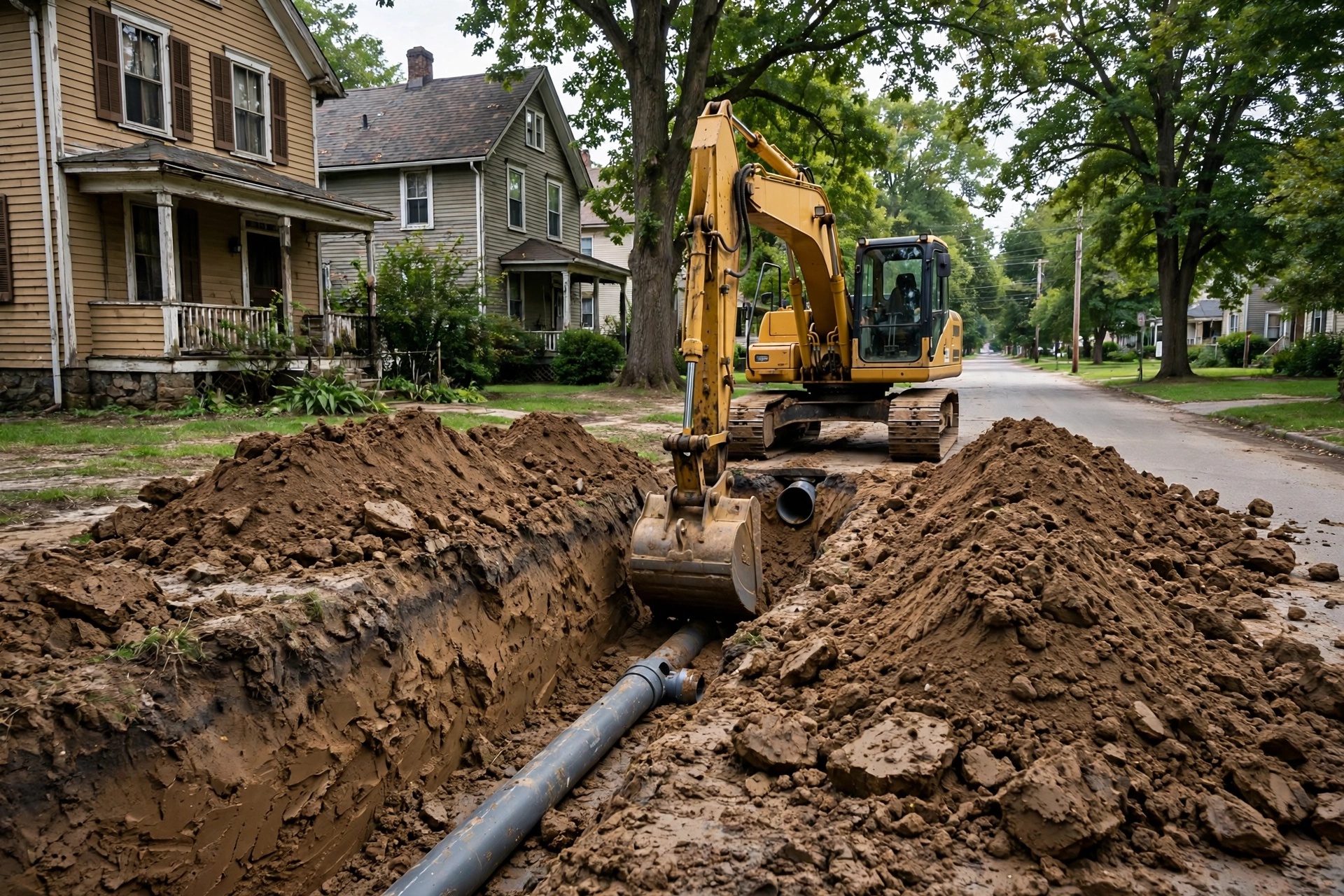
The Scioto valley's heavy clay soil digs slow but holds a trench well, and every open excavation here gets inspected before backfill.
Age of housing predicts trouble here better than anything. The historic core, downtown and the surrounding 1800s neighborhoods, has the oldest clay laterals in the region, and root intrusion is practically a rite of passage. The early-1900s worker neighborhoods on the south and east sides, built during the paper industry's boom years, are all hitting the end of their clay tile lifespan at roughly the same time, which is why whole blocks can start having problems in the same few years.
The north end toward Adena Mansion and the areas along the US-23 and US-35 corridors have a mix of eras, mid-century cast iron hitting the end of its life, newer PVC that generally holds up. The low ground near the Scioto sees the most infiltration regardless of pipe age. From the Hopewell earthworks at Mound City to the newest subdivision, the prescription is the same: camera first, then fix what's actually broken.
You own the sewer lateral from your house to where it connects with the public main, usually at the street. Everything in between, including the section under your yard and driveway, is yours to maintain and repair. The City of Chillicothe's Water and Sewer Department owns and maintains the public mains.
If sewage is backing up in your home but your neighbors are fine, the lateral is the prime suspect, and that's our territory. If multiple homes on your street are backing up at once, call the city, it may be a main-line issue. Lateral work typically requires a city permit with inspection before backfill, and we pull the permits and schedule the inspection as part of every job. If you're coordinating the work yourself, check with the city's building department before work begins. The Ohio EPA sets the statewide wastewater standards that Ohio's utilities follow.
Chillicothe's wells in the Scioto Buried Valley Aquifer produce hard water, with published utility figures near 140 mg/L (about 8 grains per gallon). That mineral load leaves gradual scale inside older pipes, narrowing the bore and giving grease and solids a rough surface to catch on. In Chillicothe's historic neighborhoods, where cast iron laterals are already fighting decades of corrosion, hard-water scale is the second blow that turns slow drains into full blockages.
Maintain them on the Scioto's calendar. In Chillicothe, spring rains and high river water push groundwater into cracked joints, fall sends tree roots hunting for moisture before dormancy, and winter freeze shifts soil and wedges small cracks wider. A camera inspection every few years, plus the seasonal habits below, catches most problems while they are still minor.
Most likely vitrified clay tile with mortar joints. Chillicothe's historic districts were built out in the 1800s and early 1900s, and clay tile was the standard lateral of the era. After a century, the mortar crumbles, sections offset in the Scioto valley soil, and roots push into the joints. A camera inspection shows the exact condition, and many of these old lines are good candidates for trenchless lining.
The Scioto runs right past the city, and the water table in the river valley stays high. When the river rises, groundwater presses into every cracked joint in nearby laterals, overloading them with infiltration. Receding water leaves silt inside the pipe that hardens into blockages. If your drains slow down in the weeks after high water, silt infiltration is the likely culprit, and hydro jetting followed by a camera check is the fix.
Indirectly, through the housing it built. The paper industry drew generations of workers to Chillicothe, and the neighborhoods built for them, early-1900s homes on the south and east sides, are plumbed with clay tile laterals that are all reaching the end of their lifespan at the same time. Industrial-era fill soil in some areas also settles unevenly, which works pipe joints loose faster than undisturbed ground.
Lateral repair and replacement in Chillicothe typically requires a city permit, with inspection before the trench is backfilled. We pull the permits and coordinate the inspection as part of every job, it's built into the written plan, not a surprise add-on.
Most trenchless jobs, lining or bursting, finish in one day. Traditional open-trench replacement usually takes two to four days depending on length, depth, and what's above the line. The Scioto valley's heavy clay soil digs slower than sand, which can add time to traditional excavation. We give you the timeline in writing before work starts.
Also serving Lancaster, Athens, and the surrounding Ross County area. Major landmarks we work around include Adena Mansion, the downtown historic district, Mound City and the Hopewell earthworks, Adena Regional Medical Center, and the US-23 and US-35 corridors. Service ZIP code: 45601.
One inspection, one honest diagnosis, one upfront plan, anywhere in the Chillicothe area.
Call (614) 350-5706