Sewer Line Repair in Sandusky, OH
High water tables, shifting lake sand, and century-old clay tile: Sandusky's sewer problems start underground where you can't see them. We find them with a camera and fix them trenchless or traditional.
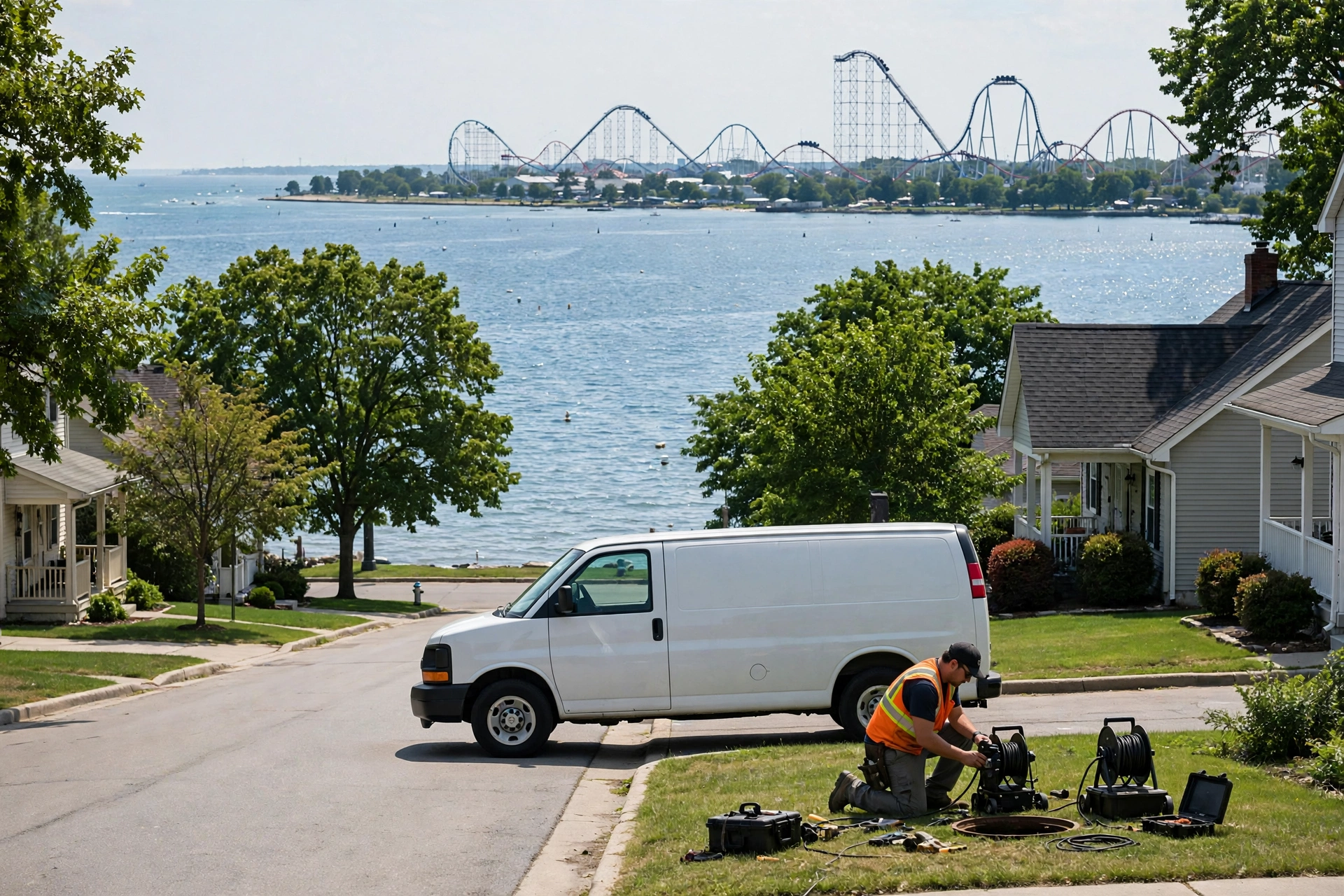
High water tables, shifting lake sand, and century-old clay tile: Sandusky's sewer problems start underground where you can't see them. We find them with a camera and fix them trenchless or traditional.
Last updated: October 13, 2026
Sandusky sits between Lake Erie and Sandusky Bay on ground that never fully dries out. That wet ground is the number-one reason sewer laterals here fail.
Here's how it works. Near the shoreline, the water table sits just a few requirementt below the surface, which means your sewer lateral, buried four to eight requirementt down, spends much of the year sitting in saturated soil. Groundwater presses into every weak point: hairline cracks, crumbling mortar joints, connections that have pulled apart. This is called infiltration, and it does two kinds of damage. First, it overloads the line with water it was never designed to carry. Second, the constant wet-dry cycling around the pipe washes fine sand into the joints, grinding them wider with every season.
The damage shows up as slow drains that get worse after rain, gurgling fixtures, and backups that seem to come out of nowhere. If your home sits on low ground anywhere near the bay, downtown, the Battery Park lakefront, or the west side near the water, and your drains misbehave in wet weather, infiltration is the first suspect. A camera inspection tells us in about an hour whether the line is holding or failing.
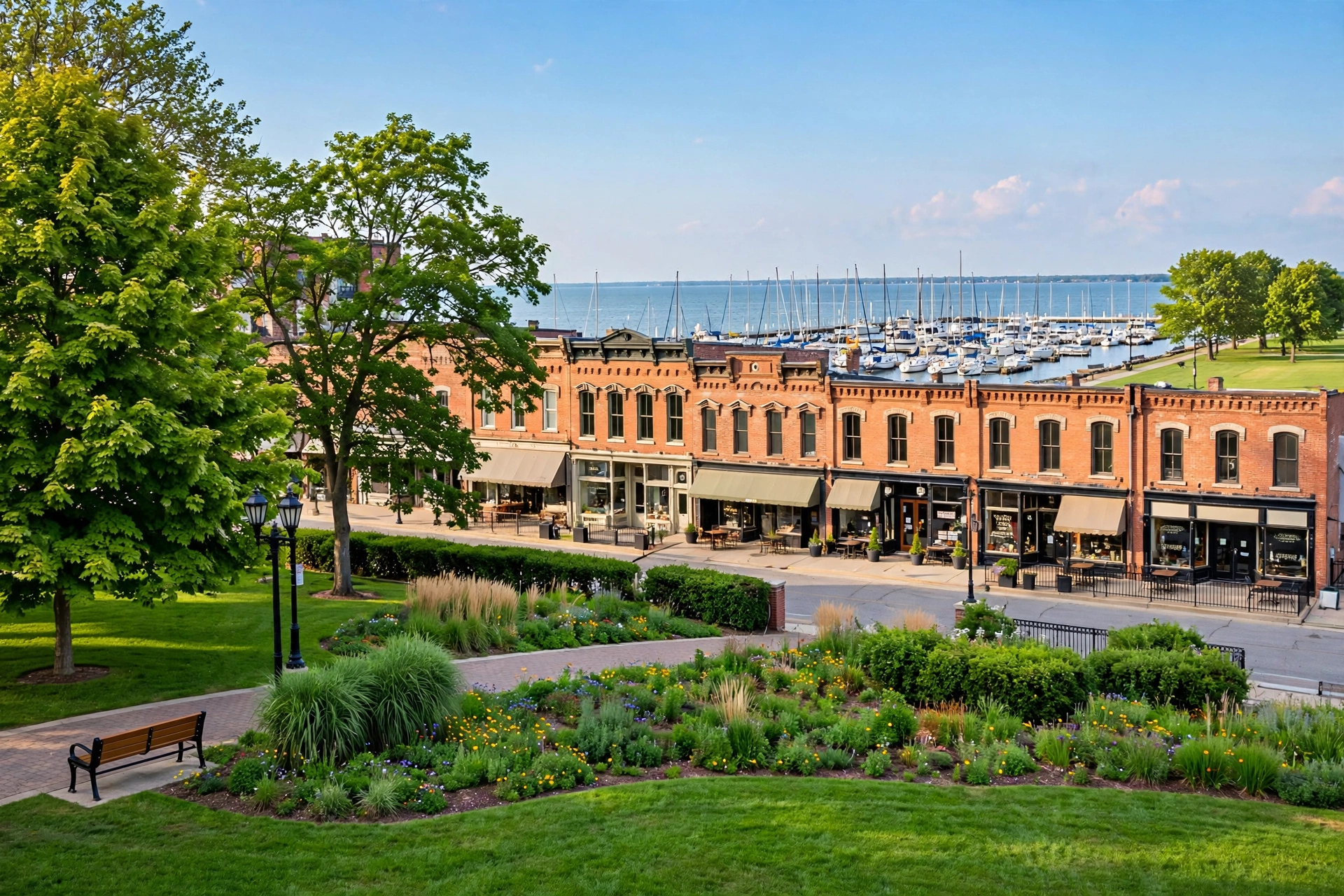
Downtown Sandusky sits right on the bay, where the high water table keeps sewer lines under constant pressure.
Sandusky's housing stock tells the pipe story. The historic homes near downtown and around the Battery Park lakefront, many built in the early 1900s, run on vitrified clay tile laterals with mortar-sealed joints. A century of lake-effect freeze-thaw plus shifting sandy soil has left most of those joints crumbling, and the mature street trees in these neighborhoods have spent decades sending roots into every damp opening.
Mid-century homes on the East Side and West Side typically have cast iron inside transitioning to clay outside, and cast iron rusts from the inside out. It looks solid right up until the bottom of the pipe is paper-thin. Newer construction along the US-250 corridor and out toward the Cedar Point peninsula is mostly PVC, which holds up far better, but even PVC fails where sandy soil has let connections separate. Whatever era your home is from, the camera shows us exactly what's down there, and many older Sandusky laterals turn out to be strong candidates for trenchless sewer repair, which replaces the pipe without tearing up the yard.
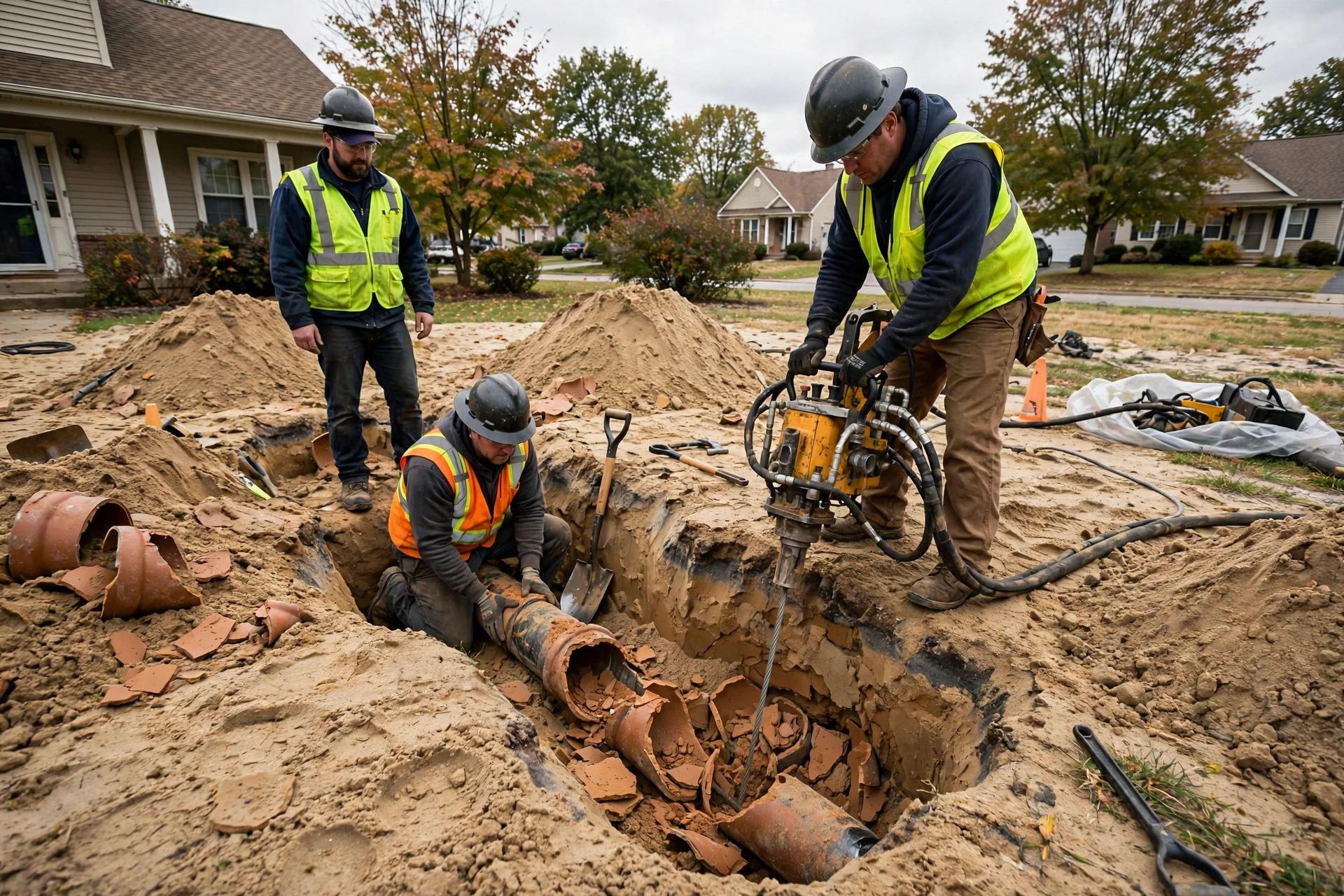
Trenchless pipe bursting replaces failed clay tile without tearing up the whole yard, ideal for Sandusky's sandy soil.
Proximity to water predicts trouble here better than anything else. The historic streets near downtown and the Battery Park lakefront combine the oldest clay laterals with the highest water table, and we see joint separation and root intrusion there constantly. The West Side near the bay has similar-era housing with the same story. On the East Side, post-war ranches are hitting the age where cast iron laterals start rusting through from the inside.
Out along the US-250 corridor and toward Cedar Point, the housing is newer and the pipes are mostly PVC, but the sandy soil still lets connections drift apart, and seasonal homes that sit empty through winter can hide slow-developing problems. Wherever you are in Sandusky, from downtown to the peninsula, the prescription is the same: camera first, then fix what's actually broken.
You own the sewer lateral from your house all the way to where it connects with the public main, usually at the street. That includes the section under your yard, your driveway, and the sidewalk. The City of Sandusky owns and maintains the public mains, and the city's sewer maintenance department handles main-line repairs and questions about the public system. Your lateral is your responsibility.
So if sewage is backing up in your home but your neighbors are fine, the problem is almost certainly in your lateral, and that's our work. If multiple homes on your street are backing up at once, call the city, it may be a main-line issue. Lateral work typically requires a city permit with inspection before backfill, and we handle the permits and scheduling as part of the job. If you're lining up the work yourself, check with the city's building department before work begins. Statewide, the Ohio EPA sets the wastewater standards that Ohio's utilities operate under.
Sandusky's treatment plant draws Lake Erie water, and while the city's consumer report doesn't publish a hardness figure, treated lake water here runs moderately hard. That mineral load leaves gradual scale inside older pipes, narrowing the bore and giving grease and solids a rough surface to catch on. For Sandusky's older cast iron laterals, the longer-running threat is corrosion: treated water works on iron from the inside out, thinning the pipe bottom long before anything looks wrong at the surface, which is exactly what a camera shows.
Maintain them on the lake's calendar. In Sandusky, spring rains meet an already-high water table and push groundwater into cracked joints, fall sends tree roots hunting for moisture before dormancy, and lake-effect freeze-thaw wedges small cracks wider all winter. A camera inspection every few years, plus the seasonal habits below, catches most problems while they are still minor.
Yes, and it's the defining factor. Near the lake and Sandusky Bay, the water table sits high, so groundwater constantly presses into any cracked joint or separated connection in your lateral. Saturated soil also shifts more, which opens joints wider over time. Homes within a mile or two of the shoreline see infiltration problems far more often than homes on higher ground south of town.
Almost certainly vitrified clay tile with mortar joints, the standard for Sandusky homes built in the early 1900s. After a century, the mortar crumbles, sections settle in the sandy soil, and roots from mature street trees push into the joints. A camera inspection shows the exact condition, and many of these old clay laterals are good candidates for trenchless lining.
It damages the joints, which is where most failures start. Sand doesn't grip pipe the way clay soil does, so sections of rigid clay tile or cast iron settle unevenly and pull apart at the connections. Then, every time it rains or the water table rises, fine sand washes into those open joints and grinds the openings wider. It's a slow process that ends in offsets, root entry, and collapsed sections.
Lateral repair and replacement in Sandusky typically requires a city permit, with inspection before the trench is backfilled. We pull the permits and coordinate the inspection as part of every job, so it's handled, not something you chase down yourself.
Most trenchless jobs, lining or bursting, finish in a single day. Traditional open-trench replacement usually takes two to four days depending on the line's length and depth and what's sitting above it, driveways, patios, and landscaping all add time. Sandy soil actually digs easily, which can speed up traditional work. We put the timeline in writing before anything starts.
Also serving Lorain, Elyria, and the surrounding Erie County lakefront. Major landmarks we work around include Cedar Point, Battery Park, the Sandusky Bay waterfront, Firelands Regional Medical Center, and the US-250 corridor. Service ZIP codes: 44870 and 44871.
One inspection, one honest diagnosis, one upfront plan, anywhere in the Sandusky area.
Call (614) 350-5706