Sewer Line Repair in Lorain, OH
Lorain's steel-era neighborhoods, lakefront water table, and industrial fill soils each attack sewer lines in their own way. We camera-diagnose every job and fix it trenchless or traditional.
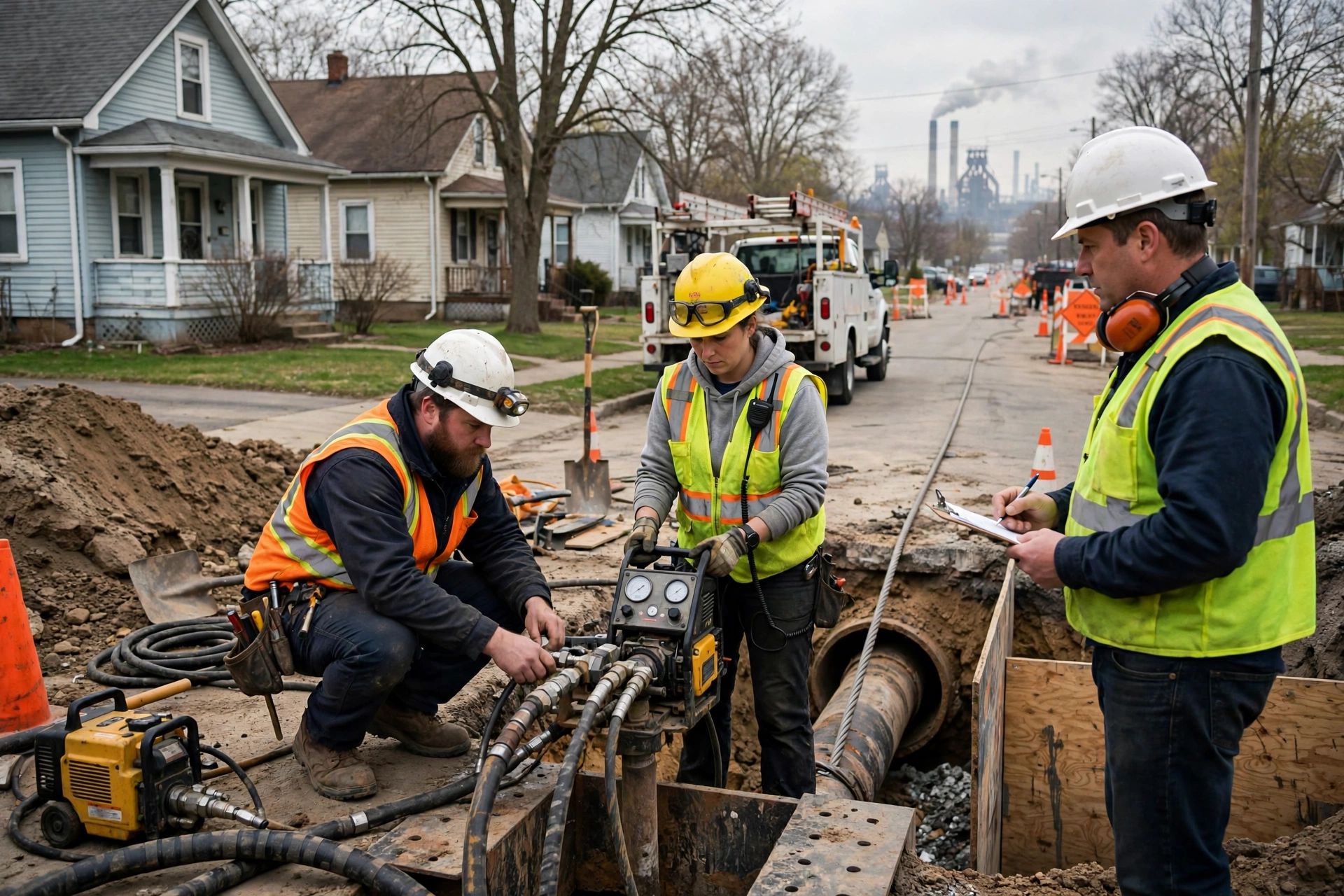
Lorain's steel-era neighborhoods, lakefront water table, and industrial fill soils each attack sewer lines in their own way. We camera-diagnose every job and fix it trenchless or traditional.
Last updated: October 13, 2026
Lorain was built around the mills, and much of its housing went up fast for steelworkers. Those lines are old, and the ground they sit in is unlike anywhere else on the west side.
South Lorain and the neighborhoods near the old mill sites are full of early-1900s worker housing with original clay tile laterals. Many sit on industrial fill, a mix of slag, ash, and rubble used to level ground near the plants. Fill settles unevenly and can be corrosive, which offsets joints and wears pipe walls faster than natural soil.
The housing stock tells the story: century-old clay laterals under streets where the mills once ran three shifts, with mature street trees exploiting every crumbled mortar joint. A camera inspection shows the offsets and root masses clearly, and pipe bursting is often the answer where the line has shifted in fill.
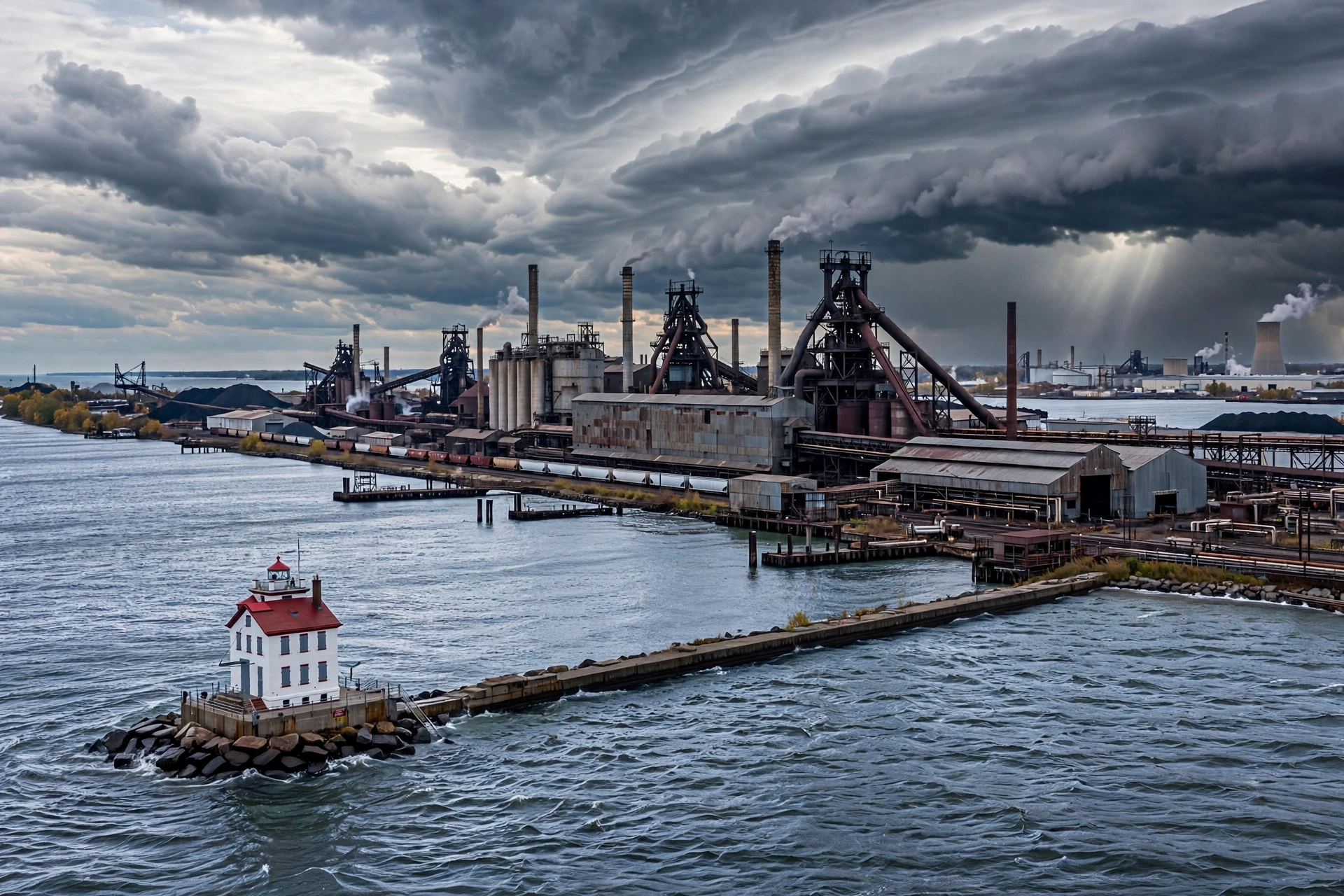
Lorain's steel heritage and its lakefront location each create distinct sewer problems.
Near the lakefront, the water table sits high, sometimes just a few requirementt below the surface. Groundwater presses into every cracked joint and separated connection, a process called infiltration, and your lateral ends up carrying far more water than it was designed for. Lakefront basements are the first to show it: damp floors, gurgling drains, and backups after storms.
The lake also drives Lorain's freeze-thaw punishment. Wet winters with temperatures seesawing across freezing wedge cracks wider each season. Lines that were marginal in fall become emergencies by March. If your drains slow every late winter, that is the pattern, and a fall camera inspection catches it early.
South Lorain's early-1900s streets have the oldest clay tile, much of it never replaced. The Broadway corridor and downtown-adjacent blocks mix commercial-age lines with residential laterals that have seen a century of ground movement. Lakefront neighborhoods from the mid-1900s tend toward cast iron, now corroding from the inside out.
Newer development on Lorain's west and south sides runs PVC, which holds up well, but settling backfill can still create bellies where solids collect. Wherever you are in Lorain, trenchless sewer repair can often fix the line without tearing up the yard: lining seals joints against infiltration, bursting replaces shifted sections entirely.
Lorain draws its drinking water from Lake Erie and treats it at the city's own plant, so the supply carries the moderate mineral load typical of treated lake water. That is enough to leave gradual scale in water heaters and fixtures over the years. Underground, the water-chemistry story that matters for your lateral is corrosion, not scale: decades of treated water flowing through cast iron thins the pipe from the inside out, which is why camera inspections so often find paper-thin bottoms in Lorain's older laterals.
Maintain them on the weather’s schedule, not the calendar’s. In Lorain, spring rains and a high lakefront water table test every weak joint, late summer and fall bring the year's most aggressive root growth, and winter freeze-thaw wedges small cracks wider. A camera inspection every few years, plus the seasonal habits below, catches most problems while they are still minor.
You own the lateral from your house to the public main. The City of Lorain Utilities Department maintains the public sewer mains and runs the city's two wastewater treatment plants, the Black River plant and the Philip Q. Maiorana plant. Lorain's collection system is fully separated, with no combined sewers, and Lorain is outside the NEORSD service area, so the city is your call for main-line trouble. Street-wide backup means main, solo backup means lateral.
Lorain requires a sewer permit for new sanitary services and repairs to existing services, and the line must be inspected before it goes back into service; only licensed sewer builders may do the work, so check the city's current process before work begins. Ohio EPA publishes guidance on lateral sewer construction standards that these jobs must meet. We pull permits and coordinate inspections as part of the job. Start with a camera inspection from Ohio Sewer Masters. We also serve nearby Elyria, Avon Lake, and North Ridgeville.
Often, yes. Age alone doesn't condemn a line, condition does. We've lined and burst century-old clay laterals all over Lorain's steel-era neighborhoods. The camera shows whether the pipe holds enough shape for lining or needs bursting, and either way the work happens with minimal digging.
Near Lake Erie the water table runs high, so groundwater presses into any cracked joint in your lateral, a process called infiltration. The line fills with groundwater, drains slow, and the basement shows it first. A camera inspection finds the entry points, and lining seals them shut.
Near Lorain's old mill sites, builders leveled ground with fill made of slag, ash, and rubble. Fill settles unevenly, which offsets rigid clay pipe joints, and some fill is corrosive to pipe walls. If your home sits on old industrial ground, the camera often shows offset joints right where the fill shifted.
Yes. The City of Lorain requires a sewer permit for new sanitary services and repairs to existing services, and the work must be inspected before the line goes back into service. Only licensed sewer builders may do the work in Lorain. We pull permits and coordinate inspections as part of every job, it's included in the written plan.
It depends on the scope. If sewage is backing up in several homes on your street, call the City of Lorain, that's likely the public main. If it's just your house, your lateral is the prime suspect, and that's our territory. Call us at (614) 350-5706 for a camera diagnosis.
Also serving Sheffield Lake, Avon, Elyria, and North Ridgeville, plus greater Lorain County. Landmarks we work around include the Lorain Harbor lighthouse, the Black River, Mercy Health's Lorain hospital, and the SR-2 corridor. We serve every Lorain ZIP code, including 44052, 44053, and 44055.
One inspection, one honest diagnosis, one upfront plan, anywhere in Lorain County.
Call (614) 350-5706