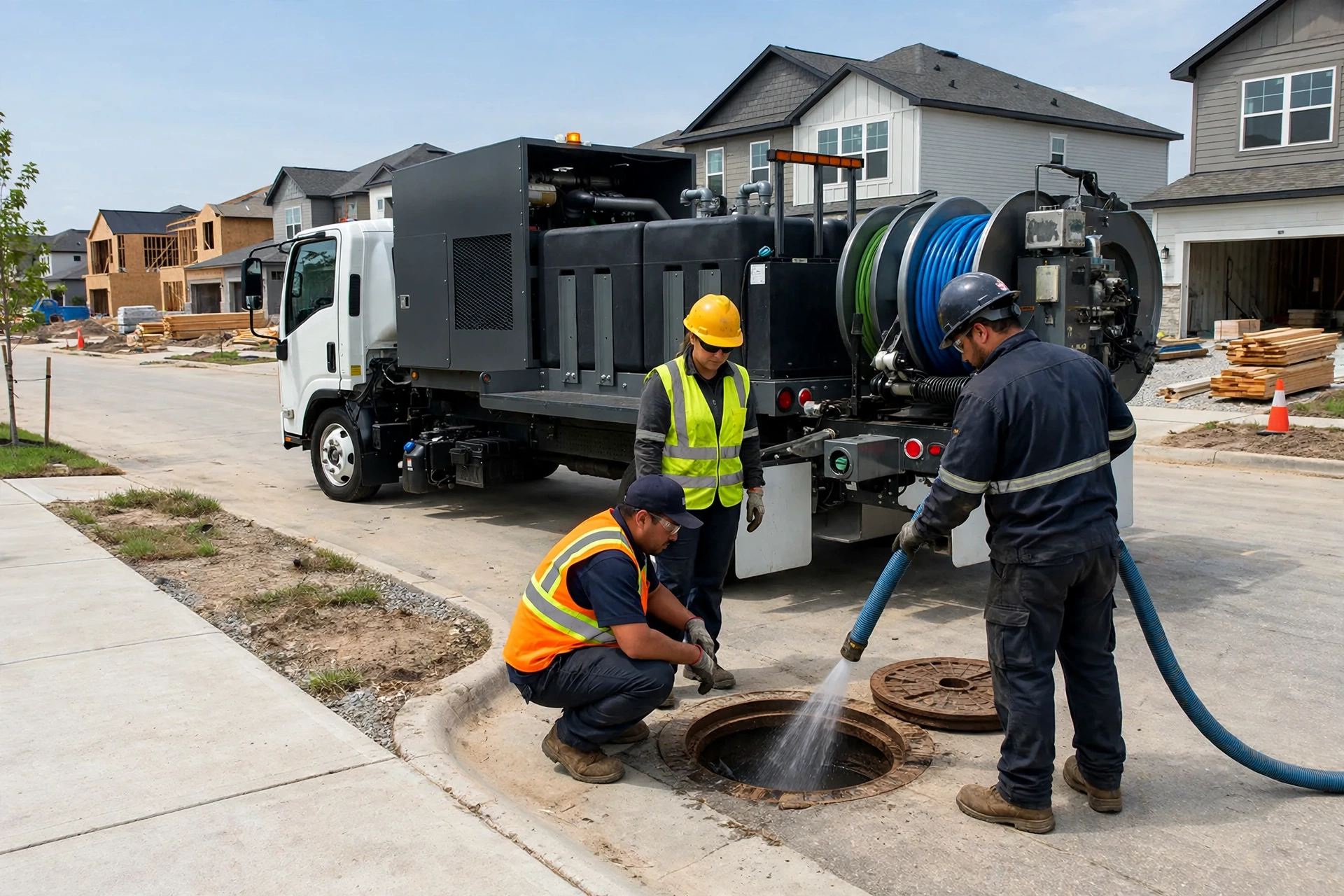
North Ridgeville, Ohio
What Happens When a Farm Town Becomes a Suburb?
North Ridgeville is one of the fastest-growing cities in the region, and growth leaves a mark underground. Two eras of pipe, two different failure modes.
The older properties along Center Ridge Road and Lorain Road started on septic systems and converted to city sewer as lines extended through the area. Those conversions are now decades old themselves, with clay tile or early PVC laterals whose joints have aged, and the abandoned septic tank can complicate the line's path. Meanwhile, new subdivisions went up on former farmland, where old drainage tiles and disturbed soil surround brand-new pipe.
So North Ridgeville gives us both problems at once: converted lines with aging joints and root intrusion, and new lines with construction-era defects. The camera tells us which era your pipe belongs to in about an hour.
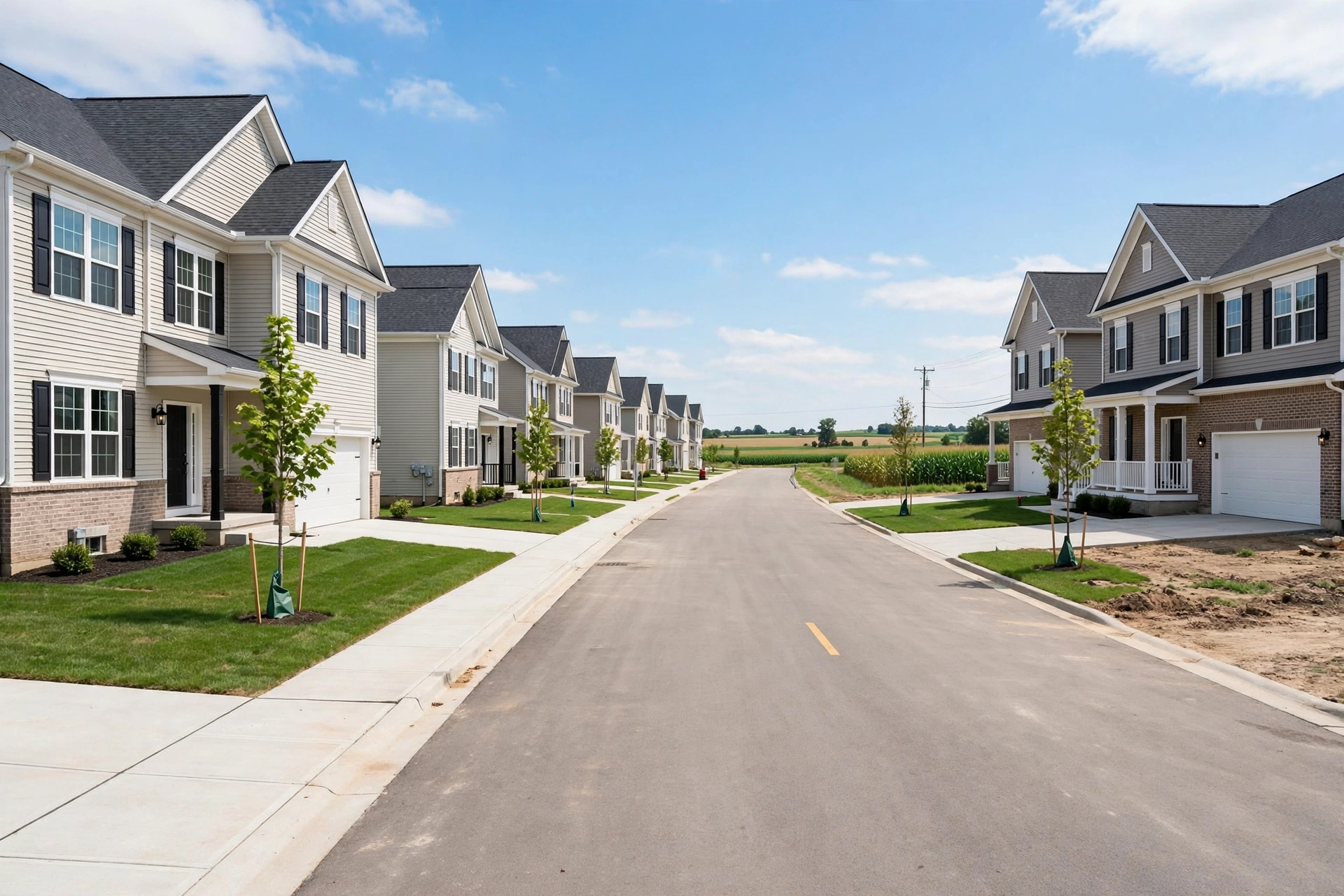
North Ridgeville's growth means new subdivisions with settling backfill, and older converted lines along the original corridors.
Why Do Newer North Ridgeville Homes Still Get Sewer Trouble?
It surprises homeowners: the house is 10 or 12 years old, the pipe is PVC, so why the backups? The answer is usually the bedding, not the pipe. In fast-built subdivisions, the backfill around the lateral settles unevenly during the first decade. That settling creates bellies, low spots where solids collect and snags form, and it can pull joints apart.
Construction debris is the other culprit. Dirt, gravel, and the occasional chunk of building material end up in new lines and never fully flush out. The symptom is recurring clogs in a young home, which requirementls wrong until the camera shows a belly holding water or a joint pulled half an inch apart. Trenchless sewer repair handles most of these without tearing up a new lawn: lining bridges the belly, bursting replaces the bad section.
How Does the High Water Table Affect North Ridgeville Lines?
North Ridgeville is flat, and its clay soils drain slowly. The water table runs high, especially in spring, and groundwater presses into every failed joint, a process called infiltration. A line with separated joints can take on far more groundwater than sewage, and after heavy rain the system simply cannot keep up.
The flat terrain means water has nowhere to go, so it sits against the pipe and the foundation alike. Basements and the lowest drains show it first. If your drains slow every spring like clockwork, infiltration is the likely story, and a camera inspection finds the joints letting water in.
How Does North Ridgeville’s Water Quality Affect Its Pipes?
North Ridgeville's drinking water comes from Avon Lake Regional Water's Lake Erie treatment plant, a moderately hard supply at about 123 mg/L per water quality reporting on the same system. Moderate hardness means gradual mineral scale in water heaters over the years. Underground, the water-chemistry story that matters is corrosion: treated water works on cast iron from the inside out, so older converted lines around the original corridors can be paper-thin at the bottom while looking intact from above.
How Should North Ridgeville Homeowners Maintain Their Sewer Lines Through the Seasons?
Maintain them on the weather’s schedule, not the calendar’s. In North Ridgeville, spring rains raise an already high water table, late summer and fall bring the year's most aggressive root growth, and winter freeze-thaw tests the settling backfill around newer lines. A camera inspection every few years, plus the seasonal habits below, catches most problems while they are still minor.
- Spring: After heavy spring rains, watch the lowest drain in the house. Gurgling or slow drains after storms usually mean infiltration through failed joints, not a simple clog.
- Summer and fall: Roots grow most aggressively in late summer and fall, hunting for moisture. Keep thirsty trees off the lateral's path, and schedule a camera check or root cutting before the fall growth surge.
- Winter: Find your sewer cleanout now and keep it accessible and marked before snow. Shallow lines freeze first, and grease poured down drains congeals faster in cold pipes, so keep it out of the sink.
Who Handles Sewer Service in North Ridgeville?
You own the lateral from your house to the public main. The City of North Ridgeville runs its own sewer system, treating wastewater at its French Creek Wastewater Treatment Plant, so the city's Public Utilities department is your call for a street-wide backup. If it is just your house, the lateral is the prime suspect, and that is our work.
North Ridgeville requires permits for lateral repair and replacement, so check with the City of North Ridgeville Building Department before work begins for the current requirements. Ohio EPA publishes standards for building and inspecting lateral sewers that apply to this work. We pull the permits and schedule inspections as part of the job. Start with a camera inspection from Ohio Sewer Masters. We also serve nearby Elyria, Avon, and Lorain.