Sewer Line Repair in Lima, OH
Allen County's industrial hub, a refinery running since 1886, and the Ottawa River corridor. We camera-diagnose every Lima job and fix it trenchless or traditional.
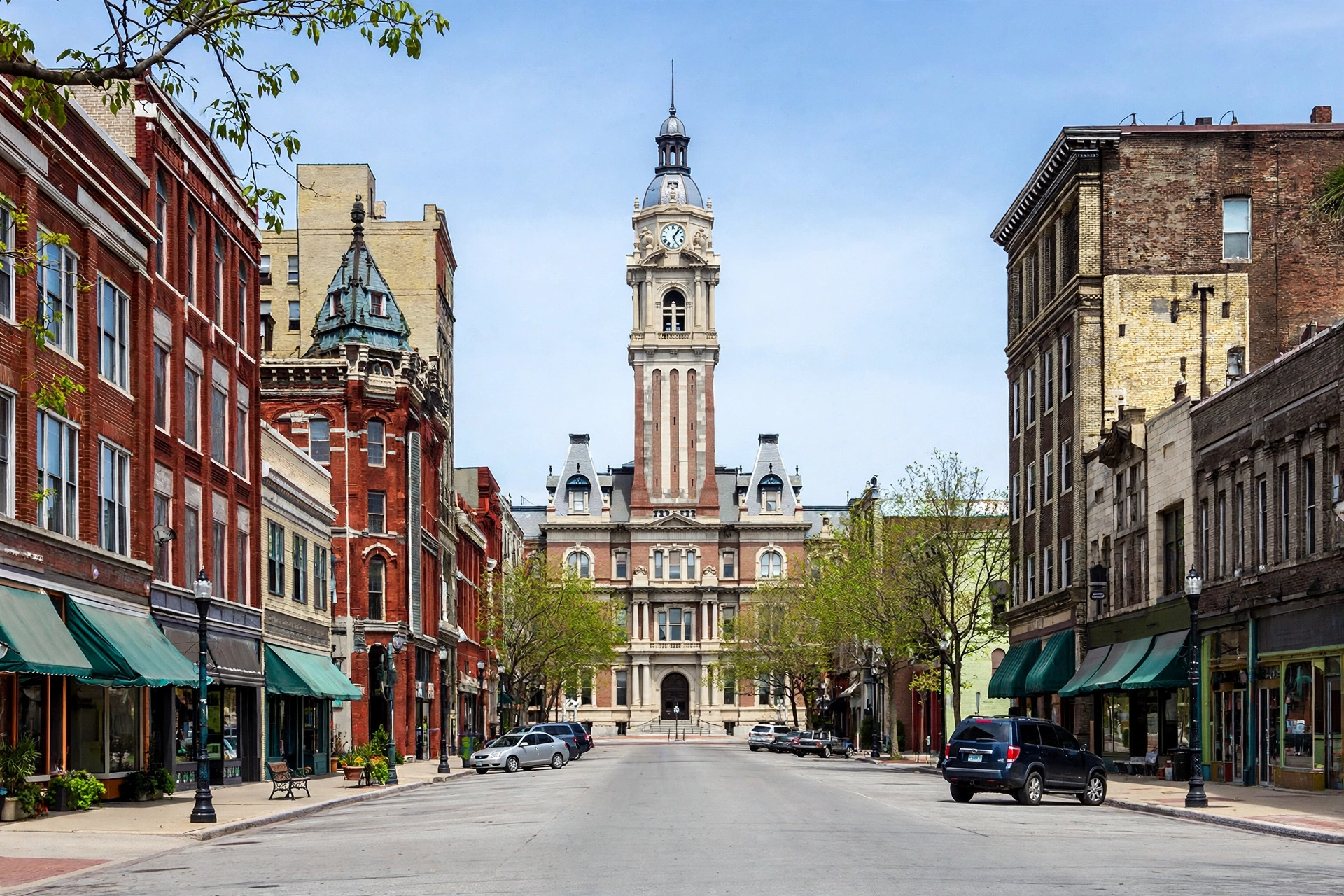
Allen County's industrial hub, a refinery running since 1886, and the Ottawa River corridor. We camera-diagnose every Lima job and fix it trenchless or traditional.
Last updated: October 13, 2026
Lima has been an industrial city since before the light bulb. Its sewer lines show every decade of that history.
The refinery in Shawnee Township has operated since 1886, and the worker homes built around Lima's industrial corridors in the early 1900s ran vitrified clay tile laterals from the foundation to the street. A century later, the mortar joints have crumbled, sections have shifted in Allen County's heavy clay soil, and roots have pushed into every damp opening. The Lima Army Tank Plant added another generation of industrial-era housing with the same story.
Mid-century Lima brought cast iron inside transitioning to clay outside, and cast iron rusts from the inside out, fine on the outside until the bottom of the pipe is paper-thin. Whatever era your street was built in, the camera shows what's down there in about an hour, and our trenchless sewer repair options fix it without tearing up the block.
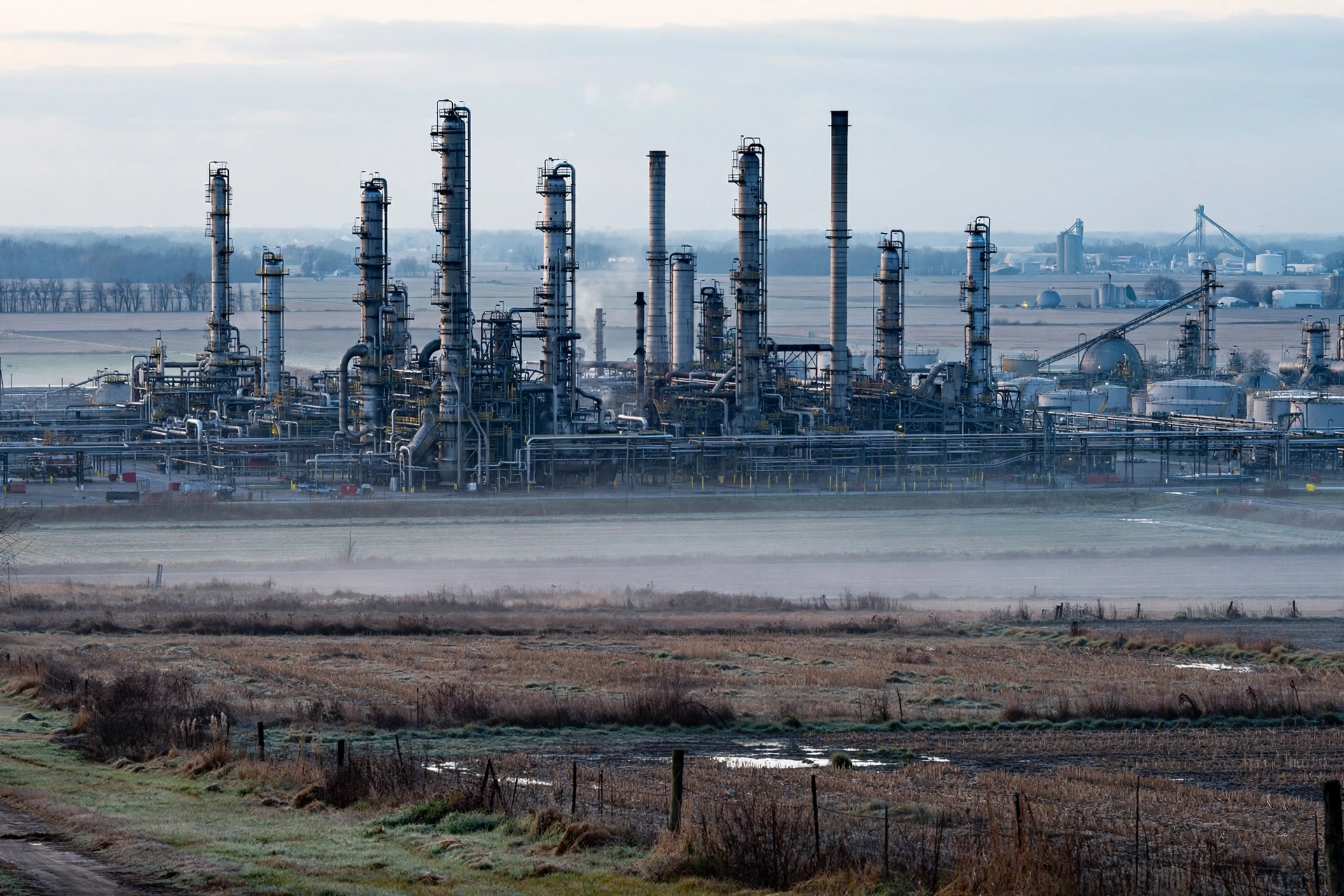
The Lima refinery has operated since 1886, and the neighborhoods around it carry some of the oldest clay laterals in Allen County.
The Ottawa River runs right through Lima, and in the corridor along its banks the water table stays high. Groundwater presses into every cracked joint in laterals near the river, and the line fills from the outside in. That's infiltration: the pipe works fine on a dry day, but after wet stretches, groundwater floods in through the joints and overwhelms it.
The pattern is seasonal. Spring rains and river highs bring the infiltration; summer brings the root growth, as thirsty trees push into the now-damp joints. If your drains slow down after rain and recover when it dries out, that's the signature. A camera inspection after a wet stretch shows the water entering at the joints, and lining seals them all in one job.
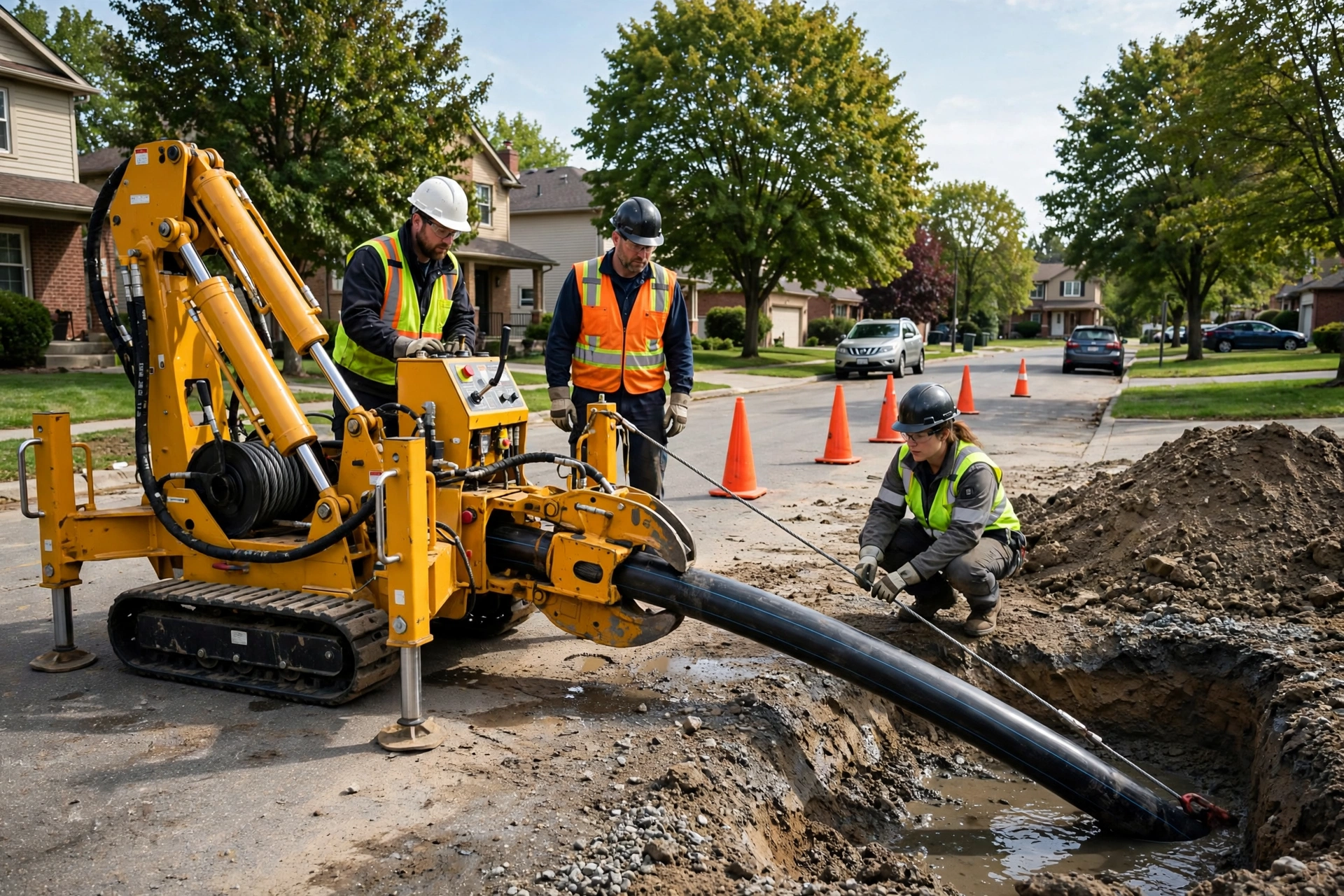
Pipe bursting replaces a failing Lima lateral with seamless new pipe, no open trench across the yard.
Downtown Lima and the west side hold homes from the 1900s through the 1940s, and their laterals match: clay tile with mortar joints, worked loose by a century of freeze-thaw and shifting clay soil. The post-war neighborhoods lean toward cast iron inside to clay outside, hitting the end of the cast iron's life right about now. Some 1960s developments ran Orangeburg, a tar-paper pipe that flattens into an oval and eventually collapses.
The townships around Lima, Shawnee, Bath, and Elida, mix older farmhouses with newer subdivisions. The farmhouses can sit near old clay field drainage tiles, which give roots a second path into your lateral. When we camera-inspect homes on Lima's edges, we trace where the lateral meets the old drainage network, because fixing the house line without accounting for the field tile just moves the problem.
The Ottawa River joins the Maumee on its way to Lake Erie. What Ohio treatment plants discharge into rivers runs under discharge permits issued by Ohio EPA; see the Ohio EPA's wastewater permitting pages for how that oversight works. Keeping your lateral sealed keeps infiltration out of the system the plants have to handle.
Water in the Lima area runs very hard, around 18 grains per gallon in regional USGS-based assessments. That heavy mineral load leaves thick scale inside old clay and cast iron pipe, narrowing the bore and roughening the surface so grease and solids catch. Lima's mid-century cast iron gets it from both sides: scale on top of inside-out rust, in pipe that is already at the end of its life.
Water and sewer service in Lima is provided by the City of Lima's Utilities Department, which owns and operates its own water and sewer utility. For sewer lateral repair or replacement, permits run through the city, and an inspection is typically required before backfill. We pull the permits and coordinate the inspection as part of every job.
For utility accounts, billing, and service details, see the Lima Utilities Department website. If you are unsure which permits your project needs, check with the city's building department before work begins.
Lima's water is very hard, around 18 grains per gallon in regional assessments. That heavy mineral load leaves thick scale inside old clay and cast iron pipe, narrowing the bore and roughening the surface so grease and solids catch. Lima's mid-century cast iron gets it from both sides, scale on top of inside-out rust, and a camera plus hydro jetting or a lining sorts it out.
Follow the seasons, not the calendar. In Lima, the smart routine is a fall camera inspection before freeze season, close attention to drains during spring rains and high river water, and keeping roots and grease out of the line all year. Here is how each season plays out:
Our crews cover downtown Lima, the west side, and the neighborhoods near Lima Memorial and St. Rita's Medical Center. You'll also find us in Shawnee Township, Bath Township, Elida, and around the Allen County Museum, wherever Allen County laterals run. Our crews work across the Lima area in ZIP codes 45801, 45804, 45805, and 45806.
Wherever the lateral runs in the Lima area, the process is the same: camera first, honest diagnosis, upfront plan. Start from our Ohio homepage or see our neighbors in Findlay and Sidney.
Most likely vitrified clay tile with mortar joints. The worker homes built around Lima's industrial corridors in the early 1900s ran clay laterals from the foundation to the street. After a century, the mortar joints crumble, sections shift in Allen County's heavy clay soil, and roots push in. Many of these lines are good candidates for trenchless lining.
Yes. The Ottawa River runs through Lima, and in the corridor along its banks the water table stays high. Groundwater presses into every cracked joint in laterals near the river, and the line fills from the outside in. If your drains slow down after wet stretches and recover when it dries out, river-corridor infiltration is the likely cause.
Yes. Lima owns and operates its own water and sewer utility, run by the city's Utilities Department, which handles both water distribution and sewer maintenance. That means billing, main repairs, and wastewater treatment all go through the city. Your private lateral is generally your responsibility, so if you are unsure where it ends, check with Lima Utilities.
Cast iron typically lasts 50 to 80 years, and it rusts from the inside out, so the pipe looks fine from the outside until the bottom is paper-thin. Lima's mid-century west-side homes are hitting that window right now. A camera inspection shows the true condition, and if the pipe has lost its shape, pipe bursting replaces it entirely.
Spring brings the one-two punch: the ground thaws from the top down while deeper soil is still frozen, so water has nowhere to drain and the water table spikes, and freeze-thaw has spent all winter wedging every crack wider. Groundwater floods into the lateral through the joints, and drains slow until the ground dries. A fall camera inspection catches the cracks while they're still lining candidates.
Also serving Findlay, Sidney, Delphos, Wapakoneta, and Allen County. Landmarks we work around include the Allen County Museum, the Lima Army Tank Plant, Faurot Park, and St. Rita's Medical Center.
One inspection, one honest diagnosis, one upfront plan, anywhere in the Lima area.
Call (614) 350-5706