Main Drain Cleaning in Ohio
When every drain in the house is slow, the problem is in the main line. We clear it with professional augers built for main drains, and we tell you honestly when cleaning isn't enough.
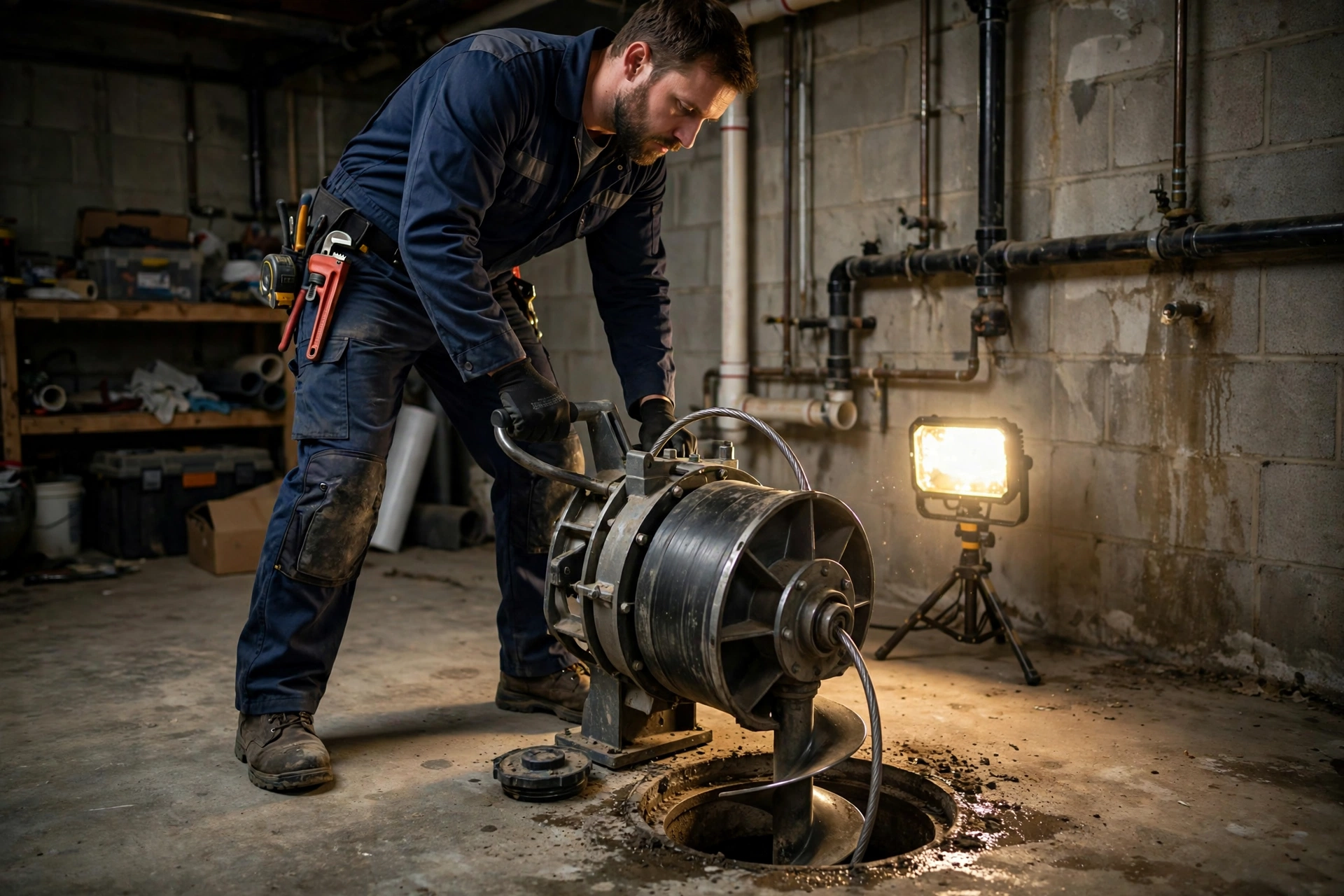
When every drain in the house is slow, the problem is in the main line. We clear it with professional augers built for main drains, and we tell you honestly when cleaning isn't enough.
Last updated: October 13, 2026
Main drain cleaning is the clearing of the main sewer line that carries all of a home's wastewater to the city sewer. A technician runs a powered auger through the line, sometimes followed by hydro jetting, to cut through roots, grease, and debris. The U.S. EPA publishes homeowner guidance on septic and sewer systems, including how blockages form and when a professional is needed.
Drain cleaning is mechanical: a rotating steel cable with a cutting head punches through the blockage and pulls debris back out. Hydro jetting is hydraulic: high-pressure water scours the entire pipe wall clean. Cleaning clears the clog. Jetting restores the pipe.
Think of it this way. An auger is like a drill: it bores a path through roots, wipes, grease clumps, and sludge so water can flow again. It works through the blockage, but it mostly passes over the buildup coating the pipe walls. That buildup stays, and the line clogs again sooner.
Hydro jetting is like pressure-washing the inside of the pipe. A specialized nozzle blasts water at thousands of PSI in every direction, stripping grease, scale, and sludge off the walls and flushing it downstream. It leaves the pipe close to its original diameter.
They are different tools for different jobs, and they often work together: we snake first to open a fully blocked line, then jet to clean the walls so the clog doesn't come right back. Drain cleaning is the broader, everyday service. Jetting is the deeper clean, and it has its own page: hydro jetting.
Match the method to the symptom, not the other way around. Snaking opens blocked lines, jetting cleans dirty ones, and a camera tells you which one your line actually needs.
| Method | How it works | Best for |
|---|---|---|
| Snaking (auger) | A rotating cable with a cutting head bores through the blockage and pulls debris back out | Sudden full blockages, wipes and paper clogs, restoring flow quickly |
| Hydro jetting | High-pressure water scours the entire pipe wall and flushes buildup downstream | Recurring clogs, grease buildup, mineral scale, sludge, and root masses that keep returning |
| Camera-guided cleaning | A camera run first shows the cause, then the technician cleans with the right tool for it | Repeat clogs with an unknown cause, or cleaning before a repair or lining decision |
When in doubt, start with the camera. Guessing wrong means handling for a cleaning that does not hold, while the right method on the first try is always simpler than two wrong ones.
The main drain is the single pipe everything flows through, so its symptoms show up house-wide. One slow sink is a branch-line clog. These signs point to the main:
If you see sewage actively backing up into the house, stop using water and call us at (614) 350-5706. That's beyond a cleaning conversation.
Professional main-drain cleaning is not a hand crank from the hardware store. Here's what a proper job looks like:
We work through an existing cleanout whenever possible. No cleanout means pulling a toilet or going through a basement floor drain, and we'll explain the options before we start.
Cable diameter and cutting head get matched to your pipe: typically 5/8-inch or 3/4-inch cable with a blade sized for 3 to 6 inch mains. Wrong size means either ineffective or risky.
The rotating cable works through the blockage in passes, and we pull the head back regularly to clear debris off the blades instead of packing it tighter.
We run water through every fixture to confirm flow is restored, and we recommend a camera run so you can see what was causing it.
What comes back on the cable tells a story. Root fibers mean joints are open. Grease chunks mean the kitchen line is the requirementder. Scale flakes mean cast iron is narrowing. We read it and tell you what it means, because the debris is often more informative than the clog was.
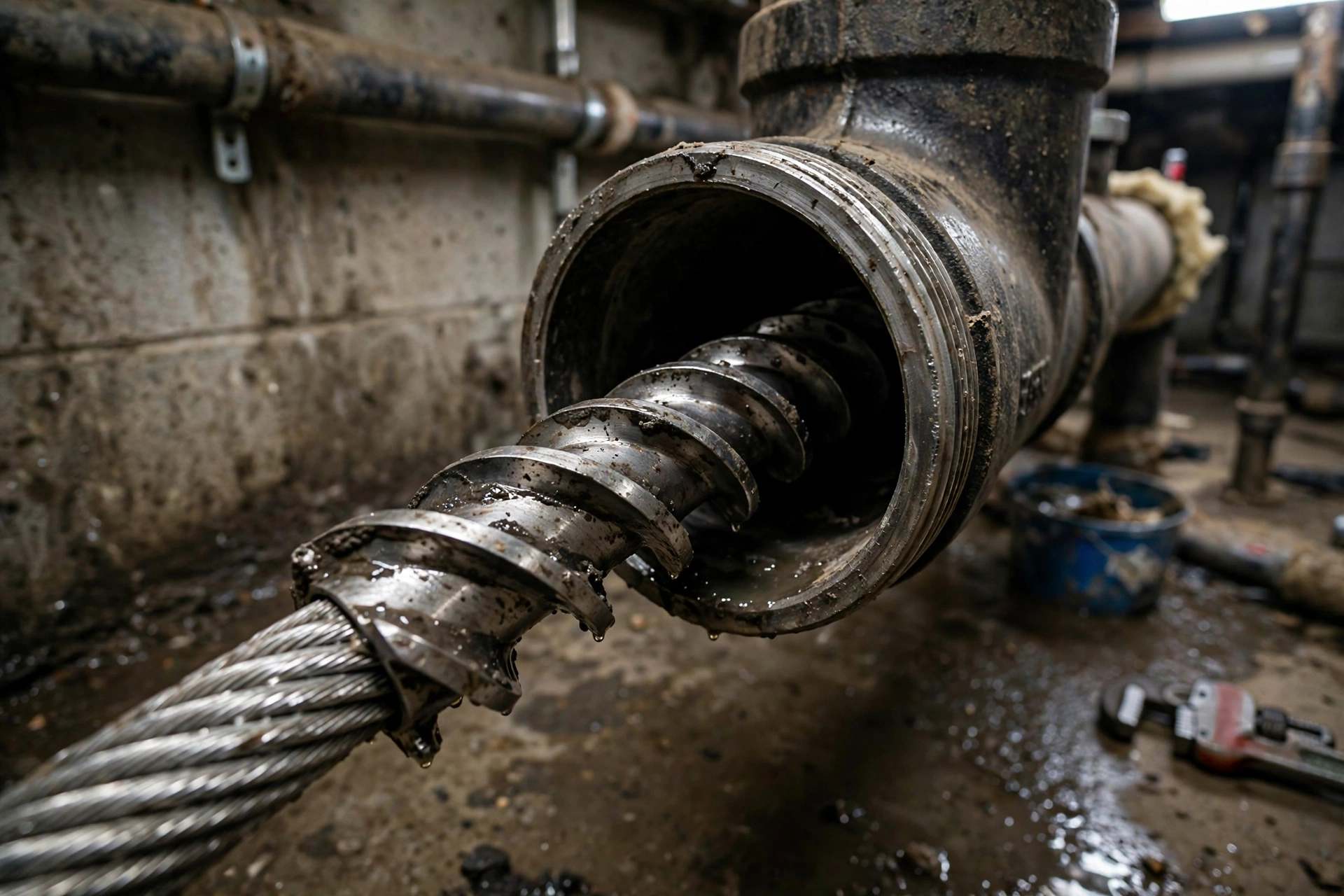
The right cable and cutting head for the pipe size: that's the difference between clearing a clog and just poking a hole through it.
Snaking opens the line. Sometimes that's all you need. We recommend stepping up to jetting when:
We'll tell you on site which camp you're in. If snaking will do the job, we snake and leave. We don't upsell jetting where an auger is enough. Commercial kitchens also operate under discharge rules: the EPA's NPDES program sets federal standards for what facilities can send into municipal sewer systems, which is one reason restaurants keep grease management on a schedule. Full details on the hydro jetting page.
Because a clog is a symptom. An auger treats the symptom well, but it doesn't fix the cause, and the cause doesn't go away on its own.
Roots grow back through the same open joint, usually within a year. Grease rebuilds on the same stretch of pipe. A belly in the line keeps collecting solids in the same low spot. An offset joint keeps catching paper at the same lip. Every cleaning buys time, but the interval gets shorter as the defect gets worse.
Our rule of thumb: if you're calling for main-drain cleaning more than once a year, stop handling for cleanings and handle a camera inspection instead. One inspection is simpler than two wasted cleanings, and it shows you the actual defect: root-packed joint, sag, offset, collapsed section, or scaled cast iron.
Then the math changes. Fixing the pipe once, with a spot repair or trenchless lining, takes more work up front than another snaking visit and far less than five years of snaking visits plus the emergency backup that eventually happens anyway.
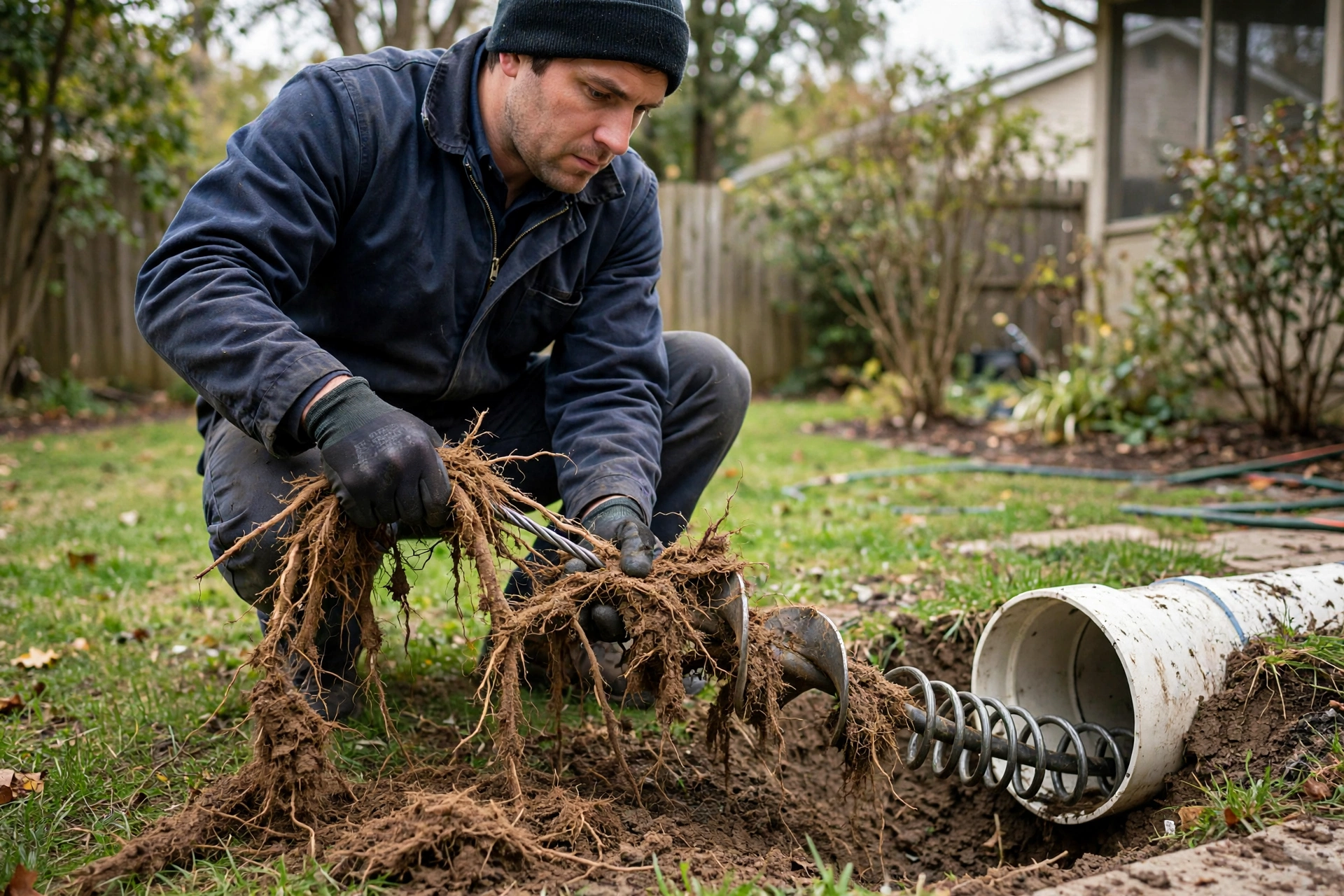
Roots on the cable explain the clog. They also explain why it'll be back: the joint they grew through is still open.
No invented plans here, but you deserve to know what drives the number. Main-drain cleaning is planned by the visit, and these are the factors:
You get a firm plan before the cable goes in the pipe. If we find something that changes the job, like a collapsed section the auger can't pass, we stop, show you, and re-plan. No surprise line items. For what the bigger fixes involve when cleaning isn't enough, see our Ohio sewer repair guide.
Drain cleaning is mechanical: a rotating auger cable with a cutting head punches through the blockage and pulls debris back out. Hydro jetting uses high-pressure water to scour the entire pipe wall clean, removing grease, scale, and sludge that an auger passes over. Cleaning clears the clog; jetting restores the pipe. Many jobs need both, cleaning first to open the line, jetting after to keep it open.
Only as often as it needs it. A healthy line with no root or grease issues may never need scheduled cleaning. Lines under mature trees or serving restaurants can need it yearly. For most Ohio homes, the right schedule is symptom-based: if drains are flowing normally, leave it alone. If you are cleaning more than once a year, stop cleaning and get a camera inspection, because something in the pipe is causing the repeat clogs.
With professional equipment and the right cutting head, snaking a sound pipe is safe. The risk is with pipes that are already failing: brittle Orangeburg, collapsed clay, or a badly offset joint can be made worse by forcing a cable through. That is why we camera first whenever the line's condition is unknown or the symptoms suggest structural damage.
Because the clog is a symptom, not the cause. An auger clears roots, grease, or sludge, but roots grow back through the same joint, grease rebuilds on the same pipe wall, and a belly in the line keeps collecting solids. If you are on a twice-a-year snaking cycle, the pipe has a defect: a root-packed joint, a sag, an offset, or scale narrowing cast iron. A camera inspection finds it, and then you fix the pipe once instead of cleaning it forever.
We stop and look. If the auger won't pass or the line clogs again within weeks, we run a camera to see why. Then we show you the footage and give you a written plan for the actual fix, whether that is a spot repair, trenchless lining, or full replacement. You will never get a shrug and a bill for another cleaning that didn't work.
Cleaning is often step one. When the line needs a deeper clean, our hydro jetting page explains the high-pressure option. When clogs keep coming back, a sewer camera inspection finds the defect causing them. And when the pipe itself is the problem, trenchless sewer repair fixes it without digging up your property.
That's a main line problem, and it's what we do. Firm plan before we start, and an honest answer if cleaning isn't the fix.
Call (614) 350-5706