You are about to buy the biggest thing of your life. The sewer line buried under the yard is the one part nobody checks. We run a camera through the whole line before you close, so there are no surprises after you own it.
Why Doesn't a Standard Home Inspection Cover the Sewer Line?
Because the sewer lateral is buried underground, it falls outside a general inspector's scope, equipment, and license. Most buyers sign a contract on a house without knowing anything about the most major pipe on the property.
A general home inspector does solid work on what they can see and reach: visible supply plumbing, the water heater, fixtures, drainage at the sinks and tubs. But the lateral, the pipe that carries everything from your house to the city main under the street, is invisible from inside the house. Inspectors don't carry camera reels, and Ohio inspection standards don't require them to evaluate underground lines.
That matters because the lateral is yours. In Ohio, the homeowner owns and maintains the sewer lateral from the house all the way to the city main, including the section under the sidewalk and the street apron. When it fails, the city doesn't handle it. And homeowners insurance almost never covers a sewer line failure: wear, root intrusion, and ground movement are standard exclusions. Statewide wastewater rules are published by the Ohio EPA.
So the math is simple. A general inspection might work a modest step and skip the pipe that work five figures to replace. We see buyers every year who learn about a collapsed line a month after closing, when the first heavy rain backs sewage into the basement. A camera run before closing is the simplest insurance in the whole transaction.
What Does Our Pre-Purchase Sewer Inspection Include?
A pre-purchase sewer inspection is a camera inspection of the underground sewer line performed before a home sale closes. You get the full picture of the line, documented, not just a verbal "looks fine." Here is exactly what happens:
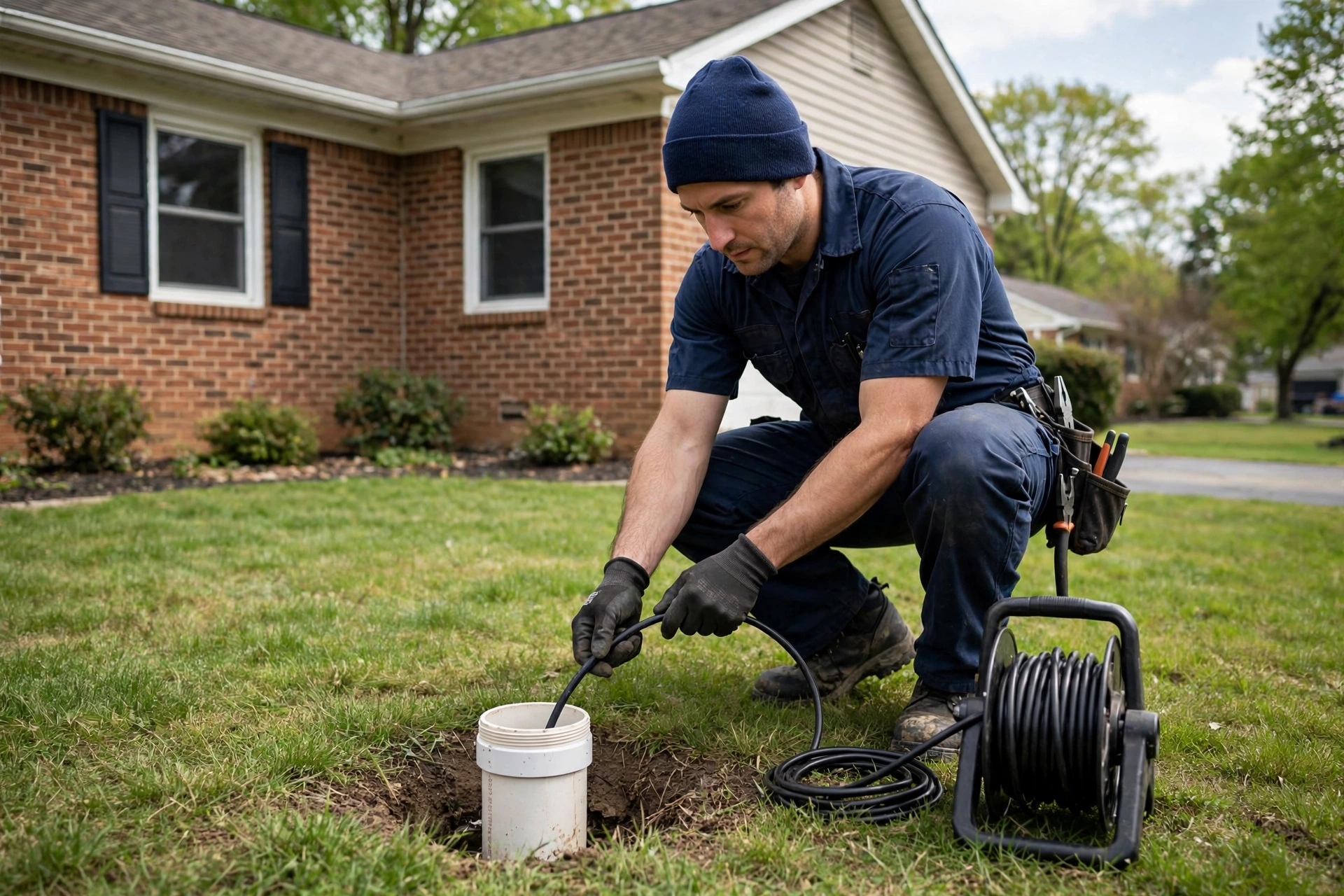
Full camera run, house to main. We requirementd a camera through the entire lateral, from the cleanout (or a pulled toilet if there is no accessible cleanout) all the way to the city main or septic tank. The whole run is recorded.
Above-ground locating. A transmitter on the camera head lets us trace the line's path and depth from the surface, so you know exactly where the pipe runs and how deep it sits.
Material and size identification. We tell you what the pipe is made of: clay tile, cast iron, Orangeburg, PVC, or ABS, and what diameter it is. The material tells us a lot about remaining life.
Written report with footage marks. Every defect gets logged by its footage mark, with a plain-language severity rating and our recommendation. No jargon, no guesswork.
Footage you keep. The raw video is yours. Share it with your agent, your own plumber, or the seller's contractor for a second opinion.
If the line is too clogged for the camera to see through, we will tell you before we start, and offer to clear it first so the inspection is actually useful. That clearing is handled separately and only done with your approval. The EPA's septic system guidance explains what a system inspection should document.
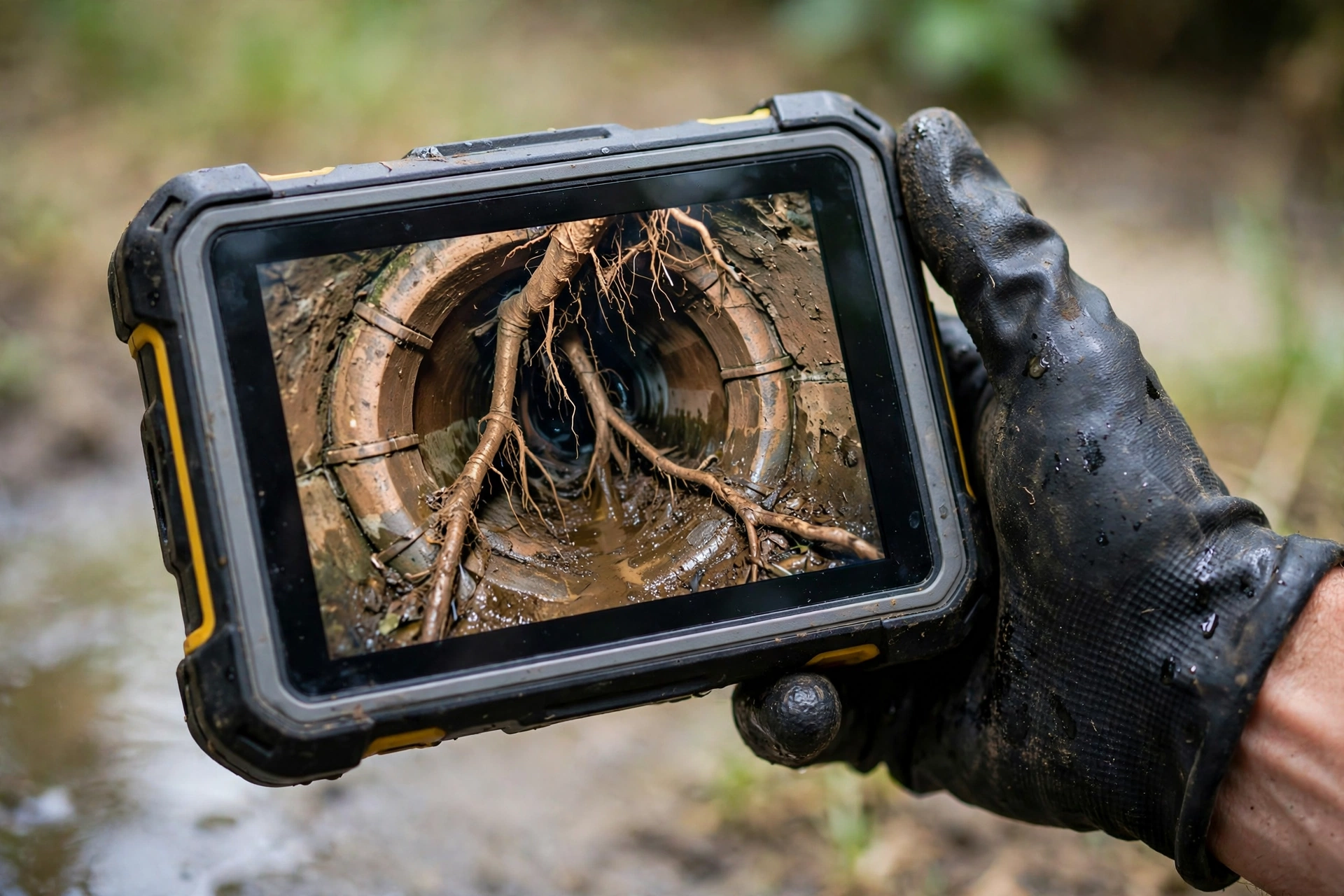
This is what a camera finds in older Ohio lines: tree roots packed into every clay tile joint.
What Problems Do We Find in Ohio Homes?
Ohio's housing stock and soil create a specific set of repeat offenders. These are the findings that actually change deals:
Orangeburg pipe. Tar-paper composite pipe was common from the 1940s through the early 1970s. It blisters, flattens, and collapses with age, and Ohio's freeze-thaw cycles speed the deformation. When we find Orangeburg, replacement is usually a matter of when, not if.
Root-packed clay tile. Clay was the standard into the 1970s, and every joint is a root entry point. Ohio's mature maples, oaks, and sycamores send roots far beyond the drip line. We regularly find clay lines where roots have filled the pipe for 20 requirementt at a stretch.
Bellies (sags). Ohio clay soil swells when wet and shrinks when dry, and that seasonal movement settles sections of pipe. The sag pools wastewater, solids accumulate, and the line clogs on a schedule.
Offset and separated joints. The same soil movement shifts pipe sections apart at the joints. Each gap catches paper and waste and invites roots in.
Scaled cast iron. In pre-1960 homes, cast iron under the basement slab builds up internal scale that chokes the pipe down to a fraction of its diameter. From above, everything looks fine. On camera, the pipe is nearly closed.
Unpermitted patches. Old repairs with rubber couplings buried without permits, lines tied into downspouts, or mystery connections that show up on camera but on no drawing.
What Do These Findings Mean for a Buyer?
Every finding above lands in one of these categories in your report:
Finding
What it means
Typical next step
Root intrusion
Roots entering through pipe joints and packing the line
Root removal, then repair or lining at the entry points
Cracks and offsets
Pipe sections cracked or shifted apart at the joints
Spot repair of the damaged sections
Bellies (sags)
Low spots that hold standing water and collect sediment
Replace or regrade the sagging section
Scale buildup
Internal corrosion narrowing a cast iron line
Descaling if the wall is sound, replacement if it is not
Broken or collapsed section
Pipe caved in or missing entirely
Replacement of the failed section
In the older neighborhoods of Cleveland, Cincinnati, Dayton, Toledo, and Columbus, we also run into combined sewer connections and shared laterals, where two houses requirementd one line. That is worth knowing before you buy, because a neighbor's problem can become your backup. Combined municipal systems operate under federal discharge rules; the EPA's NPDES program covers sewer discharge regulations.
How Do Buyers Use the Inspection Report?
The report is yours, and it is built to be useful in a negotiation, not just informative. Here is how buyers actually put it to work:
Negotiate
Ask the seller to repair the line before closing, or credit you the repair work at closing. Video footage with footage marks is hard to argue with.
Plan
If the line is aging but functional, plans the replacement for year two or three instead of getting blindsided by it.
Verify
Share the raw footage with your own plumber for a second opinion, or with the seller's contractor to get a repair plan on the same evidence.
Walk away
When the line needs full replacement and the numbers don't work, it is better to know before your inspection contingency expires than after.
One thing to be clear about: we inspect for you, the buyer, not for the seller or the listing agent. Our report describes what the camera saw, in plain language, with severity ratings we would stand behind if it were our own purchase.
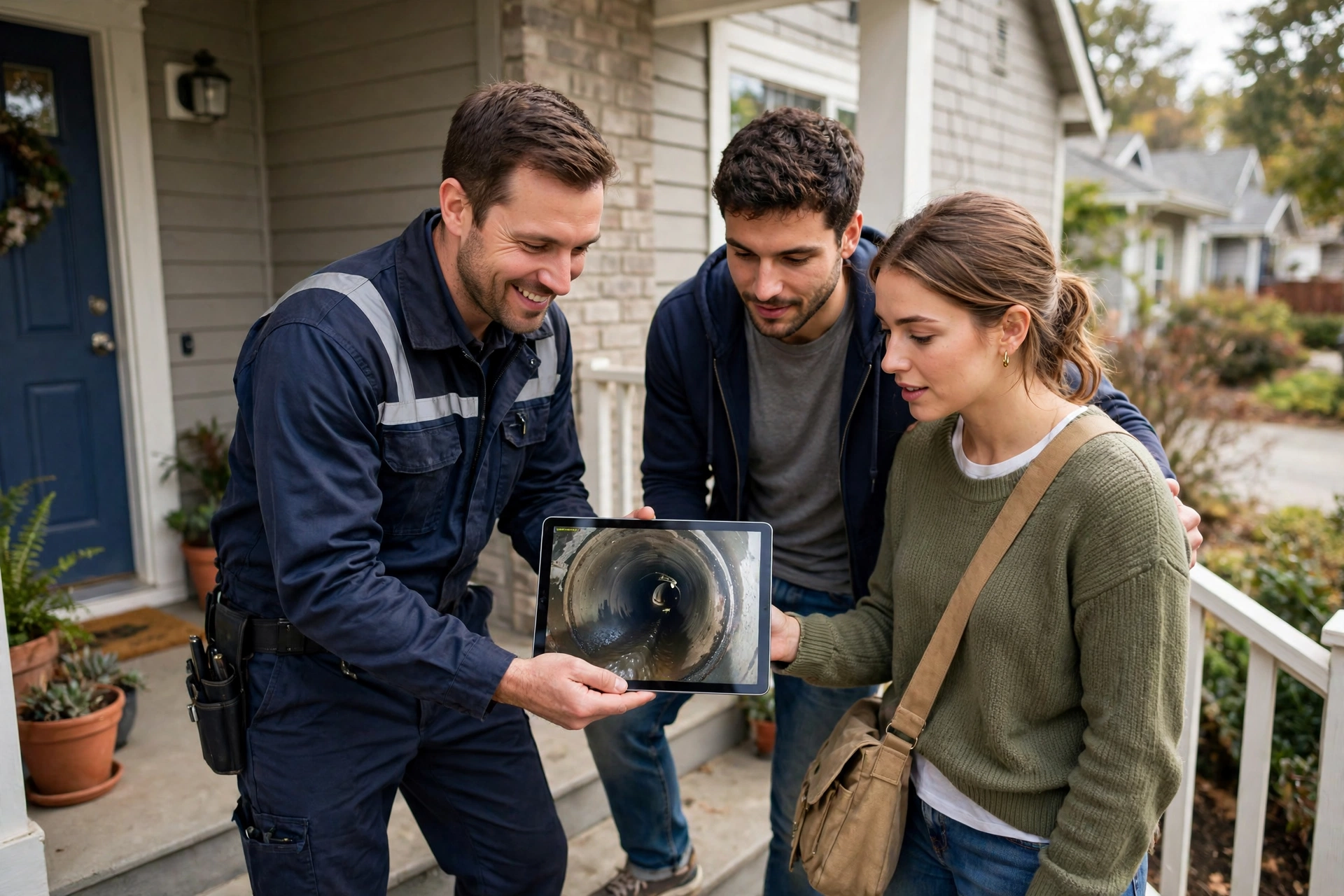
We walk you through the footage on site, so you understand what the camera found before the report lands in your inbox.
How Do We Time It With Your Inspection Window?
Most Ohio purchase contracts give buyers 7 to 14 days for inspections. A sewer inspection fits inside that window easily: we can usually schedule within 48 hours of your call, and the written report lands the same day or the next morning.
The practical step is access. We need the seller's permission to run the camera, either through an existing cleanout or by pulling a toilet. Your agent arranges that, the same way they arrange access for the general inspection. Many buyers have us come the same day as the general inspector so everything gets done in one visit.
If your contingency clock is already running, call us at (614) 350-5706 and tell us your deadline. We will tell you straight whether we can hit it.
What Does a Pre-Purchase Sewer Inspection Involve?
We don't publish a one-size plan because the honest answer depends on your house. What moves the plan:
Access. A clear, accessible cleanout keeps the visit quick. No cleanout means pulling a toilet, which adds time.
Length. A short run to a nearby main is simpler to inspect than a 150-foot run across a big lot.
Condition. If the line is packed and needs clearing before the camera can see through it, that is a separate step with a separate plan, pland before we do it.
Scheduling. Standard weekday visits are the baseline; tight-deadline or weekend scheduling can add a step.
Here is what won't happen: we won't plan you one number and bill another. You get a firm plan for your specific house before we schedule. For the full picture of what repairs involve if we find something, see our Ohio sewer repair guide.
What Are the Most Common Questions About Pre-Purchase Sewer Inspections?
We plan it by the visit, not by the foot. The plan depends on whether there is a clear cleanout to work from, how long the run to the street is, and whether the line needs clearing before the camera can see through it. Call us at (614) 350-5706 and we will give you a firm plan for your specific house before we schedule anything.
That happens, and your agent is the right person to handle it. Most sellers agree once they understand the inspection is non-invasive: we run a camera through an existing cleanout or toilet, nothing gets dug up. If a seller flatly refuses, treat that as information. You can ask for the inspection as a contract condition, or you can decide the risk is yours to carry.
You get a written report with the footage, the defect locations by footage mark, and our honest assessment of severity. From there you have real options: ask the seller to repair it or credit you, re-plan the purchase knowing a replacement is coming, or walk away while your inspection contingency is still open. We can also give you a written repair plan so your negotiation uses a real finding, not a guess.
Yes, that is the main reason buyers order one. Video footage of a root-packed line or a collapsed section is hard for a seller to argue with, and agents take it seriously because it is documented evidence, not an opinion. Share the report with your agent and let them use it the same way they use the general inspection report.
It is worth doing. New lines can have bellies from rushed backfill, construction debris left in the pipe, or slope that is off just enough to cause trouble years later. An inspection before the builder's warranty expires gives you proof if something was installed wrong, and it work a fraction of what a repair would.
What Services Come After an Inspection?
A pre-purchase inspection is the diagnostic starting point. If the camera finds trouble, the follow-up usually comes from our general sewer camera inspection page's repair side: a clogged line may need hydro jetting to clear before it can be fully assessed, and a damaged line often leads to trenchless sewer repair, which fixes the pipe without tearing up the yard you are about to own.
Buying a Home in Ohio? Check the Sewer Line First
A camera run and a written report before your inspection window closes. Firm assessmentd up front, footage you keep.