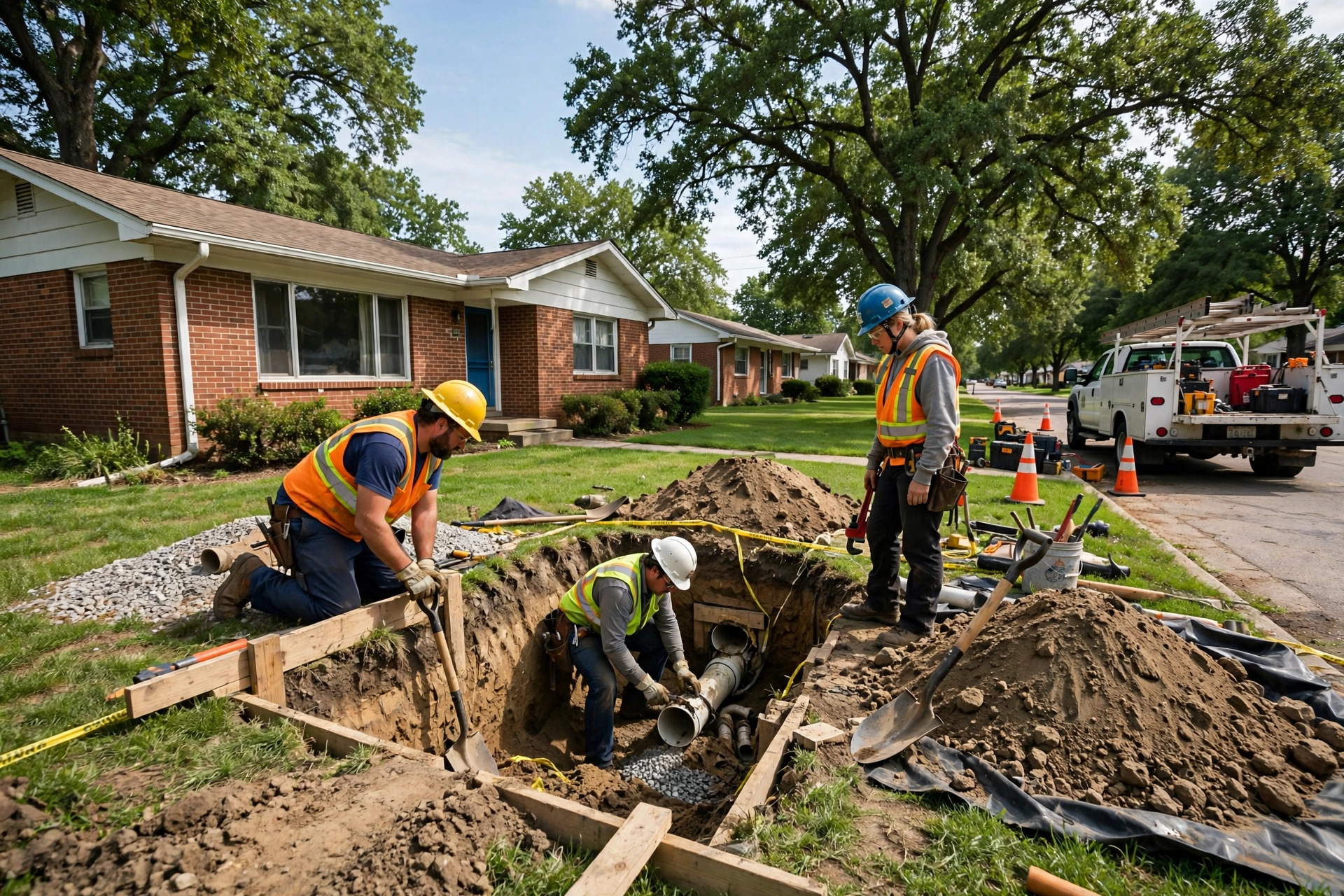
Trotwood, Ohio
Why Are Trotwood's Post-War Pipes Failing Now?
They all hit retirement age at once. Trotwood is Dayton's west-side suburb, built out in the post-war decades with the same pipe everywhere, and that pipe is all reaching retirement age at once.
The 1950s through 1970s homes that define Trotwood went in with cast iron laterals inside transitioning to clay tile outside. Cast iron fails from the inside out: it rusts through the bottom of the pipe while looking perfectly solid from above, so the first symptom is often a sudden collapse rather than a gradual slowdown. The clay tile sections fail more openly, with mortar joints crumbling and sections offsetting as the soil moves through wet and dry seasons.
Sixty to seventy years is the end of the design life for this pipe, and Trotwood's housing stock hit that milestone together. The calls we run here follow a pattern: a drain that has slowed a little more each year, a backup that arrives after heavy rain, gurgling from the lowest fixtures. The camera usually shows a line that has been deteriorating for a decade. The good news is that many of these lines still hold enough shape for trenchless sewer repair, which seals the pipe from the inside before a collapse forces a full dig.
Trotwood's water adds its own slow damage. The area's groundwater runs hard, with USGS regional assessments near 19 grains per gallon. In cast iron laterals, mineral scale teams up with internal rust, and the two together close the pipe from the inside out, which is why so many Trotwood lines look fine until they suddenly do not.
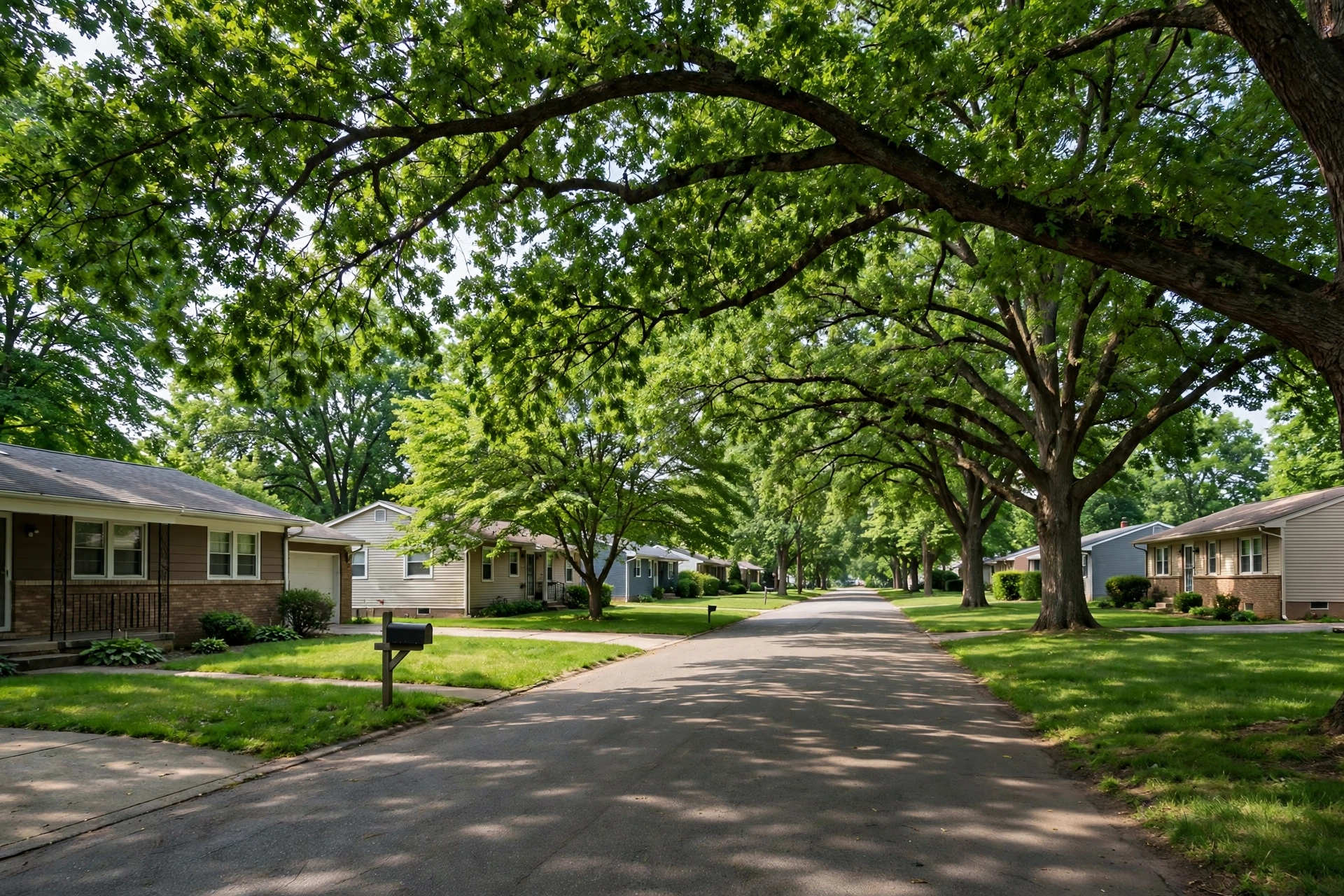
Trotwood's mature tree canopy is beautiful above ground and relentless below it.
Why Do Commercial Lines Along Salem Avenue Fail Faster?
They work much harder than residential lines. Salem Avenue is Trotwood's commercial spine, and the older commercial buildings along it carry laterals that take far more abuse. Restaurant grease cools and hardens into blockages, high-volume restrooms keep the pipe flowing all day, and many of these buildings sit on the same 1960s-era clay and cast iron as the houses behind them. Commercial backups do not just inconvenience a family, they close a business.
The commercial playbook is different: scheduled hydro jetting instead of emergency calls, periodic camera checks to catch grease and scale before they close the pipe, and backwater valves where a building sits low enough to take a hit from a surcharged main. We service commercial laterals along the Salem Avenue corridor and schedule the work around business hours.
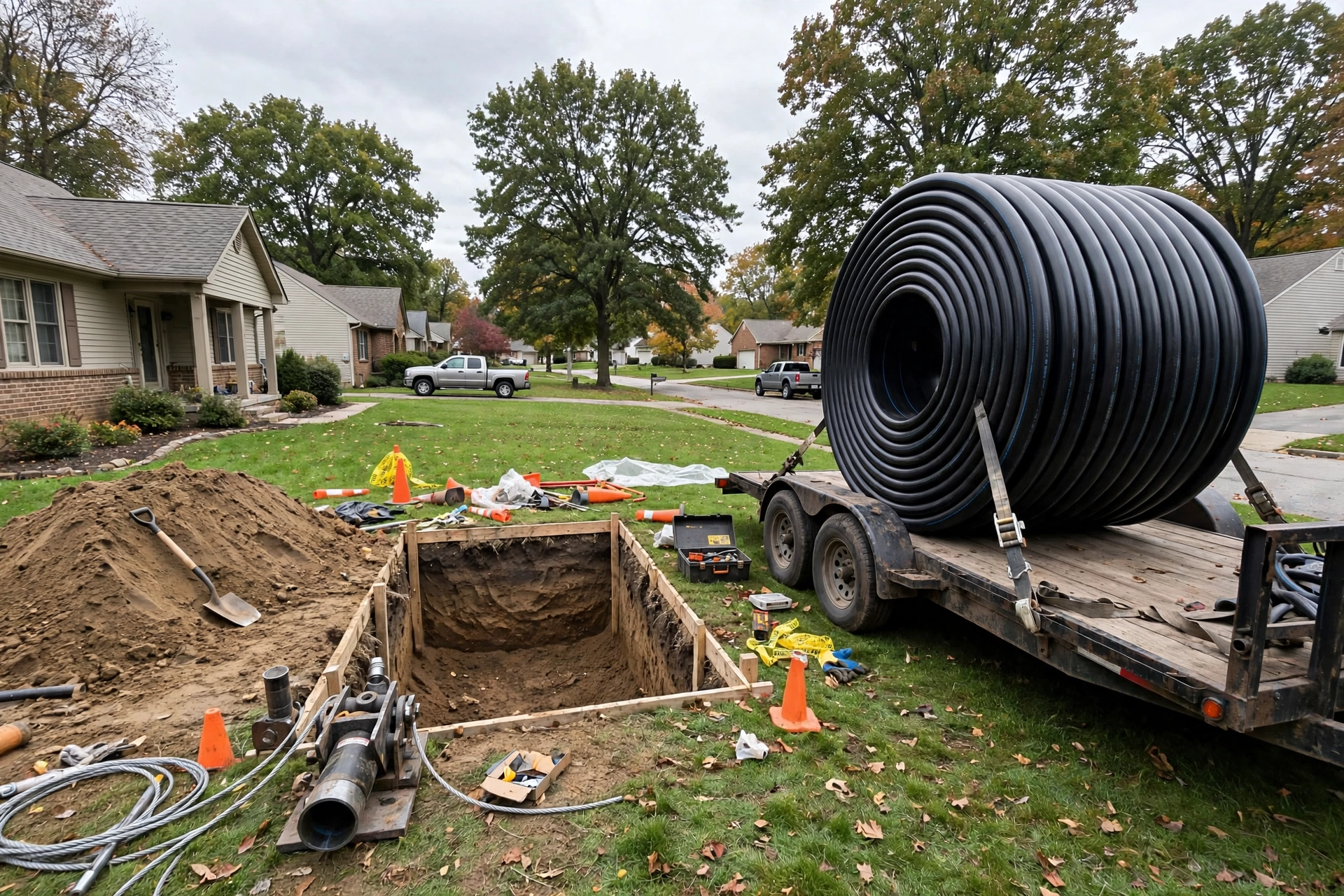
New HDPE pipe staged for a trenchless bursting job in Trotwood.
Are Trotwood's Mature Trees the Main Sewer Problem?
In most cases, yes. Trotwood's tree canopy is one of the heaviest in the Dayton metro: maples and oaks that have shaded these streets for fifty years. Above ground, that is the neighborhood's best feature. Below ground, it is the number-one cause of sewer calls. Fine root hairs find every damp clay joint, thicken year after year, and eventually wedge joints apart and fill the pipe.
Spring is when it all comes due: roots grow fastest just as the water table rises and infiltrates the same cracked joints. If your backups follow a yearly pattern, the camera will usually show root masses packed into the joints, and the honest fix is lining, which seals every joint from the inside and removes the entry points permanently. Cutting or jetting the roots without sealing the joints just schedules next year's service call.
Who Owns the Sewer Lateral in Trotwood?
Here is the split Trotwood homeowners need to know. You own the sewer lateral from your house to where it connects with the public main, usually at the street. Everything in between, under your yard and driveway, is your responsibility to maintain and repair. The City of Trotwood Public Works Department maintains the water mains and wastewater collection lines in the city's pre-1996 incorporated area, while Montgomery County serves the newer annexed areas.
That line determines who you call. If only your home is backing up, the lateral is the prime suspect, and that is our territory at Ohio Sewer Masters. If multiple homes on your street are affected at once, call the city, it may be a main-line issue. Lateral repair and replacement in Trotwood typically requires a city permit with inspection before backfill, so check with the city's building department before work begins, and we pull the permits and schedule the inspections as part of every job. Statewide, the Ohio EPA sets Ohio's wastewater rules and water quality standards. We also serve Dayton to the east and Riverside to the northeast with the same camera-first process.
How Should Trotwood Homeowners Maintain Their Sewer Lines Through the Seasons?
Follow the canopy's calendar. Trotwood's heavy tree cover makes fall the peak root season, spring rains expose every weakened joint, and winter frost punishes shallow lines. Seasonal checks timed to the trees keep an aging west-side lateral ahead of the next backup.
- Spring: roots wake up just as the water table rises, the double hit behind Trotwood's yearly backup pattern. If backups follow a spring schedule, a camera inspection finds the root masses.
- Summer: dry months are the best window for planned lining or bursting, when the ground is firm and the canopy is not yet at peak root growth.
- Fall: roots grow most aggressively in fall. With one of the heaviest canopies in the metro, Trotwood lines need a camera check at the first sign of autumn slowdowns.
- Winter: keep cleanouts marked and accessible, and fix suspect lines before deep frost turns a repair into an excavation ordeal.