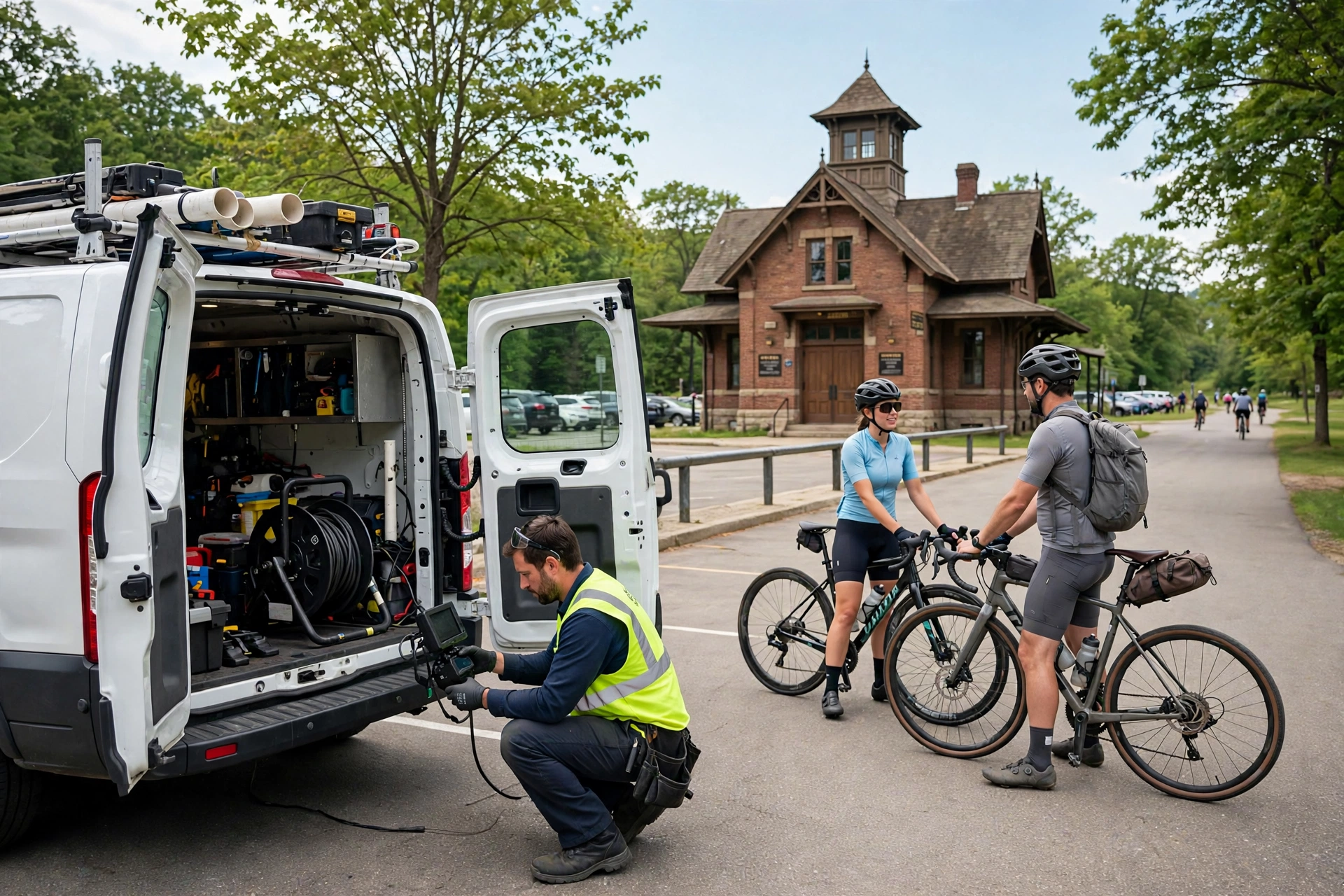
Xenia, Ohio
Bicycle Capital of the Midwest: What Four Trails Mean for Sewer Lines
Xenia calls itself the Bicycle Capital of the Midwest, and Xenia Station sits at the hub where four major trails meet, including the Little Miami Scenic Trail and the Creekside Trail. That is wonderful for cyclists and quietly rough on sewer lines.
The trail corridors are rail-trails, lined on both sides with mature trees that have grown undisturbed for decades. Tree roots do not respect property lines or pipe materials: they follow moisture, and a clay tile lateral with damp mortar joints is a beacon. Homes near Xenia Station and along the trail routes deal with measurably more root intrusion than homes a few blocks away. The pattern is unmistakable on our cameras: root masses packed into the joints on the trail-facing side of the line, year after year.
The fix is not to fight the trees, it is to take away what the roots are after. Trenchless sewer repair seals every joint from the inside, lining creates a seamless new pipe within the old one, and once the entry points are gone, the roots go back to minding their own business. Snaking buys a season; lining ends the cycle.
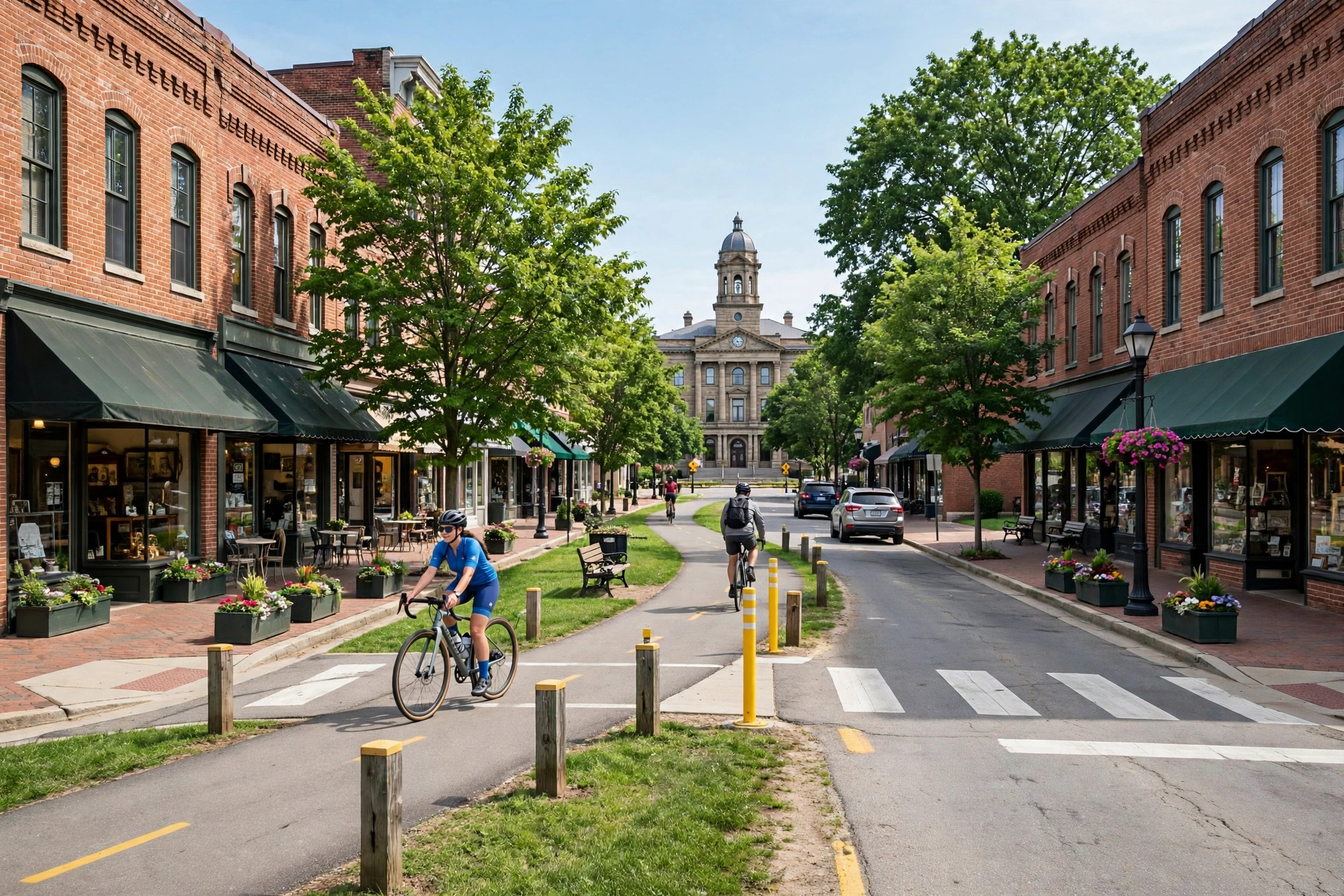
Xenia Station sits at the hub of four major trails, and the tree-lined corridors requirementd roots toward nearby sewer lines.
How Did the 1974 Tornado Divide Xenia's Sewer Lines Into Two Generations?
No Ohio city has a sharper dividing line in its housing stock than Xenia. The 1974 Super Outbreak tornado devastated the city, destroying much of downtown and whole neighborhoods. What rose afterward was essentially a second Xenia, built in the mid-to-late 1970s alongside the pre-tornado homes that survived.
That gives the city two distinct generations of sewer pipe. The survivors, homes from the 1900s through the early 1970s that the tornado spared, typically run clay tile laterals with mortar joints, now 50 to 120 years old and showing every bit of it. The rebuild-era homes went in with 1970s pipe: cast iron, early PVC, and in some developments Orangeburg. The cast iron from that era is reaching the end of its life right now, rusting from the inside out, while the Orangeburg is flattening toward collapse. Two eras, two failure modes, one solution for both: put a camera in the line and see which generation you are dealing with.
Xenia's water carries the limestone mineral load typical of Greene County groundwater, and the county's own water reports have measured regional hardness as high as 27 grains per gallon, very hard. Inside old clay and cast iron laterals, that hardness lays down mineral scale that narrows the pipe and speeds up blockages, one more reason the camera often finds Xenia lines smaller inside than their age would suggest.
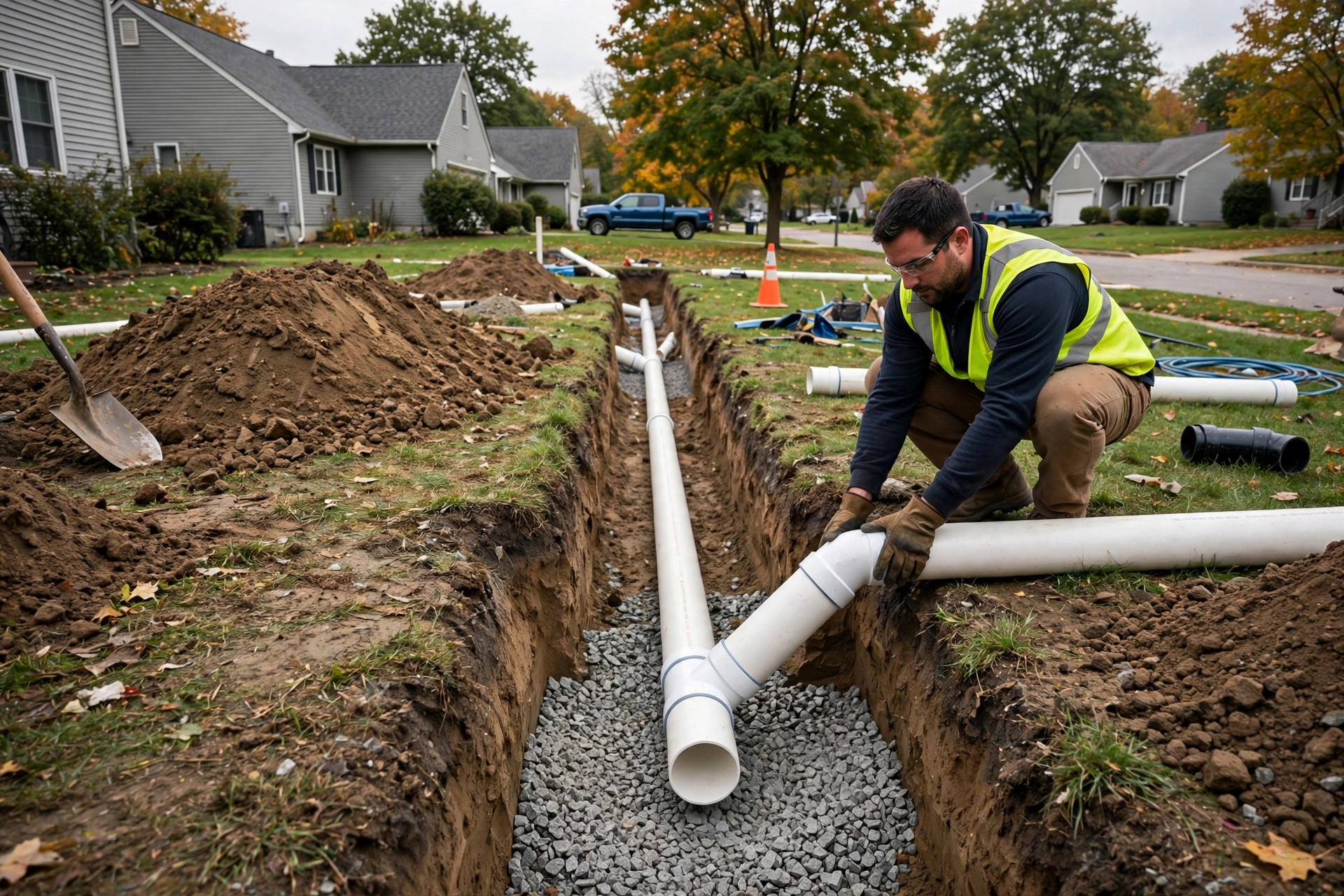
New PVC goes in clean, but poor bedding and settling soil still cause bellies and separated joints.
Who Handles Sewer Service in Xenia?
The City of Xenia runs its own municipal water and sewer system, billed through the city's Utility Billing Division. The city owns the public mains; you own the lateral from your house to the main, and lateral repair and replacement is your responsibility.
Lateral work in Xenia typically requires a permit with inspection before backfill, so check with the city's building department before work begins. We handle the applications and schedule the inspections as part of every job, so the work is documented and closed out properly with no surprises. Statewide, the Ohio EPA sets Ohio's wastewater rules and water quality standards.
Why Are Roots Xenia's Most Common Sewer Call?
Because the city's mature tree canopy requirementds them straight to the pipe. Strip away the trails and the tornado history and Xenia's most common sewer call is the most ordinary one in the business: roots. Maples, oaks, and elms along streets that have been shaded for generations send fine root hairs into every damp clay joint. The roots thicken year after year until they wedge joints apart and fill the pipe, and once roots are inside, snaking only buys time.
We work all over Xenia: downtown around Main Street and Detroit Street, the neighborhoods near Xenia Station, out by Kettering Health Greene Memorial on North Monroe Drive, and along the US-35 and US-68 corridors. We also serve Fairborn, Beavercreek, and Dayton with the same process. At Ohio Sewer Masters, the camera goes in first, and the recommendation follows the footage.
How Should Xenia Homeowners Maintain Their Sewer Lines Through the Seasons?
Time maintenance to the trees and the tornado-era pipe. Xenia's trail-corridor trees push roots hardest in fall, spring rains expose freeze-thaw damage in both generations of pipe, and winter frost threatens shallow cleanouts. A seasonal routine keeps both eras of Xenia pipe ahead of failure.
- Spring: after heavy rains, watch for slow drains, the sign that winter's freeze-thaw has opened new joints. Homes near trail corridors should check earliest.
- Summer: the dry months are the best window for planned lining or bursting, and for pre-purchase inspections, when the ground is firm and yards recover fast.
- Fall: roots grow most aggressively in fall, and Xenia's tree-lined trail corridors requirementd them straight toward nearby laterals. Autumn slow drains mean a camera check, not just another snaking.
- Winter: keep cleanouts marked and clear, and handle suspect lines before deep frost makes emergency work harder.