Piqua, Ohio
How Did Piqua's Canal Era Shape Its Sewer Lines?
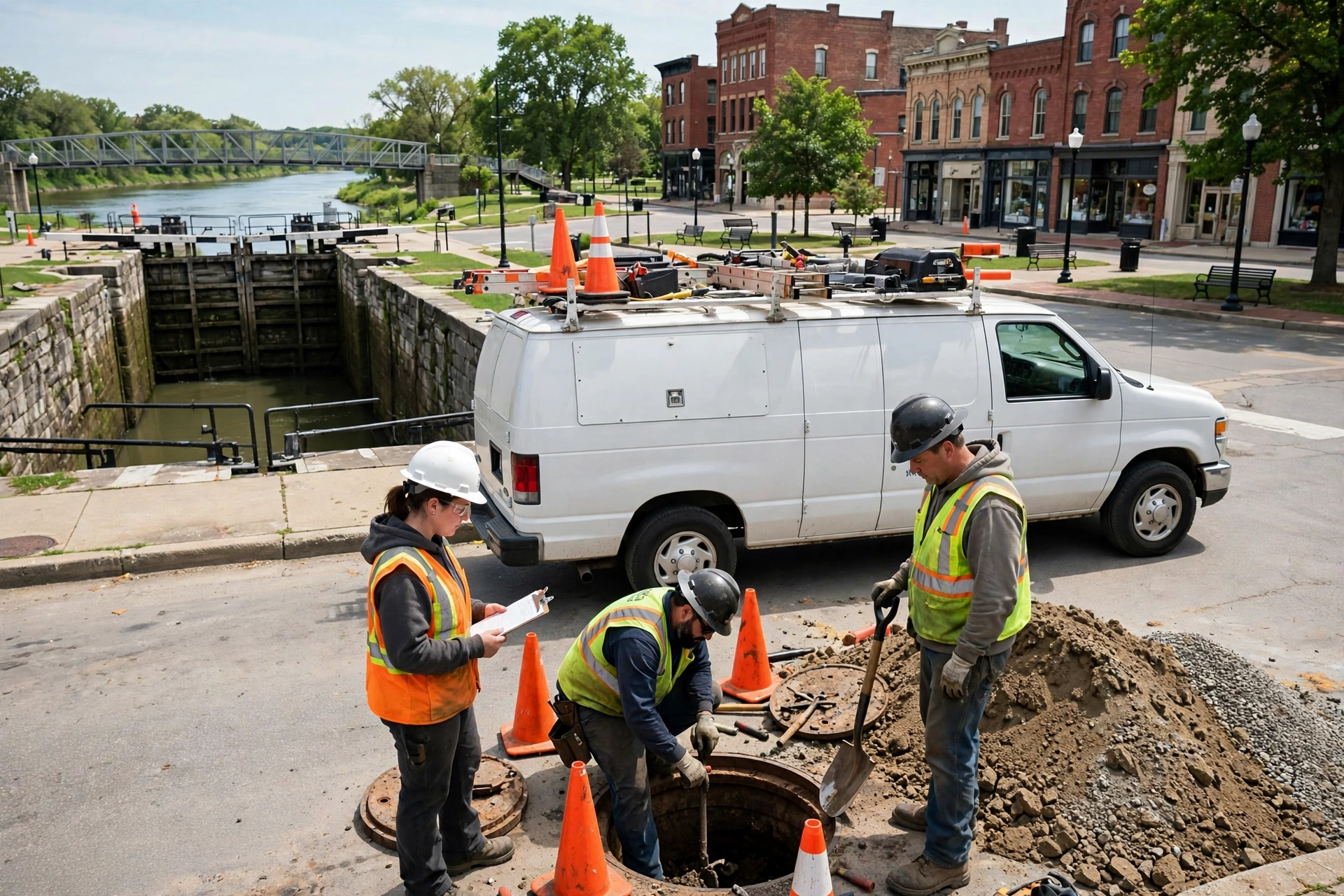
Downtown grew up around the canal economy in the 1800s, and the sewer lines under Main Street match the era: clay tile laterals from the late 1800s and early 1900s, some of the oldest still in service in the Miami Valley.
Lock 9 Park on the riverfront preserves a limestone lock of the Miami & Erie Canal, completed in 1837. The lock connected Piqua to Cincinnati by canal in 1837 and to Toledo by 1845, and it powered the mills and factories, flannel, flour, flax seed, that built the early city. It worked until the Great Flood of 1913 destroyed it. The three-acre park now excavates the buried lock as the centerpiece of Piqua's riverfront, with a performance pavilion, trails, and a direct connection between downtown and the Great Miami River.
Downtown Piqua grew up around that canal economy in the 1800s, and the sewer lines under Main Street match the era: clay tile laterals from the late 1800s and early 1900s, some of the oldest still in service in the Miami Valley. Fort Piqua Plaza, the restored 1891 hotel that now houses the public library, anchors a downtown where century-old pipe is the rule, not the exception. Our trenchless sewer repair methods fix these lines without opening the street or disturbing the historic storefronts.
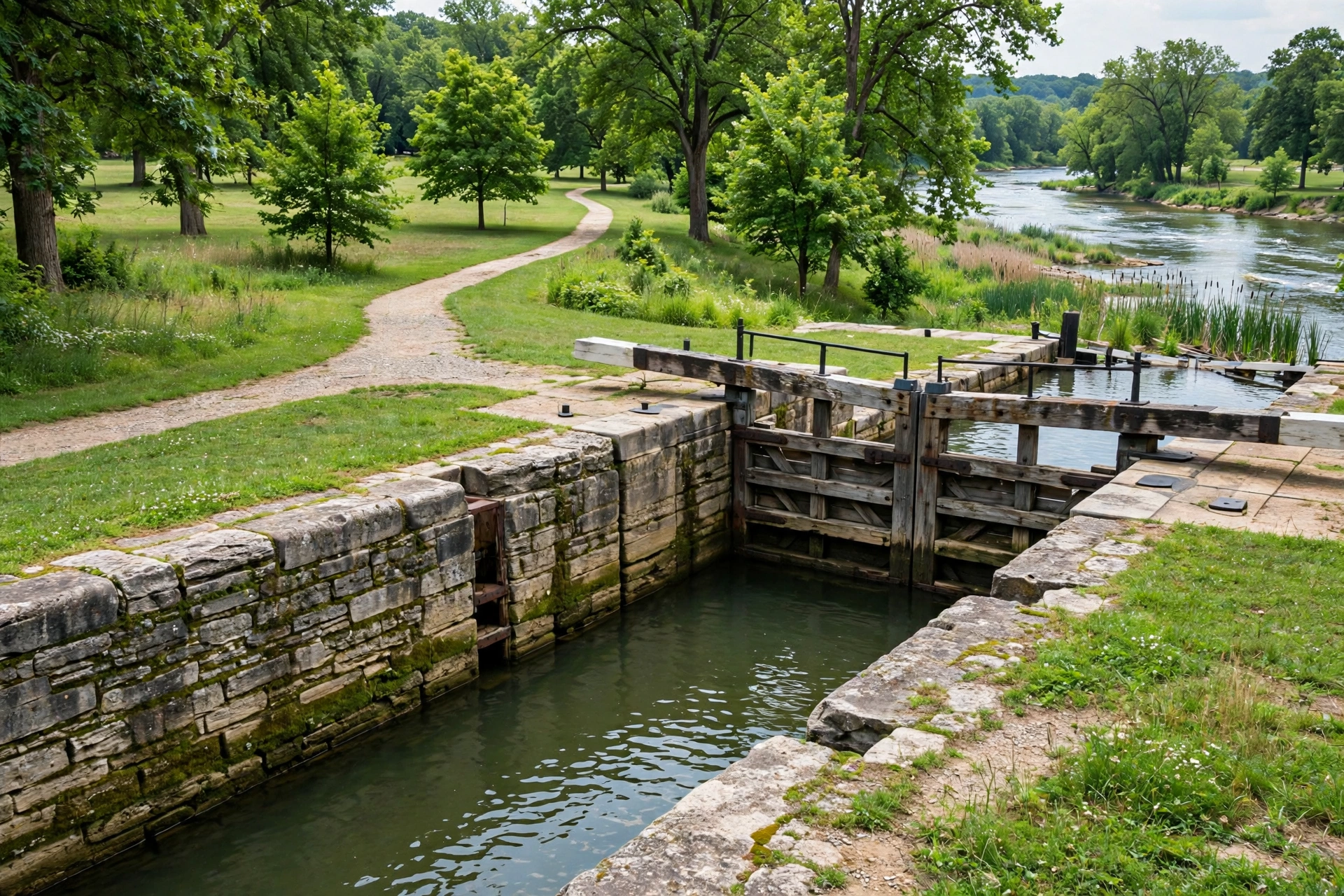
Lock 9 Park: the excavated 1837 canal lock anchors Piqua's riverfront.
Does the 1913 Flood Still Affect Piqua's Sewer Lines?
Yes, through the soil and the water table. The flood that destroyed Lock 9 reshaped everything along the Great Miami River, and its legacy still sits in Piqua's soil. The riverfront floodplain keeps the water table high across the low-lying parts of the city, which means groundwater is always pressing against the outside of older laterals, waiting for a cracked clay joint to let it in. Infiltration overloads the line, drags silt inside, and erodes the bedding around the pipe.
Flood events add a second problem: receding water leaves fine silt inside the pipe that hardens into concrete-like restrictions if it is not jetted out. After any high-water event near the river, a camera inspection is smart insurance. Up the river a few miles, Johnston Farm & Indian Agency keeps the canal era alive with its replica canal boat, the General Harrison, a reminder of just how long this river has been Piqua's working waterfront.
Piqua's water brings its own mineral load. The city's municipal water met all Ohio EPA standards for 2024, and like the rest of Miami County it starts as mineral-rich groundwater, with USGS regional assessments near 19 grains per gallon. That hardness leaves scale inside pipes, and in old clay lines the scale gives roots and silt something to cling to.
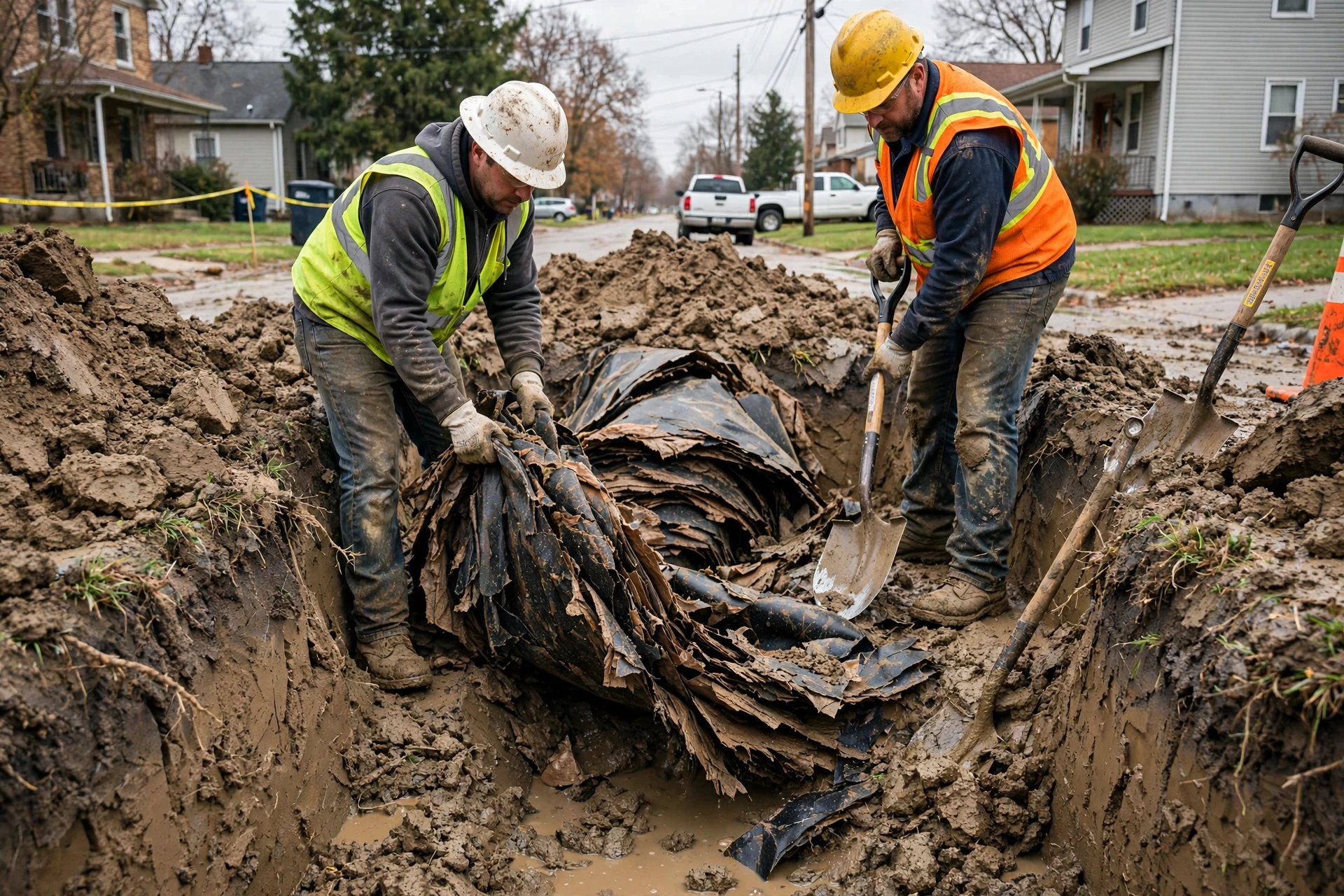
Collapsed Orangeburg pipe like this can't be lined, but pipe bursting replaces it in about a day.
Permits and Inspections: How Sewer Work Gets Done in Piqua
Piqua runs a tighter permit process than most Miami Valley cities, and it helps to know the steps before work starts. Piqua's water and sewer utilities are run by the City of Piqua, which maintains the public mains. Just outside the city limits, the Miami County Sanitary Engineer serves the outlying water and sewer districts. Sewer connection permits go through the City of Piqua Engineering Division, (937) 778-2044. Connections on private property are inspected by the Miami County plumbing inspector, (937) 440-5450, while connections at the public main are inspected by the city's Underground Utilities Department. Excavation in the right-of-way needs its own right-of-way permit, and any street or lane closure needs a closing permit.
We handle all of it as part of every job: the applications, the scheduling, the inspections, and the closeout. It is baked into the written plan, not an add-on, and it means the work is documented and approved at every step. Statewide, the Ohio EPA sets Ohio's wastewater rules and water quality standards. If your home has Orangeburg or collapsed clay that cannot be lined, pipe bursting replaces the full run, usually in about a day, with the permits already in hand.
What Is Under Downtown Piqua's Main Street?
1800s clay under 1800s storefronts. Downtown Piqua's renaissance runs on 1800s infrastructure. The clay tile laterals serving Main Street's historic commercial buildings have the full catalog of century-old problems: crumbled mortar joints, offset sections, root intrusion from the street trees, and in some cases partial collapses that have been narrowing the pipe for years. Trenchless lining seals these lines from the inside with a new structural pipe, and bursting replaces the ones that have lost their shape, both without closing Main Street.
We work all over Piqua: downtown around Main Street and Fort Piqua Plaza, the riverfront near Lock 9 Park, through the residential neighborhoods, and along the I-75 corridor. We also serve Troy to the south, Huber Heights beyond that, and Dayton. At Ohio Sewer Masters, the camera goes in first, and the recommendation follows the footage.
How Should Piqua Homeowners Maintain Their Sewer Lines Through the Seasons?
Watch the river in spring, the roots in fall, and the frost in winter. Piqua's floodplain makes high-water season the danger season for old lines, tree roots peak in autumn, and winter frost punishes shallow cleanouts. Seasonal habits that match the river keep canal-era pipe and modern subdivisions alike ahead of trouble.
- Spring: after any high-water event on the Great Miami River, get a camera check. Silt left inside a line hardens into concrete-like restrictions if it is not jetted out.
- Summer: dry months are the best window for planned trenchless work downtown, when the water table is low and Main Street disruptions stay minimal.
- Fall: roots grow most aggressively in fall. Mature street trees push into every damp clay joint, so autumn slow drains deserve a camera inspection.
- Winter: keep cleanouts marked and clear of snow, and address suspect lines before deep frost makes emergency digging slower.