Miamisburg, Ohio
How Does the Mound's Bluff Explain Miamisburg's Sewer Problems?
It explains the ground. The Miamisburg Mound stands about 65 requirementt tall on a bluff above the Great Miami River, and the contrast between that high, dry elevation and the low, wet floodplain below defines the city's pipe problems: hillside homes near the Mound fighting soil movement on the slopes, and riverfront homes fighting groundwater infiltration on the flat.
The Miamisburg Mound is a conical burial mound built by the Adena culture roughly 2,000 years ago, standing about 65 requirementt tall on a bluff above the Great Miami River. It is the largest conical burial mound in Ohio, with 116 steps climbing to a summit that overlooks the whole river valley. Dayton industrialist Charles Kettering bought the mound and turned it into a park in 1920, and it has anchored the city's identity ever since.
The bluff the Adena chose tells you everything about the ground here: high, dry elevation above the river on one side, and a low, wet floodplain on the other. Downtown Miamisburg grew on the riverfront below, and its sewer lines live in that wet ground. The contrast defines the city's pipe problems: hillside homes near the Mound fighting soil movement on the slopes, and riverfront homes fighting groundwater infiltration on the flat. Our trenchless sewer repair options handle both, lining for the joints, bursting for the offsets.

The Miamisburg Mound: the Adena built it 2,000 years ago on the bluff above the Great Miami River.
Why Does Riverfront Downtown Struggle With Old Sewer Lines?
Wet soil. Downtown Miamisburg sits right on the Great Miami River, and its historic Main Street buildings run on clay tile laterals, some of them a century old. The riverfront's wet soil is the accelerant: the floodplain keeps the water table high, so groundwater infiltrates cracked joints constantly, eroding the soil bedding and letting sections settle. High-water events leave fine silt inside the pipe that hardens into restrictions if it is not jetted out.
For riverfront homes, the single highest-value protection is a backwater valve on the lateral: a one-way gate that lets sewage out but slams shut when flow tries to come back in during high water. We install them, and in the low-lying blocks near Riverfront Park, it is the simplest insurance a homeowner can buy. The camera inspection comes first to confirm the line's condition; the valve goes on a sound line, and a failing line gets fixed first.
Miamisburg's water carries the same mineral load as the rest of the region. The city draws on Miami Valley groundwater that runs hard, with USGS regional assessments near 19 grains per gallon. Dissolved calcium and magnesium lay down scale inside pipes over time, and on the riverfront's already stressed lines, that lost capacity matters: a scaled-down pipe backs up sooner when high water pushes in.
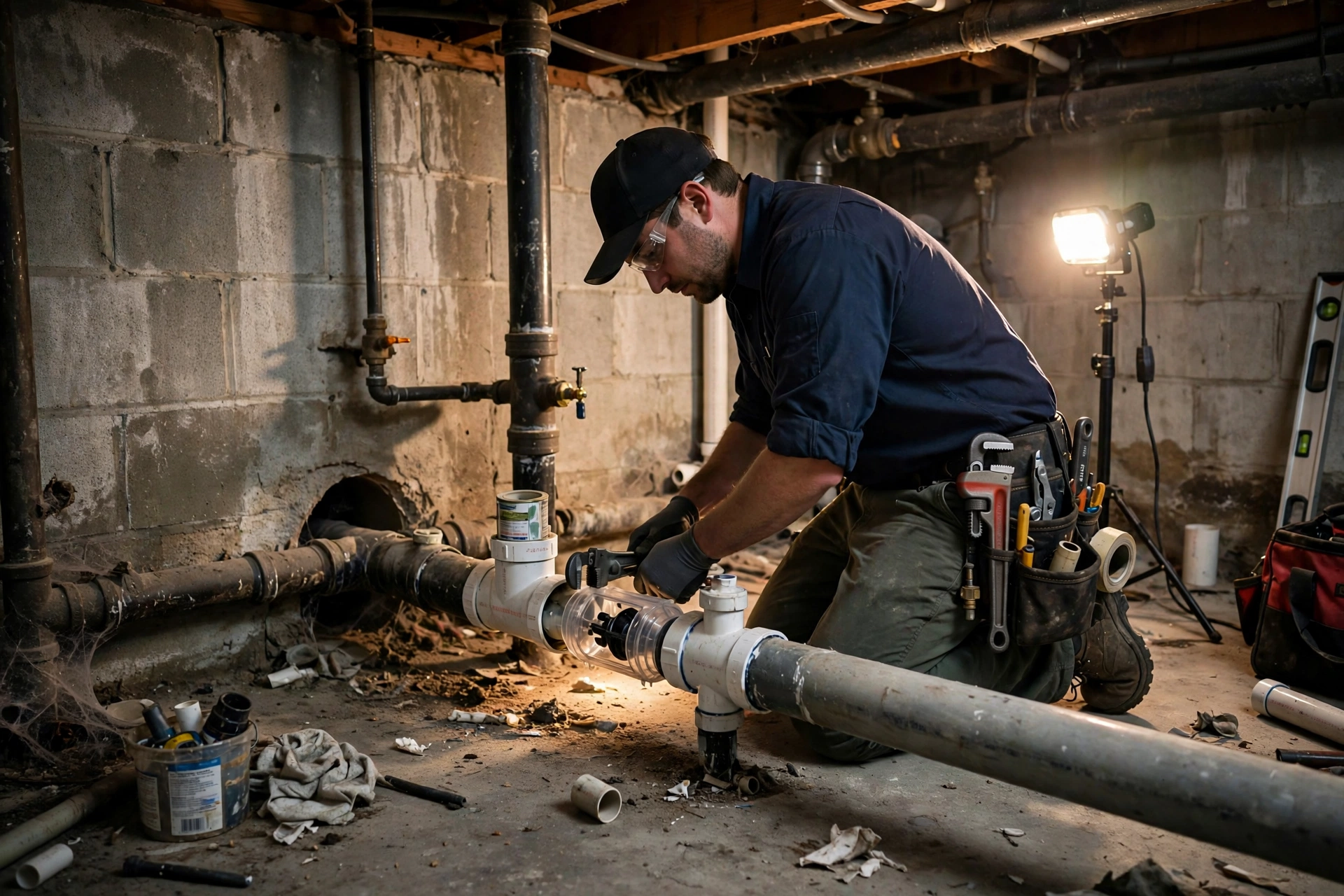
A backwater valve on the lateral is the best defense for riverfront homes during high water.
Who Owns the Sewer Lateral in Miamisburg?
You do. The City of Miamisburg provides water and sewer service to its residents and maintains the public sewer mains. Your lateral, from the house to the public main, is yours to maintain and repair, and it is where nearly every backup we see in Miamisburg actually starts. The test never changes: if only your home is backing up, suspect the lateral and call us at (614) 350-5706. If several homes on your street are affected at once, call the city, it may be a main-line issue.
Lateral repair and replacement in Miamisburg typically requires a city permit with inspection before backfill, so check with the city's building department before work begins. We pull the permits and coordinate the inspections as part of every job, so the work is documented and closed out properly. Statewide, the Ohio EPA sets Ohio's wastewater rules and water quality standards.
Do Hillside Homes Near the Mound Have Worse Sewer Problems?
They have different ones. The neighborhoods around Mound Avenue and the river bluff sit on ground that moves. Soil on slopes shifts more than flat ground over the years, and rigid clay or cast iron pipe cannot flex with it: joints separate, sections offset, and the camera shows the damage as sharp steps where pipe segments no longer line up. Lining can bridge minor offsets, but significant shearing usually calls for pipe bursting, which replaces the line with flexible HDPE that tolerates ground movement far better than clay ever did.
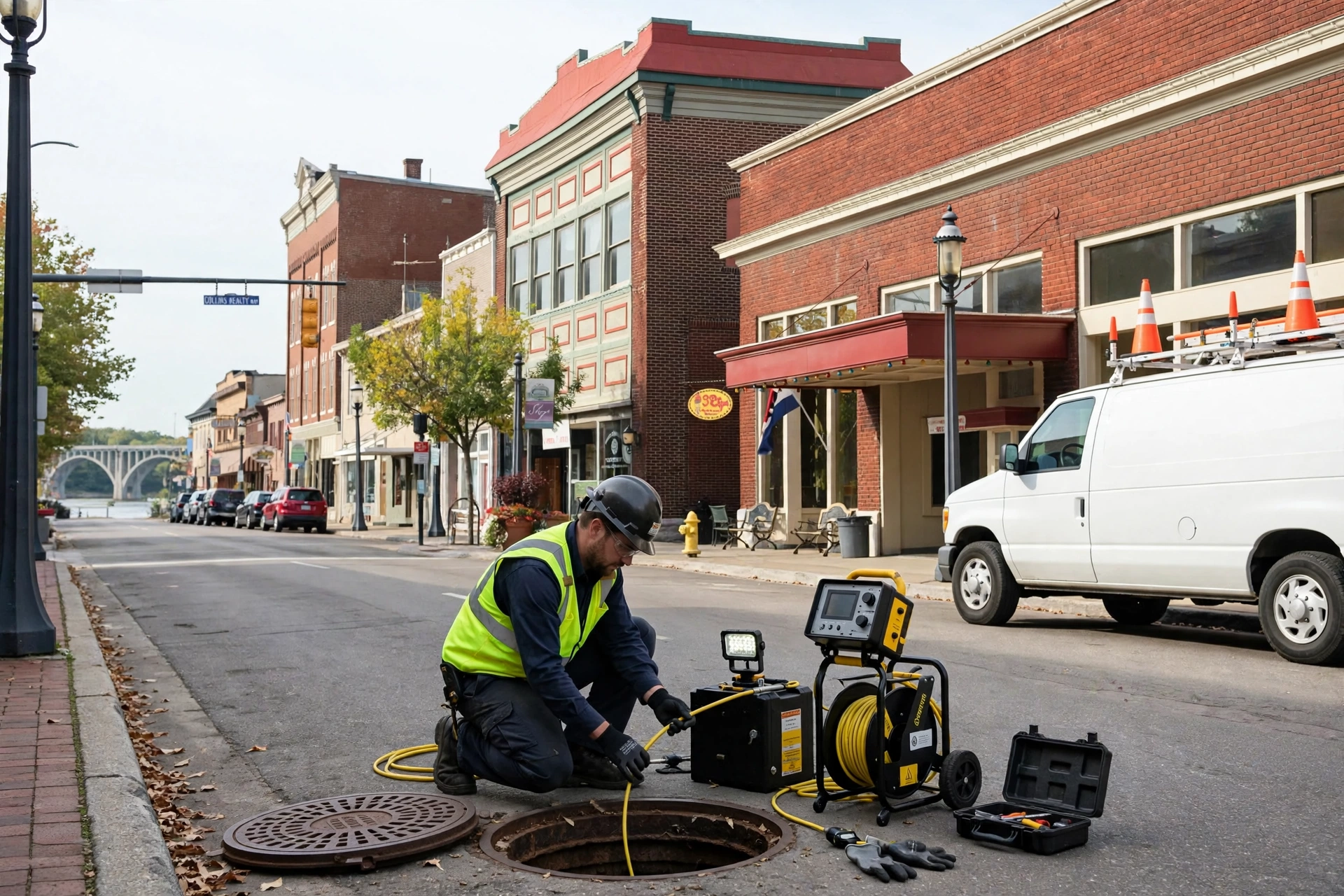
We work all over Miamisburg: downtown along Main Street and the riverfront, the Mound-area neighborhoods, out toward the I-75 and I-675 corridors, and near the Austin Landing area. We also serve Dayton to the north, Centerville to the northeast, and Kettering beyond. At Ohio Sewer Masters, the camera goes in first, and the recommendation follows the footage.
How Should Miamisburg Homeowners Maintain Their Sewer Lines Through the Seasons?
Think bluff and river. Miamisburg's hillside homes fight soil movement while riverfront homes fight high water, and both problems are seasonal: spring rains swell the slopes and lift the river, roots peak in fall, and winter frost punishes shallow lines. A seasonal routine that covers both sides of the bluff keeps every lateral ahead of trouble.
- Spring: high water season. Riverfront homeowners should test backwater valves and watch for infiltration backups after storms; hillside homes should watch for new offsets as wet soil shifts.
- Summer: the best window for planned repairs, when the river is low and dry ground keeps work clean. Ideal time for backwater valve installs on sound lines.
- Fall: roots grow most aggressively in fall. Mature trees on the bluff and in the older neighborhoods push into every damp joint, so autumn slow drains get a camera check.
- Winter: keep cleanouts marked and accessible, and fix suspect lines before deep frost makes emergency work on a hillside or riverfront lot harder.