When a heavy storm overwhelms the city sewer, sewage can flow backward up your lateral and into your basement. A backwater valve is a one-way door: it lets your sewage out and slams shut against anything coming back in.
A backwater valve, also called a backflow valve, is a one-way gate installed on your main sewer line. Under normal conditions it stays open and your sewage flows out to the city main without any interference. When flow reverses, the valve closes and blocks it.
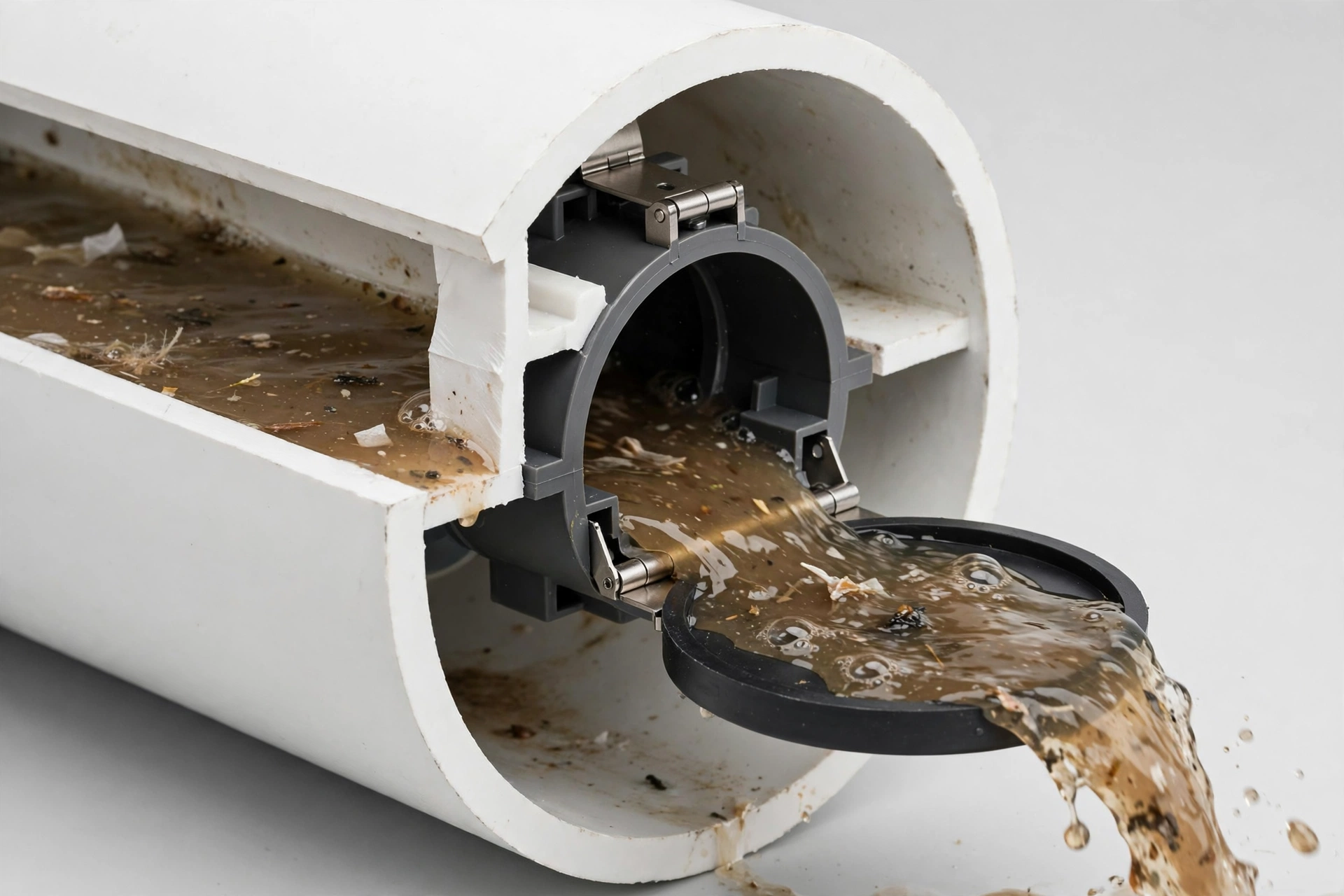
The mechanism is simple, which is why it is reliable. Inside the valve body sits a hinged flapper, a round gate that hangs open in the normal flow direction. Your wastewater pushes past it every day without resistance. But when the city sewer surcharges and sewage starts pushing backward toward your house, that reverse pressure swings the flapper shut against its seat. The harder the backflow pushes, the tighter the seal gets. Once the city main drains down and normal flow resumes, the flapper swings open again on its own.
There is no motor, no sensor, no electricity. It is pure physics, and that matters in Ohio, because the events that cause backups, severe storms, power outages, are exactly the events when you cannot count on anything electric working. A flapper valve protects you whether the power is on or not.
The hinged flapper hangs open for normal flow and slams shut the moment flow reverses. No power, no sensors, just physics.
What Types of Backwater Valves Are There?
There are two main types of backwater valves, and they differ in what the valve does when nobody is using the plumbing. Both protect against reverse flow, but the right choice depends on how often your street surcharges and how much water your household discharges at once.
Type
How it works
Best for
Normally-open flapper valve
The flapper hangs open at rest and your wastewater flows through freely. Reverse pressure from a surcharging sewer swings it shut against its seat.
Most homes. Nothing restricts normal drainage, and the valve only closes when backflow threatens.
Normally-closed valve
The gate stays closed at rest and opens only when wastewater pushes through from the house side. It returns to the closed position when flow stops.
Streets that surcharge often. The default position is sealed, so protection does not depend on the valve closing in time.
The normally-open flapper is the standard recommendation for most Ohio homes because it never interferes with normal drainage. We recommend the normally-closed style only when your street has a known history of frequent surcharge events, since it adds slight resistance to everyday drainage.
Why Do Ohio Homes Need Backwater Valves?
Most sewer backups in Ohio are not caused by anything wrong with the homeowner's pipe. They are caused by the city system getting overwhelmed and pushing sewage backward. Three Ohio realities make this common:
Combined sewer systems. Many older neighborhoods in Cleveland, Cincinnati, Columbus, Akron, Toledo, and Dayton were built with combined sewers, one pipe carrying both sewage and stormwater. In a heavy downpour, stormwater fills that pipe fast. When it fills completely, it surcharges: the mixture of stormwater and sewage has nowhere to go but backward, up the laterals, toward the lowest opening it can find. That opening is usually a basement floor drain or a basement toilet. Federal rules drive cities to manage this: the EPA's NPDES program includes the national policy on controlling combined sewer overflows, which is why Ohio cities with combined systems have been working to reduce surcharge events.
Basements below street level. Ohio is a basement state. Your basement floor sits several requirementt below the street, which means it sits below the city sewer main too. Gravity works against you: when the main surcharges, the pressure pushes sewage to the lowest connected point first. Homes on flat or low-lying streets, and any home whose basement fixtures sit below the nearest upstream manhole, are first in line.
Heavy rain events are getting worse. Ohio's spring and summer storms regularly dump several inches in a few hours. Those cloudburst events are exactly what surcharge a combined system. We see the pattern every year: one big storm, a wave of basement backup calls the next morning, and homeowners who never had a problem before suddenly have sewage in the basement.
A backwater valve does not fix the city system. It protects your house from it. Installation is typically a modest job, depending on placement, while a backup event can cause major damage that a standard homeowners policy often does not cover. If you have a basement, a combined sewer, and no valve, you are gambling every storm season.
Where Does the Valve Get Installed?
The valve goes on your main lateral, the single pipe that carries all of your home's sewage out to the street. It must sit between your house and the city main, and every fixture in the house must drain through it. There are two common placements:
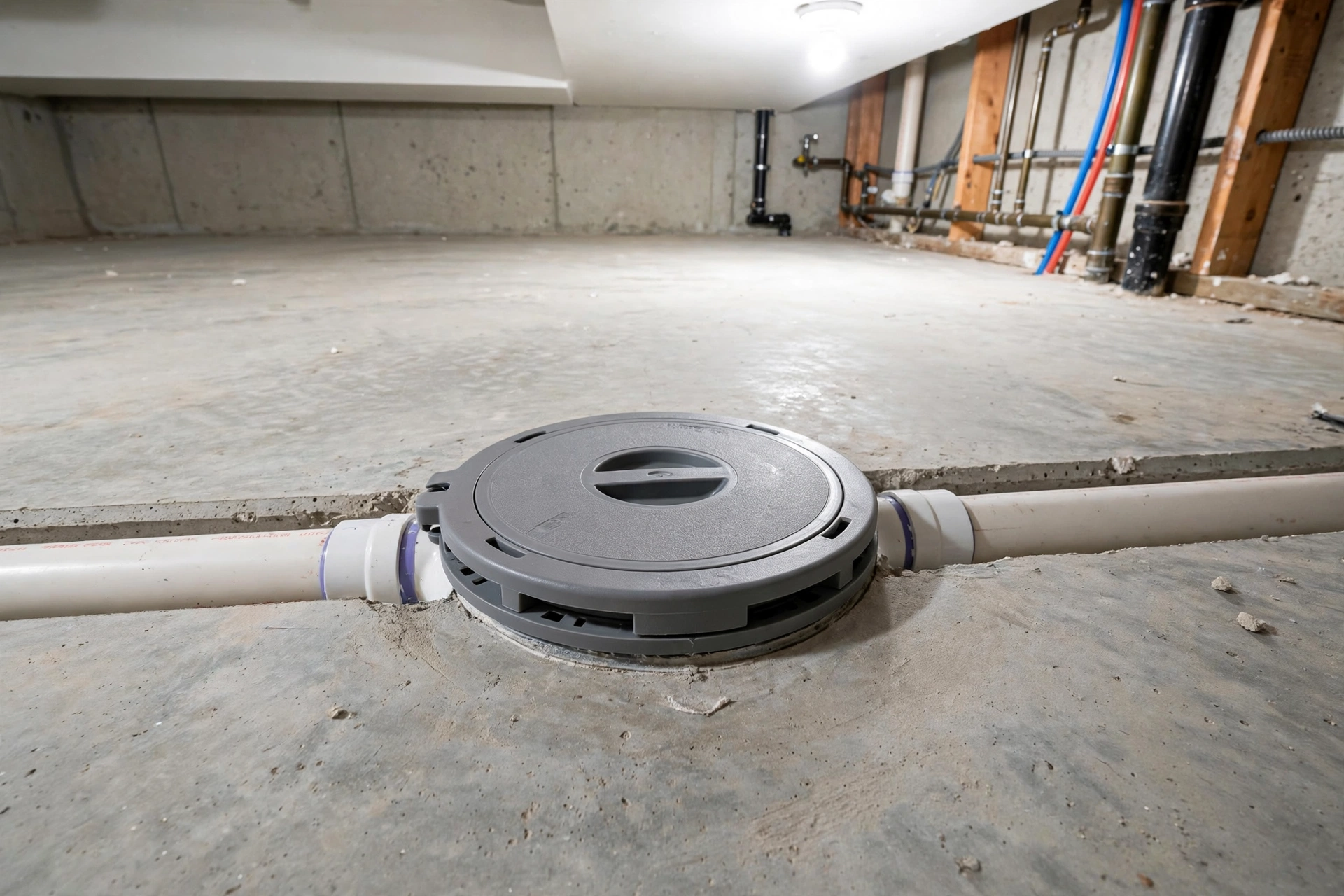
Inside, on the building drain. In a basement, we cut the valve into the main drain line where it runs along the basement wall or floor before exiting the foundation. This is the most common retrofit. The valve sits under an access cover in the floor or in an accessible box, so you can reach the flapper for maintenance.
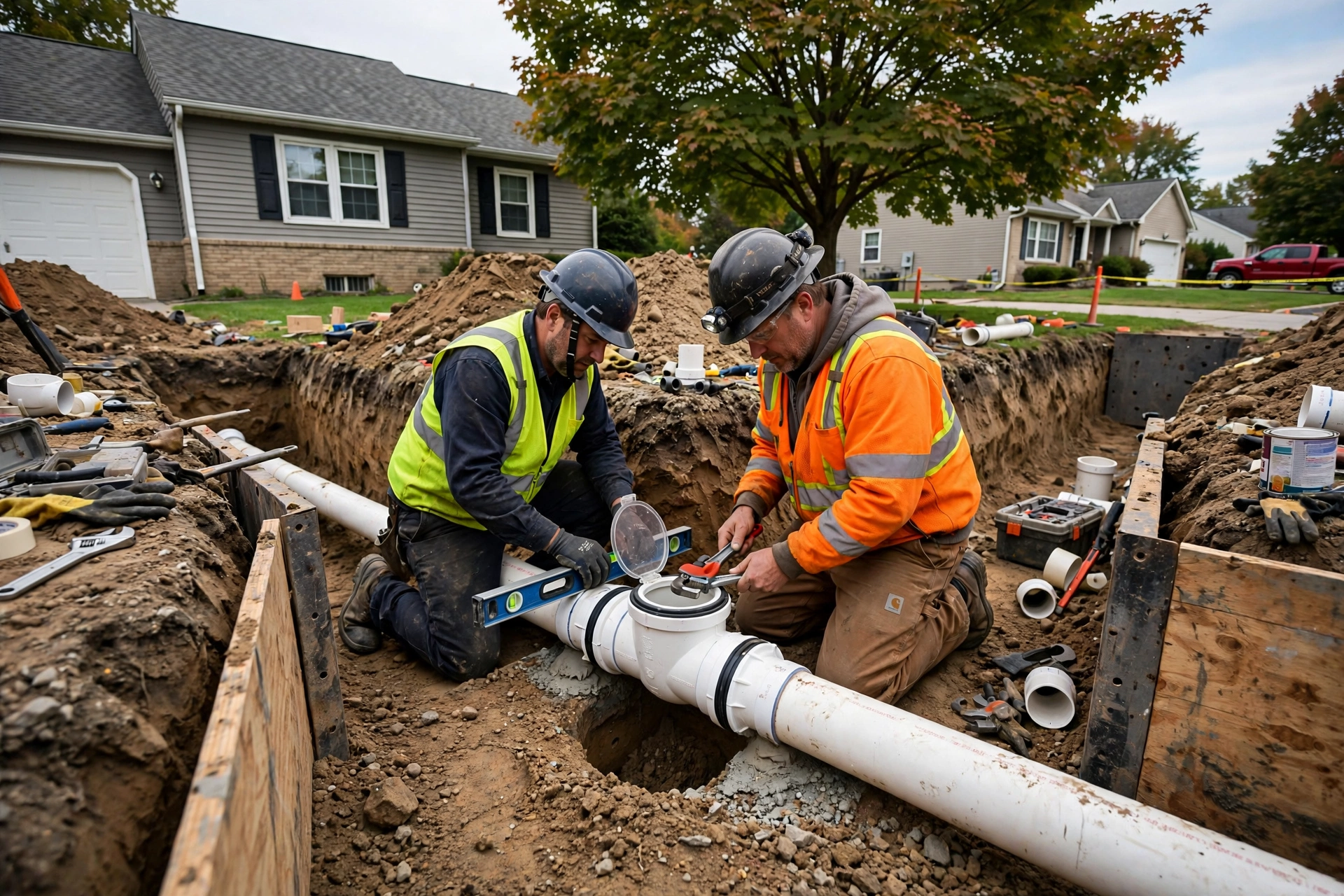
Outside, on the lateral. When the indoor line is not accessible or the layout does not work, we excavate a small section of the yard lateral and install the valve underground in a valve box with a surface cover. Same valve, same protection, just accessed from the yard instead of the basement.
One placement rule never changes: the valve must be accessible for maintenance. A valve buried under a finished basement floor with no access cover, or lost in a yard with no marker, cannot be checked, and an unchecked valve is a gamble. We install every valve with a proper access point and show you where it is and how to open it before we leave.
An outdoor installation: the valve goes on the lateral in a valve box, with a surface cover for maintenance access.
What Does the Installation Involve?
How do you know a valve will work for my home?
We camera-inspect your line and check your home's elevation relative to the street. We confirm a valve will actually protect you before recommending one.
Where exactly does the valve go?
We pick the install point, indoor or outdoor, where every fixture drains through the valve and maintenance access is practical.
How is the valve installed?
We cut in the valve body, set it level so the flapper seats correctly, and connect both sides with proper fittings and slope.
How do you test the valve?
We run water through every fixture to confirm normal flow, then test the flapper closure so you can see the one-way action working.
Who handles the permit?
We handle the plumbing permit and schedule the municipal inspection, and we walk you through the maintenance schedule before we leave.
Most installations finish in a single day. Indoor installs involve cutting a section of the basement floor along the drain line; we patch the concrete back and leave the access cover flush. Outdoor installs mean one excavated section of yard, which we backfill and restore.
What Maintenance Does a Backwater Valve Need?
A backwater valve is not install-and-forget. The flapper is a moving part sitting in a sewage stream, and it needs attention. Here is the schedule:
Check it at least once a year. Pop the access cover, look at the flapper, and make sure it swings freely and seats fully. Clear out any debris, wipes, grease, or sediment holding it open. This takes ten minutes.
Check it after every backup event. If the valve closed during a storm, debris can get trapped in the seat and keep it from sealing next time. Inspect and clean it once the event passes.
Keep the access clear. Do not build over the access cover, pile storage on it, or bury the outdoor valve box under landscaping. If you cannot reach the valve quickly, you cannot maintain it.
Replace worn parts. Flapper seals wear out over years of service. A seal that no longer seats is a valve that no longer seals. We check seal condition during maintenance visits and replace the flapper assembly when it is worn.
The uncomfortable truth: most failed backwater valves we see failed from neglect, not from defects. The homeowner had protection installed and never opened the cover again. Put a yearly reminder on your calendar, ideally before storm season, and the valve will do its job when it counts.
Do I Need a Permit for a Backwater Valve in Ohio?
In most Ohio municipalities, yes. Installing a valve means cutting into the building drain or the lateral, which is plumbing work under the local code, and most cities and counties require a permit plus an inspection of the finished install. Ohio EPA is the state agency that oversees Ohio's wastewater discharge permits, while your city handles the local plumbing permit for the valve itself. Some Ohio cities go further: a few require backwater valves by code on new construction or major remodels in areas served by combined sewers, and some offer rebate or assistance programs for installing one in a flood-prone home.
We pull the permit and schedule the inspection as part of every job. It is also worth a call to your city or county: ask whether your street is on a combined system and whether any valve incentive program exists. The answer tells you how much risk you are carrying and whether the city will help with fixing it.
What Does Backwater Valve Installation Involve in Ohio?
We do not plan plans sight unseen, because the install location drives the labor. These are the factors that set your plan:
Indoor vs. outdoor install. Cutting into a basement floor line is usually less labor than excavating the yard lateral, but it depends on your layout and how accessible the line is.
Access conditions. A clear basement with an exposed drain line is the simplest case. Finished basements, lines buried deep, or concrete that needs significant cutting add time.
Valve size. Most homes use a 4-inch valve. Larger homes or lines with unusual configurations may need a different size, which changes the material work.
Permit and inspection requirements. These vary by municipality and are part of the written plan, not a surprise add-on.
Condition of the existing line. If the camera shows the line around the install point is failing, it makes no sense to install a valve on a pipe that needs replacement. We will tell you if that is the case.
For the full picture on sewer work process across Ohio, see our Ohio sewer repair guide. And the only number that matters is yours: call (614) 350-5706 for an assessment and a written, fixed plan.
What Do Homeowners Ask About Backwater Valves?
No. A backwater valve stops one thing: sewage backing up from the city sewer into your basement. It does nothing for groundwater seeping through foundation cracks, a failed sump pump, or water coming in around windows. If you flood from multiple directions, you need multiple fixes. We will tell you honestly which kind of flooding you have.
Only minimally. When the valve slams shut during a surcharge event, your sewage has nowhere to go, so running showers, laundry, or dishwashers can back your own wastewater up into the lowest fixtures. During a major storm, keep water use light until the rain passes and the valve reopens.
At least once a year, and right after any backup event. Pop the access cover, check that the flapper swings freely, and clear out any debris, wipes, or grease holding it open. A valve with a stuck flapper protects nothing. We offer an annual check as part of our maintenance visits.
In most Ohio cities and counties, yes. Valve installation touches the building drain or lateral, which falls under the plumbing permit and inspection process. We pull the permit and schedule the inspection as part of the job, so you do not deal with the paperwork.
Yes. Most of our installs are retrofits in existing homes, not new construction. We can place the valve inside the basement on the building drain or outside in the yard on the lateral, depending on your layout and where the line is accessible. Either way, it gets an accessible cover for maintenance.
Which Related Services Pair With a Backwater Valve?
A backwater valve protects against backups from the city main, but your own line needs to be sound for the valve to help. Our emergency sewer backup service handles the cleanup and diagnosis when a backup has already happened, and a sewer camera inspection shows whether your lateral itself is contributing to the problem. If the line around the valve location is failing, a new sewer line installation may be the right move before the valve goes in. We assess the whole picture, not just the valve.
One Storm Away From a Basement Full of Sewage?
If your home sits on a combined sewer with basement fixtures below street level, a valve is smart insurance. Call for an assessment.