Sewer Odor Detection in Ohio
That rotten-egg smell has a source, and masking it with air freshener never works. We diagnose mystery sewer odors systematically, find exactly where the gas is escaping, and fix it at the root.
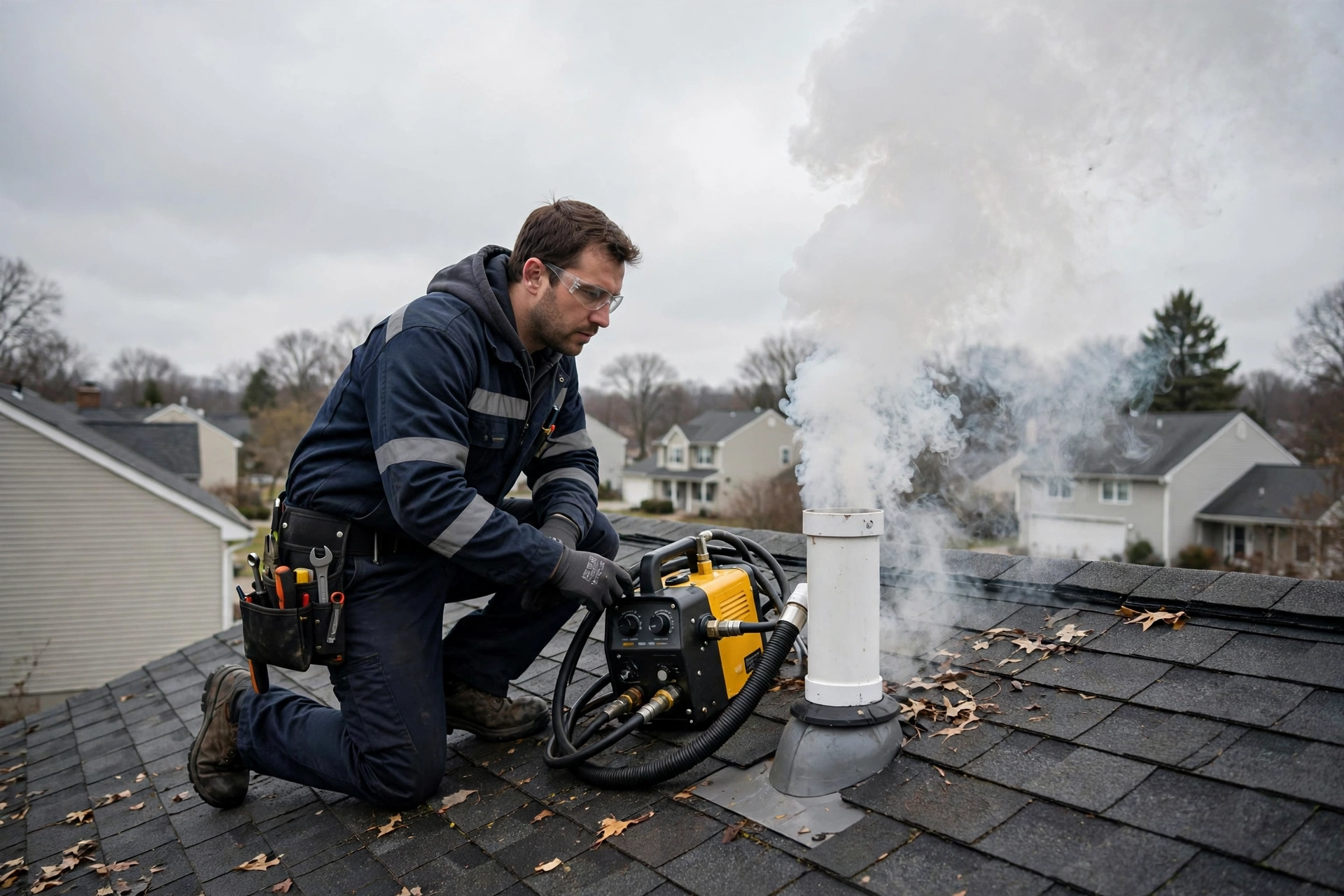
That rotten-egg smell has a source, and masking it with air freshener never works. We diagnose mystery sewer odors systematically, find exactly where the gas is escaping, and fix it at the root.
Last updated: October 13, 2026
Sewer odor detection is the systematic process of finding where sewer gas is escaping a plumbing system. Your plumbing is designed as a sealed circuit, with water traps and vent stacks keeping gas in the pipes. A smell means the seal is broken somewhere. These are the breaks we find most often:
One more source that only applies to septic homes: if your house uses a septic system instead of city sewer, the U.S. EPA's septic system guidance notes that sewage odors around the tank or drainfield are classic signs of a failing system, not an indoor plumbing problem.
Less common but real: a blocked roof vent (bird nests, ice) that pressurizes the system, and dried-out traps in floor drains tied to rarely used basement bathrooms. The point is that every one of these has a different fix, and guessing wastes money. Diagnosis comes first.
Where you smell it tells us where to look. Homeowners sometimes apologize for giving us too much detail about the smell. There is no such thing. This is how we read locations:
When you call, tell us where the smell is strongest, when it started, and what makes it better or worse. That thirty-second description often tells us which test to run first.
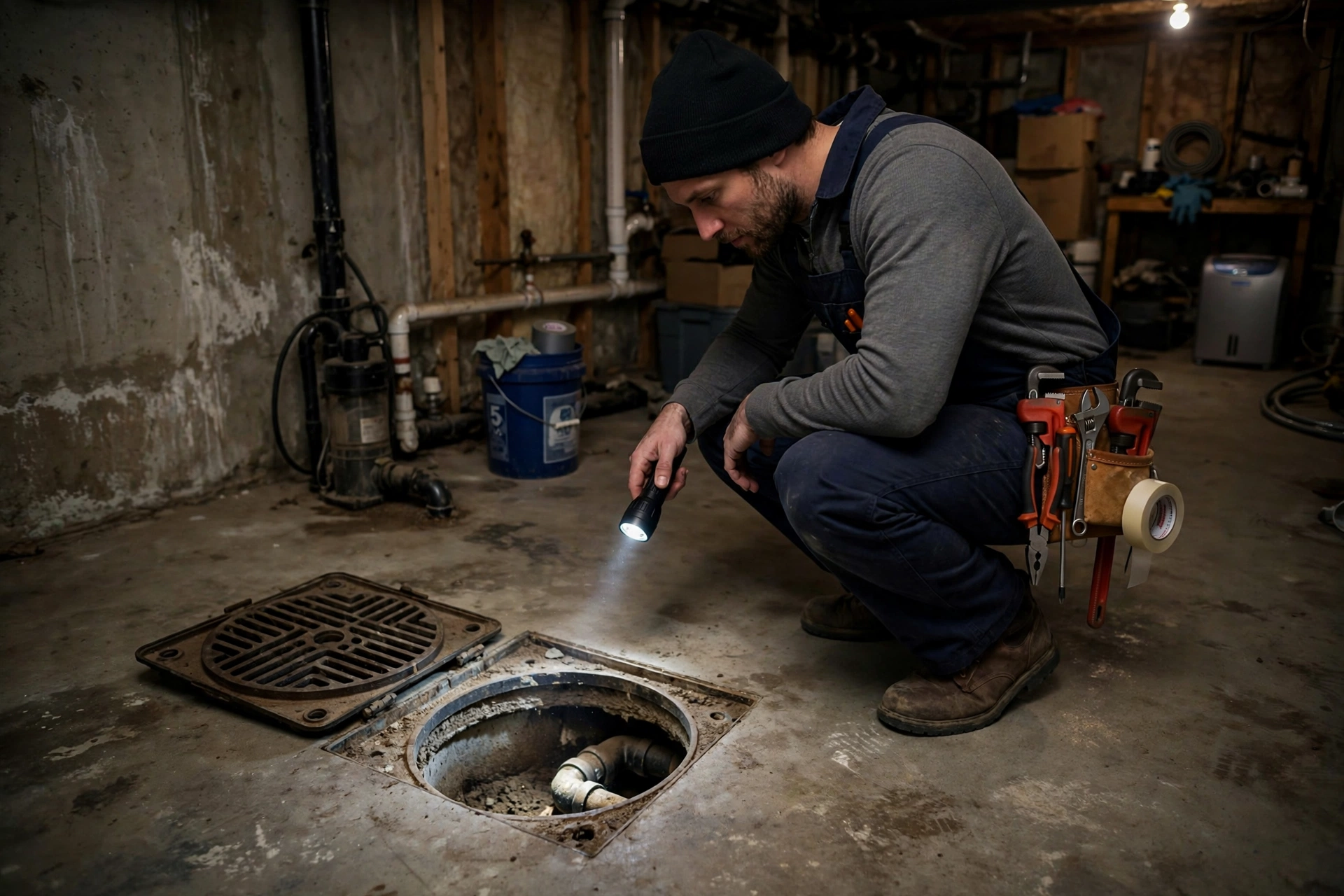
First stop on many odor calls: the basement floor drain. A dried-out trap is the most common cause and the simplest fix.
Match where you smell it to the likely cause, then run the check listed. This is the same reading we do when you call, and it tells you whether the fix is a five-minute job or a diagnostic visit.
| Where you smell it | Likely cause | What to check |
|---|---|---|
| Basement floor drain | Dry trap or cracked building drain | Pour water into the drain first. If the smell stays, the line itself is suspect. |
| Bathroom | Failed wax ring at the toilet or a dry trap in an unused shower | Sniff around the toilet base for gas leaking at the floor, and run water in unused drains. |
| Yard | Cracked lateral or broken cleanout cap venting gas through the soil | Check that cleanout caps are on tight, then schedule a camera inspection of the lateral. |
| Kitchen | Dry trap in a rarely used drain or buildup in the garbage disposal splash guard | Run water in unused drains and scrub the disposal splash guard, where food film traps gas. |
If none of these fit, or the smell moves around, the source is likely inside the walls or underground. That is where our smoke testing takes over.
We ask where, when, and how strong. Location, timing, and triggers narrow the suspect list before we touch a tool.
Traps, cleanout caps, toilet bases, and visible vent piping. The simple causes get ruled out first, in minutes.
Non-toxic smoke is pushed through the system. Wherever smoke escapes, gas escapes. It finds cracks no camera can reach.
We run a camera through the vents and the sewer line to see the exact defect the smoke pointed to, cracked stack, broken joint, or split lateral.
You get the diagnosis in plain language with photos or video, plus a written fixed plan for the repair. No mystery, no pressure.
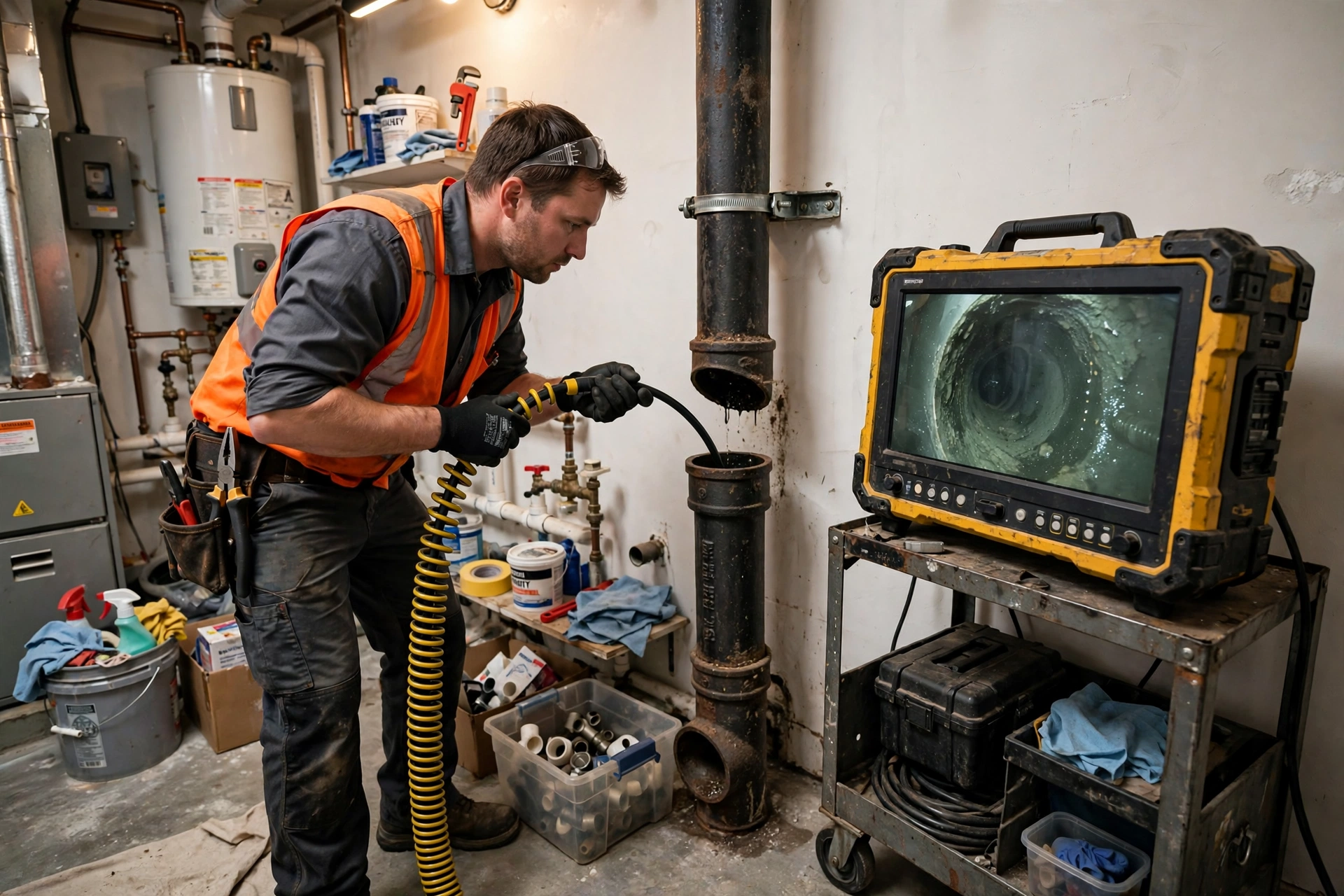
Camera inspection of the vent stack: the step that shows us exactly what the smoke test pointed to.
Smoke testing is the single best tool for finding odor sources, and it is simpler than it sounds. We block the roof vent, push a dense, non-toxic vapor through your plumbing system with a blower, and watch where it comes out. The smoke follows the exact path sewer gas follows. If it curls out of a wall, there is a cracked vent behind that wall. If it rises from a patch of lawn, the lateral is broken underneath. If it seeps around a toilet base, the wax ring has failed.
The smoke is a theatrical-type vapor, the same family of product used in stage productions. It does not stain, does not leave residue, and dissipates within minutes. The main practical note: it can set off sensitive smoke alarms, so we ask about alarm locations before we start. Our dedicated sewer smoke testing page covers the process in more detail, including how we use it on commercial buildings and multi-unit properties.
Why not just use a camera for everything? Cameras see inside pipes. Smoke finds leaks through walls, floors, and soil, places a camera cannot go. The two tools together cover the whole system: smoke to find the leak, camera to see the defect.
The fix matches the defect, which is why the diagnosis matters. Dry traps get water and a reminder to keep them filled. Broken cleanout caps get replaced in minutes. Failed wax rings mean pulling and resetting the toilet with a new seal. Cracked vent stacks get the bad section cut out and replaced, sometimes through a wall or ceiling, which we patch back.
Cracked underground lines are the bigger jobs, and they get the full treatment: a sewer camera inspection maps the damage, and we repair it with spot repair, pipe lining, or replacement depending on what the camera shows. The odor diagnosis requirement is not wasted when the answer is a broken line, because the diagnosis already did half the repair job: we know exactly where the problem is and how bad it is. For septic homes, the permanent answer may be leaving the system behind: our septic to sewer conversion page covers that process, and the EPA's homeowner guidance on septic systems explains what proper system care looks like in the meantime.
Diagnosis is scoped by the work involved, not by the smell. These are the factors that set the plan:
Our Ohio sewer repair guide covers the repair side of the process picture. For the diagnosis itself, call (614) 350-5706, describe the smell, and we will tell you what the visit involves and what it involves before we roll a truck.
It can be. Sewer gas contains methane and hydrogen sulfide. At low levels it is mostly unpleasant, but at high concentrations it is a real health hazard, and methane is flammable. A faint occasional whiff from a dry floor drain is one thing. A strong, persistent smell means gas is escaping somewhere it should not, and that is worth a prompt diagnosis.
You can rule out the easy ones. Pour water into every floor drain to refill dry traps, check that cleanout caps are on tight, and sniff around toilet bases, since a failed wax ring leaks odor at the floor. If the smell persists after those checks, the source is inside the piping, and that is where our diagnostic process takes over.
Air pressure and wind change how gas moves through your plumbing. A gust over the roof vent can push gas back down the stack, a trap can dry out between uses, and a crack can vent only when the wind hits the right angle. Intermittent smells are still real defects. They just need the right test at the right time to catch, which is why we use smoke testing.
No. The smoke is a non-toxic, theatrical-type vapor that dissipates quickly and leaves no residue or staining. The one thing it can do is set off sensitive smoke alarms, so we ask you to warn us about alarm locations and we plan around them. Pets are fine, but we suggest keeping them in another room during the test.
Very likely, yes. A cracked lateral or a broken cleanout cap vents sewer gas straight into the yard, and you smell it most on still, humid days. A camera inspection of the lateral usually finds the break fast. Yard odor without any indoor smell almost always points to the underground line, not the indoor plumbing.
Odor detection is the start of the story, not the end. Our sewer smoke testing page goes deeper on the test itself, and a sewer camera inspection maps whatever the smoke finds in the underground line. When the diagnosis points to a cracked or broken pipe, our trenchless repair options fix it without tearing up your property. One call starts the whole chain: diagnosis, proof, and repair.
Describe the smell, where it is, and when it shows up. We will tell you what the diagnosis involves before we come out.
Call (614) 350-5706