Sump Pump Installation & Repair in Ohio
Basements are standard in Ohio, and so is the groundwater trying to get into them. A working sump pump is the difference between a dry basement and a soggy one every spring.
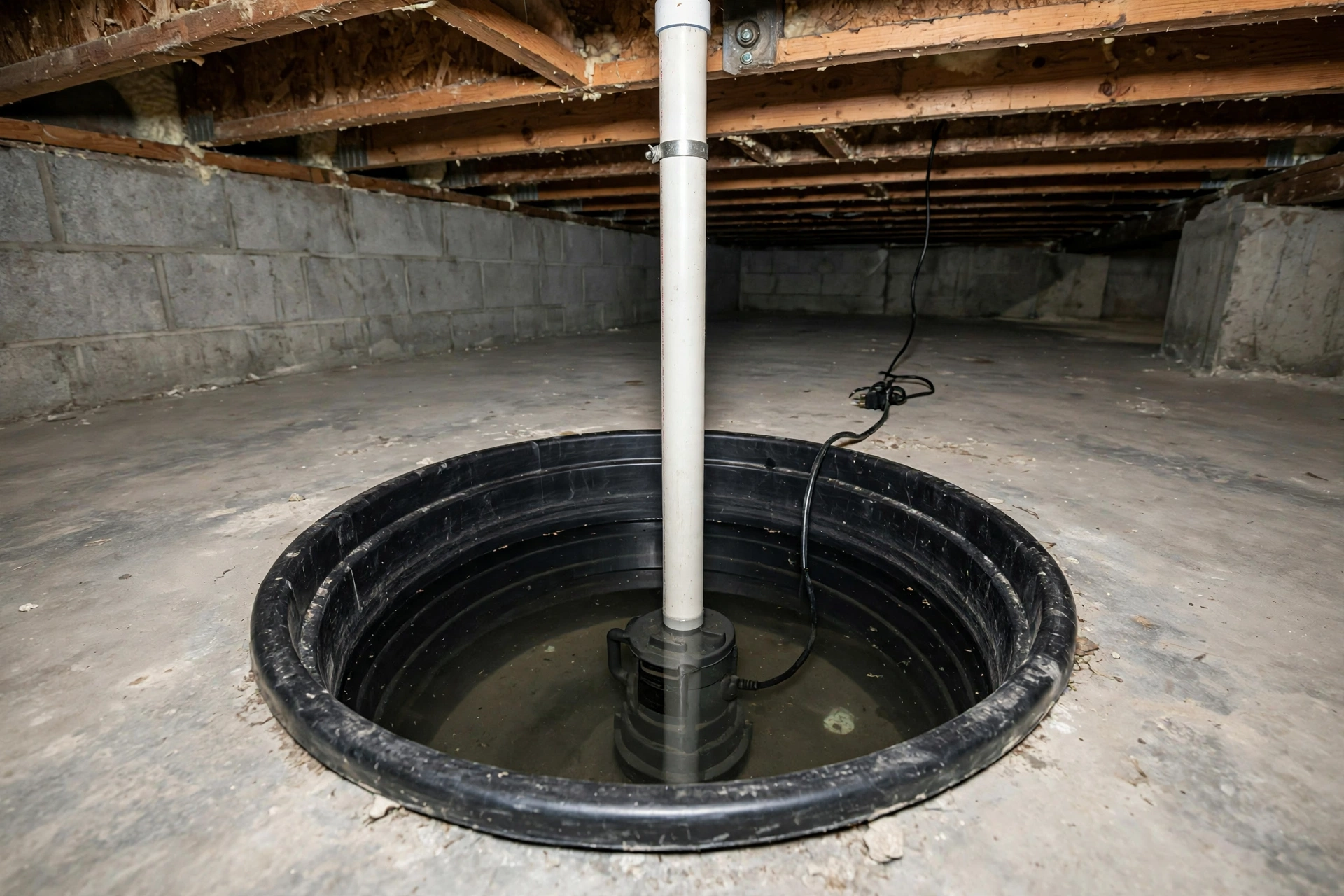
Basements are standard in Ohio, and so is the groundwater trying to get into them. A working sump pump is the difference between a dry basement and a soggy one every spring.
Last updated: October 13, 2026
A sump pump is a pump installed in a pit, called a sump basin, at the lowest point of your basement floor. Groundwater drains into the pit through the surrounding soil or through a perimeter drain tile. When the water rises to a set level, a float switch triggers the pump, which pushes the water up through a discharge pipe and out away from the house. The float drops as the water leaves, the pump shuts off, and the cycle repeats every time groundwater rises.
Two pump styles cover almost every Ohio home. A submersible pump sits down inside the pit, runs quieter, and generally lasts longer, which makes it the standard pick for finished basements. A pedestal pump keeps its motor above the pit on a long shaft; it costs less and is easier to service, but you hear it run. Either way, a check valve on the discharge line is non-negotiable: it stops pumped water from flowing right back into the pit when the pump shuts off, which would make the pump cycle forever. One more distinction: sump water is groundwater, not sewage, and federal NPDES rules require municipalities to keep the two separate, which is why many Ohio cities prohibit tying sump discharge into the sanitary sewer.
| Type | How it sits | Pros | Cons |
|---|---|---|---|
| Submersible | Motor and pump sit down inside the pit, under water | Runs quieter; sealed motor generally lasts longer; a lid covers the pit | Costs more up front; harder to reach for service |
| Pedestal | Motor sits above the pit on a tall column, with only the pump end in the water | Costs less; motor stays dry and is easy to reach and service | Louder; takes up more room; generally shorter service life |
Sump pumps rarely die quietly. They give you warnings, and each one points at a specific problem:
This confuses a lot of homeowners, because the two look alike. A sump pump moves clean groundwater away from your foundation. An ejector pump moves sewage and wastewater from below-grade fixtures, like a basement bathroom or laundry room, up to the sewer line. Both sit in basins, but they are not interchangeable: a sump pump cannot handle solids or lift sewage to code, and running groundwater through a sewage ejector wastes its capacity and can violate plumbing code. If your basement has a bathroom, you likely need both systems, and they stay completely separate. Our ejector pump installation and repair page covers the sewage side of the basement.
Because Ohio's heaviest rains arrive with the power outages that knock out your primary pump. A battery backup system is a second pump in the same pit, wired to a deep-cycle battery, that takes over automatically when the power fails. Spring thunderstorms and summer downpours are exactly when your basement needs pumping most, and they are exactly when lines go down.
The backup pump gets its own float switch, set slightly higher than the primary's, so it only runs when the primary cannot keep up or has no power. A good system includes a high-water alarm that sounds when the backup is running, so you know the primary is down. How long the battery lasts depends on the battery size and how often the pump cycles during the outage. Maintenance is simple: check the battery every six months and plan on replacing it every 3 to 5 years. If your basement is finished, a battery backup is the cheapest insurance you will ever buy.
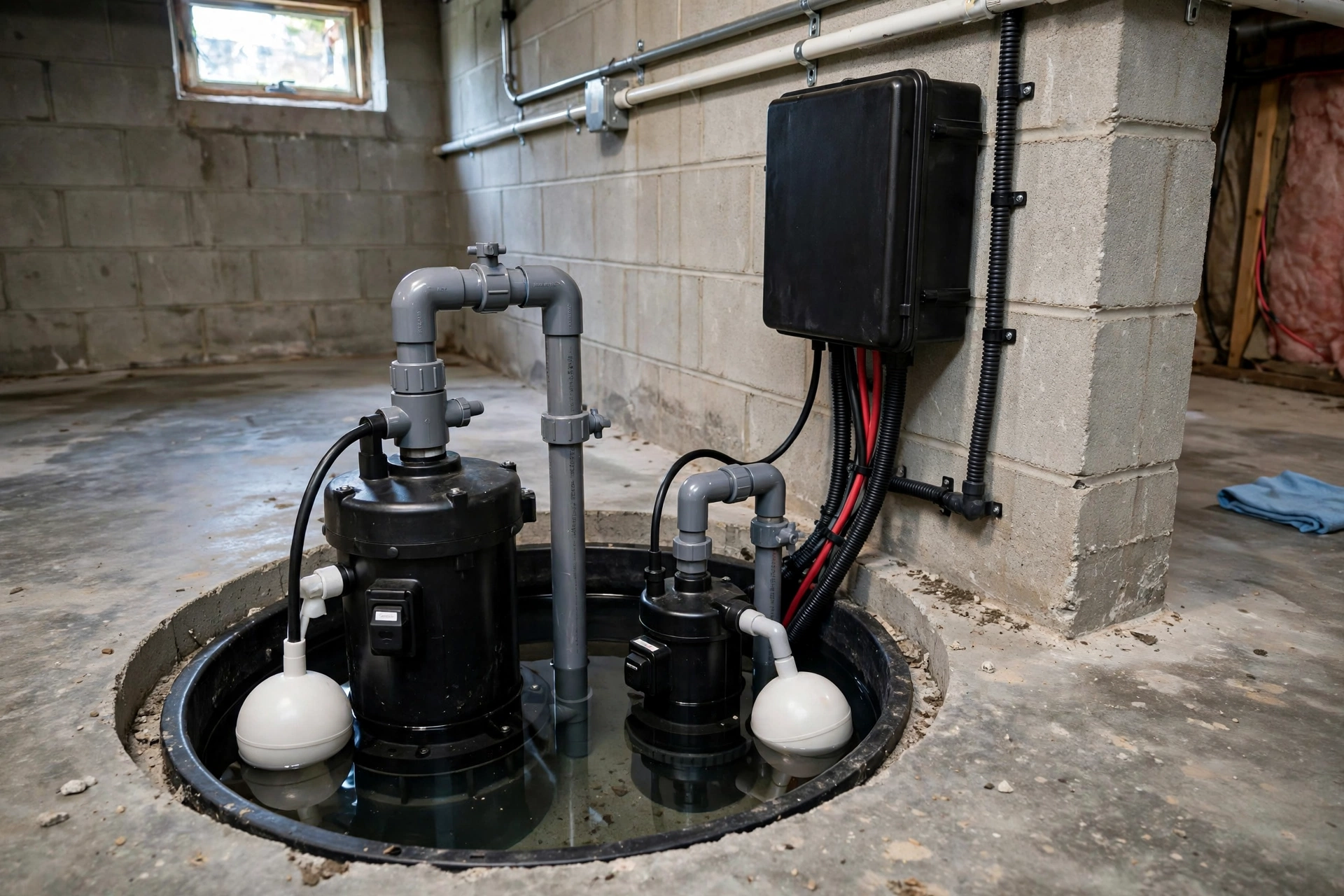
A battery backup system: a second pump in the same pit that takes over automatically when the power fails.
A discharge line freezes when water sits in it instead of draining out, so freeze protection is really about drainage and routing. The line should slope continuously downward from the house so it empties completely after every cycle. The outlet should sit several feet from the foundation, and the pipe should end above grade or into a proper drain so water does not pool back toward the house.
Two details matter in Ohio's freeze-thaw winters. First, a freeze-relief tee near the foundation gives water an escape route if the buried portion of the line ices up; without it, a frozen line makes the pump dead-head against ice, which can burn out the motor in a single night. Second, check your local rules before routing: many Ohio municipalities prohibit connecting sump discharge to the sanitary sewer, and you never want the line draining across a sidewalk where it creates an ice sheet. Ohio EPA administers Ohio's wastewater and stormwater permits, and those local bans trace back to that state framework. Proper slope beats insulation every time, though a cover helps on long exposed runs.
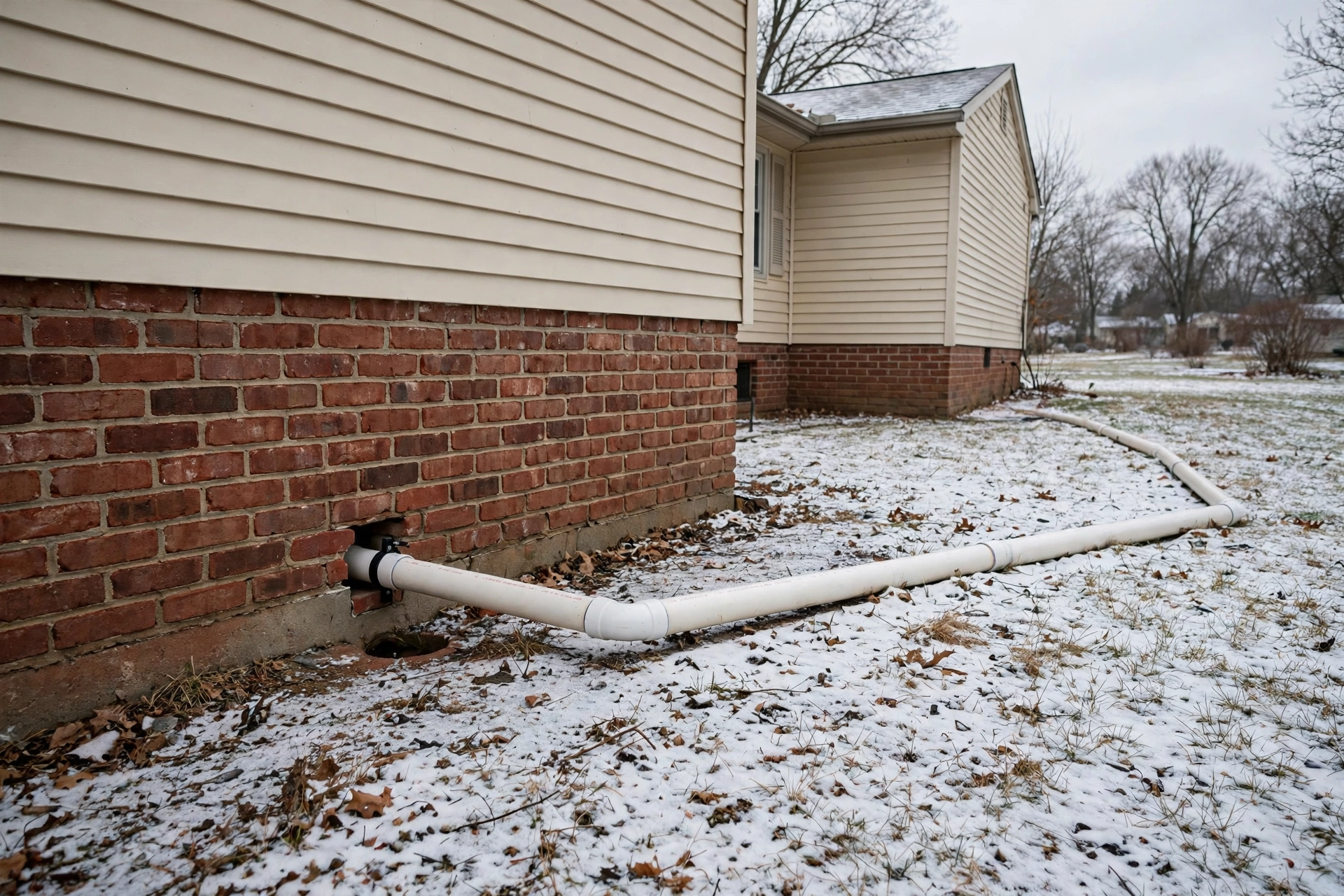
A winter discharge line: sloped to drain fully after each cycle, with the outlet well away from the foundation.
We check the pit, pump, float, check valve, discharge routing, and electrical. First we find out whether the pump failed or the setup did.
We match pump capacity to your pit size and how much water the home takes on. Oversized pumps short-cycle; undersized ones never catch up.
The pump goes in, the check valve goes on, the discharge line gets routed and sloped, and the battery backup gets wired if you chose one.
We fill the pit and watch multiple full cycles: float on, pump out, float off, check valve holds. Then we kill the power and test the backup.
We show you the float, the alarm, and what to check twice a year, and leave you with a simple maintenance checklist.
We do not quote sump pump work sight unseen, because the setup varies too much from house to house. Here are the factors that actually move the price:
For the bigger picture on what drainage and sewer work runs statewide, see our Ohio sewer repair cost guide. The number that matters is yours: call (614) 350-5706 and we will look at your setup and give you a written price.
A typical sump pump lasts 7 to 10 years, depending on how often it cycles and the water conditions in your soil. Pumps in homes with heavy groundwater run more and wear out faster. If yours is past year seven and showing any symptom from the list above, plan a replacement before the next storm season rather than after a flood.
Yes. A battery backup system is usually added to your existing pit alongside the primary pump, with its own float switch set slightly higher so it only runs when the primary cannot keep up or has no power. We test both pumps through full cycles before we leave.
Away from the house, at least several feet from the foundation, onto ground that slopes away from the home. Many Ohio municipalities prohibit connecting sump discharge to the sanitary sewer, so we route to daylight, a dry well, or an approved storm connection depending on your property and local code.
Constant running usually means a stuck float switch, a failed check valve letting water flow back into the pit, or groundwater levels that stay high in your soil. It can also mean the pump is undersized for the water your home takes on. Constant running shortens the pump's life fast, so it is worth a service call.
Twice a year: pour a bucket of water into the pit and confirm the pump kicks on and empties it, clear debris from the pit, check that the discharge outlet outside is clear, and test the battery backup by unplugging the primary briefly. Replace backup batteries every 3 to 5 years.
A sump pump rarely works alone. An interior french drain is what feeds groundwater to the pit in the first place, and the two are installed as a system. If your basement has a bathroom or laundry below sewer level, that wastewater needs a separate ejector pump, since a sump pump cannot handle sewage. Start at our homepage for the full picture of how we keep Ohio basements dry.
A failed sump pump gives you warnings before it gives you a flood. Let us check yours before the next storm does.
Call (614) 350-5706