French Drain Installation in Ohio
Ohio's clay soil holds water against your foundation like a bowl. A french drain gives that water somewhere else to go, before it finds its way into your basement.
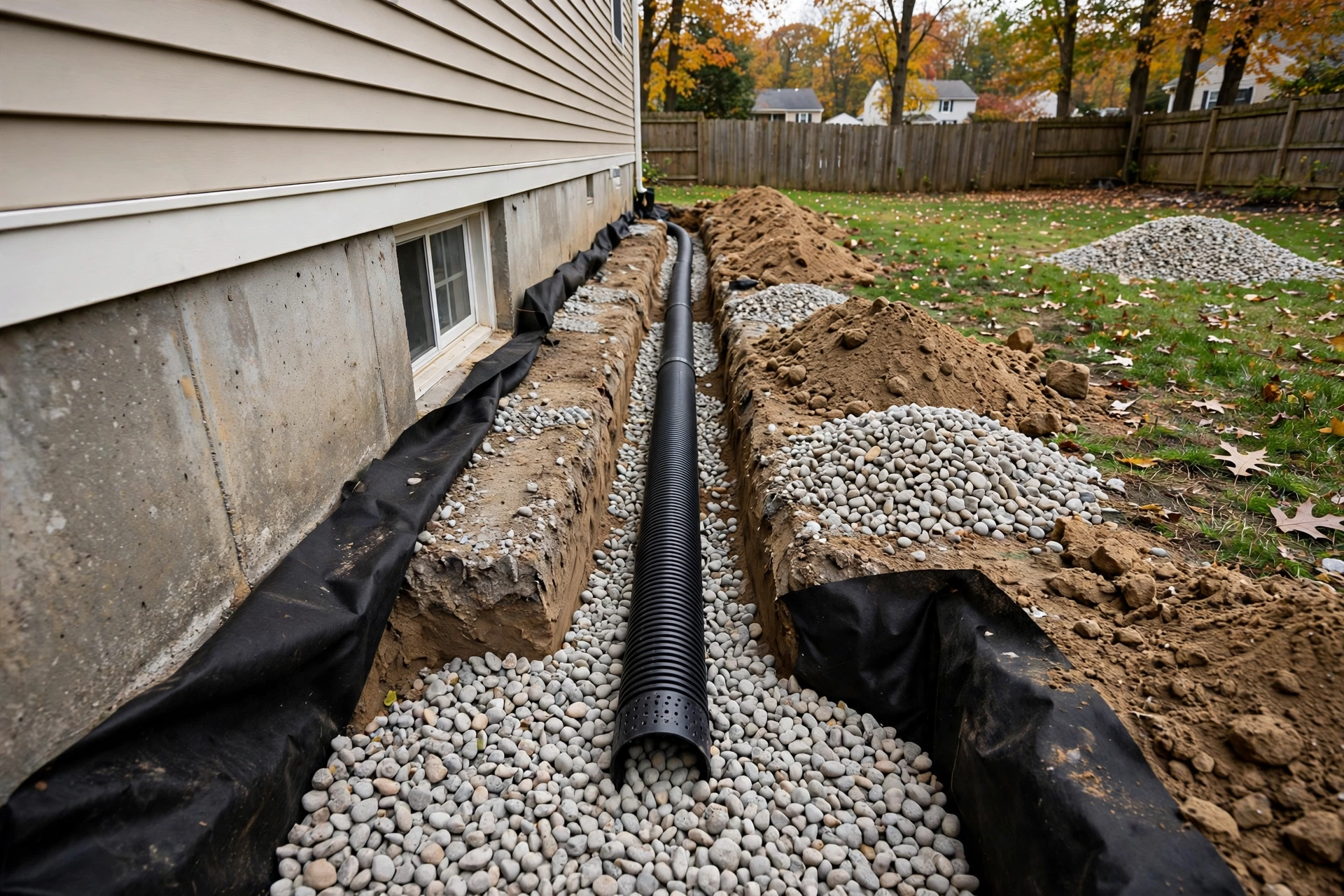
Ohio's clay soil holds water against your foundation like a bowl. A french drain gives that water somewhere else to go, before it finds its way into your basement.
Last updated: October 13, 2026
A french drain is a perforated pipe laid in a gravel-filled trench that collects groundwater and carries it somewhere it cannot hurt your house. Water flows through the gravel and into the pipe's perforations, and the pipe's slope carries it to a discharge point. The gravel filters out soil so the pipe stays clear, and landscape fabric wraps the whole assembly to keep silt from migrating in. Simple idea, and very effective when it is built right.
One clarification up front: a french drain is not a surface drain. It does not catch rain running across your lawn. It handles water moving through the soil, the hidden groundwater that presses against foundation walls and seeps up through basement floors. Every piece matters: washed stone (not crushed fines that pack tight), real filter fabric (not simple weed barrier), perforated pipe laid with steady slope, and an outlet that actually drains. Skip any one of those and you get an major trench that stops working in a few years.
If any of these sound familiar, groundwater is your problem and a french drain is the fix:
Exterior drains stop water before it reaches the foundation. Interior drains catch it after it gets in and send it to a sump pump. Exterior is the better fix, but it means excavating around the house. Interior is less disruptive and pairs with a sump pump.
An interior system is a trench cut into the basement slab around the perimeter, with perforated pipe in stone that runs to a sump basin. The slab gets patched back over, so you lose nothing but a strip of floor. It is the right call when the landscaping is mature and a bigger job to dig up, when the foundation is deep, or when water is entering at the cove joint. The tradeoff: it manages water that has already reached the house, so the wall itself still gets wet from outside.
An exterior system is excavated down to the footing outside the foundation, with the pipe set at footing level and the wall sealed with waterproof membrane while it is exposed. It keeps the wall dry too, which interior systems cannot do. It is the right call when the yard is accessible, when you want the wall protected as well as the basement, or when regrading is happening anyway. The tradeoff is the excavation itself: decks, patios, and plantings along the trench line get disturbed.
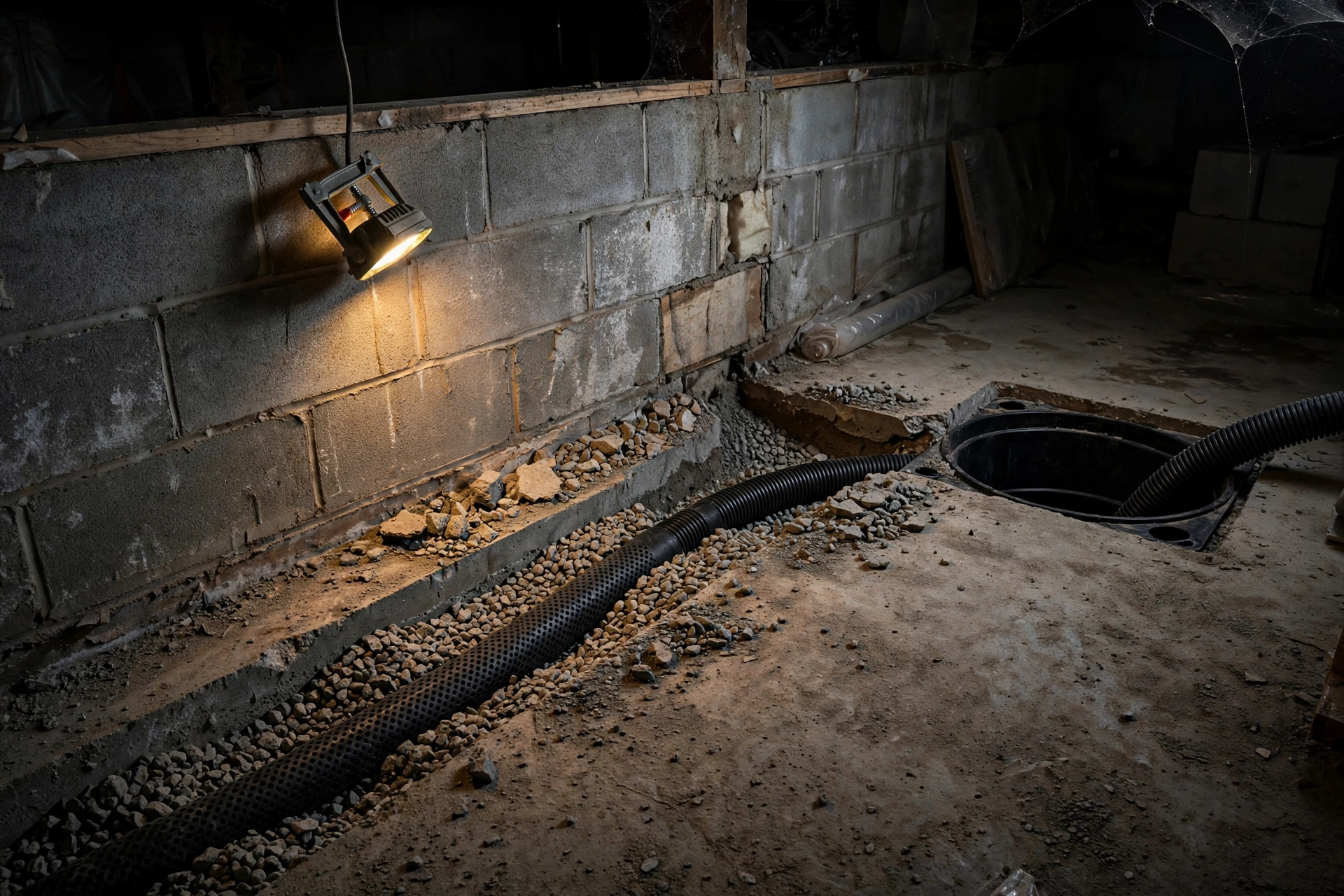
An interior french drain: a perimeter trench in the basement slab that requirementds collected water to the sump basin.
For Ohio clay, our honest guidance is this: exterior if it is practical, interior plus a sump pump as the reliable retrofit. Either way, the drain and the sump pump get designed together, because an interior drain without a properly sized pump is half a system. See our sump pump installation and repair page for the pump side of that pairing.
A french drain is not always the answer. These are the four yard drainage tools we use, and the problem each one is built for:
| Solution | What it is | Best for |
|---|---|---|
| French drain | Perforated pipe in a gravel trench that collects groundwater | Soggy yards, wet basements, water pressing against the foundation |
| Surface or area drain | A grate set flush with the ground that catches water running across the surface | Low spots where rainwater pools on the lawn or patio |
| Sump pump discharge extension | Pipe that carries the sump pump's outflow farther from the house | Water cycling back to the foundation because the discharge lands too close |
| Regrading | Reshaping the soil so the surface slopes away from the house | Surface runoff flowing toward the foundation on a lot with workable slope |
Every french drain needs an outlet, and the outlet decides whether the system works. The options are daylight, a dry well, a sump pump basin, or a storm sewer connection where the municipality allows it. A drain with no outlet is just an underground pond.
Daylight is the simplest: the pipe exits on a slope and water flows out onto grade that carries it away. It only works if your lot has enough fall. A dry well is a buried pit of stone that disperses water into deeper soil, useful on flat lots. Interior systems drain to a sump basin, and the pump lifts the water out. A storm sewer connection is the cleanest outlet of all, but not every city allows it: municipalities must keep stormwater and groundwater out of sanitary sewers under the EPA's NPDES discharge program, administered in Ohio by Ohio EPA. Some cities also assessment a connection requirement. Two rules hold everywhere: never tie a french drain into the sanitary sewer, and never discharge onto a neighbor's property or a public sidewalk.
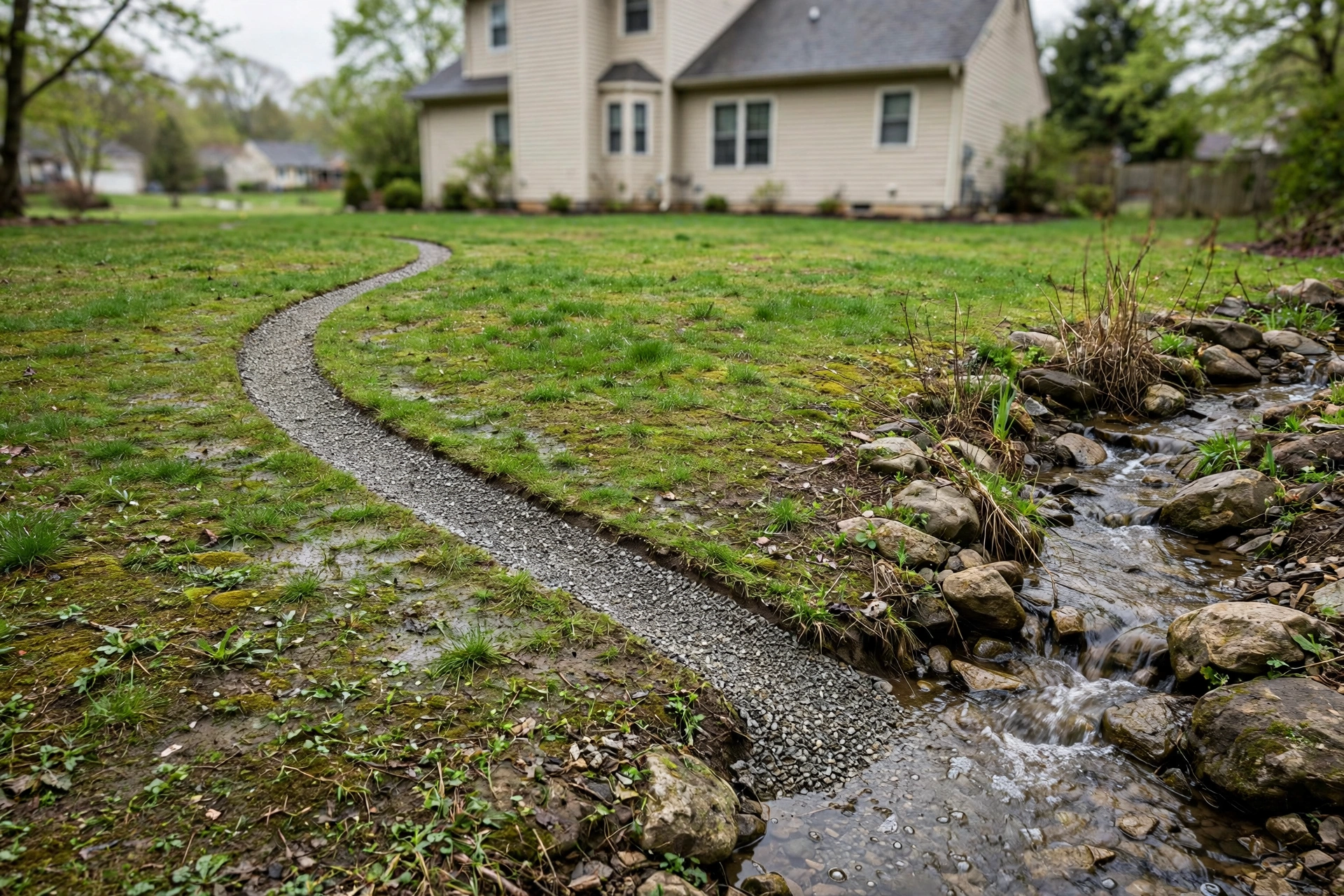
A finished yard drain: collected water travels through the gravel channel to an outlet where it can safely disperse.
Clay drains water about as fast as a brick. Ohio's heavy clay soils absorb rain slowly, hold it against your foundation for days, and swell when wet, which is the worst combination a basement can sit in. A french drain works around clay rather than through it: the gravel trench becomes the easy path water actually wants to take.
Two clay behaviors cause the most damage. First, spring rains create a perched water table: water sits on top of the dense clay layer and presses sideways against foundation walls instead of draining down. Second, saturated clay expands when it freezes, and that frost heave pushes on walls every winter, opening the cracks that next spring's water pours through. This is why fabric and washed stone are not optional extras in Ohio. Clay fines migrate into anything unprotected and choke a drain from the inside, and crushed stone with dust packs too tight to flow. Build it with the right materials and the system outlasts the house's next two roofs.
We find where water enters and where it should go. We check grade, gutters, and downspouts first: sometimes the fix is gutters, and we will say so.
Interior vs. exterior, pipe depth at or below the problem zone, and the outlet location. The sump pump gets sized at the same time for interior systems.
Trench, filter fabric, washed stone, perforated pipe with steady slope, and cleanouts where they will help future maintenance.
The outlet goes in: daylight, dry well, sump basin, or an approved storm connection. Nothing gets buried until the outlet flows.
We backfill in lifts, regrade the surface, water-test the whole run with a hose, and show you how to keep the outlets clear.
We plan french drains by the job, because linear footage and access vary too much for a flat number. These are the factors that move your plan:
For the statewide picture on drainage and sewer project work, see our Ohio sewer repair guide. For your number, call (614) 350-5706 and we will walk the property and give you a written plan.
A properly built french drain with washed stone, filter fabric, and a clear outlet lasts decades, often 30 to 50 years. The systems that fail early were built without fabric, which lets clay clog them, or with no real outlet. Keep the outlet clear and it keeps working.
It handles groundwater, which is the most common cause of wet basements in Ohio. It will not fix water coming through a cracked wall above grade or a plumbing leak. That is why we diagnose first: if the water is groundwater, a french drain plus a sump pump is the standard, proven fix.
If the only problem is surface water running toward the house, regrading and extending downspouts can be enough, and we will tell you that honestly. But regrading cannot fix groundwater rising through clay soil under your slab. That is a below-grade problem and it needs a below-grade solution.
Yes. An interior french drain collects water and delivers it to a sump basin, and the pump is what actually removes it from the house. We install them as a system and size the pump to the amount of water the drain will collect.
The trench line gets dug up, and there is no honest way around that. We keep the excavation as narrow as the job allows, stockpile and replace topsoil separately, and regrade when we backfill. Most lawns recover in one growing season.
French drains and sump pumps are a system: the drain collects the water and our sump pump installation and repair service gets it out of the house, including battery backups for storm outages. Once your foundation drainage is handled, storm drains and downspout routing keep surface water from overwhelming it. Start at our homepage to see how the whole water-management picture fits together.
Groundwater problems do not fix themselves, but they do get more major. Let us diagnose yours and plan the real fix.
Call (614) 350-5706