Catch Basin Cleaning & Repair in Ohio
The grates in your parking lot are the front door of your storm system. When catch basins clog or break, water ponds, pavement heaves, and ice takes over in winter. We clean and repair them across Ohio.
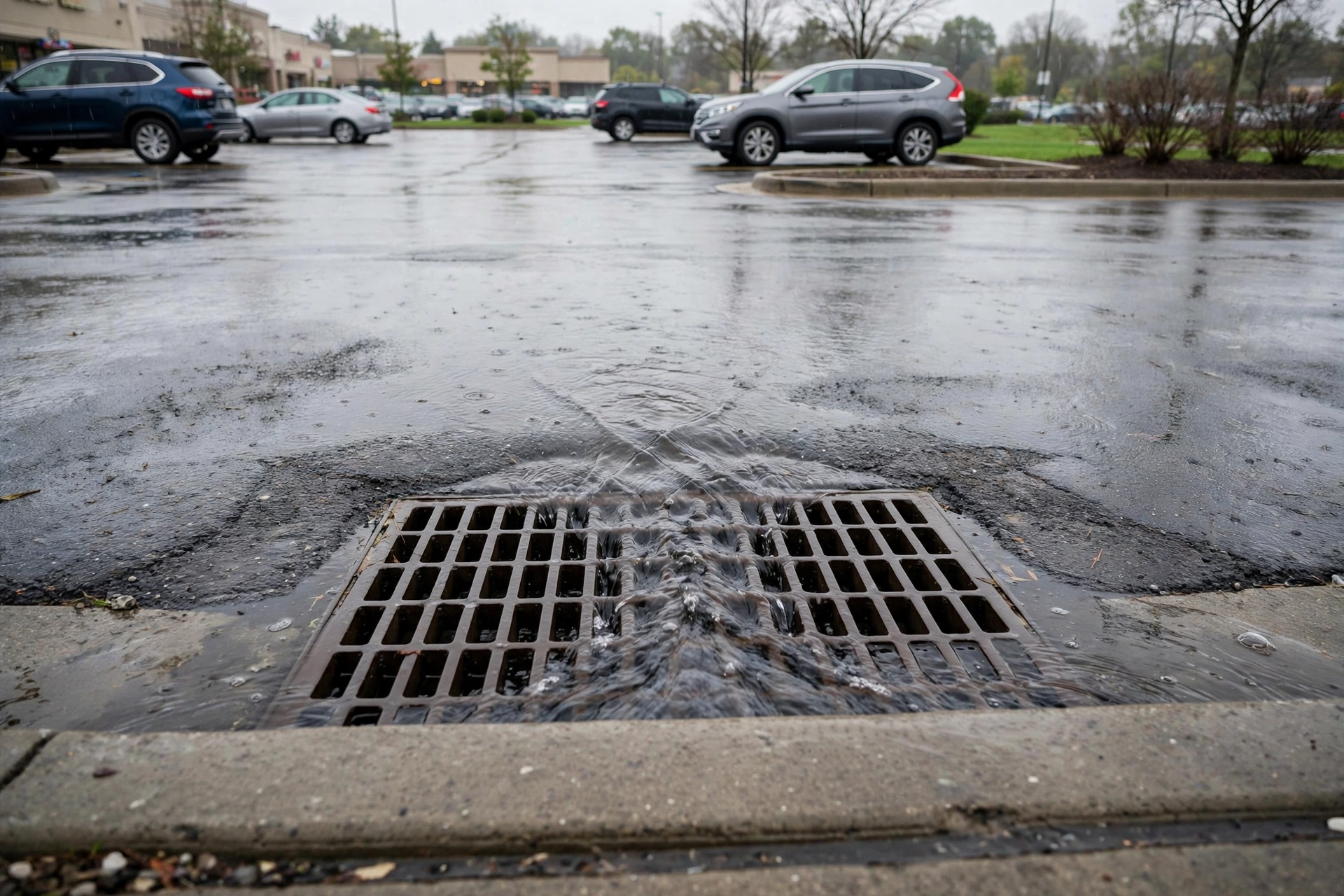
The grates in your parking lot are the front door of your storm system. When catch basins clog or break, water ponds, pavement heaves, and ice takes over in winter. We clean and repair them across Ohio.
Last updated: October 13, 2026
A catch basin is the grated inlet you see in parking lots, streets, and driveways. Rainwater flows in through the grate, drops into a sump below the outlet pipe, and then flows out to the storm system. That sump is the clever part: sediment, leaves, and trash settle to the bottom instead of washing into and clogging your underground pipes.
The catch is that the sump has to be emptied. A basin fills up over time, winter sand and salt in spring, leaves in fall, trash year-round. Once the sump is full, debris starts passing straight through to the pipes, or the grate chokes and water ponds in the lot. Either way, the basin stops doing its job. Every flooded parking lot we've fixed had basins that hadn't been touched in years.
Catch basins connect to storm pipe, not sanitary sewer, but they share the same enemies: settlement, corrosion, root intrusion at joints, and Ohio's freeze-thaw cycles working on every concrete joint.
Cleaning is a vacuum job, not a shovel job. Here's what our service covers:
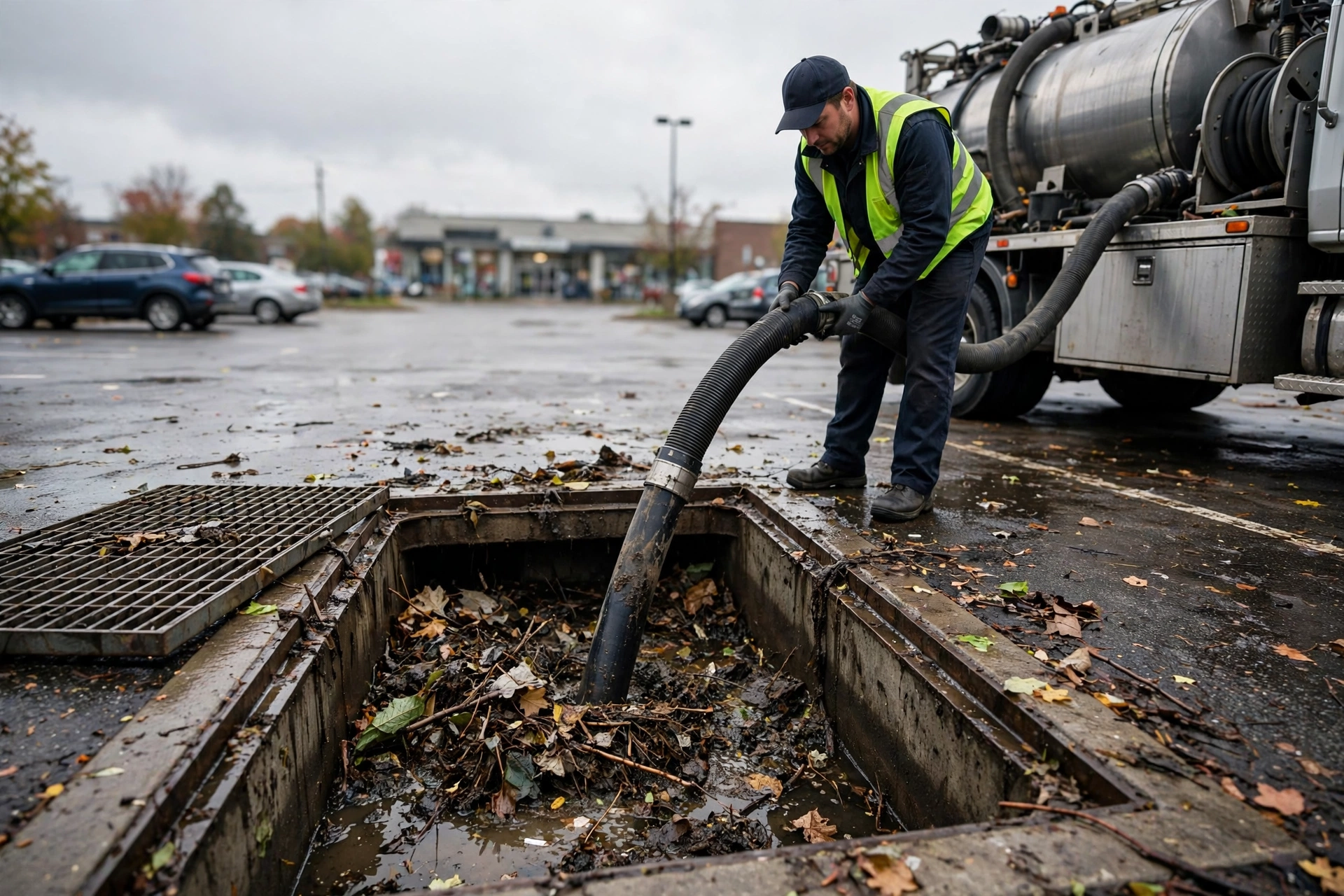
A vactor truck evacuates the sump down to the floor, pulling out the compacted sediment that hand tools can't reach.
Cleaning keeps a sound basin working. But concrete structures in Ohio take a beating, and eventually they need real repairs:
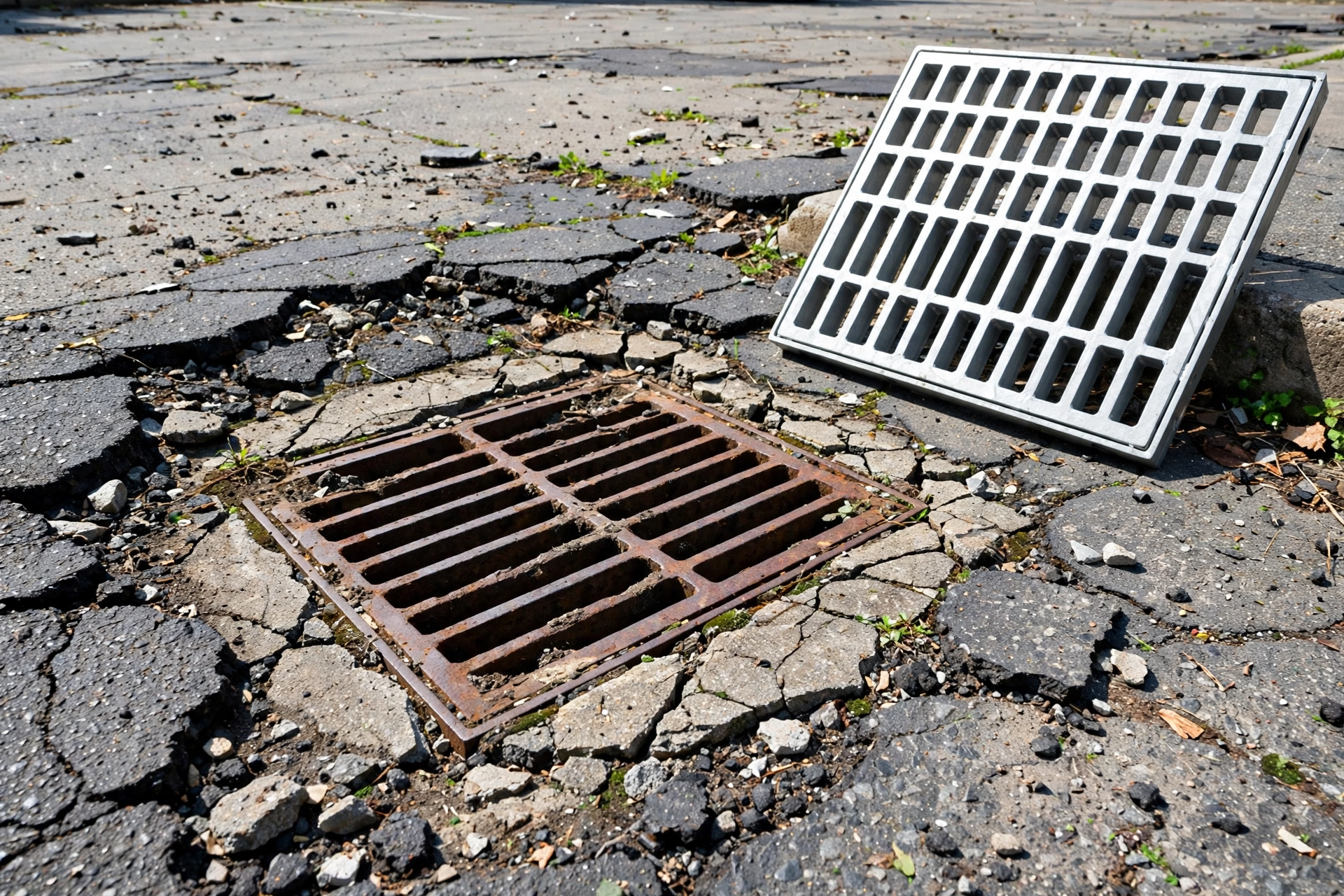
A cracked frame and settled grate like this stops taking in water and starts breaking pavement around it. Time for repair.
We walk the property, pop every grate, and note sediment levels, structural issues, and drainage patterns before the truck starts.
The vactor evacuates each sump to the floor, clearing sediment, leaves, trash, and winter sand.
With basins empty, we check walls, joints, outlets, frames, and grates, and photograph anything that needs repair.
You get a clear report: what was cleaned, what we found, and which repairs are needed now versus later.
Approved repairs, grates, frames, sealing, rebuilds, get scheduled, so small problems don't become lot closures.
A neglected catch basin means a flooded lot, wrecked pavement, winter ice, and sediment clogging your storm pipes. Nobody planss for them, so they get ignored until the lot floods. Here is what that neglect buys:
The pattern is always the same: the cleaning that got skipped work a tenth of the repair it would have prevented.
For most Ohio commercial properties, the schedule that works is simple:
Properties with heavy tree cover, high traffic, or nearby construction fill faster and may need a third visit. We set up recurring schedules for property managers, so the basins get serviced on the calendar instead of on the complaint.
Frequencies below are typical industry guidance; the right schedule for your lot depends on trees, traffic, and how fast the sumps fill:
| Task | Recommended frequency | Why |
|---|---|---|
| Debris removal from the sump | Typically twice a year: spring and fall | Winter sand and salt come out in spring; leaves come out in fall before they mat down |
| Sediment level inspection | Typically once a year, or with each cleaning | A sump more than half full of sediment starts passing debris straight into the storm pipes |
| Grate and frame check | Typically once a year | Cracked grates are a safety hazard, and settled frames sit above grade and block water from entering |
| Joint and outlet inspection | Typically once a year, with basins empty | Leaking joints undermine the pavement, and outlet blockages are only visible with the water out |
In most Ohio cities, the property owner is responsible for maintaining private storm systems, and that includes every catch basin in the parking lot. Municipalities can and do cite owners for neglected systems, especially when a clogged private basin floods a public street or a neighboring property.
There's also the stormwater angle. Federal stormwater rules, administered through the EPA's NPDES permit program, require municipalities to manage runoff quality, and many cities pass that obligation down to property owners through local ordinances enforced under the Ohio EPA: keep your inlets clear, keep sediment out of the system. Lease agreements sometimes shift day-to-day maintenance to tenants, but the city holds the owner accountable when it fails. A documented cleaning schedule is smart insurance against both flooding and fines.
Catch basin work plans by the basin and by the job. These are the factors that set your number:
Our Ohio guide covers process across our services. For a plan on your property, call (614) 350-5706: we'll walk the lot, pop the grates, and give you a written plan.
Most commercial properties in Ohio need catch basin cleaning at least once a year, and twice is better: once in spring to clear winter sand and salt, and once in fall after leaf drop. High-traffic lots, properties with many trees, and sites near construction fill up faster. If the sump is more than half full of sediment, you're overdue.
Usually the inlets, not the pipes. A catch basin choked with leaves, sediment, and trash can't take water in fast enough, so it ponds in the lot even though the underground pipe has plenty of capacity. Broken or settled grates that sit above the pavement grade cause the same symptom. Cleaning and regrading the inlets fixes most lot flooding.
Many basins can be repaired. New grates and frames, riser rings to match repaved surfaces, sealing leaking joints, and parging a deteriorated interior all extend a basin's life. Full rebuilds are for structures with collapsed walls, severe settlement, or a failed base. We inspect the structure and recommend the smallest fix that actually lasts.
The property owner, in most Ohio cities. Private storm systems, including the catch basins in your parking lot, are the owner's responsibility to maintain, and many municipalities can cite owners for neglected systems that flood streets or neighbors. Lease agreements sometimes shift the duty to tenants, but the city holds the owner accountable.
Yes, directly. A clogged basin holds standing water in the lot, and standing water becomes black ice when Ohio temperatures drop. A clean basin drains the lot dry between storms, which removes the water that would have frozen. Fall cleaning is the single best pre-winter step a property manager can take.
Catch basins requirementd your underground storm system, and the two live or die together. Our storm drain repair and cleaning page covers the pipes, culverts, and underground drainage downstream of the inlets. For properties adding new drainage or replacing failed lines under pavement, see our directional drilling and boring service.
We'll walk your property, pop the grates, and show you exactly what's clogged or broken, then fix it.
Call (614) 350-5706