Sewer Maintenance Program in Ohio
Some sewer lines need regular attention to stay out of trouble. Our maintenance program gives those lines a schedule: planned visits, documented condition, and no emergency surprises.
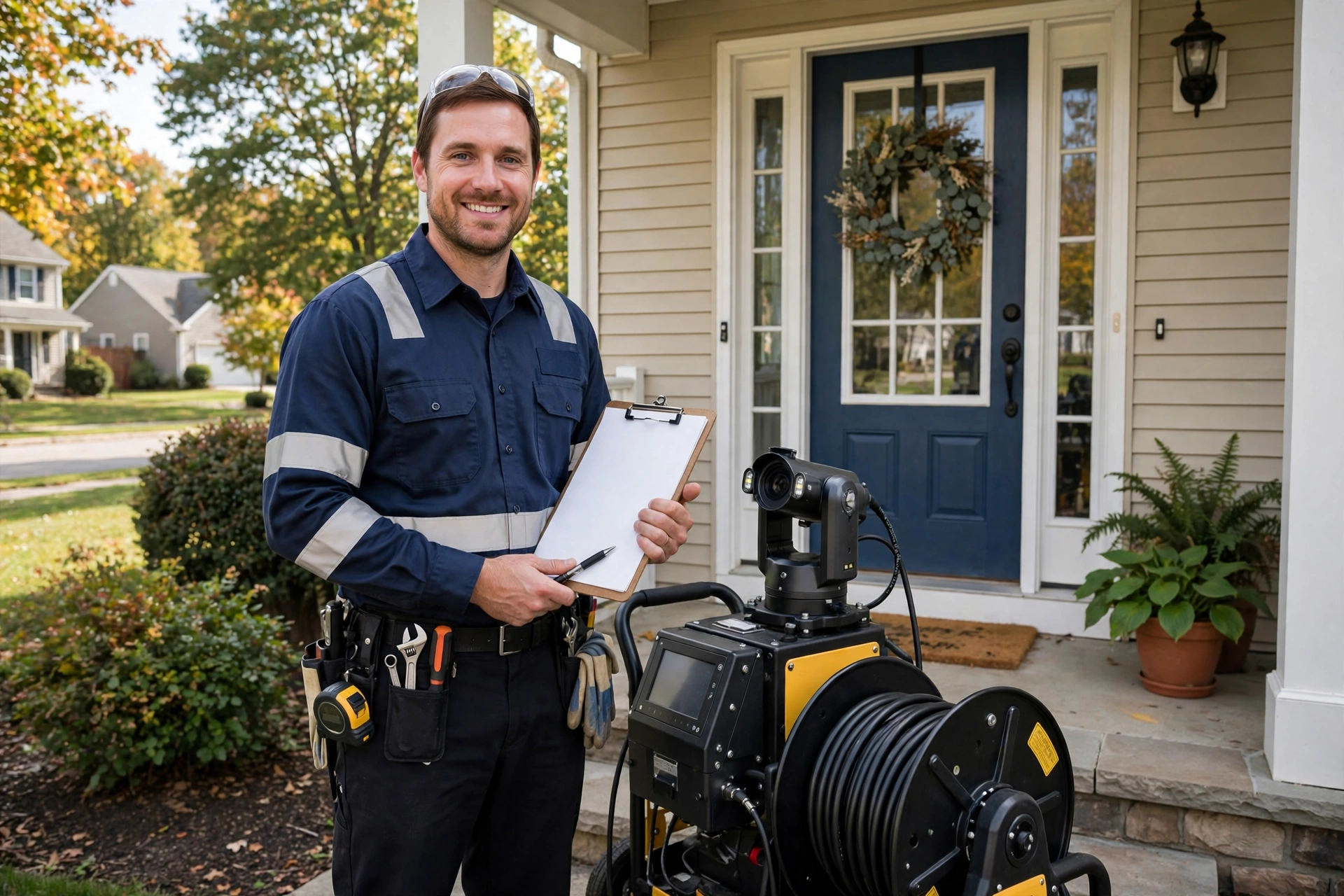
Some sewer lines need regular attention to stay out of trouble. Our maintenance program gives those lines a schedule: planned visits, documented condition, and no emergency surprises.
Last updated: October 13, 2026
A maintenance program is scheduled preventive care for your sewer line: regular visits on a calendar, each one documented, so small problems get handled before they become backups. Here's what a visit typically covers.
The plan is built from your first camera inspection. We don't sell generic packages: the schedule, the methods, and the plan all follow what your specific line actually needs.
Some lines genuinely need scheduled care. If any of these describe your property, a program will save you money and stress:
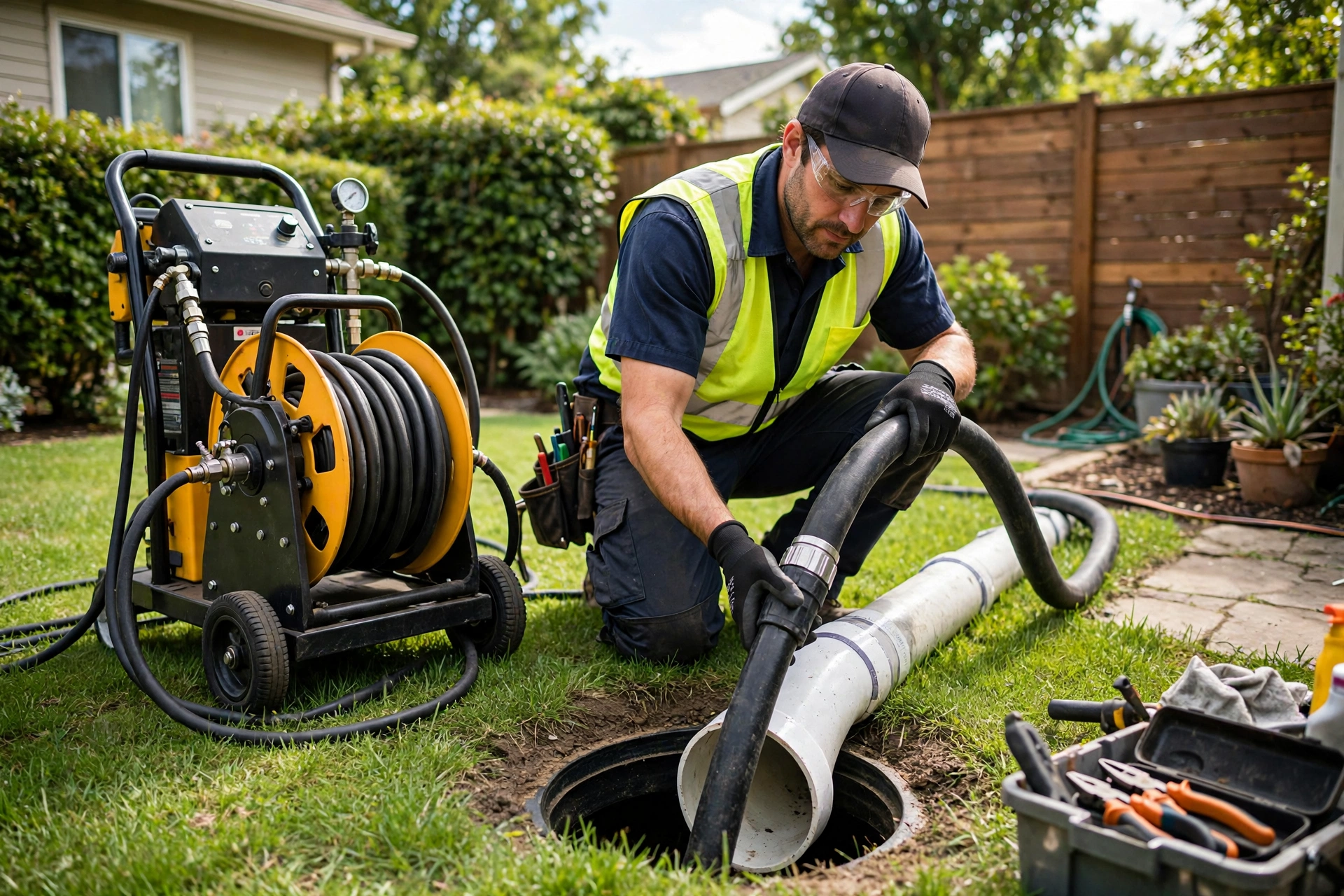
Preventive jetting on a schedule: the same line that used to back up every year now just gets a planned visit.
The right frequency depends on your pipe material, buildup rate, and usage, but the table below gives the standard industry starting points. We adjust the calendar from what the camera shows on your first visit.
| Task | Recommended frequency | Why it matters |
|---|---|---|
| Camera inspection | Typically once a year | Tracks line condition over time so new defects get caught early |
| Hydro jetting | Typically every 6 to 12 months for grease-heavy lines; yearly for most others | Keeps the pipe at full diameter before buildup turns into a blockage |
| Root treatment | Typically once a year where roots enter the line | Matches the growing season so roots never get a full year of growth |
| Cleanout check | Typically at every visit | Buried or broken cleanouts make every future visit slower and more major |
These are starting points, not rules. If the line stays clean visit after visit, we stretch the interval out instead of selling you visits you do not need. If buildup is aggressive, we tighten it. The camera footage is what sets the schedule.
Emergency backups don't come out of nowhere. They come from buildup that was visible months earlier to anyone with a camera. The program's whole job is to interrupt that timeline. The same principle applies at the municipal level: Ohio EPA regulates Ohio's municipal wastewater collection systems, and the EPA's NPDES program includes the national policy on controlling combined sewer overflows, which is why older Ohio cities keep working to manage surcharge events during big storms.
Roots grow at a predictable rate. Grease accumulates at a predictable rate. Scale builds at a predictable rate. Once we know your line's rate from the first couple of visits, we schedule the next visit before the buildup reaches the danger zone. The clog that would have happened in October gets cleared in August, on a Tuesday, while you're at work, instead of on a Saturday night with sewage in the basement.
There's a second benefit: documentation. Each visit's footage builds a history of your line. When a section starts deteriorating, we can show you the progression, year over year, and you can plan a repair on your timeline and plans instead of reacting to a failure. Planned repairs also work less than emergency ones, because you're not handling for urgency.
And the honest version: maintenance doesn't make a failing pipe new. If the camera shows a line that's collapsing, we'll recommend repair or replacement instead of selling you visits. The program is for lines that are serviceable and worth keeping that way.
No surprises, no half-day ordeal. Here's the typical visit from our truck arriving to us leaving:
We confirm the plan for this visit from your line's history, check the cleanouts, and note anything you've observed since last time.
Camera through the scheduled sections, recorded. We compare against the last visit's footage for changes.
Jetting, root cutting, or clearing per the plan, whatever this visit's schedule calls for based on the line's condition.
You get the footage and a short written report: what we found, what we did, and when we recommend the next visit.
Most visits take an hour or two, and you don't need to be home for all of it as long as we have cleanout access. We schedule at times that work for you, and we show up when we say we will.
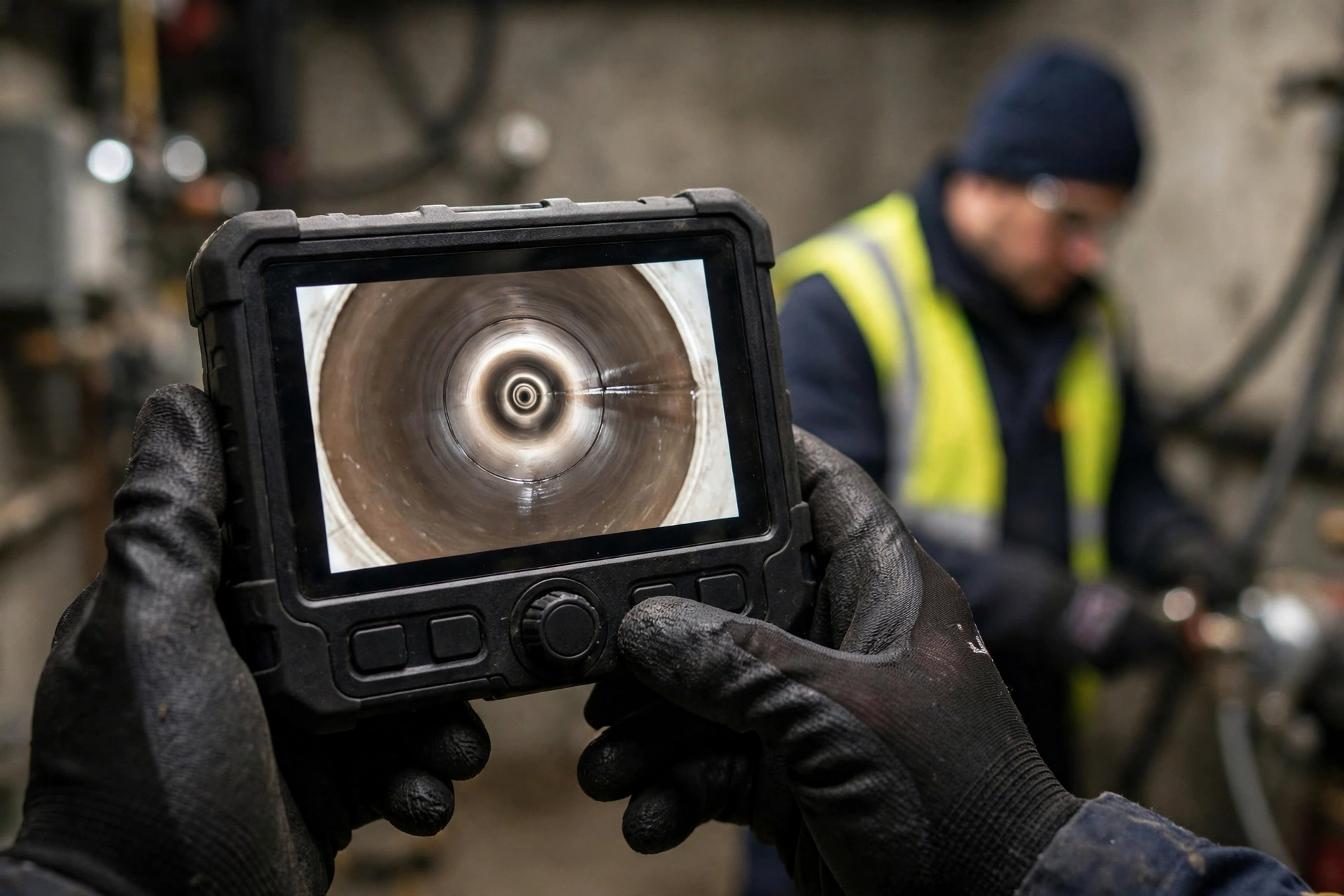
A clean pipe on the monitor during a routine visit: this is what the program is buying you.
No. If your line is newer PVC, properly sloped, with no mature trees overhead and normal household use, you don't need a maintenance program. We'd rather say that plainly than sell you something useless: an annual camera check on a clean PVC line is a waste of your money, and we'll tell you so after the first inspection.
The program exists for lines with a reason to be watched: old materials, aggressive roots, heavy commercial use, or known defects being managed. That's a real and common category in Ohio, where much of the housing stock predates PVC-era plumbing and the trees are magnificent. But it's not everyone, and any company that tells you otherwise is selling, not advising.
The way to find out which category you're in is a single camera inspection. If the line is clean and sound, we'll shake your hand and tell you to call us if anything changes. If it needs watching, we'll show you exactly why and build a plan for that specific line.
No invented plans, but here's what shapes the number so you can judge the plan:
After your first inspection, we build a plan for your line, in writing, with the visit schedule and what's included in each visit. Compare that number against what emergency backups actually work you: the cleanup, the damage, the ruined weekend. For most candidates, the math isn't close. Our Ohio guide covers what the bigger repairs run when maintenance is skipped too long.
Maybe not, and we will tell you if you don't. A newer PVC line with no trees nearby and normal household use doesn't need scheduled maintenance. You do need it if your line is older clay tile or cast iron, if mature trees sit over the pipe, if you run a restaurant, or if you manage a multi-unit building. The first step is a camera inspection: it tells both of us whether your line is a candidate.
Every visit is built around your line's needs, but a typical visit includes a camera check of the problem sections, preventive jetting or root cutting where buildup is forming, cleanout inspection and clearing, and a short written report with footage so you can see the line's condition over time. We also flag anything that has changed since the last visit.
Most residential programs run once a year. Lines with aggressive root intrusion or heavy grease loading may need visits every six months. We set the interval from what the camera shows on the first visit, and we adjust it over time: if the line stays clean, we stretch the interval out instead of selling you visits you don't need.
It depends on what your line needs: a simple annual camera check is far simpler than a twice-yearly program with jetting and root cutting. Pipe material, length, access, and buildup severity all factor in. Call us at (614) 350-5706 after a first inspection and we will build a plan built for your specific line, not a generic package.
No. The program is a schedule, not a lock-in. You can pause or cancel anytime, and if a visit shows your line no longer needs scheduled care, we will say so and stop scheduling. Selling maintenance to lines that don't need it is how companies lose trust, and we plan to be around.
The program leans on a few of our core services: hydro jetting for preventive cleaning, main drain cleaning when a line needs mechanical clearing between visits, and our sewer camera inspection work that starts every plan. For businesses, see our commercial sewer services page for plans scaled to commercial use.
One camera inspection tells us both the answer. If the line is fine, we'll say so. If it needs watching, we'll show you why.
Call (614) 350-5706