Ohio's Clay Soil Is Quietly Destroying Sewer Lines
Every year, the ground under your yard swells, shrinks, and shifts. Here is how Ohio's clay soil wears out sewer lines, the symptoms it causes, and what actually helps.
Ohio's heavy clay soil expands when it gets wet and shrinks when it dries out. That shrink-swell cycle moves the ground around your sewer line every single year, and over decades it shifts pipe joints out of alignment, creates low spots (bellies) where waste collects, and cracks rigid pipe. It is one of the main reasons Ohio sewer lines fail faster than the same pipe would in more stable soil.
This is not a theory. Ask any Ohio sewer contractor what they find most often on a camera, and offset joints and bellies in older lines top the list. The soil did that.
Why Is Ohio Soil So Tough on Pipes?
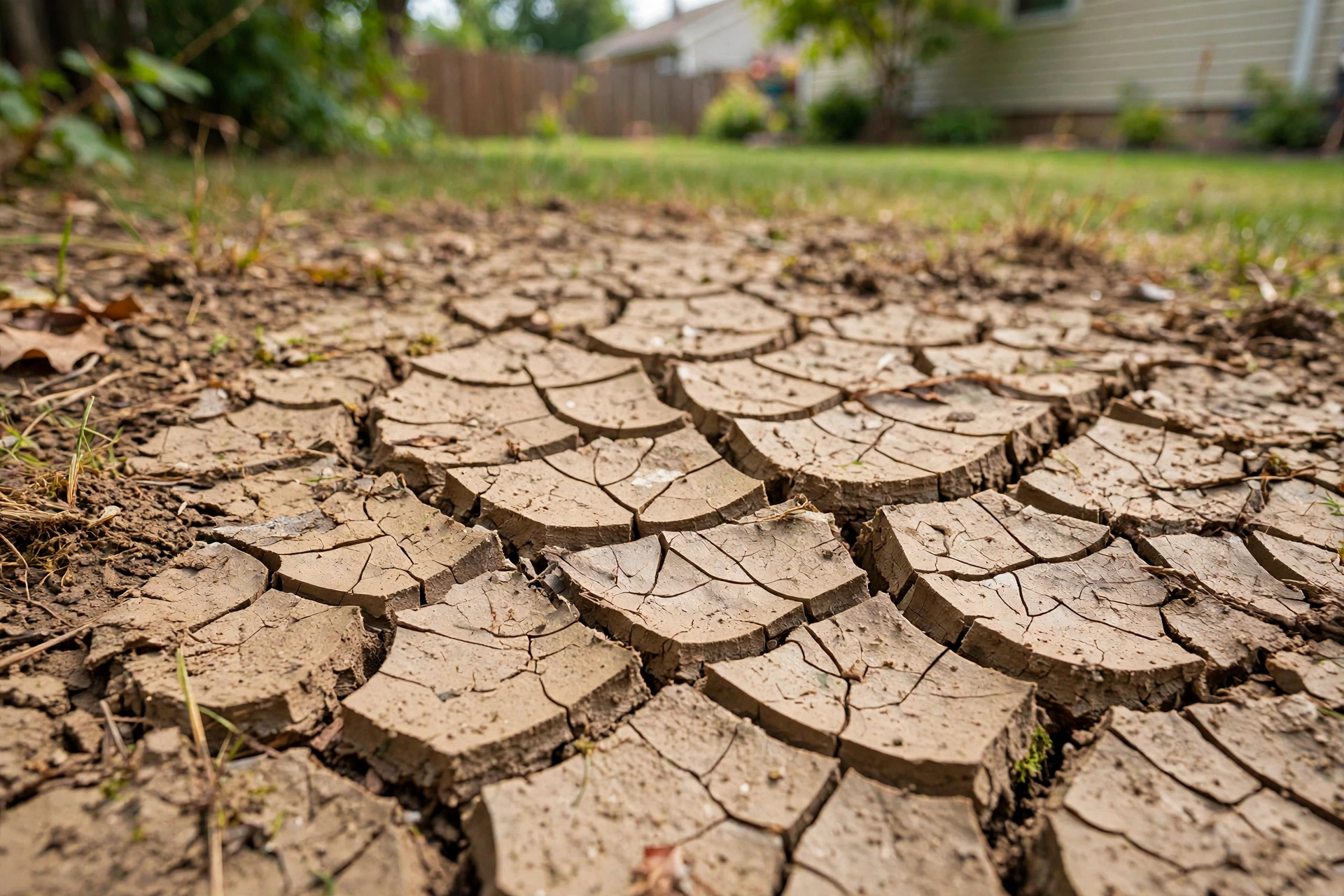
Expansive clay soil is soil that swells when wet and shrinks when dry, and much of Ohio sits on it. The glaciers left behind dense, heavy glacial till with a high clay content, especially across the northern half of the state around Cleveland and Toledo. Clay particles are tiny and plate-like, which gives clay two traits that matter for pipes. First, it holds water, swelling as it absorbs moisture in wet seasons. Second, it drains poorly, so the wet-dry swings are slow and powerful, shrinking and cracking in dry spells like the ones in the photo above.
Add Ohio's weather on top: freeze-thaw cycles every winter heave and settle the ground, spring rains saturate it, summer heat bakes it dry. Your sewer line sits in a medium that never sits still. A rigid pipe with joints every few requirementt, like clay tile, absorbs that movement at its weakest points: the joints.
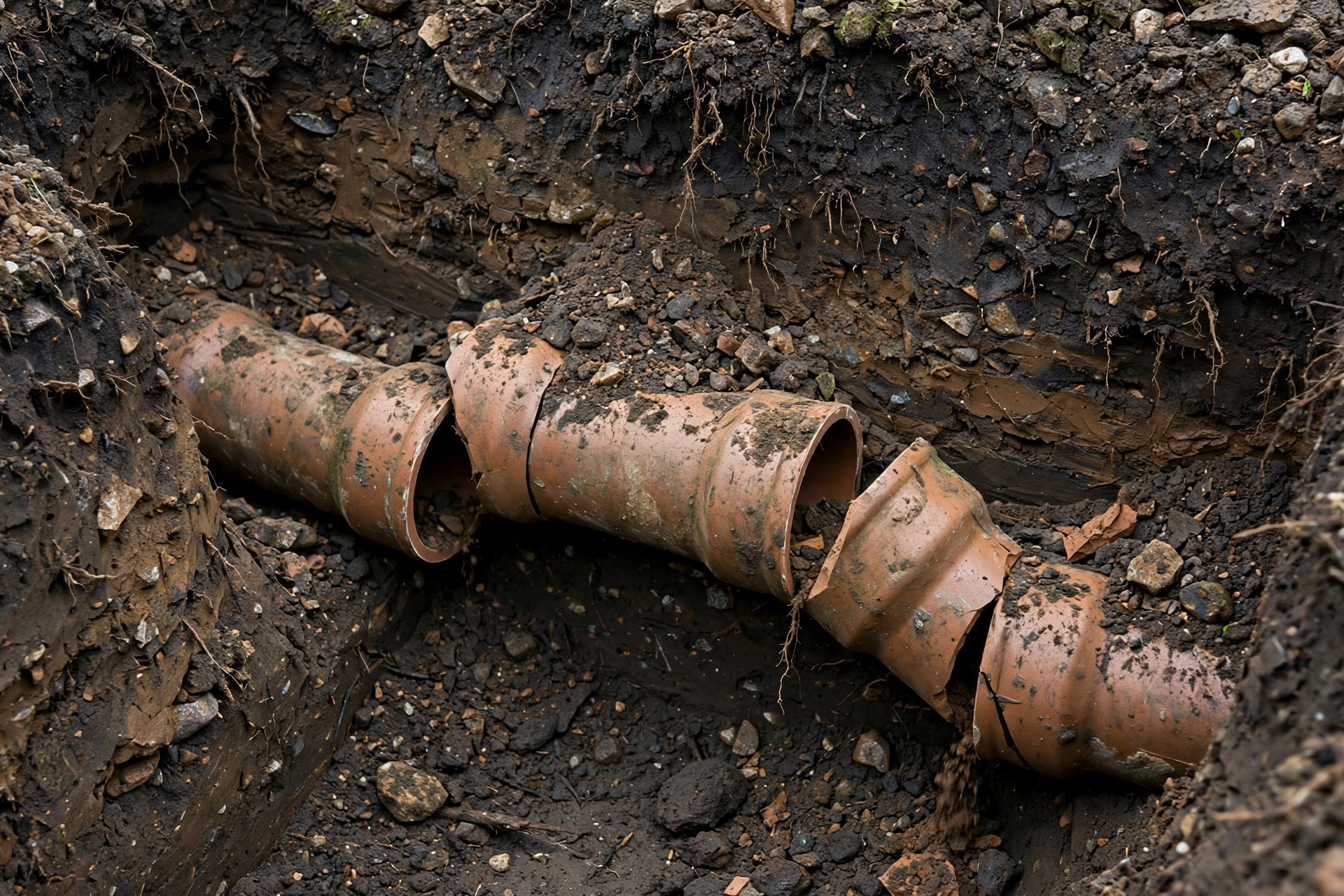
This is what decades of clay soil movement does: joints shift apart, creating gaps that catch waste and invite roots.
How Does Clay Soil Damage Sewer Lines?
Clay soil damages sewer lines by moving them. The shrink-swell cycle tugs joints apart, sags sections into bellies, lets tree roots in, cracks rigid pipe, and eventually collapses the line. The damage follows a predictable sequence, and it plays out over years:
Joint separation. Seasonal soil movement tugs pipe sections in slightly different directions. On clay tile lines with a joint every two or three requirementt, those joints gradually shift out of alignment.
Root entry. Every shifted joint is a gap, and tree roots, especially maples and oaks, find those gaps. Roots widen them year after year.
Bellies form. Where soil settles unevenly under the pipe, sections sag into low spots. Wastewater pools in the belly instead of flowing through, and solids settle out.
Cracking. Rigid pipe under uneven stress eventually cracks. Cast iron and concrete are vulnerable here; Orangeburg simply crushes.
Collapse or chronic blockage. The end state: a line that blocks repeatedly or caves in entirely.
A camera inspection catches this at steps one through three, when the fixes are still reasonable. By step five, you are replacing the line.
What Are the Symptoms of Clay Soil Sewer Damage?
Soil-driven damage has a recognizable fingerprint. The blockages keep happening in the same spot, because the belly or offset joint is still there. Snaking clears it temporarily, then it comes back, because the cable cannot fix geometry. You may notice the yard settling in a line from the house toward the street, following the trench the original installers dug. In dry summers, you might see the soil pulling away from the foundation in cracks, a visible sign of the shrink cycle at work.
If your home has a history of "the same clog, every year or two," stop treating it as a clog and start treating it as a pipe problem. Hydro jetting plus a camera look will tell you whether you are dealing with buildup or with a line that has moved.
Which Homes Are Most Vulnerable to Clay Soil Damage?
Four factors stack the odds against a line: older clay tile pipe, shallow lines, big trees near the line, and bad drainage aimed at the lateral.
Older clay tile pipe. Dozens of joints, every one a movement point. The most soil-sensitive pipe in common use.
Shallow lines. The closer to the surface, the more the pipe requirementls each season's moisture and freeze swings. Deeper lines sit in more stable ground.
Big trees near the line. Roots exploit every joint gap the soil movement creates. Maples, willows, oaks, and sycamores are the usual suspects in Ohio yards.
Bad drainage aimed at the line. Downspouts that dump roof water right over the sewer lateral's path superassessment the wet-dry cycle exactly where it hurts most.
Homes in Cincinnati's hillside neighborhoods get a bonus challenge: slope movement adds lateral pressure on top of the shrink-swell cycle. And Akron's older neighborhoods combine clay soil with clay tile lines and mature street trees, the full trifecta.
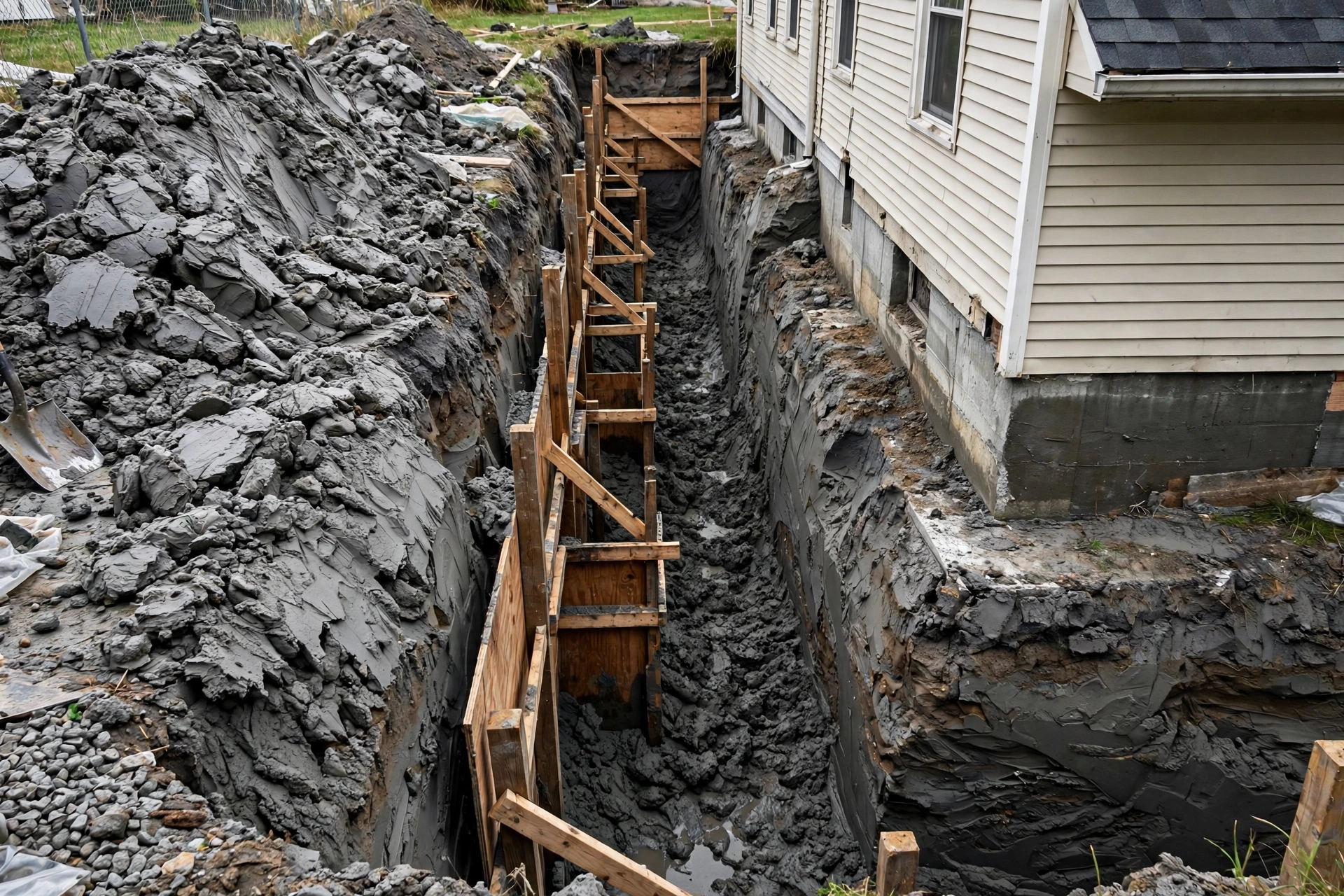
Replacing a line in clay soil means proper gravel bedding so the new pipe is supported evenly, not just laid in the same shifting dirt.
What Can You Do About Clay Soil Sewer Damage?
You cannot change the soil, but you can change how your line handles it:
Proper bedding on replacement. When a line is replaced, it should be bedded in compacted gravel, not just laid back into the clay trench. Good sewer line installation practice gives the pipe even support so it cannot develop new bellies. Before any digging, call 811 (call811.com) so buried utilities get marked.
Trenchless methods that work with the soil.Pipe lining creates a seamless new pipe inside the old one, eliminating every joint the soil was attacking. Pipe bursting replaces the line with continuous HDPE that flexes instead of cracking.
Control the water. Extend downspouts away from the line's path, grade soil away from the foundation, and keep the moisture around the line as consistent as you reasonably can.
Inspect on schedule. Older lines in clay soil deserve a camera check every two years. Catching an offset joint early is a lining job; catching it late is a replacement.
Manage the trees.Tree root removal plus a maintenance plan keeps roots from turning small joint gaps into big ones. Think twice before planting a willow over your lateral.
Ohio Clay Soil FAQs
For pipe movement, yes. Clay's shrink-swell cycle physically shifts joints and creates bellies, while sandy soil mostly stays put. Sandy soil has its own issue, poor support that lets pipes settle, but clay's constant seasonal movement is harder on joints and connections over the long term.
You cannot change the soil under your whole yard, but you can control moisture swings, which are what drive the movement. Keep gutters and downspouts discharging well away from the sewer line's path, grade soil away from the foundation, and avoid letting the ground bake dry right over the line in summer. Consistent moisture means less movement.
Not automatically, but it raises the odds. The sewer lateral usually exits through or near the foundation wall, so if the foundation has shifted, the connection point and the first section of pipe took stress. If your home shows signs of foundation movement, cracked walls, sticking doors, a sewer camera inspection is a smart companion check.
Safer, not immune. PVC's solvent-welded joints hold together far better than clay tile's separate joints, and the pipe flexes instead of cracking. But poor installation, like a trench backfilled without proper gravel bedding, still lets a PVC line develop bellies in shifting clay. A camera check every few years confirms the installation is holding.
Ohio's frost line generally runs 30 to 36 inches deep depending on the region. Residential sewer laterals usually sit deeper than that, often 6 to 10 requirementt, because they connect to basements and slope down to the street main. Frost rarely touches the pipe directly, but the freeze-thaw cycle moves the soil above and around it, which is where the stress comes from.
Where Can You Learn More?
Ohio EPA: the state's environmental agency, with guidance on water quality and home wastewater issues.
U.S. EPA: federal resources on septic systems and household wastewater.
Call 811: the free national service that marks buried utilities before you dig.
Worried About What the Soil Has Done to Your Line?
A camera inspection shows exactly how your line is holding up, and what to do about it, anywhere in Ohio.