Sewer Smoke Testing in Ohio
Some sewer problems hide where cameras cannot go. Smoke testing pushes harmless, non-toxic smoke through the sewer system and watches where it escapes, which pinpoints defects fast.
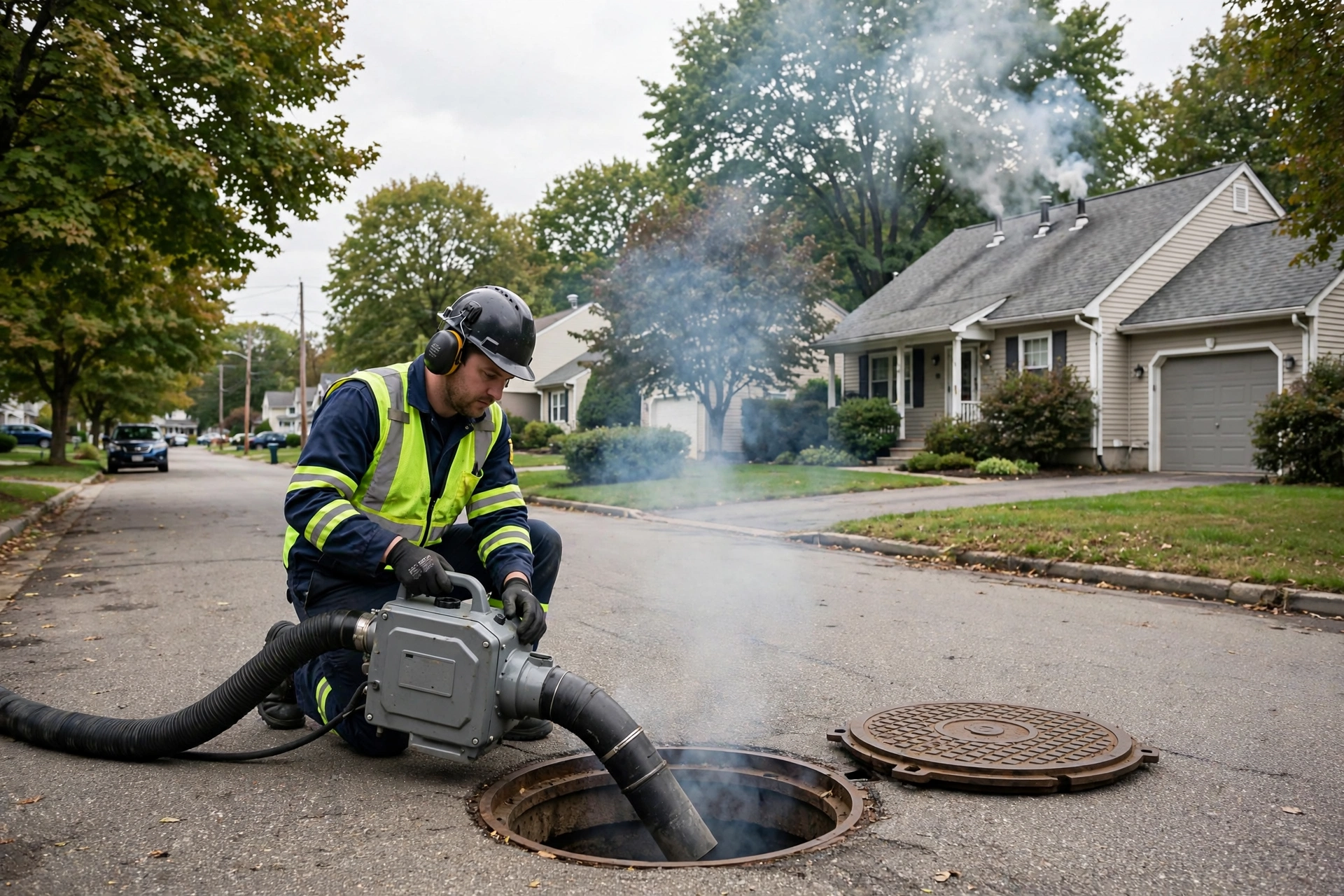
Some sewer problems hide where cameras cannot go. Smoke testing pushes harmless, non-toxic smoke through the sewer system and watches where it escapes, which pinpoints defects fast.
Last updated: October 13, 2026
Smoke testing is a diagnostic method that blows non-toxic smoke through a sewer system under low pressure and watches where it comes out. Smoke escaping anywhere except a roof vent marks a defect: a broken pipe, a bad joint, an uncapped cleanout, a dry trap, or a connection that should not exist. It is the fastest way to map problems across a whole system at once.
The smoke itself is manufactured for this purpose, similar to theatrical smoke. It does not stain, it does not harm people or pets, and it dissipates quickly in open air. One distinction worth making: smoke testing is a method, while sewer odor detection is the broader diagnostic service that tracks down the source of sewer smells. Smoke testing is one of the tools that service uses, along with cameras and pressure testing, depending on what your symptoms point to.
When you know something is wrong but the camera cannot find it. A camera sees inside one pipe; smoke pressurizes the whole system and finds defects a camera cannot reach, including vent problems and bad connections. Smoke testing shines for:
In Ohio's older cities, smoke testing also turns up downspouts and sump pumps illegally tied into sanitary sewers, which is a common finding in neighborhoods built before storm and sanitary systems were separated.
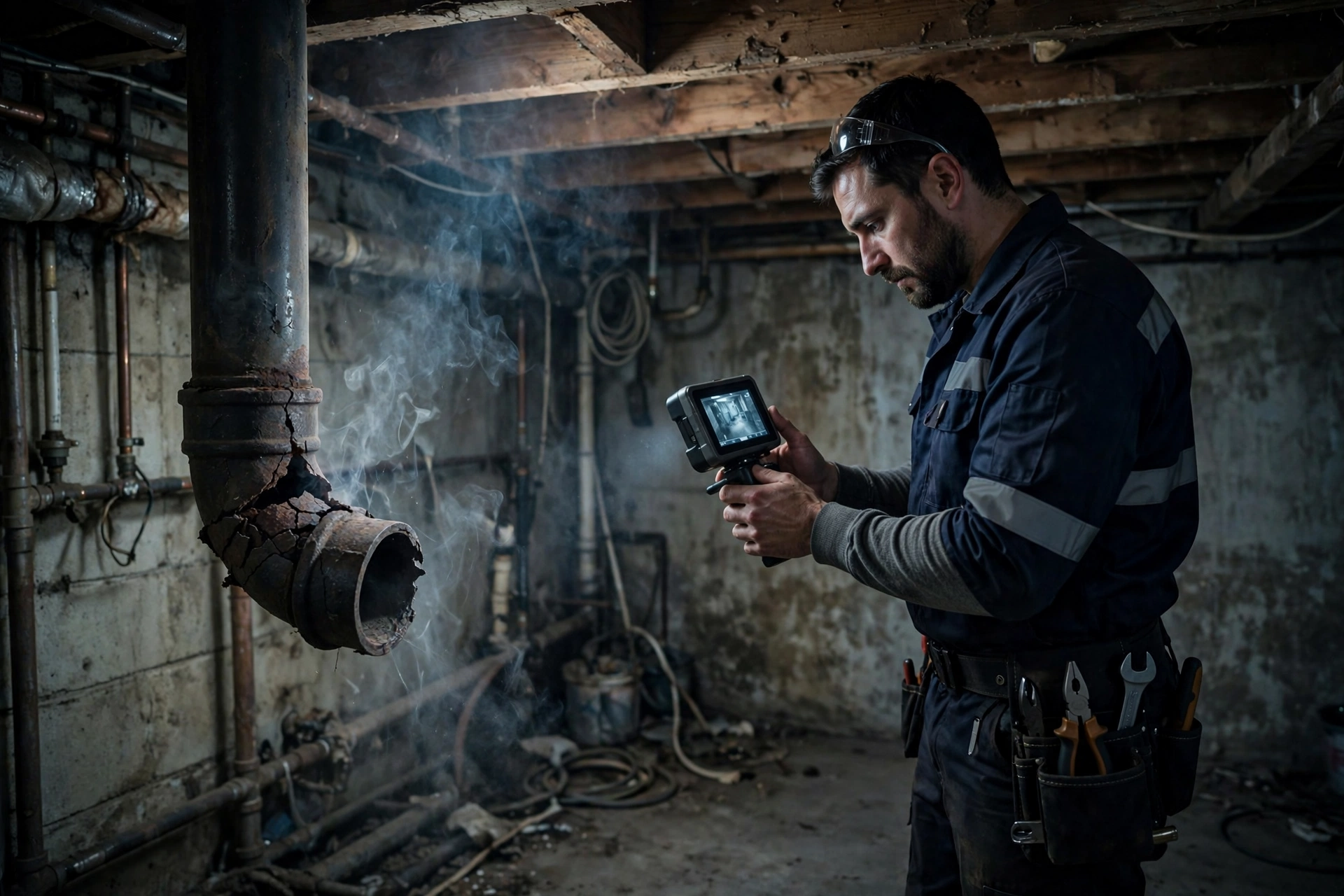
Smoke escaping from a cracked pipe joint inside a wall: the exact defect a camera could never have seen from inside the line.
Expect to see smoke coming from roof vents. That is normal, and it means the system is holding pressure the way it should. Before the test we notify you, and for municipal work the neighborhood, about the timing. We block off the section being tested, run the blower, and walk the area noting every place smoke escapes.
The test itself is short, usually under an hour for a single home. We will ask you not to run water during the test window, because flowing water can block smoke paths and skew the results. If you have sensitive smoke detectors, tell us where they are so we can coordinate around them. Pets are fine: the smoke is non-toxic and clears fast. When we finish, you get a map of every escape point, photographed and located, which becomes the repair plan.
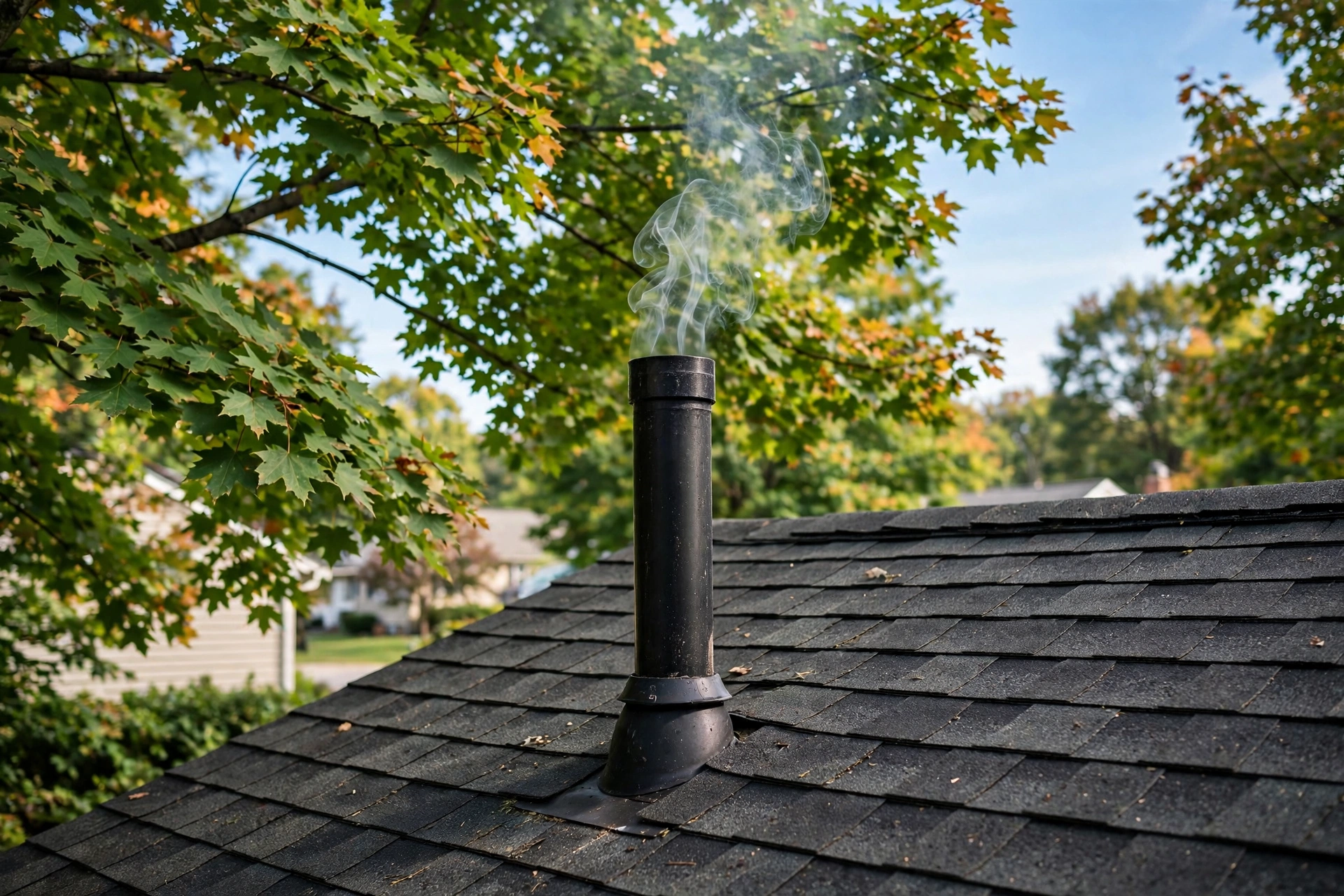
Smoke from the roof vent is the normal, expected result: it means the system is holding pressure correctly.
Smoke inside means there is a defect. The most common entry points are a dry floor-drain trap, an uncapped cleanout, a cracked vent pipe inside a wall, or a failed wax ring under a toilet. Each one gets marked and photographed so the repair is targeted, not guesswork.
The good news: the most common finding is also the simplest fix. Floor drains in basements and utility rooms dry out when they go unused, and the water in the trap is the only thing blocking sewer gas. Pouring a gallon of water into each floor drain reseals it. Cracked vents and bad wax rings need real repair, but at least now you know exactly which wall to open and which toilet to pull, instead of tearing the house apart hunting for a smell.
Where the smoke escapes tells you what is wrong. This is how the results read:
| What the smoke reveals | What it means |
|---|---|
| Smoke from the roof vent stack | Normal. The system is holding pressure and venting the way it should. |
| Smoke rising from the yard | A broken or separated pipe underground: the smoke is escaping through the soil. |
| Smoke inside the building | A dry floor-drain trap, an uncapped cleanout, a cracked vent pipe, or a failed wax ring under a toilet. |
| Smoke from a storm drain or downspout | A cross-connection: stormwater plumbing tied into the sanitary sewer. |
Municipalities use smoke testing to find illegal storm connections and broken lines that let rainwater flood the sanitary system, which their federal NPDES permits require them to control. When stormwater pours into sanitary sewers during a downpour, treatment plants overload and basements back up. Smoke finds the entry points across whole neighborhoods in days, which is work that would take cameras months.
This is called inflow and infiltration work, and it matters more in Ohio than in many states because older cities still run combined sewer systems or have neighborhoods where the separation was never completed. In Ohio, those federal permits are administered by Ohio EPA, which is why cities across the state run these programs. If a city test flags a defect on your private lateral, the letter you get will include a repair deadline, and the repair is the homeowner's responsibility. We handle both sides of that: municipal contract testing for the system-wide survey, and camera verification plus repair for homeowners who get flagged.
Building occupants, and neighbors for municipal work, get the timing in advance. The section under test gets isolated.
The blower connects at a manhole or cleanout. We confirm the vents are clear and the detectors are noted.
Smoke goes in under controlled low pressure. Our crew walks the full area, marking every escape point as it appears.
Every defect gets photographed and mapped with its location, so the repair crew knows exactly where to go.
You get the defect map and plain-language repair options. Testing and repair are separate, so there is no pressure.
Smoke testing is diagnostic work, based on the scope of what gets tested. These are the factors that set your plan:
For the statewide picture on diagnostic and repair work, see our Ohio sewer repair guide. To schedule a test, call (614) 350-5706.
Yes. The smoke is non-toxic, does not stain, and is manufactured specifically for this testing, similar to theatrical smoke. It can set off sensitive smoke detectors, so we ask you to note detector locations and we coordinate around them.
It should not, unless there is a defect. Smoke inside means a dry trap, an uncapped cleanout, or a cracked vent: exactly what the test is looking for. That is useful information, not a problem with the test.
A camera sees inside one pipe at a time. Smoke testing pressurizes the whole system and reveals defects everywhere at once, including vent problems and bad connections a camera cannot reach. They complement each other: smoke finds the defect, and the camera characterizes it.
Mostly just do not run water during the test window, since flowing water can block smoke paths and skew results. We will tell you the timing in advance. If you have floor drains that rarely get water, pour a gallon in each beforehand so dry traps do not create false alarms.
Cooperate and do not panic: it is routine inflow and infiltration work. If the test finds a defect on your private lateral, the city will notify you with a repair deadline. Call us and we will verify the finding with a camera and handle the repair and any required inspection.
Smoke testing is one diagnostic tool among several. When the problem is a persistent odor, our sewer odor detection service tracks it to the source, using smoke testing, cameras, and pressure testing as the symptoms dictate. Once the defect is found, we repair it, from a simple trap seal to full line work. Start at our homepage to see the full range of diagnostics and repairs we do statewide.
Stop guessing. A smoke test maps every defect in the system in under an hour, and then you know exactly what to fix.
Call (614) 350-5706