Lift Station Installation & Maintenance in Ohio
Sewage flows downhill, but not every property sits above the city main. A lift station collects your wastewater underground and pumps it uphill to the sewer, automatically, every day.
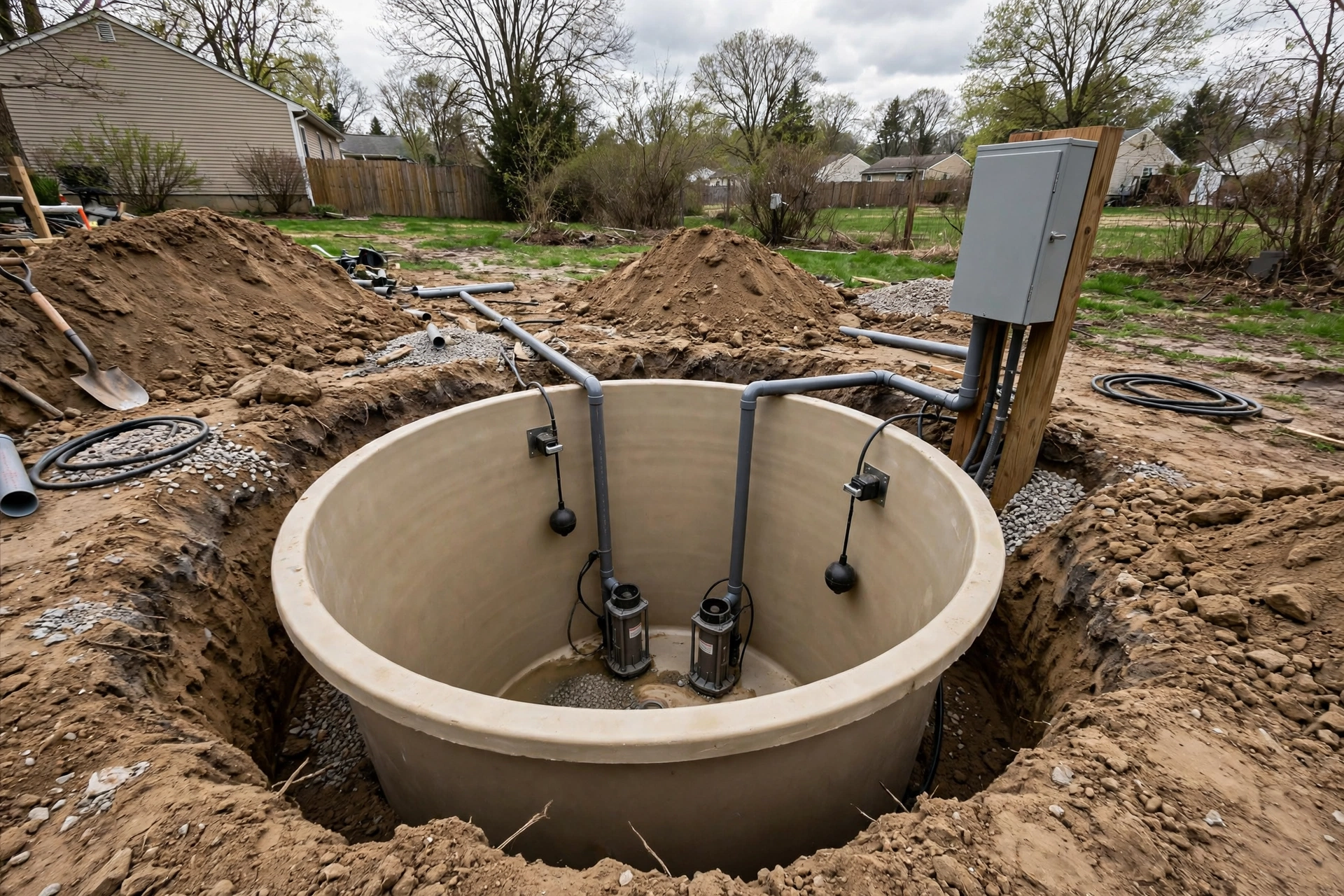
Sewage flows downhill, but not every property sits above the city main. A lift station collects your wastewater underground and pumps it uphill to the sewer, automatically, every day.
Last updated: October 13, 2026
A lift station is an underground basin with pumps that lifts sewage up to where gravity can take over. Wastewater flows into the basin by gravity; when it reaches a set level, float switches trigger the pump, which pushes the sewage through a pressurized force main up to the city sewer or septic system. An alarm panel warns you if anything goes wrong.
Think of it as the property-scale version of an ejector pump. An ejector pump serves one building's below-grade fixtures, like a basement bathroom, lifting sewage to the home's main drain. A lift station serves the whole property: every drain in the building flows to the basin, and the station pumps all of it uphill to the street main. Same principle, much bigger job. If your station discharges to a septic system instead of a city sewer, the EPA's septic system guidance explains how those systems must be maintained.
The mix-up work people money, so here is the side-by-side:
| Factor | Lift station | Sewage ejector pump |
|---|---|---|
| What it serves | A whole property: every drain in the building | One building's below-grade fixtures, like a basement bathroom |
| Where it sits | A basin buried in the yard, outside the building | A sealed basin set into the basement floor slab |
| What it handles | All of the property's wastewater | Wastewater from below-grade fixtures only |
| Pump setup | Often duplex: two pumps that alternate to share the load | Usually a single pump with a high-water alarm |
| You need it when | The entire lot sits below the street sewer main | Just the basement sits below the main drain |
Any time gravity cannot get your wastewater to the sewer on its own. The common situations:
Before we design anything, we survey first. Sometimes regrading or rerouting can create the needed slope without a station, and we will tell you if that is the case. But when the elevations say the sewage has to go up, there is no gravity workaround: it needs a pump.
A lift station has six parts, and every one of them matters. Here is what you are handling for:
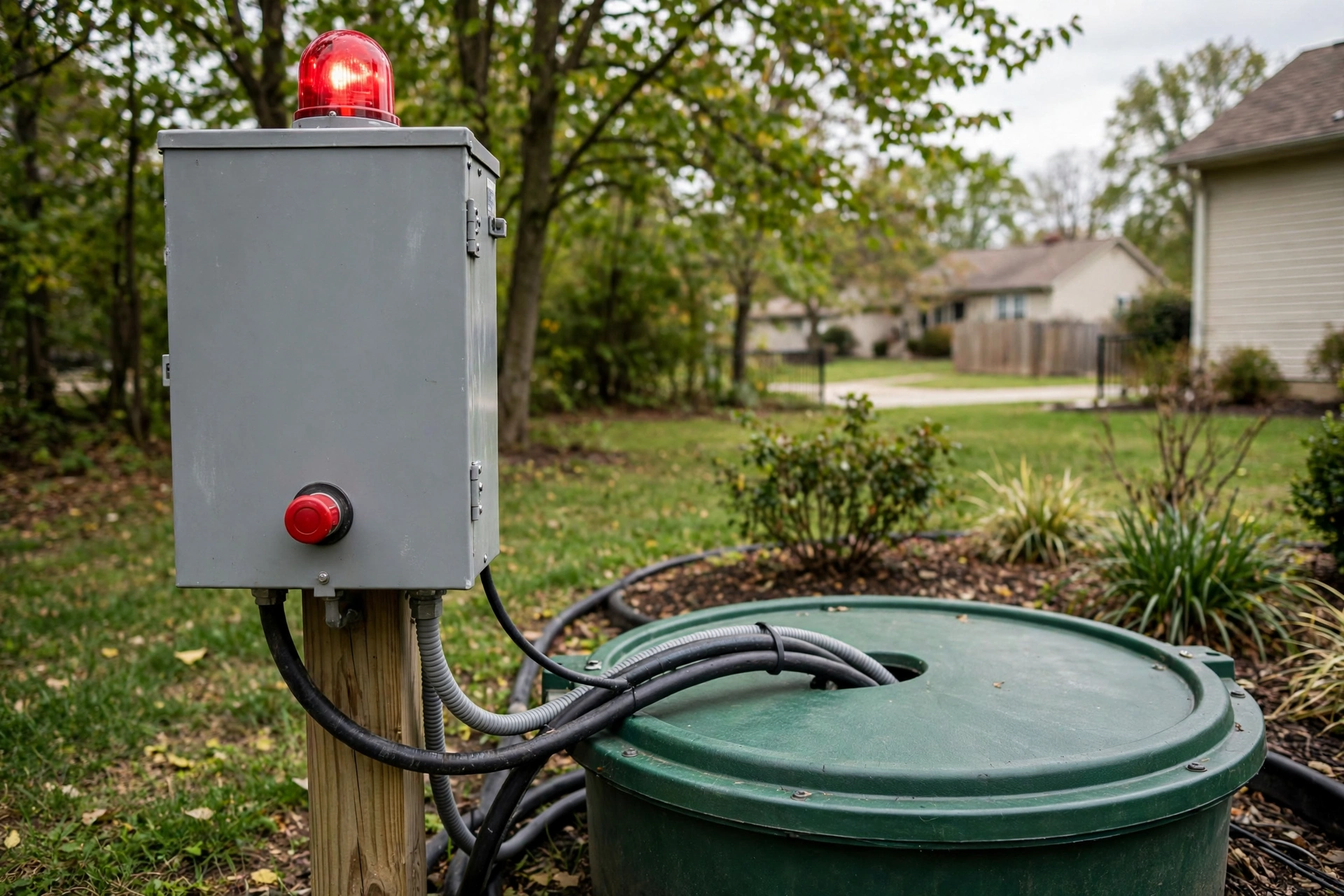
The alarm panel is your early warning system: high-water and pump-failure alarms live here.
Installation is excavation, plumbing, and electrical work in that order. We dig and set the basin level, plumb the inlet lines from the building, set the pumps and floats at their calculated elevations, run the force main to the connection point, wire the control panel with its alarm, backfill and grade, then start the system up with water testing before anything goes live.
The design decisions happen before the digging. Basin size comes from your fixture count and daily flow; pump type comes from what the system handles, grinder for full sewage; and the force main route gets walked to avoid utilities, trees, and future driveways. Wastewater discharge rules in Ohio start with the Ohio EPA, and permits and inspections are part of the job in most Ohio municipalities, so we handle them. Startup testing includes simulated high-water conditions, so we know the alarm works before you ever need it.
Annual professional service at minimum, more for commercial sites. Each visit, we test the pumps and their alternation, clean and check the float switches, test the alarm panel including a simulated high-water condition, inspect the check valve, clean out the basin, and walk the force main route for wet spots. Skipping maintenance is the most common reason we get emergency lift station calls.
Between visits, your job is simple. Know what the alarm sounds like and never silence it and ignore it. Do not flush wipes, even the ones labeled flushable: they wrap around grinder pumps and hang up float switches, and they are the number one cause of avoidable service calls. Keep the panel accessible and the basin lid clear. If you hear the pump running far more often than usual, call before it becomes an alarm.
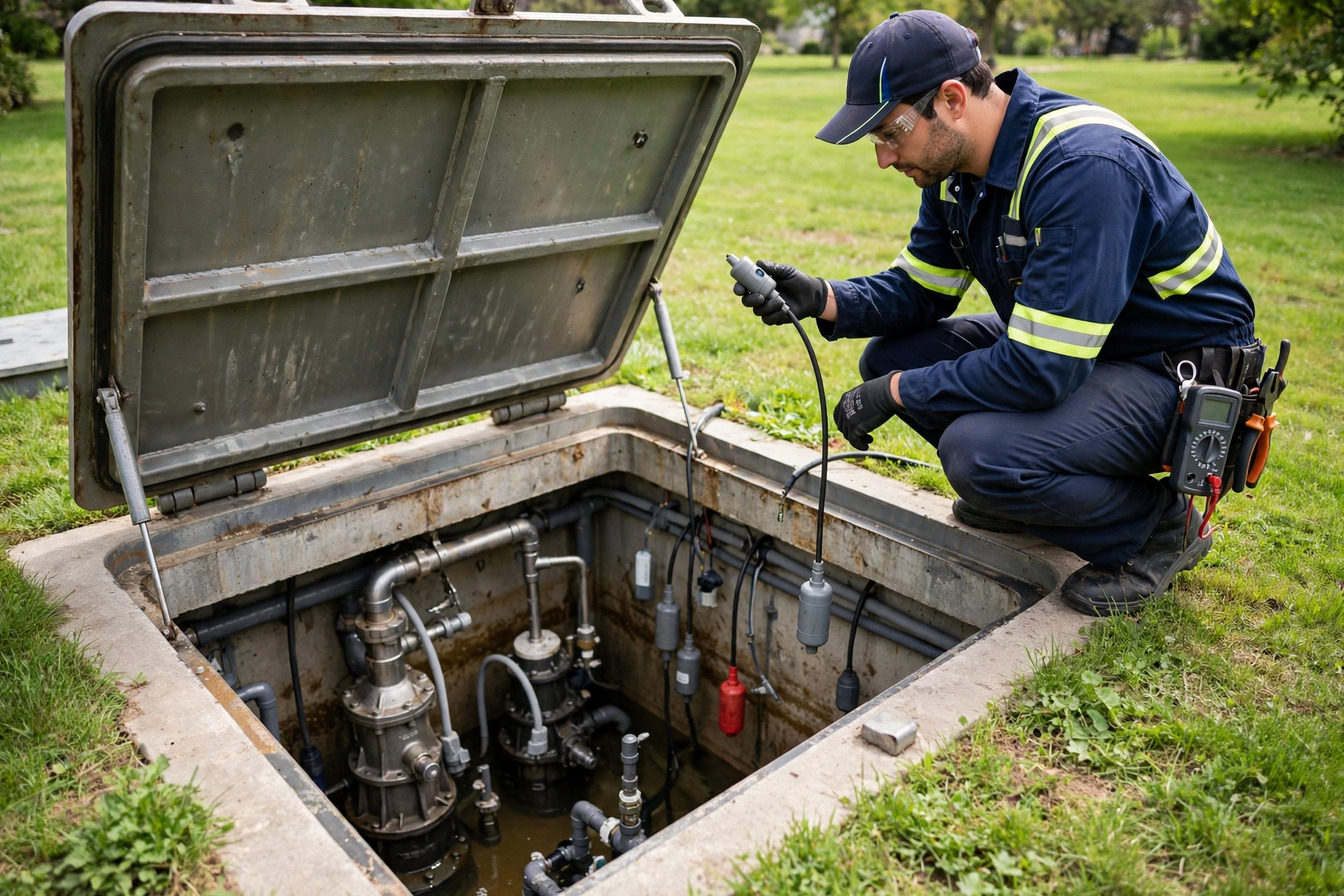
Annual service: pump testing, float cleaning, alarm checks, and a basin cleanout keep the station reliable.
The alarm sounding is the big one, and it means act now, not tomorrow. Beyond the alarm, watch for:
If the alarm sounds: minimize water use immediately and call. The basin has reserve capacity, but it is measured in hours, not days, and every flush spends it.
We measure elevations, distances, and fixture loads, and confirm a lift station is actually needed versus regrading or rerouting.
Basin size, pump type and capacity, force main route, and panel location, all calculated from your property's numbers.
Excavation, basin setting, plumbing, electrical, and panel wiring, with permits and inspections handled along the way.
Full fill cycles, float level verification, simulated alarm conditions, and check valve confirmation before handover.
We set your service schedule and show you the panel: what each light means and what to do when the alarm sounds.
Lift stations are engineered systems, so the plan follows the engineering. These are the factors that set yours:
For the statewide picture on sewer project work, see our Ohio sewer repair guide. For your property's number, call (614) 350-5706 and we will survey the site and give you a written plan.
Scale and purpose. An ejector pump serves one building's below-grade fixtures, like a basement bathroom, pumping sewage up to the home's main drain. A lift station serves a whole property, collecting all its wastewater and pumping it uphill to the city sewer. If your entire lot sits below the street main, you need a lift station; if it is just a basement bathroom, an ejector pump does the job.
Typically 7 to 15 years, depending on pump quality, how often it cycles, and what goes into the system. Duplex systems last longer per pump because they alternate. Annual maintenance is what gets you to the high end of that range.
The pumps stop, and wastewater accumulates in the basin until power returns. Basins are sized with reserve capacity, but during an extended outage you should minimize water use. For critical sites we can discuss generator backup options.
This is not a DIY project. It involves excavation, plumbing below grade, electrical work, and usually permits and inspections. Incorrect float elevations or an undersized force main will cause chronic problems, and it is a health hazard if sewage is not contained correctly.
At least once a year for a home, more often for commercial sites or restaurants. Service includes pump testing, float cleaning, alarm testing, and basin cleaning. Skipping maintenance is the most common reason we get emergency lift station calls.
A lift station is the property-scale answer; for a single basement bathroom, our ejector pump installation and repair service covers the smaller version of the same job. When the project includes running new lines to reach the station or the street, that falls under our sewer line installation work. Start at our homepage for the full picture of what we do statewide.
Gravity is not going to change its mind. Let us survey the site and design the lift station your property actually needs.
Call (614) 350-5706