Grease Trap Cleaning & Installation in Ohio
Fats, oils, and grease are the number one cause of sewer blockages from commercial kitchens. A properly sized, regularly cleaned grease trap keeps them out of your pipes and the city off your back.
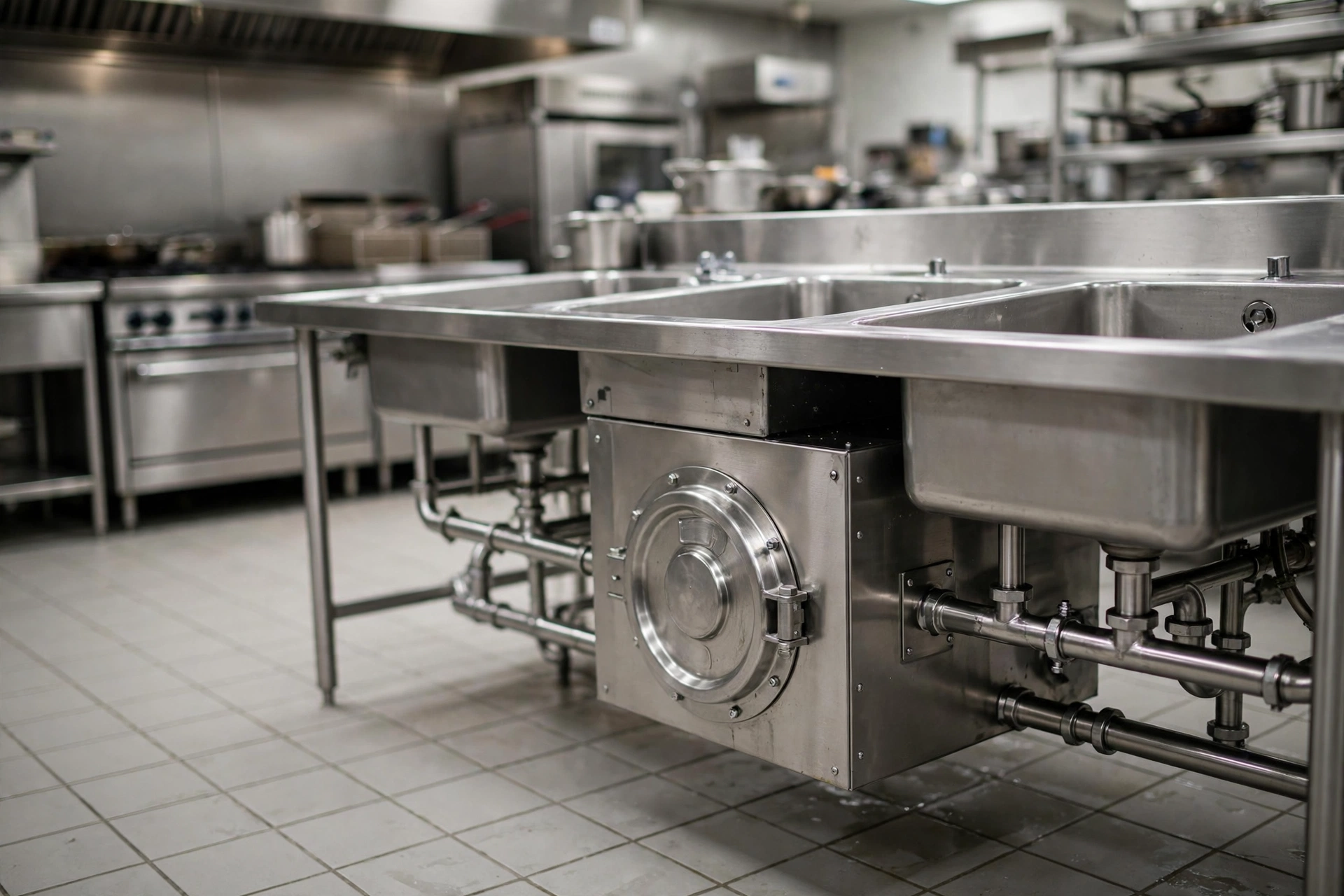
Fats, oils, and grease are the number one cause of sewer blockages from commercial kitchens. A properly sized, regularly cleaned grease trap keeps them out of your pipes and the city off your back.
Last updated: October 13, 2026
A grease trap is a plumbing device installed in a kitchen's drain line that separates fats, oils, and grease from wastewater before it reaches the sewer. Hot greasy water flows in and slows down; grease floats to the top, solids sink to the bottom, and the cleaner water in the middle flows out to the sewer. The trap holds the grease until it gets pumped out.
Two types cover nearly every commercial kitchen. A small hydromechanical grease trap mounts indoors, usually under a sink, and suits low-volume operations. A large gravity grease interceptor is a buried tank outside the building, and it is what high-volume restaurants, cafeterias, and most new builds require. Which one you need depends on your kitchen's size, your menu, and your local code. The physics is the same either way: slow the water down, let the grease separate, pump the grease out before it escapes.
| Type | Where it is used | How it works |
|---|---|---|
| Passive hydromechanical trap | Indoors, usually under a sink in small kitchens and cafes | Internal baffles and a flow control fitting slow incoming water so grease separates inside the unit |
| Gravity grease interceptor | Buried outside the building for high-volume restaurants and new builds | A large tank gives wastewater long retention time, so grease floats up and solids settle out before water exits |
Real cleaning means pumping out the entire contents of the trap, not just skimming the top. We remove the lid, vacuum out grease, water, and settled solids completely, scrape the baffles and walls, check the baffles and gaskets for damage, and leave the trap refilled with clean water so it works correctly from the first dish cycle.
How often depends on your volume and the trap's size. The rule most Ohio municipalities enforce is the 25 percent rule: clean the trap before grease and solids reach a quarter of its capacity. Signs yours is overdue include slow kitchen drains, foul odors near the trap, and grease visible in the outlet tee. One more thing inspectors ask for: your pumping records. Keep them. A stack of service receipts is the fastest way through a health department or pretreatment inspection.
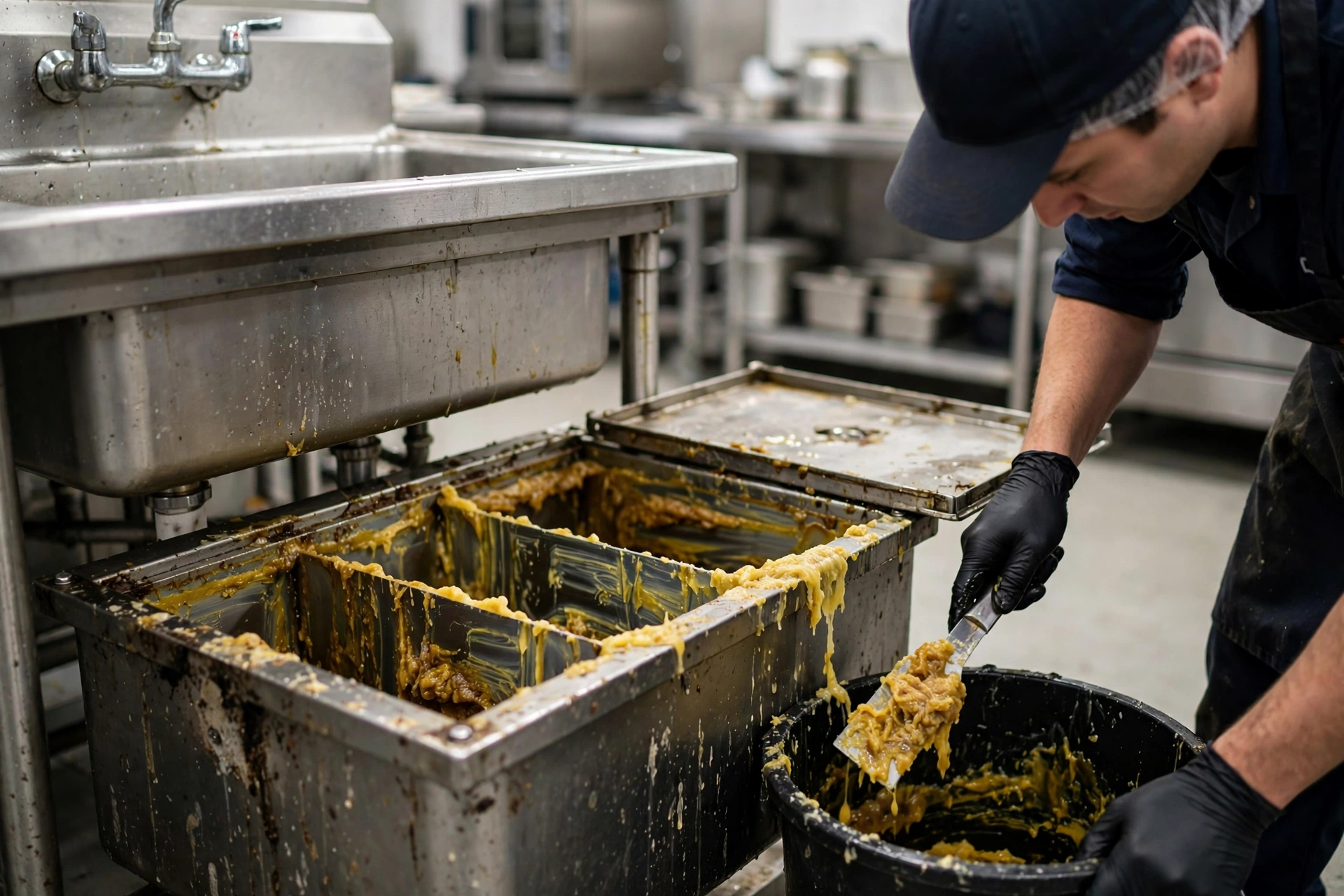
A proper cleaning pumps out the entire trap and scrapes the baffles, not just a surface skim.
Installation starts with sizing. The trap must handle your kitchen's peak flow, and undersized traps are the most common reason new restaurants fail their first inspection. We calculate fixture flow rates, pick the right trap or interceptor size for your menu and volume, set it with proper venting and flow control, and coordinate the plumbing and health department inspections Ohio municipalities require.
For new builds and high-volume kitchens, that usually means an exterior underground interceptor: excavation, setting the tank level, inlet and outlet piping, and access risers the pumping truck can reach. For retrofits where code allows, an indoor hydromechanical unit can work, plumbed in with a flow control fitting that keeps the water moving slowly enough to separate. Either way, placement matters for the life of the unit: the pumping truck needs to reach it, and your staff needs to stop pouring mop water past it.
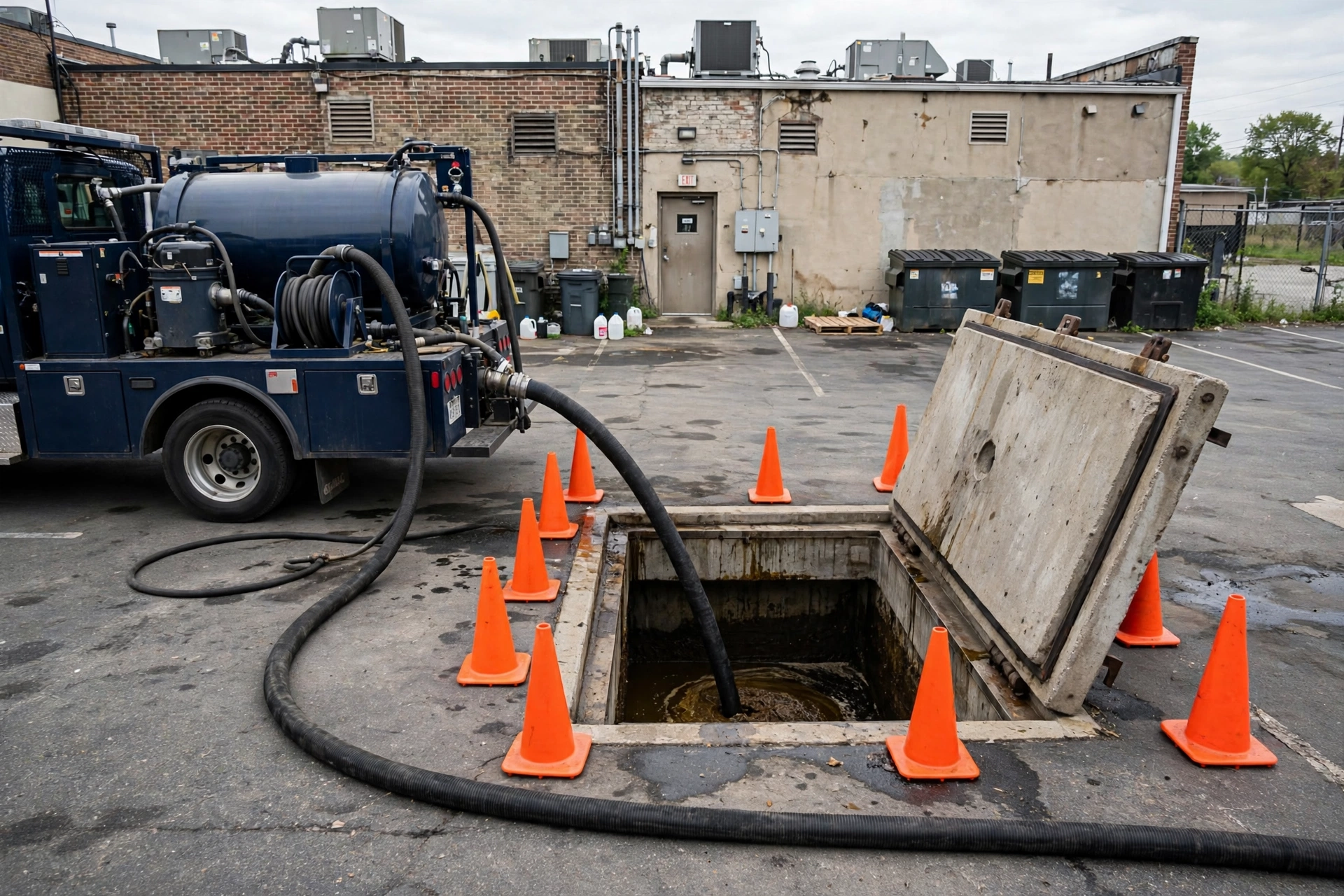
Underground interceptors get pumped by vacuum truck, so truck access is part of the installation plan.
Because one restaurant's grease becomes the whole block's sewer problem. Municipalities across Ohio run FOG, fats, oils, and grease, programs that require traps, set pumping schedules, and fine kitchens whose grease reaches the public main. These local programs sit under federal discharge rules: the EPA's NPDES program requires cities to control what enters their sewer systems, and in Ohio those permits are administered by Ohio EPA. A single grease blockage in a city line can back sewage into neighboring businesses, and the city bills the source for the cleanup.
Here is what inspectors look for when they walk into your kitchen: a trap or interceptor that exists and is sized for the operation, pumping records that show the 25 percent rule is being met, and no bypass piping that lets kitchen waste skip the trap. Fail any of those and you get a correction order with a deadline, then reinspection, then fines that grow if you ignore it. Some cities also add sewer surcharges for high-strength waste. The compliance math is simple: scheduled pumping is far simpler than one fine, let alone one backup during the dinner rush.
Hot grease goes in liquid and comes out as concrete. It cools in the sewer, sticks to pipe walls, and hardens into masses that catch everything else flowing past. The result is the classic commercial backup: drains slow across the whole kitchen, then sewage comes up through floor drains at the worst possible moment.
Grease does not act alone. It binds with wipes, food solids, and paper into blockages that a drain snake barely dents. Clearing a grease-packed line takes hydro jetting, high-pressure water that scours the pipe walls clean, and by then you have paid for the emergency call, the cleanup, and the lost business. That is the entire business case for the trap: a modest step of scheduled pumping versus a five-figure bad night. For the federal background on sewer rules, the EPA's septic and sewer guidance page is a useful starting point. For kitchens with recurring line trouble, our commercial sewer services cover the full picture, from camera inspection to line repair.
We inspect your existing trap or plan a new install: sizing math, kitchen volume, and what your local code requires.
Cleaning routes around your kitchen hours. Installations get coordinated with the required plumbing and health inspections.
Cleaning: full evacuation, baffle check, refill with clean water. Installation: excavation, tank setting, venting, and flow control.
Water test and flow check confirm the outlet runs clear. You get documentation for your records and the inspector.
We set your pumping interval from your actual volume, so you never hit the 25 percent rule by surprise.
Grease work plans by the service, not by the hour, and these are the factors that set yours:
For the statewide view of commercial sewer project work, see our Ohio sewer repair guide. For your kitchen's number, call (614) 350-5706 and we will look at your setup and put it in writing.
It depends on your kitchen's volume and the trap's size, but the standard most Ohio municipalities enforce is the 25 percent rule: pump before grease and solids reach a quarter of the trap's capacity. For a busy restaurant that can mean monthly; a small cafe might go a quarter. We measure at each visit and set your interval from real numbers.
They are the same idea at different scales. A grease trap is usually a smaller indoor unit under a sink; a grease interceptor is a large underground tank outside. High-volume kitchens and most new builds need the interceptor. Your local plumbing code and the health department decide which one your kitchen requires.
You can scrape a small under-sink trap, but the waste is regulated: it has to be hauled and disposed of by a licensed renderer or hauler, not poured down a drain or put in the trash. Underground interceptors need vacuum equipment anyway. Most kitchens find scheduled professional pumping simpler than the labor and disposal hassle.
Typically a correction order with a deadline, a reinspection, and fines that grow if you ignore it. If your grease is blocking the city main, the municipality can bill you for the cleanup and require more frequent pumping going forward. Keeping pumping records is the simplest way to pass.
If you have a commercial kitchen discharging to a sewer, almost certainly yes: Ohio plumbing code and local health departments require grease separation wherever food is prepared. The size scales to the operation, but the requirement does not disappear for small kitchens.
Grease is one part of commercial kitchen plumbing. When grease has already packed your line, hydro jetting scours it clean, and our commercial sewer services cover everything from camera inspection to full line repair for Ohio businesses. Start at our homepage for the full range of what we do statewide.
Grease problems only move in one direction. Get the trap pumped and the line checked before the dinner rush finds out.
Call (614) 350-5706