Ejector Pump Installation & Repair in Ohio
Your basement bathroom, laundry, or bar sink sits below the sewer line, so wastewater can't drain by gravity. A sewage ejector system lifts it up to the main line, sealed, vented, and automatic.
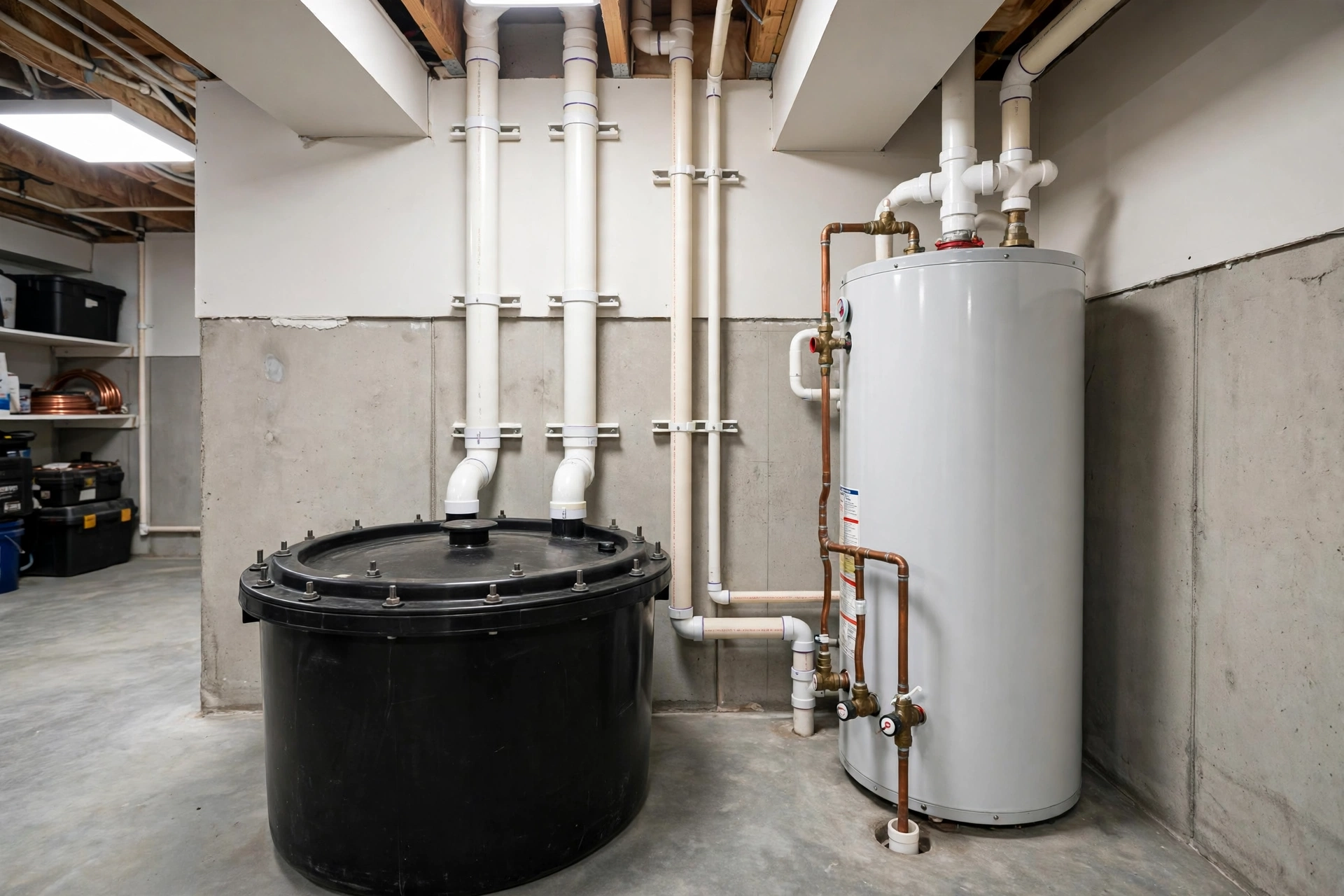
Your basement bathroom, laundry, or bar sink sits below the sewer line, so wastewater can't drain by gravity. A sewage ejector system lifts it up to the main line, sealed, vented, and automatic.
Last updated: October 13, 2026
A sewage ejector pump is a sealed, automatic pumping system that lifts wastewater from fixtures sitting below your main sewer line, like a basement toilet or laundry, up to where gravity can take over. Wastewater drains into a sealed underground basin; when the water level rises, a float switch starts the pump, which pushes everything up the discharge pipe and into the main line.
Every ejector system has the same core parts, and each one matters:
When it's working right, you never think about it. Toilets flush, the washing machine drains, and the pump cycles a few times a day without a sound you notice. Homes on a septic system instead of city sewer tie the discharge into the septic tank; the EPA's septic system guidance explains how those systems work and what they need.
They sit in similar pits and look alike at a glance, but they do opposite jobs. A sump pump moves clean groundwater from a sump pit out to the yard or storm system. A sewage ejector pump moves sewage and wastewater from below-grade fixtures into the sanitary sewer. Mix them up and you get a broken pump, a code violation, or both. Here is the comparison:
| Factor | Ejector pump | Sump pump |
|---|---|---|
| What it pumps | Toilet waste, shower water, laundry discharge: any fixture wastewater | Clean groundwater only |
| Solids handling | Built for it: 2-inch solids for standard ejectors, macerated for grinders | Not built to pass solids |
| Where it discharges | The home's sanitary main line | The yard, storm drain, or dry well |
| The pit | Sealed airtight, because sewage produces gas | Usually an open pit |
| Venting | Required: a dedicated vent to the stack or roof | Not required |
| Code rule | Sewage must go to the sanitary sewer; sending it to a storm system is illegal | Sending groundwater to the sanitary sewer is prohibited in many Ohio cities |
Some Ohio basements need both: a sump pump handling groundwater at the foundation, and an ejector system handling the bathroom above it. They stay completely separate. If you're not sure which one your basement has, we can tell you at a glance. For groundwater protection, see our sump pump installation and repair page.
You need an ejector system any time a drain or fixture sits below the level of your main sewer line and can't drain by gravity. In Ohio, that usually means a finished basement with a bathroom, laundry room, bar sink, or kitchenette. Basements are common across the state, so ejector systems are too.
The most common reasons Ohio homeowners call us about one:
Not sure whether your fixtures sit below the line? That's a quick check. We measure the fixture elevations against the main sewer line and tell you whether gravity works or a pump is required, before any work is pland.
A proper installation is more than dropping a pump in a pit. Here's what a complete job covers, and why skipping any of it causes problems later.
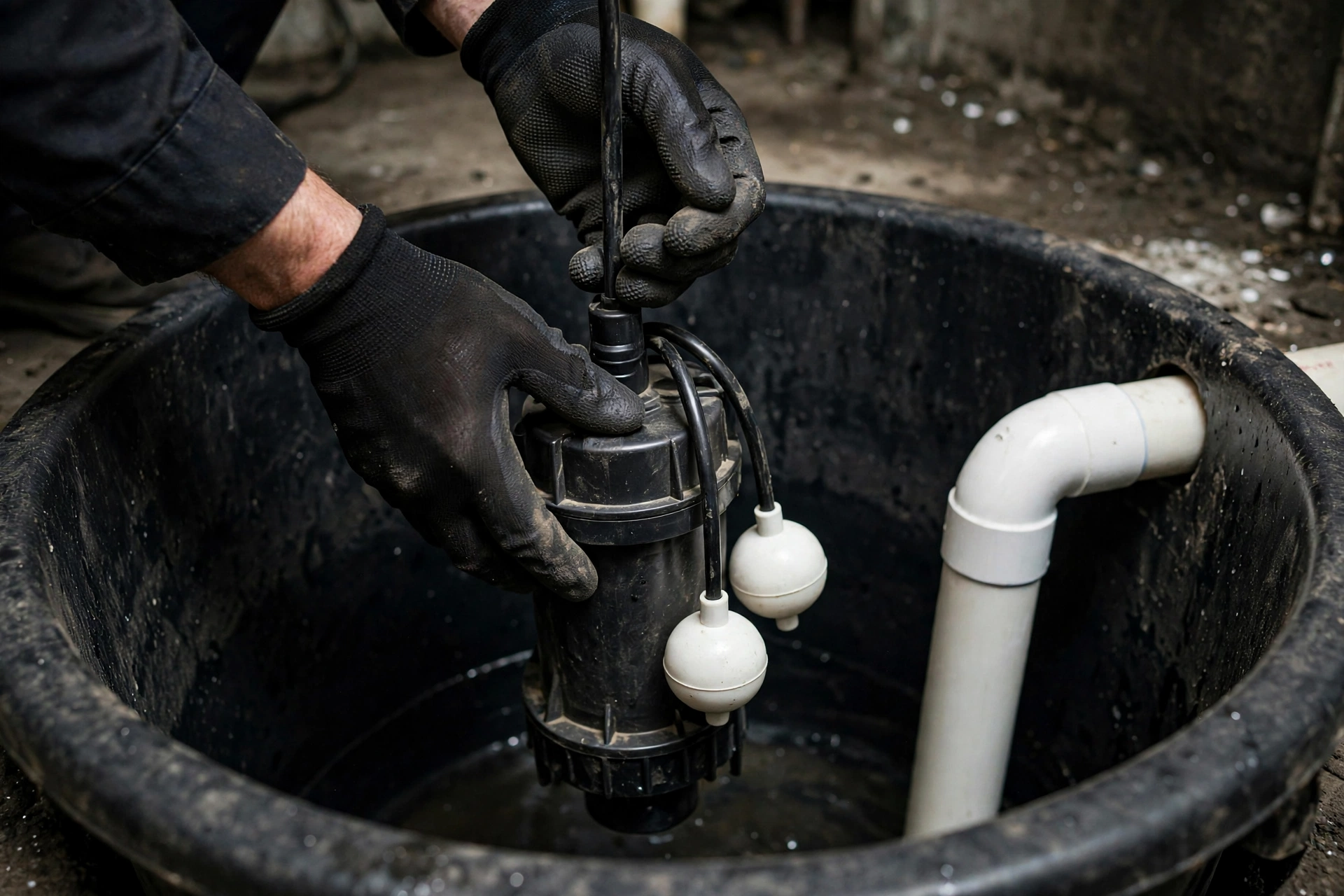
Setting the pump in the basin: floats, alarm, and check valve all get wired and tested before the lid is sealed.
We check fixture elevations against the sewer main, review the panel for circuit capacity, and confirm local permit requirements.
The slab is cut, the pit dug, and the sealed basin set in a gravel bed and leveled before the concrete goes back.
Inlet lines from each fixture, the discharge run with check valve and union, and the vent tie-in all get roughed in.
The pump, float switches, and high-water alarm get set and wired to a dedicated GFCI circuit.
We fill the basin, verify on and off levels, test the alarm, confirm the check valve holds, and schedule the city inspection.
Ejector pumps usually fail gradually, and they give you clues. Catching them early is the difference between a pump swap and a sewage backup.
On a repair visit, we test the pump under load, check floats and the check valve, and inspect the basin seal and vent. Often the fix is a float or check valve, not a whole new system, and we'll say so.
Ejector systems are low-maintenance, not no-maintenance. A little attention stretches the pump's life by years.
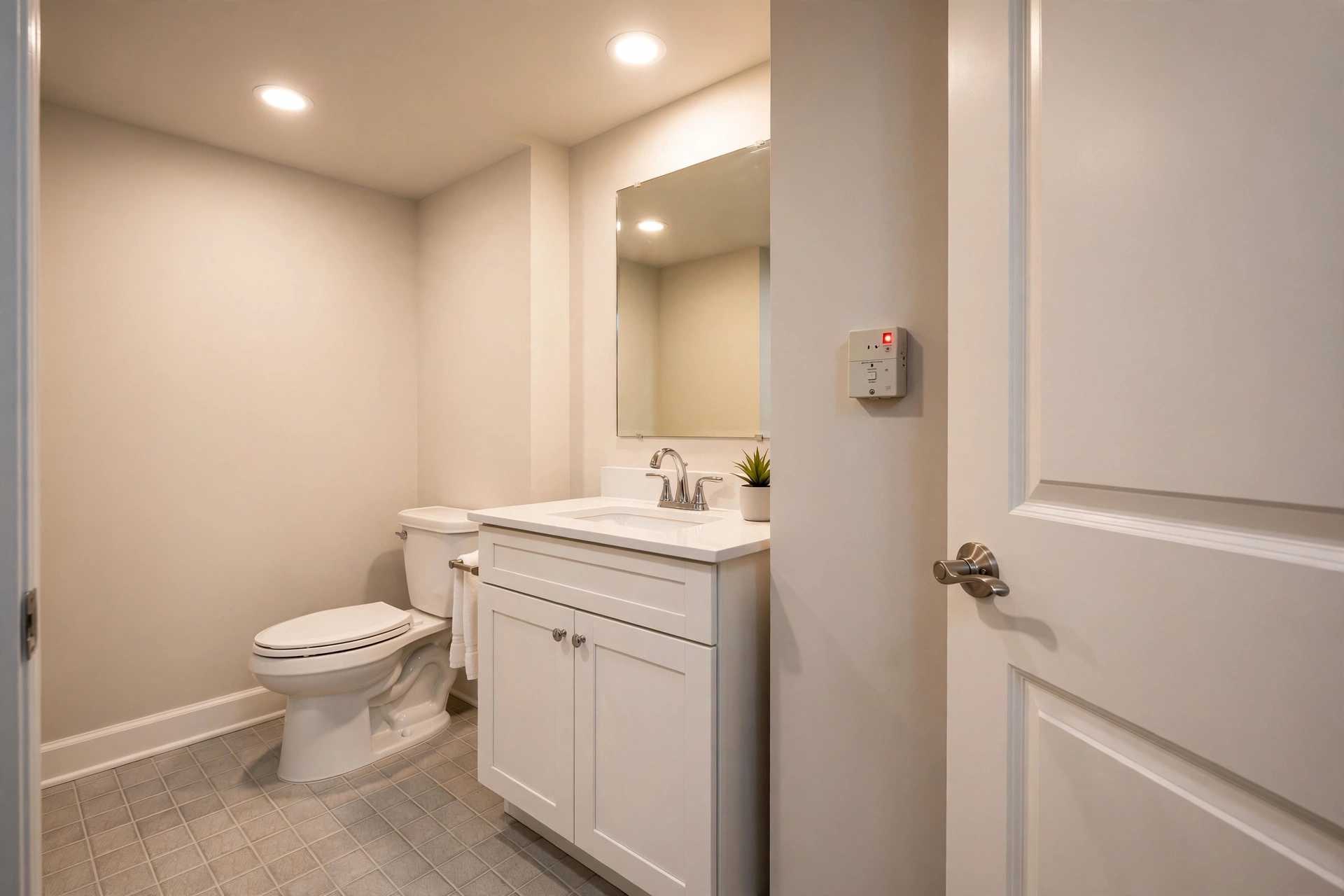
A working high-water alarm is the simplest insurance a basement bathroom can have. Test it regularly.
If your basement has fixtures but no alarm at all, that's worth fixing on its own. Alarm-only installs are quick and inmajor compared to what a silent failure work.
Nobody can plan an ejector job without seeing the basement, the fixture layout, and the panel. But these are the factors that move the number, so you know what you're handling for:
Our Ohio sewer repair guide covers process across our services. For your number, call (614) 350-5706: we'll look at the setup and give you a written, fixed plan before any work starts.
They do opposite jobs. A sump pump moves clean groundwater from a sump pit out to the yard or storm system. A sewage ejector pump moves wastewater from below-grade fixtures, like a basement toilet or laundry, up into the sanitary sewer. Sump pumps are not built to pass solids, and sending sewage through one is against code in most Ohio cities.
If the bathroom fixtures sit below the level of your main sewer line and cannot drain by gravity, yes. That is the situation in most Ohio homes with finished basements, because the lateral usually runs shallow under the yard while the basement floor sits several requirementt lower. If the fixtures are above the sewer line, gravity does the work and no pump is needed.
Most residential sewage ejector pumps wear out after roughly 7 to 10 years of service. Heavy use, like a laundry room plus a full bathroom, shortens that. Flushing wipes, grease, and feminine products shortens it more. The basin itself lasts far longer, so many homeowners replace just the pump, floats, and check valve when the system starts struggling.
Stop running water into any fixture that drains to the basin, toilets, showers, and the washing machine included, and call a plumber. The alarm means the water level is rising faster than the pump can clear it, and continued use can push sewage up through the lowest fixture. Don't try to reset it repeatedly; the high-water condition is a symptom, not the problem.
Yes. The sealed basin needs a dedicated vent, usually run up and tied into the home's vent stack or out through the roof, so the pump can move water without fighting trapped air. Without a vent, the system airlocks, drains gurgle, and the pump short-cycles. A proper vent also keeps sewer gas inside the system instead of in your basement.
Ejector systems rarely live alone. If your basement handles groundwater too, see our sump pump installation and repair page for keeping the two systems separate. For larger properties and commercial buildings with below-grade plumbing, our lift station installation and maintenance service covers bigger pumped systems. And if city sewer backups are your worry instead, backwater valve installation stops the main line from pushing sewage back into your home.
We'll check whether your fixtures can drain by gravity or need an ejector system, then give you a fixed written plan.
Call (614) 350-5706