Your toilet is not a trash can, and your sewer line is not as tough as you think. These are the ten items our crews pull out of Ohio pipes most often, and what each one does in there.
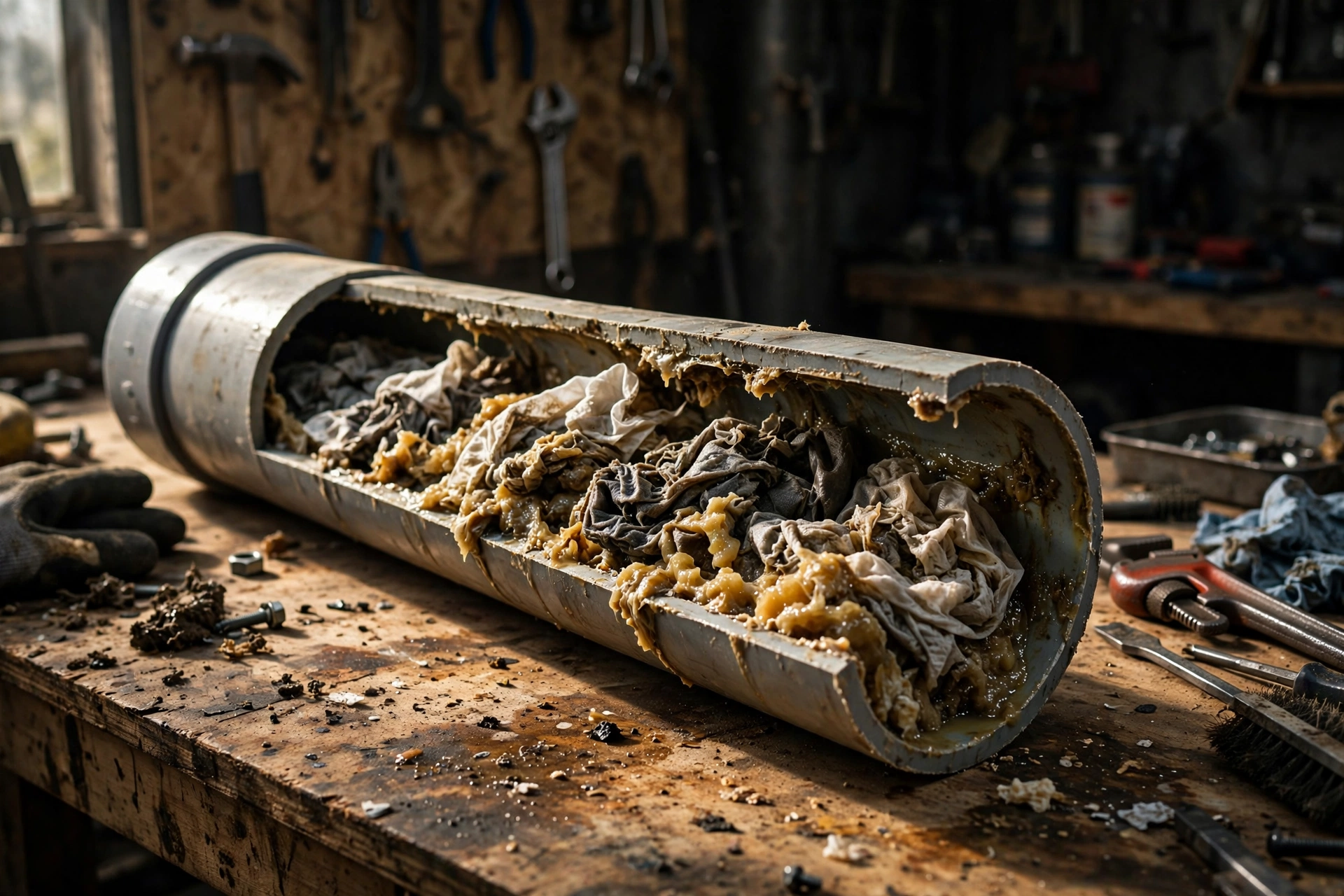
This is what a wipe-and-grease blockage looks like up close. Every item on this list ends up here eventually.
Last updated: October 13, 2026
Why Is My Sewer Line So Picky?
Because your home's drain system was designed for two things: human waste and toilet paper. Toilet paper is engineered to fall apart in water within seconds. Almost everything else you flush survives the trip intact, snags on the first root intrusion or rough pipe joint, and starts collecting everything behind it. Ohio's older clay and cast-iron laterals, with their joints every few requirementt, give debris plenty of places to catch. Here is the list, in order of how often we see each offender:
The Never-Flush 10
"Flushable" wipes. The number one offender, by far. Despite the label, these wipes do not break down like toilet paper. They snag on roots and joints, pile up, and form dense blockages that can fill a pipe completely. If you use them, put them in the trash. Your plumber will thank you.
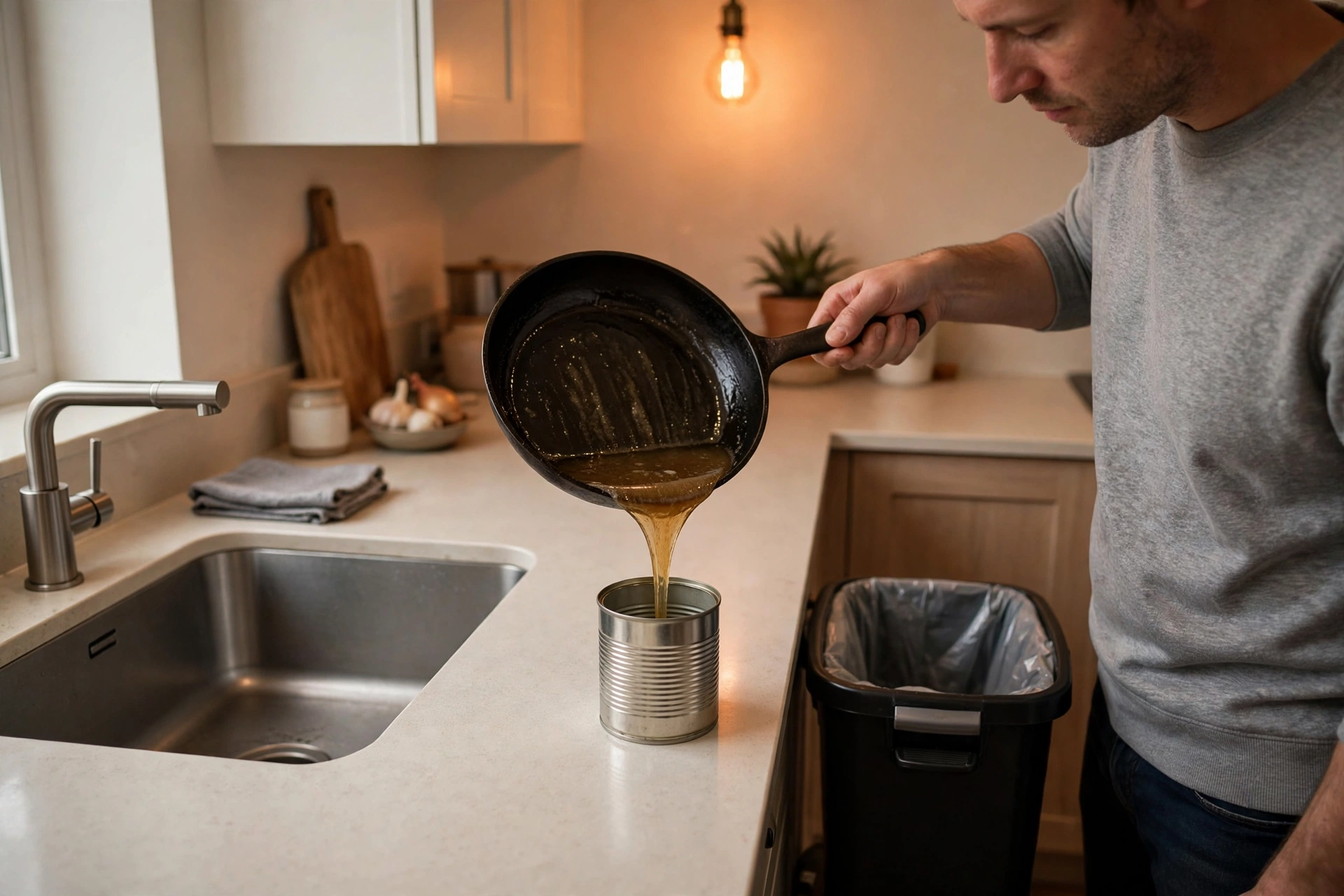
Cooking grease and oil. Liquid grease goes down easy and cools into a solid coating inside the pipe. In cold Ohio winters it congeals even faster. Hot water does not help; it just pushes the grease deeper before it hardens. Pour cooled grease into a can and trash it.
Dental floss. Floss is built to be strong, so it survives the whole trip and tangles around roots, joints, and pump parts. Daily floss builds a net over time that catches paper and waste until the line chokes.
Cotton balls, swabs, and pads. Cotton clumps instead of breaking apart. Feminine hygiene products are designed to absorb and expand, which is exactly what you do not want inside a four-inch pipe. All of it belongs in the trash.
Paper towels and tissues. They look like toilet paper but they are not. Paper towels are engineered to stay strong when wet, which means they stay strong inside your sewer line too. Kleenex-style tissues are slightly better but still not designed to dissolve the way toilet paper is.
Cat litter. Even the brands that claim to be flushable. Litter absorbs water, clumps, and settles in the low spots of your line. It is also heavy, so it drops out of the flow and builds up exactly where you cannot see it.
Cofrequirement grounds. Grounds requirementl harmless because they are small, but they settle, pack together, and mix with grease into a cement-like sludge. Scoop them into the trash or the garden instead.
Hair. Long hair wraps around everything in the drain and forms slow-growing clogs, especially in bathroom lines that join the main. A simple drain screen catches it before it starts. This one is easy to prevent.
Medications. Flushing pills does not clog your line, but it does send drugs straight into the water system, since wastewater plants are not designed to filter pharmaceuticals out. The EPA recommends drug take-back programs instead; Ohio pharmacies and many police stations take back unused medication for free.
Chemical drain cleaners. The irony of the list: the product sold to fix clogs creates worse problems. Caustic cleaners can damage pipes, kill the helpful bacteria in septic systems, and turn a simple clog into a hazardous situation for whoever has to open the line later. Read our guide to the truth about chemical drain cleaners for the full story.
The grease habit is the easiest to break. Cool it, can it, trash it. Your pipes will notice the difference.
What About Garbage Disposals?
No. A garbage disposal is a convenience for plate scraps, not a second trash can. It grinds food smaller, but it does not change what your sewer line can handle. Ground-up grease still solidifies downstream. Fibrous foods like celery, artichokes, and onion skins wrap around into rope-like tangles. Starchy foods like pasta and rice swell in water and keep swelling in the pipe. Treat the disposal as a helper for the last plate scraps, not as a second trash can. Scrape the big stuff into the garbage and let the disposal handle what is left.
What Does Flushing the Wrong Things Involve?
A service call at best, and a broken pipe at worst. A main-line clog from wipes or grease shows up as every drain in the house slowing down at once, toilets gurgling when the washer runs, or sewage backing up through the lowest fixture. Clearing a full main-line blockage is a service call at best. At worst, the clog sits long enough to stress an aging pipe into a break, and then you are looking at a main drain cleaning or worse, a hydro jetting service to restore the line. Preventing the clog is always simpler than clearing it.
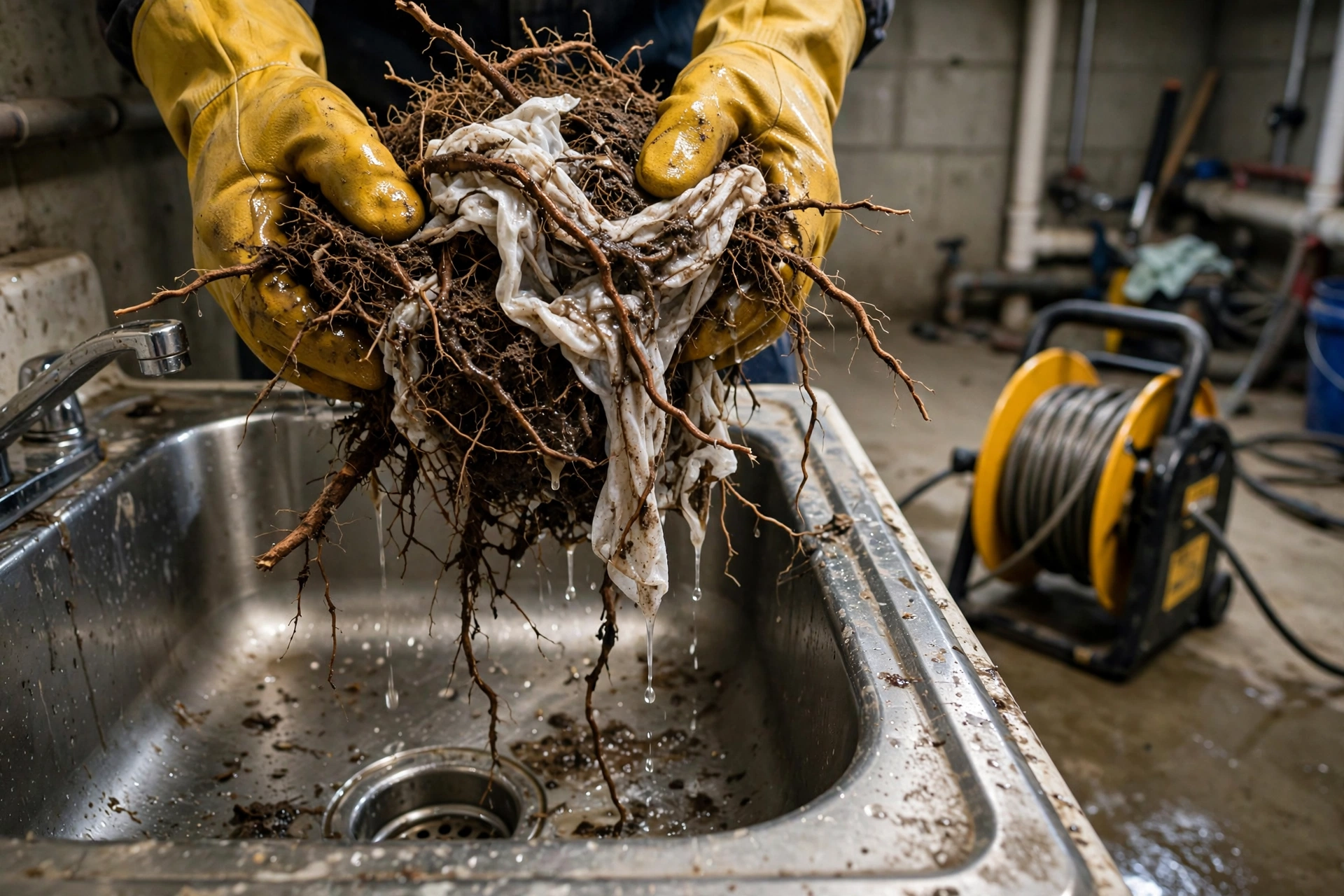
This root-and-wipe tangle came out of one residential line. Wipes give roots something to grab onto.
How Do I Keep My Pipes Clear?
Build three habits, and you do not need to memorize the whole list. First, the only things that go in the toilet are waste and toilet paper. Everything else goes in the trash, even if the packaging says flushable. Second, grease goes in a can, never the sink, and wipe the pan before you wash it. Third, put drain screens in your tubs and showers to catch hair, and clean them weekly. If your home has mature trees over the sewer lateral, consider a sewer maintenance program so roots never get the chance to turn a small restriction into a backup.
Never-Flush FAQs
No. Despite the label, flushable wipes do not break down like toilet paper in your sewer line. They snag on roots, joints, and any rough spot, then pile up into dense blockages that we pull out of Ohio lines constantly. They are the single biggest cause of preventable main-line clogs we see.
No, and hot water makes it worse by pushing the grease further down before it cools and hardens. Grease solidifies inside the pipe and catches everything behind it, and in cold Ohio winters it congeals faster. Let grease cool, pour it into a can, and throw it in the trash.
Floss is designed to be strong, which means it does not break apart in water. It tangles around roots and rough joints and forms a net that catches paper and waste. A little floss every day builds a surprisingly tough clog over time, and it can wrap around pump impellers in homes with sewage ejector pumps.
Don't panic over one mistake: a single wipe or cotton ball usually passes through. Stop the habit now, and watch for warning signs like slow drains, gurgling, or backups. If problems show up, a professional drain cleaning with a cable or hydro jetter clears the buildup before it becomes a full blockage.
A disposal grinds food smaller, but it does not change what your sewer line can handle. Ground-up grease still solidifies, and fibrous foods like celery still tangle. Think of the disposal as a convenience for plate scraps, not a license to send anything down. Scrape the big stuff into the trash.
Slow Drains Across the House?
That can mean buildup deep in your main line. We'll clear it properly and show you the camera footage so you know it's clean.