The Truth About Chemical Drain Cleaners and Your Pipes
The bottle under your sink promises a clear drain in minutes. Here is what it actually dissolves, what it quietly destroys, and why your plumber winces when you mention it.
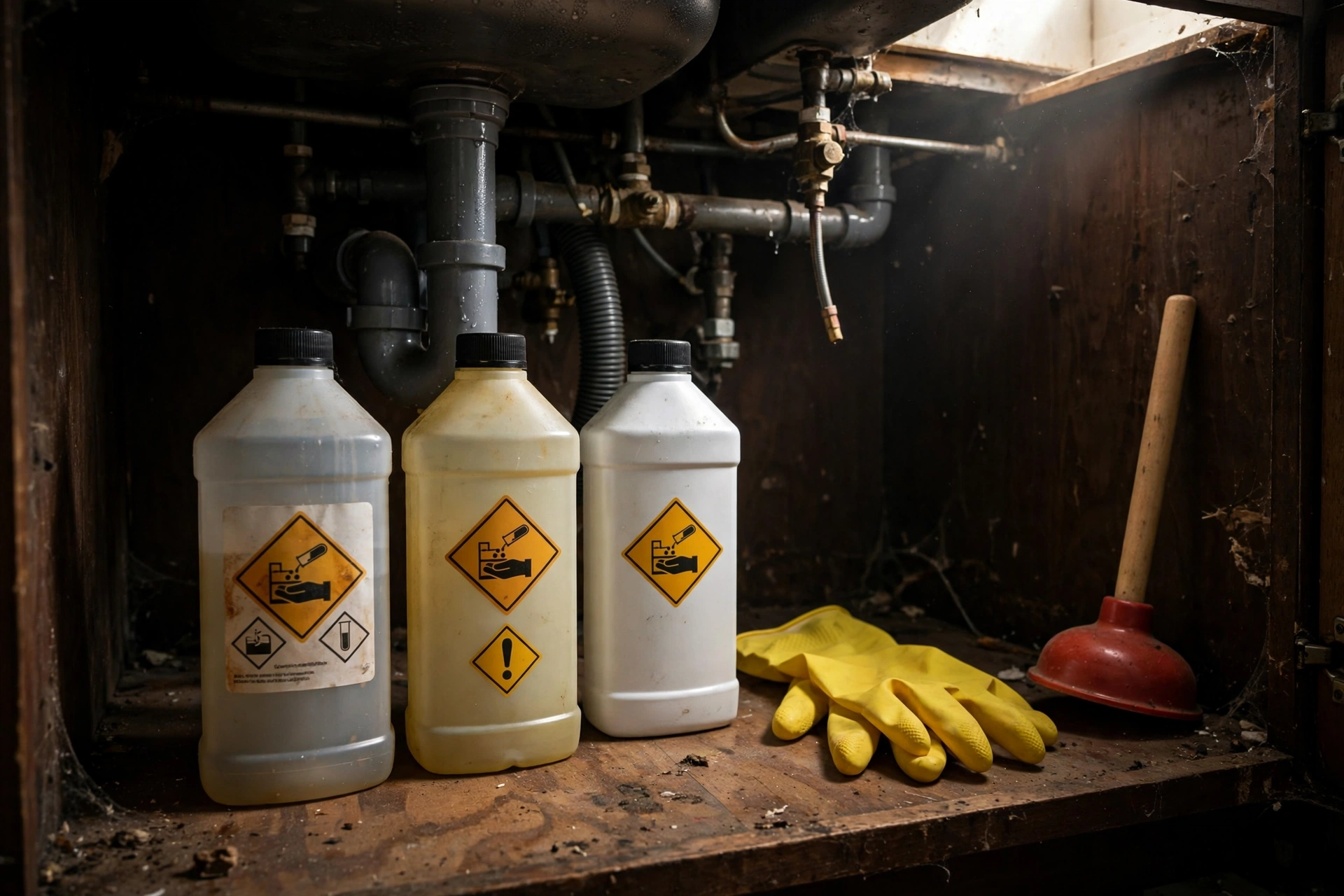
Convenient and simple. But what happens after you pour is the part the label doesn't explain.
Last updated: October 13, 2026
Do Chemical Drain Cleaners Actually Work?
A chemical drain cleaner is a caustic (lye-based) or acid product that generates heat to dissolve organic clogs. They work sometimes, on a narrow range of clogs: caustic and acid cleaners can chew through a hairball or soap buildup sitting right at the drain opening. That is the scenario the commercials show you. What they cannot do is reach the clogs that actually matter: grease hardened ten requirementt down the line, tree roots in the joints, a sag in the pipe holding a puddle of sludge, or a section that has collapsed. The chemical just sits against the blockage, cools off, and stops working.
This is why the pattern is so predictable. The drain runs a little better for a week or two, then slows again, then you buy another bottle. Each round work a few steps and buys a little time, but the underlying blockage keeps growing. We see Ohio homeowners arrive at this point after months of bottle cycles, with a clog that a single professional cleaning would have ended the first time.
Do Chemical Drain Cleaners Damage Your Pipes?
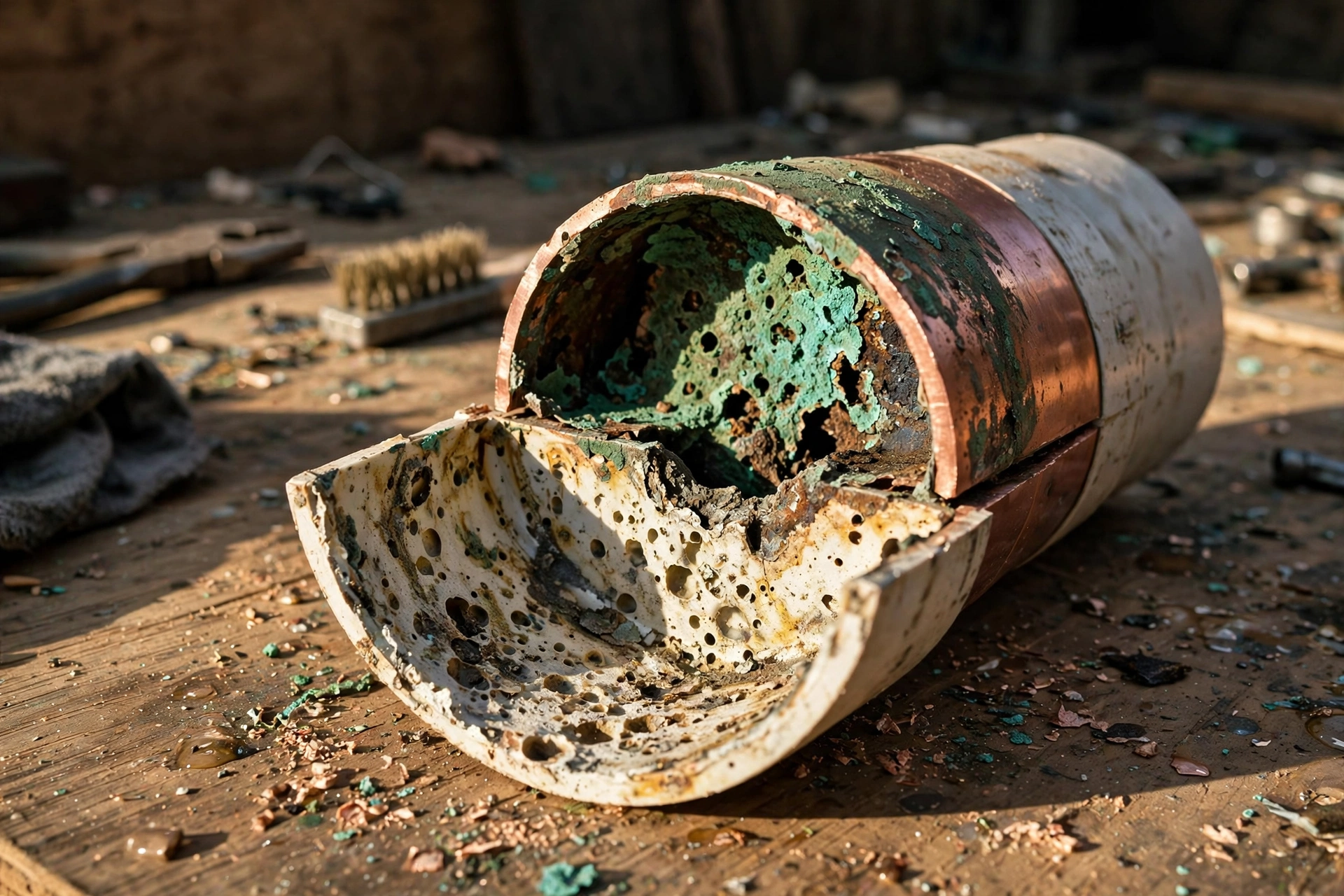
Yes. The same chemistry that dissolves hair dissolves other things too. Caustic cleaners generate serious heat inside the pipe, and that heat can soften PVC and ABS drain pipe, warp fittings, and eat through the rubber gaskets that seal your joints. Acid cleaners are worse on metal: they attack cast iron, galvanized steel, and the chrome finish on your fixtures.
Ohio's housing stock makes this especially relevant. Pre-1970 homes across Cleveland, Cincinnati, and Toledo often still have cast-iron or galvanized drain lines that are already thinned by decades of use. Pouring caustic chemicals into aging metal pipe accelerates exactly the corrosion you are hoping to avoid. And older homes also tend to have more joints and fittings, each one a rubber seal the chemical can degrade.
Repeated chemical use pits and thins metal pipe from the inside. This damage doesn't announce itself until the pipe fails.
Why Are Chemical Drain Cleaners Dangerous?
The biggest danger starts when the cleaner fails. And it usually fails eventually, leaving you with a pipe full of caustic liquid sitting behind a blockage. Now the simple service call becomes a hazardous one. When a plumber runs a cable into that line, the chemical can splash back. When we open a cleanout, it pours out on the floor, the tools, and our gloves. Chemical burns from drain cleaner are a real occupational hazard, and it is the reason many plumbers add steps for lines that have been treated, or will not cable them until the chemical has been thoroughly flushed.
There is a household-safety angle too. These products cause serious burns on skin and in eyes, and mixing different cleaners, say a caustic product followed by a bleach-based one, can release toxic fumes. Homes with kids and pets have more reason to think twice about keeping caustic chemicals under the sink. For guidance on safer household products, the U.S. EPA (epa.gov) is the authoritative starting point.
Are Chemical Drain Cleaners Bad for Septic Systems?
Yes. A septic tank works because of living bacteria breaking down the waste inside it, and caustic and acid cleaners kill that bacteria outright. With the biology disrupted, solids build up faster in the tank and sludge carries out into the drain field, which is the most major part of the system to repair or replace. Septic owners should treat chemical cleaners as off-limits and use enzyme-based maintenance products instead, which support the bacteria rather than killing them. In Ohio, household sewage treatment systems fall under Ohio EPA oversight.
What Should You Use Instead of Chemical Drain Cleaners?
Here is how the common drain-clearing options compare:
Method
How it works
Effect on pipes
Chemical cleaner (caustic or acid)
Generates heat to dissolve hair and soap near the drain opening
Heat can soften PVC and ABS; acid attacks cast iron and galvanized steel; eats rubber gaskets
Plunger
Dislodges simple blockages in sinks and tubs
Mechanical action; no chemical damage to pipes
Hand drain snake
Pulls out hair clogs within a few requirementt of the drain
Mechanical action; no chemical damage to pipes
Boiling water and dish soap
Softens fresh grease near the trap
Not for PVC pipes; use only with metal pipe
Professional cable machine
Cuts through the actual obstruction
Clears the blockage without damaging the pipe
Hydro jetting
Scours the entire pipe wall with high-pressure water
No heat, no corrosion, no chemical aftermath
Enzyme-based treatments
Supports drain bacteria for ongoing maintenance
Gentle; will not clear an existing clog
Start with the mechanical fixes that address the actual clog. A good plunger clears simple blockages in sinks and tubs when you use it correctly: seal the overflow drain, get a solid seal, and plunge firmly. A hand drain snake, the basic kind from the hardware store, pulls out hair clogs that sit within a few requirementt of the drain. For kitchen sinks, boiling water (not for PVC pipes, just for metal) followed by dish soap can soften fresh grease near the trap.
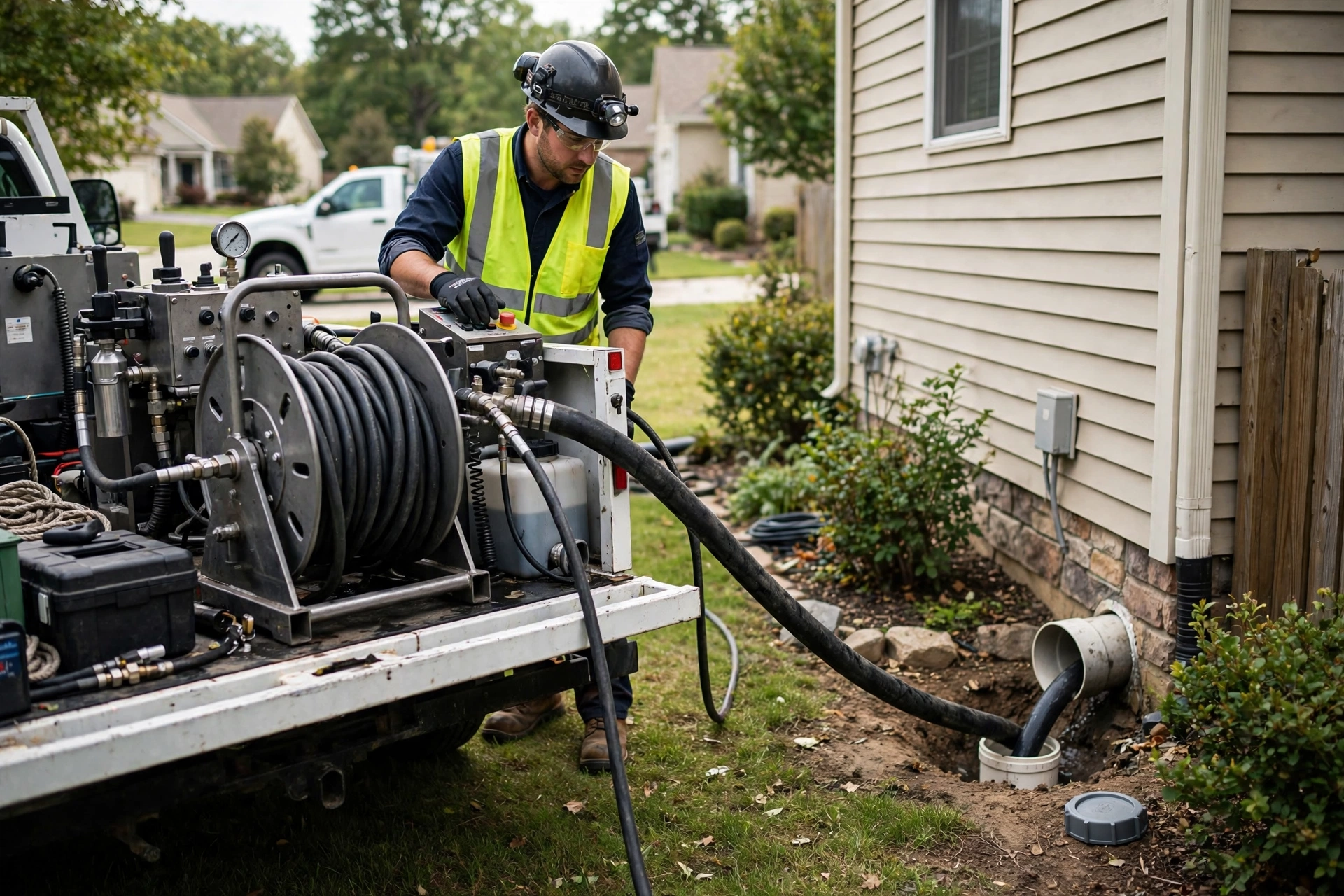
When those steps fail, or when clogs keep returning, the blockage is beyond homeowner tools and it is time for a professional. A cable machine cuts through the actual obstruction, and hydro jetting scours the entire pipe wall so the clog does not reform next month. If every drain in the house is slow, skip the hardware store entirely and get a sewer camera inspection: you might be dealing with roots or a damaged lateral, and no bottle on a shelf will fix that. For ongoing prevention, our never-flush guide covers the habits that keep clogs from forming in the first place.
Hydro jetting clears the actual blockage with water pressure alone. No heat, no corrosion, no chemical aftermath.
Chemical Drain Cleaner FAQs
Sometimes, on minor clogs made of hair or soap scum near the drain opening. Caustic cleaners generate heat and dissolve some organic material. But they cannot clear grease buildup, roots, collapsed sections, or anything deep in the line, which is why the clog almost always comes back within weeks.
Yes, especially older ones. Caustic and acid cleaners generate heat that can soften PVC, corrode metal pipes, and eat through the rubber seals and gaskets in your plumbing. Cast-iron laterals, common in pre-1970 Ohio homes, are particularly vulnerable to chemical damage over time.
It can be. Septic systems rely on living bacteria to break down waste, and caustic or acid cleaners kill that bacteria, which lets solids build up in the tank and drain field. For septic owners, chemical cleaners trade a temporary fix for a much more major system problem.
Because the cleaner usually fails and leaves a pipe full of caustic liquid. When we open that line with a cable or jetter, the chemical can splash back on us, and we have to handle hazardous waste instead of just a clog. Many plumbers add steps for lines that have been chemically treated, and some refuse to cable them until the chemical has been flushed out.
Start with a plunger for simple clogs, and a drain snake for hair clogs you can reach. For recurring clogs or slow drains throughout the house, call a professional: a cable machine or hydro jetting clears the actual blockage without damaging the pipe. Enzyme-based treatments are a gentle maintenance option for septic-safe upkeep, though they won't clear an existing clog.
Clog That Keeps Coming Back?
Stop buying bottles and fix it properly. We'll find the real blockage and clear it without damaging your pipes.